
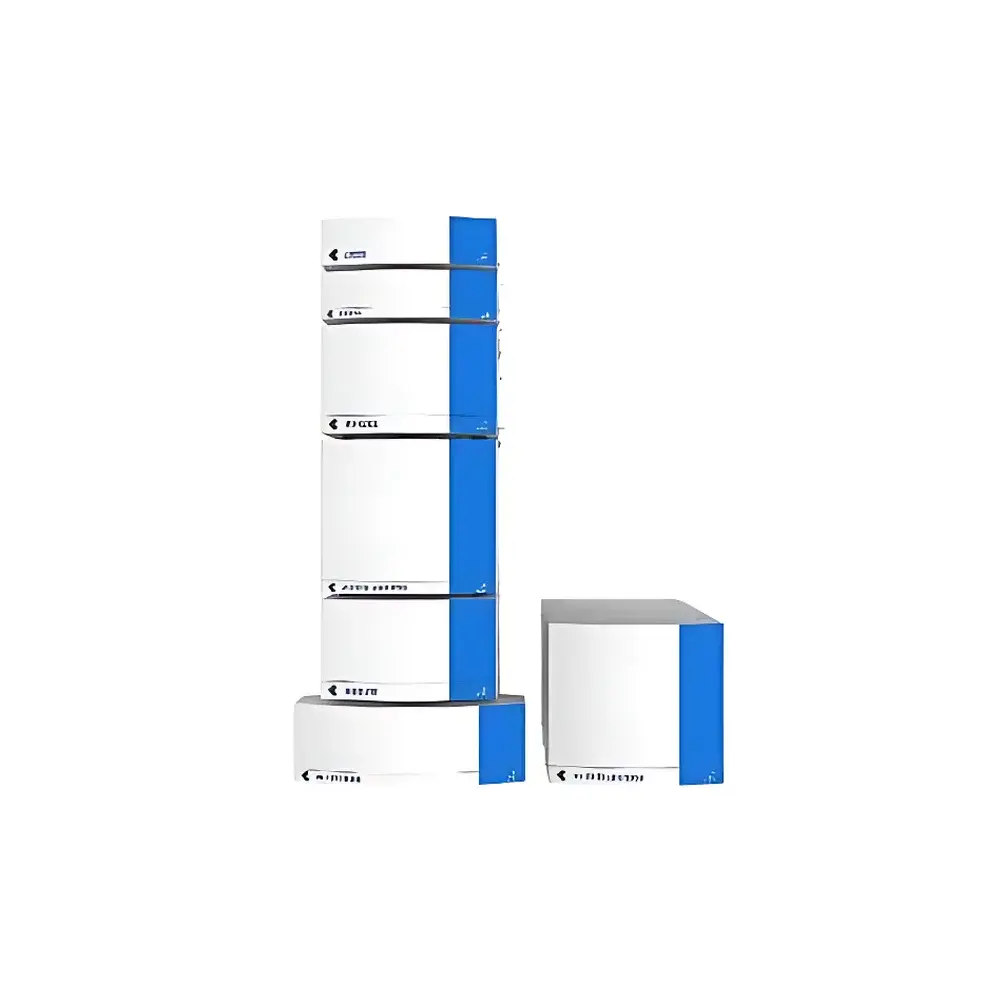
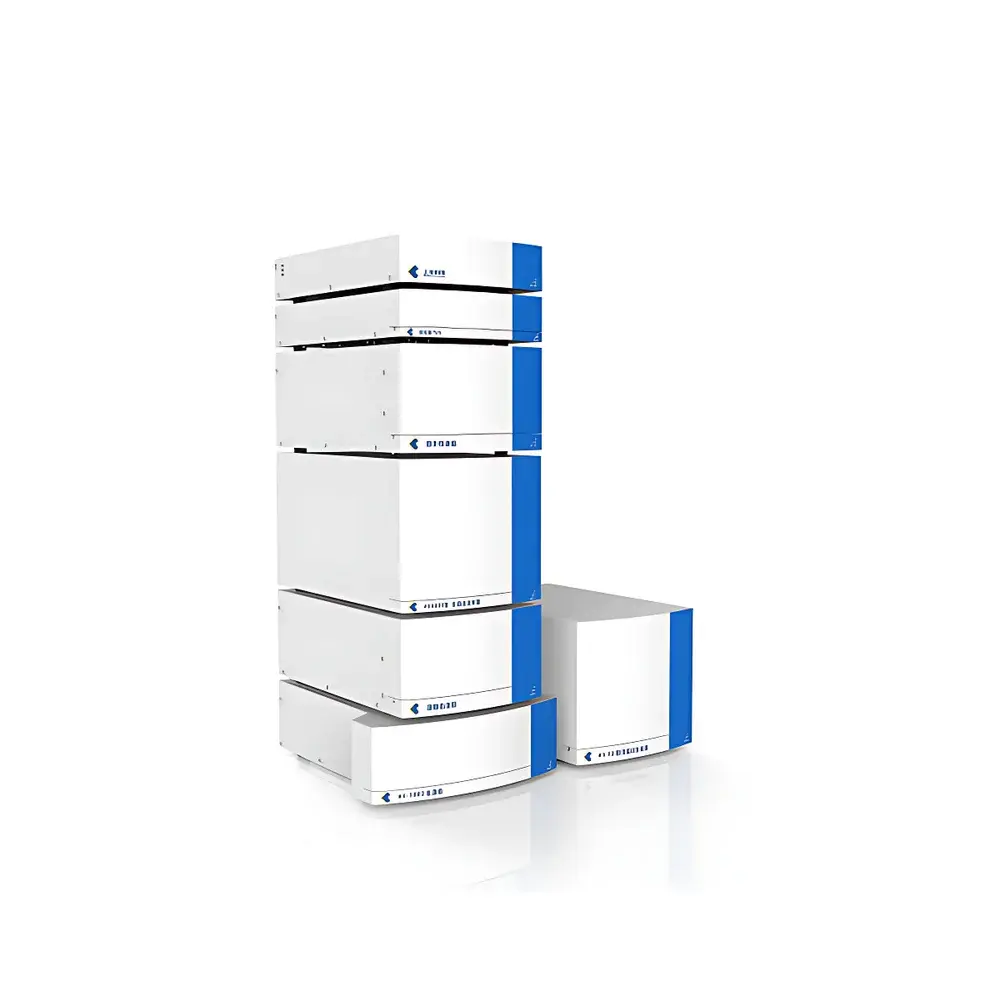
KEZHE SHANGHAI Anters-1500A Post-Column Derivatization Amino Acid Analyzer
| Brand | KEZHE SHANGHAI |
|---|---|
| Origin | Shanghai, China |
| Manufacturer Type | Direct Manufacturer |
| Instrument Type | Post-Column Derivatization System |
| Model | Anters-1500A |
| Pump Flow Rate | 0.01–9.99 mL/min |
| Maximum Pump Pressure | 40 MPa |
| Autosampler Injection Volume | 1–5000 µL |
| Autosampler Temperature Control Range | 5–70 °C |
| Post-Column Reactor Temperature Range | Ambient to 199 °C |
| Detection Wavelength | 570 nm (dual-wavelength detection at 440 nm & 570 nm) |
| Flow Cell Volume | 8 µL |
Overview
The KEZHE SHANGHAI Anters-1500A is a dedicated high-performance amino acid analyzer engineered for precise, reproducible quantification of primary and secondary amino acids in complex biological and pharmaceutical matrices. It operates on the well-established post-column derivatization (PCD) principle using ninhydrin chemistry — a method standardized in pharmacopoeial guidelines (e.g., USP , EP 2.2.46) and widely accepted for regulatory-compliant analysis of hydrolyzed proteins and physiological fluids. The system integrates a robust quaternary HPLC pump, temperature-controlled autosampler, thermostatically regulated post-column reaction coil, dual-wavelength photometric detection, and a modular chromatography workstation — all synchronized via Ethernet-based real-time control architecture. Designed for routine QC/QA laboratories and research facilities requiring GLP/GMP-aligned workflows, the Anters-1500A delivers trace-level sensitivity, inter-run precision (RSD < 0.3% for flow rate), and full analytical traceability without reliance on pre-column derivatization or mass spectrometry infrastructure.
Key Features
- Quaternary gradient HPLC pump with flow range 0.001–10 mL/min and pressure capability up to 40 MPa, ensuring stable elution under high-backpressure conditions typical of amino acid separation columns.
- Autosampler with 144-position 2-mL vial capacity (96- and 384-well plate compatibility available), programmable injection volume (0.1–100 µL standard; extended range up to 5000 µL), and integrated needle wash station to eliminate carryover.
- Post-column derivatization module featuring PID-controlled heating (ambient to 199 °C, ±0.1 °C stability) and inert gas-purged reagent reservoirs with individual shut-off valves to prevent oxidation and degradation of ninhydrin and buffer solutions.
- Dual-wavelength UV-Vis detector operating simultaneously at 440 nm (for imino acids and proline) and 570 nm (for primary α-amino acids), equipped with an 8-µL low-dead-volume flow cell and built-in lamp life monitoring with predictive replacement alerts.
- Self-calibrating monochromator with wavelength accuracy ≤ ±0.2 nm, verified automatically prior to each sequence to ensure long-term photometric consistency.
- Modular software platform supporting full instrument control, gradient programming (step, linear, and point-to-point profiles), real-time overlay of chromatograms, system status, and gradient profile — all within a single synchronized view.
Sample Compatibility & Compliance
The Anters-1500A accommodates diverse sample types including acid-hydrolyzed protein digests (analysis time: 30–50 min), physiological fluids (plasma, serum, urine; analysis time: 90–180 min), and food extracts. Its column chemistry and derivatization protocol comply with ISO 13903:2005 (animal feed analysis), AOAC Official Method 994.12 (protein hydrolysates), and Chinese Pharmacopoeia ChP 2020 Vol. IV Section 0401. All fluidic pathways are constructed from chemically inert materials (e.g., PEEK, stainless steel with passivation), minimizing metal-catalyzed side reactions. The system supports audit trail functionality per FDA 21 CFR Part 11 requirements when configured with user role management, electronic signatures, and immutable data archiving — making it suitable for regulated environments in pharmaceutical development and clinical diagnostics.
Software & Data Management
The Anters-1500A is operated via a Windows 7/10-native modular workstation software suite. It provides comprehensive chromatographic data acquisition, peak integration (with baseline correction, valley-to-valley splitting, and retention time alignment), calibration curve generation (linear, quadratic, or weighted), and report export in PDF, CSV, and XML formats. Built-in tools include sequence scheduling, method validation templates (precision, linearity, LOD/LOQ), and electronic lab notebook (ELN)-compatible metadata tagging. Audit trail records all user actions — including method edits, parameter changes, and result approvals — with timestamps and operator IDs. Data integrity is further ensured through automatic backup, encrypted storage, and optional networked deployment with centralized database management.
Applications
- Quantitative profiling of 20+ standard amino acids and derivatives (e.g., taurine, γ-aminobutyric acid) in biopharmaceutical formulations and biosimilars.
- Stability-indicating assays for protein therapeutics undergoing forced degradation studies (acid/base/thermal stress).
- Quality control of infant formula, dietary supplements, and fermented food products per national nutritional labeling standards.
- Metabolomic screening of plasma/urine samples in preclinical toxicology and biomarker discovery workflows.
- Validation of enzymatic hydrolysis efficiency in peptide synthesis and recombinant protein purification processes.
FAQ
What derivatization chemistry does the Anters-1500A employ?
It uses ninhydrin-based post-column derivatization, optimized for thermal reaction kinetics and compatible with both acidic and neutral mobile phases.
Is the system compliant with FDA 21 CFR Part 11?
Yes — when deployed with enabled user authentication, electronic signatures, and audit-trail logging, it meets core requirements for electronic records and signatures in regulated labs.
Can the system analyze proline and hydroxyproline separately?
Yes — dual-wavelength detection at 440 nm enables selective quantification of secondary amines, while 570 nm captures primary amines, allowing resolution and integration of overlapping peaks with appropriate column selection.
What is the minimum detectable concentration for glycine under standard conditions?
Typical limit of detection (S/N = 3) is ≤ 0.5 pmol on-column using a 100-µL injection and standard amino acid column, assuming optimal derivatization yield and detector settings.
Does the system support method transfer from legacy amino acid analyzers?
Yes — gradient profiles, column dimensions, and temperature parameters can be imported or manually replicated; method conversion kits and application notes are provided for common platforms (e.g., Biochrom 30+, Hitachi L-8900).
Related Products




