
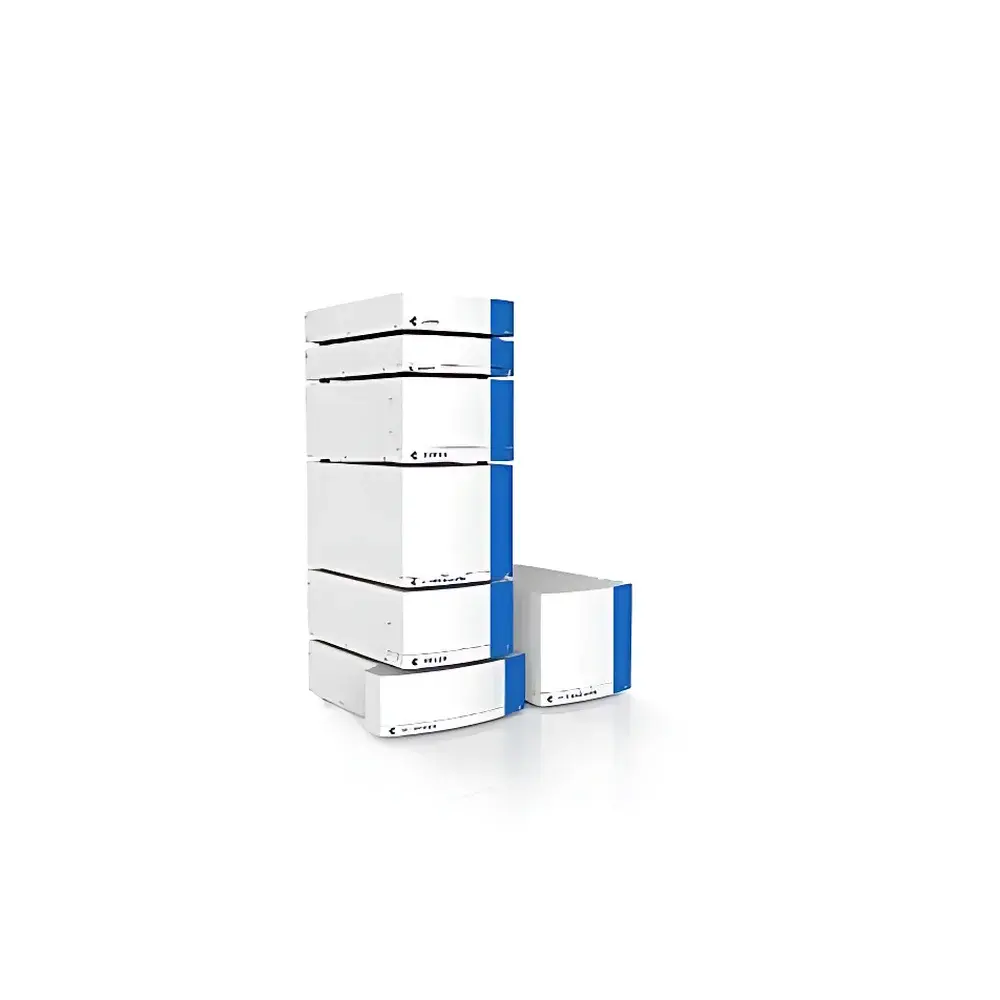
KEZHE Anters-1500G Gel Permeation Chromatography System
| Brand | KEZHE SHANGHAI |
|---|---|
| Origin | Shanghai, China |
| Manufacturer Type | Original Equipment Manufacturer (OEM) |
| Model | Anters-1500G |
| Instrument Type | Ambient-Temperature GPC System |
| Pump Flow Range | 0.001–10 mL/min |
| Pump Pressure Range | 0–40 MPa |
| Refractive Index Detector Drift | <1×10⁻⁷ RIU/h |
| RI Detector Cell Volume | 9 µL |
| UV Detector Wavelength Range | 100–200 nm |
| UV Detector Noise | <0.25×10⁻⁵ AU |
| Column Oven Temperature Range | 4 °C to 40 °C above ambient |
Overview
The KEZHE Anters-1500G Gel Permeation Chromatography (GPC) System is a high-precision, ambient-temperature liquid chromatographic platform engineered for the molecular weight distribution (MWD) analysis of synthetic polymers, natural macromolecules, and non-UV-absorbing compounds—including polysaccharides, glycosaminoglycans, saponins, and other native plant-derived therapeutics. Unlike conventional HPLC systems relying on UV detection, the Anters-1500G integrates a high-stability differential refractometer (RI) as its primary detector, enabling universal, concentration-sensitive quantification independent of chromophore presence. Its design follows the fundamental principles of size-exclusion chromatography (SEC), where analytes are separated based on hydrodynamic volume in solution as they elute through porous gel-packed columns under laminar flow conditions. The system complies with ISO 16014 (Plastics — Determination of Molecular Weight Distributions by Size-Exclusion Chromatography) and supports calibration using certified polystyrene or pullulan standards traceable to NIST SRMs.
Key Features
- High-accuracy binary HPLC pump with flow precision <0.3% RSD and accuracy <±0.06%, delivering stable gradient and isocratic elution across 0.001–10 mL/min at pressures up to 40 MPa;
- Automated sample introduction via 144-position 2-mL vial tray (optional 96-well plate support), featuring needle wash-in-loop, vial presence sensing, and carryover <0.1%;
- Modular column oven with programmable temperature control from 4 °C to 40 °C (±0.15 °C stability, 0.1 °C resolution), accommodating up to three 30-cm analytical columns (six-column configuration optional);
- Dual-detector capability: factory-integrated RI detector (cell volume: 9 µL; baseline drift <1×10⁻⁷ RIU/h; linear range ±600×10⁻⁶ RIU) plus optional UV/VIS module (100–200 nm range, noise <0.25×10⁻⁵ AU);
- Vacuum degassing module integrated upstream of the pump to minimize bubble formation and baseline instability;
- Fully synchronized control architecture—pump, autosampler, column oven, detectors, and data acquisition operate under unified timing and event-driven logic;
- Rugged mechanical design with stainless-steel fluidic paths and chemically resistant wetted materials suitable for THF, chloroform, DMF, and aqueous SEC mobile phases.
Sample Compatibility & Compliance
The Anters-1500G is optimized for both organic-phase (e.g., THF, o-dichlorobenzene) and aqueous-phase GPC applications. It accommodates standard commercial SEC columns—including cross-linked polystyrene-divinylbenzene (PS-DVB), silica-based hydrophilic interaction media, and specialty columns for polysaccharide or protein analysis. Column compatibility extends to 8.0 mm ID × 300 mm formats with pore sizes covering 100–1,000,000 Da ranges. All operational parameters—including injection volume (0.1–100 µL), flow rate, temperature ramping, and detector signal integration—are fully configurable to meet ASTM D5296, USP <621>, and EP 2.2.47 requirements. Audit trail functionality, user-level access control, electronic signatures, and raw data immutability ensure compliance with FDA 21 CFR Part 11 and GLP/GMP laboratory practices.
Software & Data Management
The system is operated via KEZHE’s modular GPC Analysis Workstation software—a Windows-based application built on .NET Framework with SQL Server backend for structured data storage. The interface supports real-time overlay of chromatograms, instrument status telemetry, and automated peak integration using tangent skim, valley-to-valley, or Gaussian deconvolution algorithms. Quantitative analysis includes absolute and relative molecular weight calculations (Mn, Mw, PDI), calibration curve fitting (linear, cubic spline, or polynomial), and batch report generation compliant with ISO/IEC 17025 documentation standards. Software modules include full audit trail logging (user actions, parameter changes, data exports), role-based permissions (Administrator, Analyst, Viewer), and secure export to CSV, PDF, and CDF formats. Third-party instrument interoperability is supported via ASCII-based ASCII/CSV export protocols and optional API integration for LIMS synchronization.
Applications
- Molecular weight characterization of herbal polysaccharides (e.g., astragalus polysaccharide, ganoderma lucidum polysaccharide) in TCM quality control;
- Batch consistency assessment of heparin, hyaluronic acid, and chondroitin sulfate for pharmaceutical manufacturing;
- Stability monitoring of polymer-drug conjugates during accelerated degradation studies;
- Quality-by-Design (QbD) development of biodegradable polyesters (PLA, PCL) and hydrogels;
- Residual solvent and oligomer profiling in synthetic polymer synthesis;
- Method validation per ICH Q2(R2) guidelines for regulatory submissions in APAC and EMA jurisdictions.
FAQ
Is the Anters-1500G compatible with high-temperature GPC applications?
No—the system is configured for ambient-temperature operation only, with column oven range limited to 4 °C–40 °C above ambient. High-temperature SEC (e.g., 150 °C for polyolefins) requires dedicated HT-GPC hardware not included in this model.
Can the RI detector be used with aggressive solvents such as chloroform or o-dichlorobenzene?
Yes—the optical cell and flow path materials are chemically inert to common organic SEC solvents. Users must ensure proper solvent compatibility with column packing and employ appropriate safety measures for volatile or toxic mobile phases.
Does the software support multi-detector data fusion (e.g., RI + UV + light scattering)?
The base configuration supports synchronized acquisition from RI and optional UV detectors. Multi-angle light scattering (MALS) or viscometry integration requires external hardware and custom API linkage; KEZHE provides technical documentation and SDK for third-party detector synchronization.
What calibration standards are supplied with the system?
One set of certified polystyrene narrow-distribution standards (100–1,000,000 Da) is included. Pullulan or dextran standards for aqueous SEC may be ordered separately.
Is remote monitoring and control supported?
Yes—via secure RDP or VNC over local network; cloud-based telemetry is not enabled by default but can be implemented through customer-specific IT infrastructure and firewall configuration.
Related Products




