
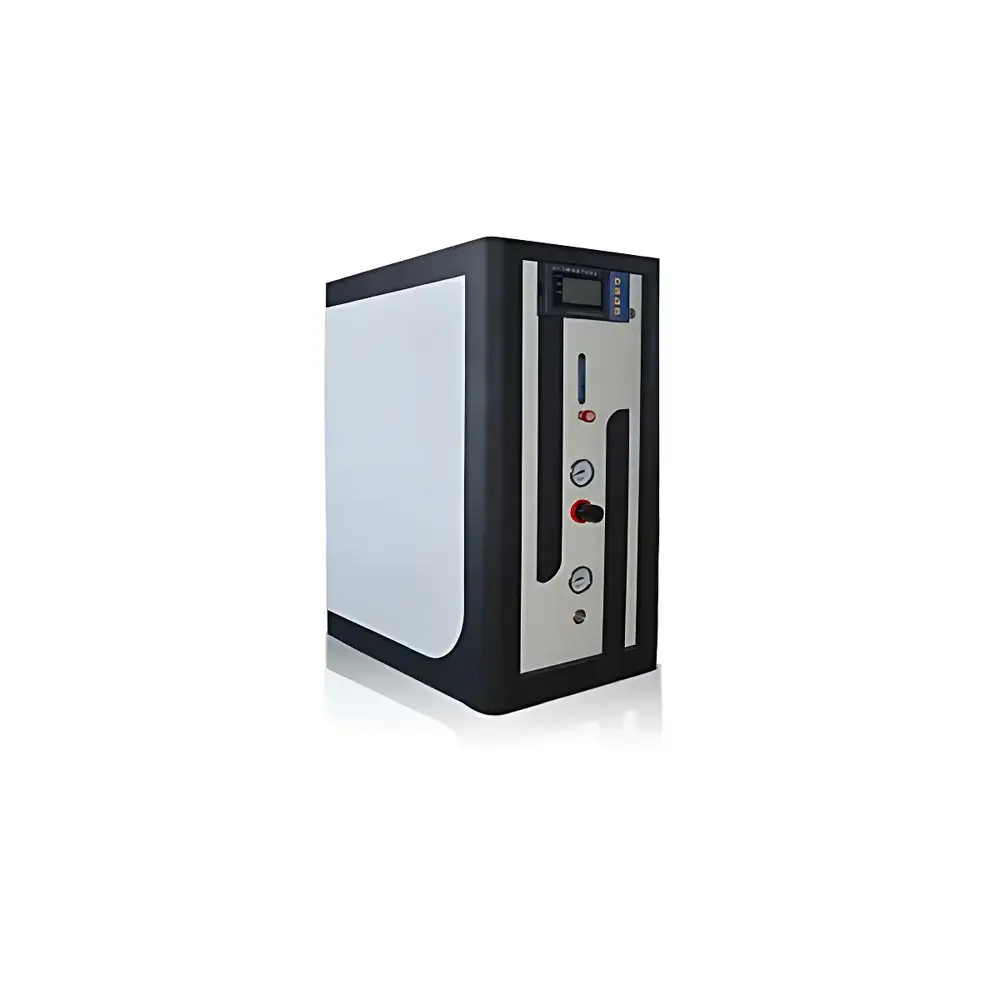
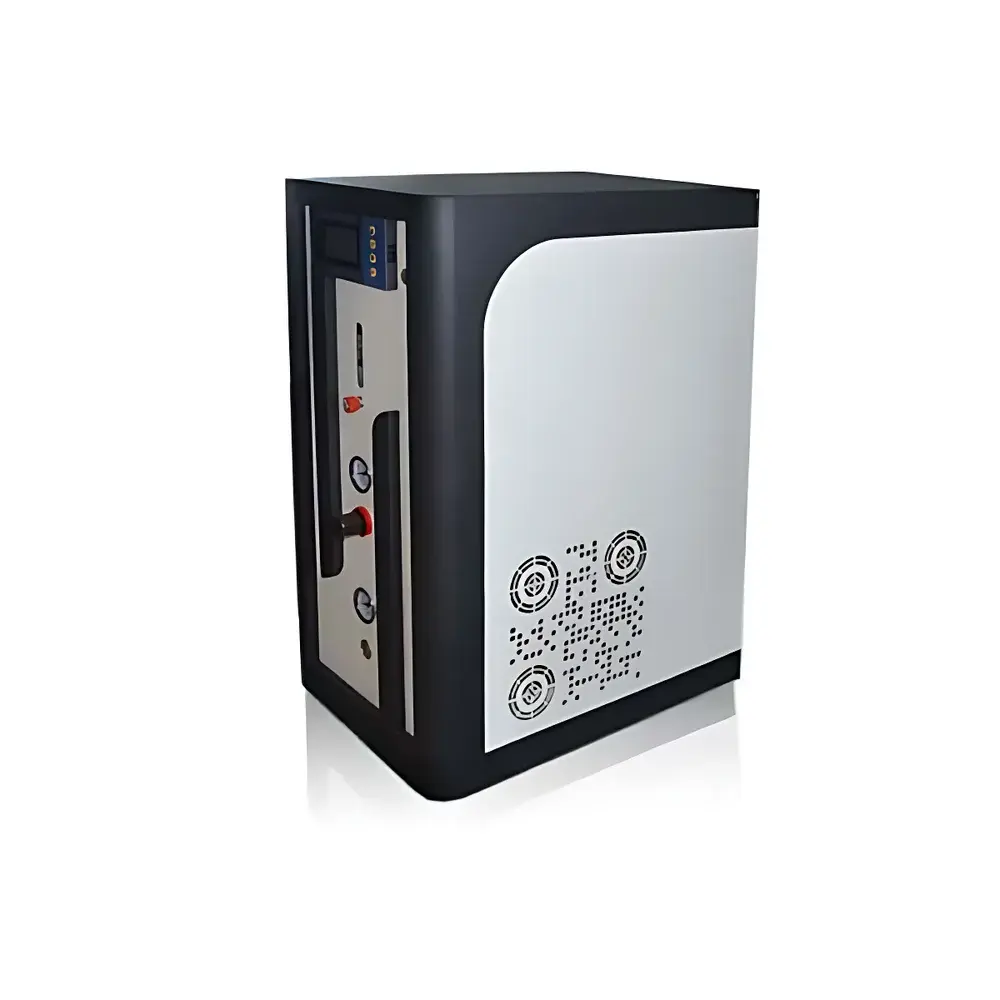
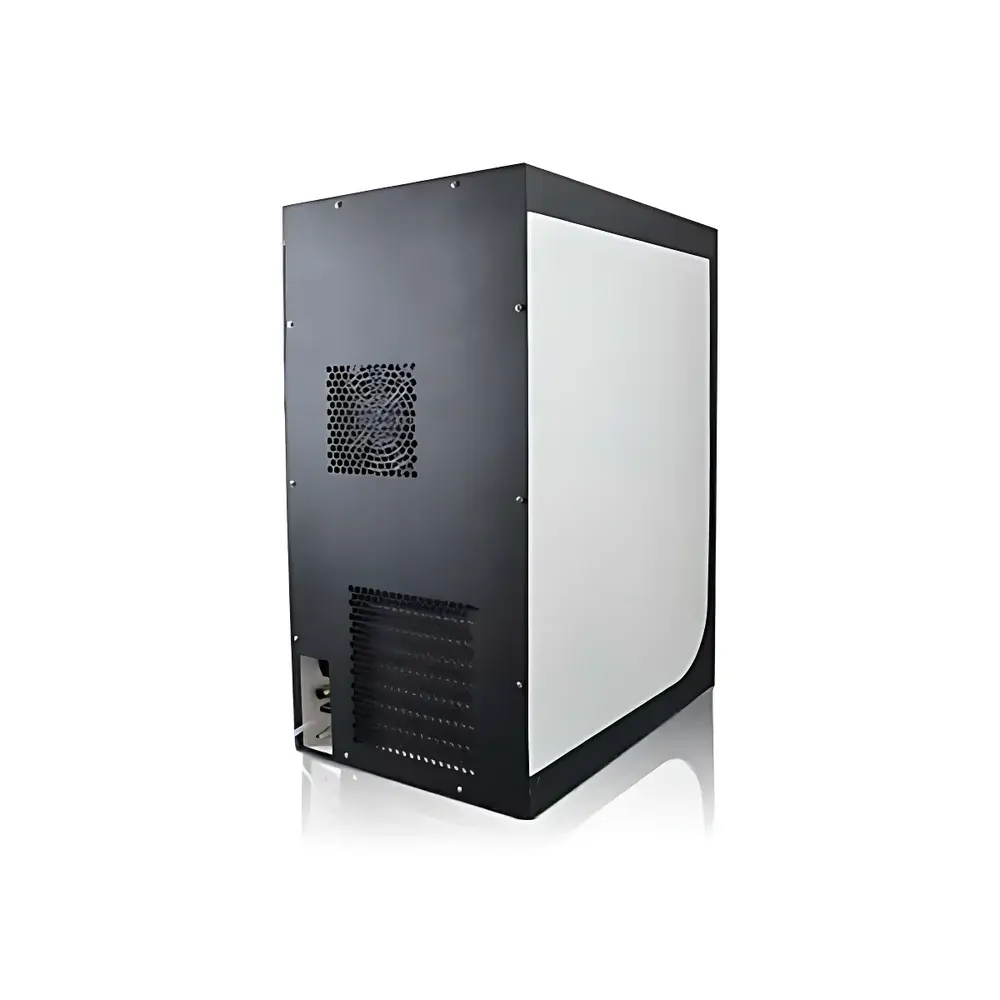
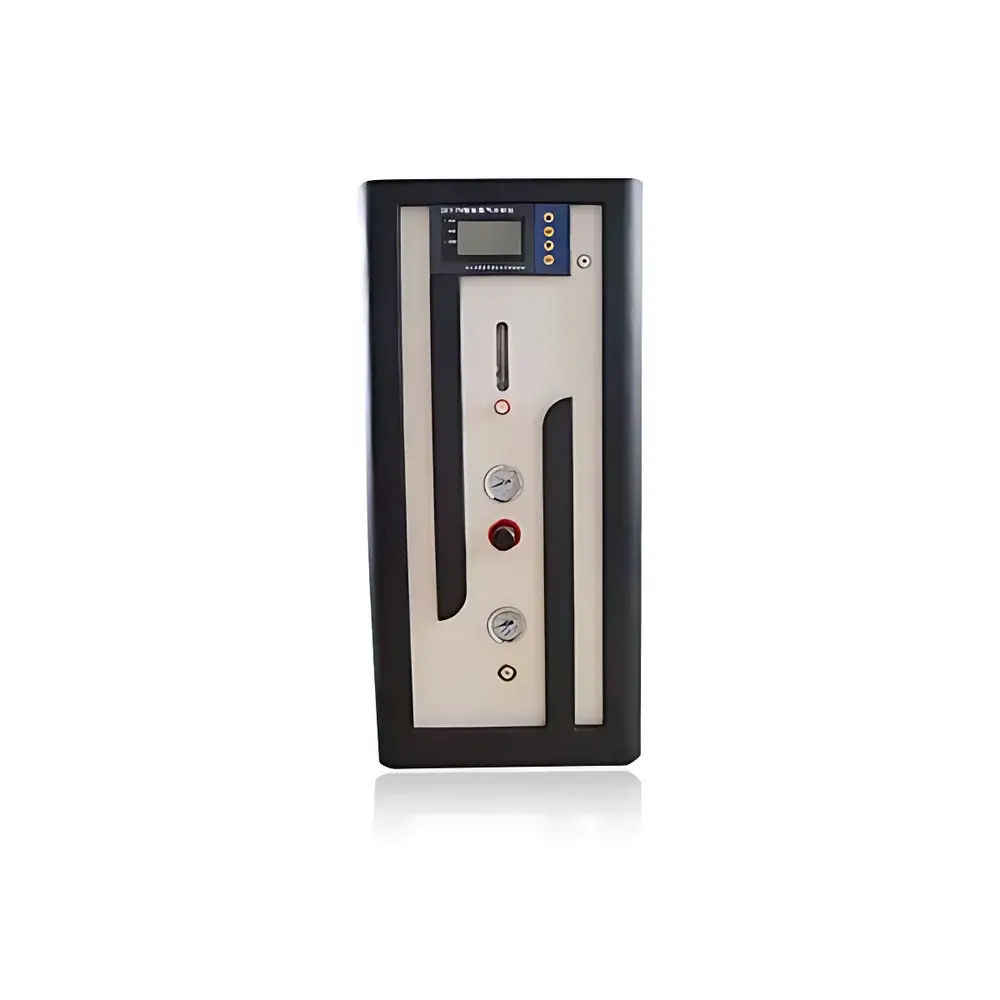
AYAN AYAN-H1000ml High-Purity Hydrogen Generator for Laboratory GC Applications
| [Brand | ANYAN (Hangzhou Anyan Instrument Co., Ltd.) |
|---|---|
| Origin | Zhejiang, China |
| Model | AYAN-H1000ml |
| Hydrogen Generation Principle | Pure Water Electrolysis (KOH-free PEM-compatible design) |
| Output Flow Rate | 0–1000 mL/min |
| Output Pressure | 0–0.4 MPa (adjustable, factory-set at 0.3 MPa) |
| Hydrogen Purity | ≥99.999% |
| Power Consumption | ≤180 W |
| Input Voltage | 220 V ±10%, 50 Hz ±5% |
| Operating Temperature | 0–50 °C |
| Relative Humidity | ≤85% RH |
| Dimensions (W×D×H) | 310 × 190 × 360 mm |
| Weight | 12 kg |
| Gas Outlet | 1/8″ NPT or Φ3 mm stainless steel tubing |
| Water Refill | Automatic + manual backup |
| Safety Protections | Low-water-level alarm, overpressure shutdown, hydrogen leak detection, dual-stage overcurrent protection |
| Compliance | Designed to meet ISO 8573-1 Class 1 compressed gas purity requirements for GC carrier gas] |
Overview
The AYAN AYAN-H1000ml High-Purity Hydrogen Generator is an engineered solution for laboratories requiring a continuous, on-demand supply of ultra-high-purity hydrogen (≥99.999%) as carrier gas for gas chromatography (GC), fuel gas for flame-based detectors (FID, FPD, NPD), and reducing atmospheres in analytical and preparative applications. Unlike traditional high-pressure cylinders, this generator employs zero-gap pure water electrolysis—operating without liquid KOH electrolyte—to produce hydrogen via proton exchange membrane (PEM)-compatible electrochemical dissociation of deionized water. Oxygen byproduct is safely vented to atmosphere. The system integrates thermal management to stabilize electrolytic cell temperature, ensuring consistent gas output and extended service life. Its modular architecture supports future scalability, while intelligent pressure-based flow control dynamically matches hydrogen delivery to real-time instrument demand—eliminating gas waste, minimizing storage risks, and enabling true “gas-on-demand” operation.
Key Features
- Ultra-high-purity hydrogen output (≥99.999%) compliant with ASTM D7622 and ISO 8573-1 Class 1 specifications for GC carrier gas
- Stable, pulse-free flow delivery from 0 to 1000 mL/min, automatically tracked and regulated via closed-loop pressure feedback
- Dual-stage safety architecture: primary overpressure cutoff (0.4 MPa max) and secondary electronic overcurrent protection
- Anti-backflow design with integrated check valve and hydrophobic membrane barrier—prevents condensate or moisture ingress into GC inlet lines
- Corrosion-resistant gas path constructed entirely from electropolished 316 stainless steel tubing, ultrasonically cleaned pre-assembly
- Intelligent diagnostics including low-water-level alarm, automatic shutdown on dry-run, and real-time hydrogen leakage monitoring
- Low power consumption (≤180 W), compact footprint (310 × 190 × 360 mm), and lightweight chassis (12 kg) suitable for benchtop or mobile lab deployment
Sample Compatibility & Compliance
The AYAN-H1000ml is compatible with all major GC platforms—including Agilent, Thermo Fisher, Shimadzu, PerkinElmer, and Waters—supporting both split/splitless injectors and detector-specific flow requirements (e.g., 30–40 mL/min for FID, 1–5 mL/min for TCD). It meets functional equivalence to USP , EP 2.5.27, and JP 17 standards for high-purity process gases used in pharmaceutical QC labs. While not certified to FDA 21 CFR Part 11 out-of-the-box, its embedded event log records timestamped operational parameters (pressure, flow, temperature, fault codes), supporting GLP/GMP audit readiness when integrated with validated LIMS or chromatography data systems (CDS). No external calibration gases or consumables are required beyond periodic DI water replenishment.
Software & Data Management
This is a standalone hardware platform with no proprietary software dependency. All operational status indicators—including output pressure, real-time flow rate, electrolyzer temperature, water level, and fault alerts—are displayed on the front-panel LED interface. Event logs are stored internally (non-volatile memory) and accessible via USB diagnostic port for export in CSV format. For integration into automated lab environments, optional RS-232 or analog 4–20 mA output interfaces enable remote monitoring and interlock signaling with GC oven or detector modules—facilitating compliance with laboratory-wide safety protocols and centralized gas management systems.
Applications
- Carrier gas for capillary GC analysis across petrochemical, environmental, food safety, and forensic testing workflows
- Fuel gas for flame ionization (FID), flame photometric (FPD), and nitrogen-phosphorus (NPD) detectors
- Reductive purge gas in headspace sampling, thermal desorption units, and catalytic reaction monitoring
- On-site hydrogen supply for portable GC-MS field deployments in emergency response or environmental screening
- Replacement for high-pressure H₂ cylinders in regulated facilities seeking reduced storage liability and improved workflow continuity
FAQ
What is the recommended water quality for optimal performance?
Deionized water with resistivity ≥18.2 MΩ·cm and total organic carbon (TOC) <5 ppb is required. Tap or distilled water must not be used.
Can this generator supply multiple GC instruments simultaneously?
Yes—when paired with a calibrated manifold and pressure-regulated distribution panel, it can serve up to two standard GC systems operating within combined flow limits (≤1000 mL/min total).
Does the unit require periodic catalyst replacement or membrane servicing?
No. The solid-electrolyte architecture contains no consumable catalysts or replaceable membranes under normal operating conditions; only routine DI water replenishment is needed.
How does the system handle transient pressure spikes during GC oven ramping?
Integrated buffer volume and fast-response pressure regulation maintain ±0.02 MPa stability across dynamic load changes, preventing flow surges that could compromise retention time reproducibility.
Is the oxygen byproduct hazardous in a standard lab environment?
Oxygen is vented through a dedicated exhaust line to fume hood or exterior ducting; accumulation in enclosed spaces must be avoided per OSHA 1910.104(b)(2) guidelines for oxygen-enriched atmospheres.



