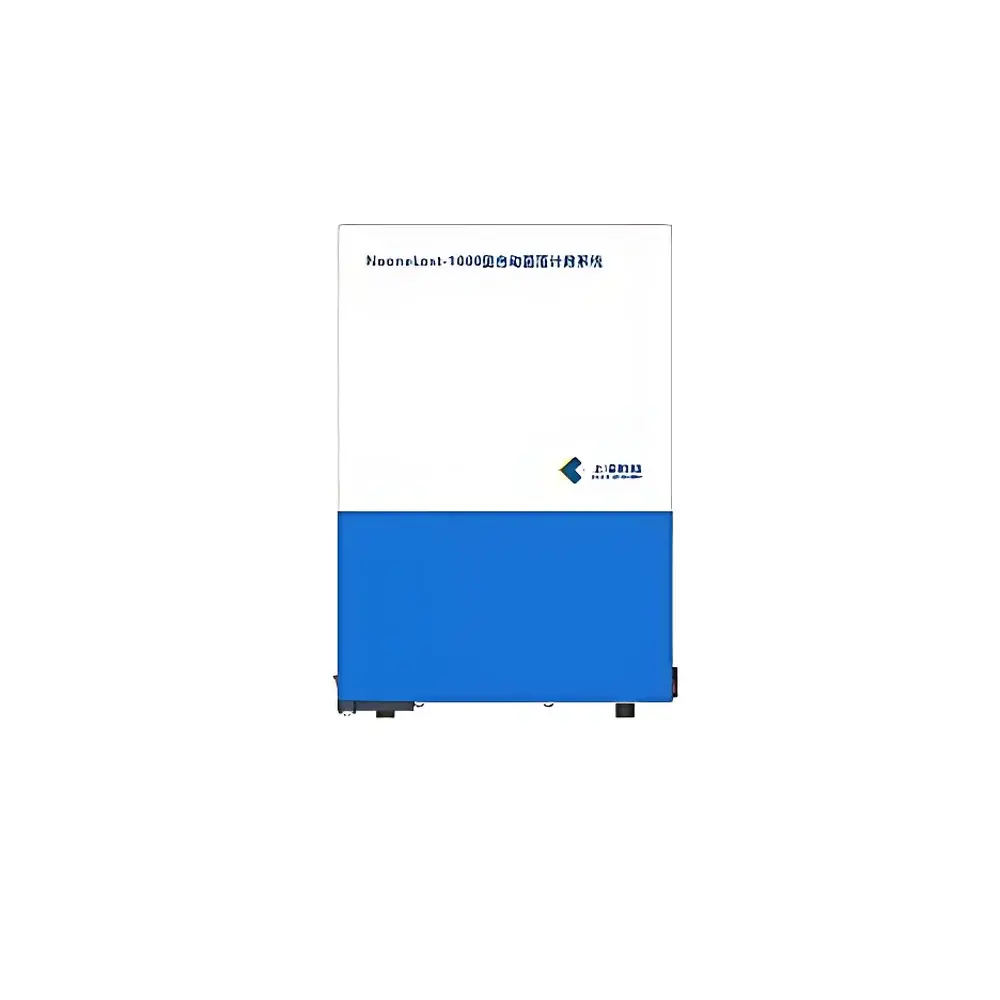
KEZHE NooneLost-1000 Automated Colony Counter
| Brand | KEZHE SHANGHAI |
|---|---|
| Origin | Shanghai, China |
| Manufacturer Type | Direct Manufacturer |
| Instrument Type | Semi-Automated Colony Counter |
| Counting Speed | >50 Petri Dishes per Hour |
| Imaging Sensor | 12 MP |
| Illumination | Transmitted White Light |
| Compatible Dish Diameters | 60, 75, 90, 100, 120 mm |
| Software Features | Background Optimization, Manual Correction Mode, Adjustable Brightness/Contrast/Sensitivity, Auto-Edge Cropping, Individual Colony Tagging, Excel Export, Zone Diameter Measurement (for Kirby-Bauer & Cylinder Plate Assays) |
Overview
The KEZHE NooneLost-1000 Automated Colony Counter is a semi-automated digital imaging system engineered for high-throughput, reproducible microbial colony enumeration and inhibition zone analysis in regulated and non-regulated laboratory environments. It operates on the principle of high-resolution transmitted-light image acquisition followed by algorithm-driven morphological segmentation and threshold-based object detection—optimized specifically for standard microbiological agar plates. Unlike fully manual or basic optical counters, the NooneLost-1000 integrates hardware-level illumination uniformity control with adaptive software processing to minimize variability arising from plate opacity, condensation, agar thickness, or colony morphology heterogeneity (e.g., mucoid, filamentous, or confluent growth). Designed for compliance-critical workflows in food safety, pharmaceutical quality control (QC), clinical microbiology, and environmental monitoring labs, the system supports both routine colony counting and quantitative antibiotic susceptibility testing via cylinder plate (cup plate) and disk diffusion (Kirby-Bauer) methodologies.
Key Features
- 12-megapixel CMOS imaging sensor with calibrated white-light transmission illumination ensures consistent contrast across diverse agar formulations—including blood agar, MacConkey, Sabouraud, and chromogenic media.
- Automated edge detection and dish-diameter recognition (60–120 mm) eliminate manual cropping; background optimization algorithms suppress debris, scratches, and agar imperfections without compromising low-contrast colony detection.
- Real-time adjustable parameters—including brightness, contrast, sensitivity, and binary threshold—enable method-specific tuning per SOP or regulatory requirement (e.g., ISO 4833-1:2013, USP , FDA Bacteriological Analytical Manual).
- Dual-mode operation: fully automated batch counting + interactive manual correction mode with one-click addition/deletion of colonies and re-tagging of ambiguous objects.
- Integrated inhibition zone measurement module calculates zone diameters with sub-millimeter precision and computes antibiotic potency (units/mL or µg/disk) using built-in standard curves per EP/USP guidelines.
- Direct export of raw count data, annotated images, and statistical summaries (mean, SD, CV%) to Microsoft Excel (.xlsx) with timestamped audit trail metadata.
Sample Compatibility & Compliance
The NooneLost-1000 accommodates standard circular Petri dishes (60–120 mm diameter), including polystyrene, polypropylene, and glass variants. It supports common plating techniques—pour plate, spread plate, membrane filtration, and spiral plating—with robust recognition of isolated colonies, microcolonies (>0.1 mm), and clustered formations requiring deconvolution. The system meets foundational requirements for GLP-compliant documentation: all image acquisitions are time-stamped, user-logged, and stored with unalterable EXIF metadata. While not pre-certified for 21 CFR Part 11, its software architecture supports integration with validated LIMS environments and enables configurable electronic signatures, audit trails, and version-controlled method files—facilitating internal validation per ISO/IEC 17025 or pharmaceutical QA protocols.
Software & Data Management
The bundled KEZHE Colony Analysis Suite (v4.x) runs on Windows OS and features a modular interface with dedicated modules for colony counting, zone measurement, and report generation. All image processing steps are logged in a non-erasable activity journal, recording operator ID, timestamp, parameter settings, and modification history. Raw TIFF images and processed PNG overlays are stored separately to preserve integrity. Batch processing allows queue-based analysis of up to 99 plates per session, with auto-resume after interruption. Data output includes summary tables, distribution histograms, and customizable PDF reports compliant with internal QC templates or external accreditation submissions (e.g., CNAS, UKAS, A2LA).
Applications
- Quantitative aerobic plate counts (APC) in food, dairy, and beverage manufacturing per ISO 4833-1 and AOAC Official Methods.
- Microbial limit testing (MLT) and bioburden assessment in pharmaceutical raw materials and finished products per USP and Ph. Eur. 2.6.12.
- Clinical specimen screening—including urine, wound swabs, and respiratory samples—in hospital microbiology labs adhering to CLSI M02-A12 and M100-S33 standards.
- Antibiotic potency verification during stability studies and release testing using cylinder plate assays per EP 2.8.12 and USP .
- Environmental monitoring in cleanrooms (ISO 14644-1) and water systems (ISO 9308-1), supporting trend analysis over time-series datasets.
FAQ
Is the NooneLost-1000 compliant with FDA 21 CFR Part 11?
The base software does not include out-of-the-box electronic signature or audit trail configuration required for full Part 11 compliance; however, it provides the foundational data integrity features (user login, immutable logs, timestamped exports) necessary for lab-specific validation under a qualified QMS.
Can it process spiral plates or membrane filters?
Yes—the system recognizes non-uniform colony distributions and applies dynamic regional thresholding to maintain accuracy across spiral dilution patterns and filter-based colony isolation.
What file formats does it support for image import/export?
Native acquisition is TIFF; processed results export as PNG (annotated), XLSX (tabular), and PDF (report). Third-party image stacks (e.g., multi-focus Z-stacks) are not supported.
Does it require annual calibration or certification?
No hardware calibration is mandated; however, users should perform periodic verification using NIST-traceable calibration plates or standardized test slides to confirm counting accuracy and zone measurement repeatability per internal SOPs.
Is remote software update available?
Firmware and software updates are delivered via secure USB media or authenticated HTTP download; no cloud-based auto-update functionality is implemented to preserve air-gapped lab network security policies.
Related Products