
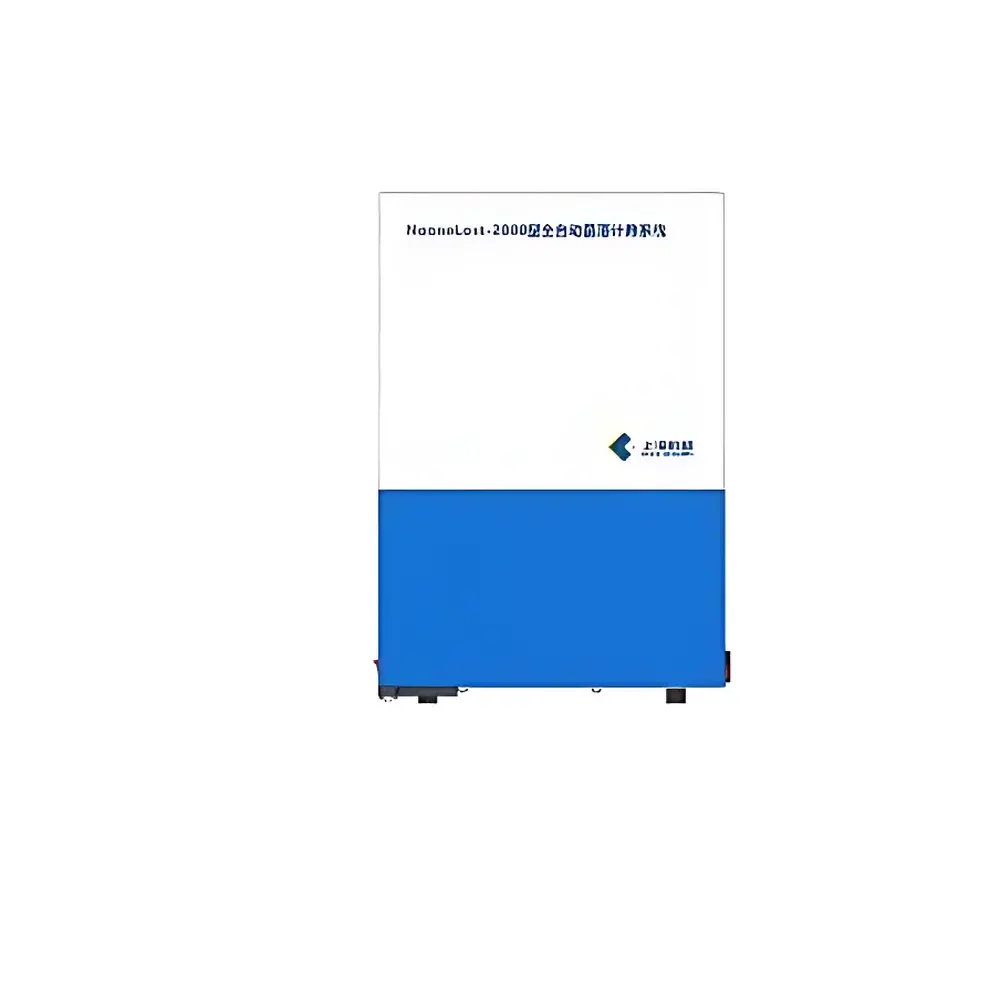
NooneLost-2000 Automated Colony Counter System
| Brand | KEZHE SHANGHAI |
|---|---|
| Origin | Shanghai, China |
| Manufacturer Type | Original Equipment Manufacturer (OEM) |
| Product Category | Domestic |
| Model | NooneLost-2000 |
| Instrument Type | Fully Automated Colony Counter |
| Counting Speed | >400 Petri Dishes per Hour |
Overview
The NooneLost-2000 Automated Colony Counter System is a high-precision, vision-based microbiological enumeration platform engineered for laboratories requiring regulatory-compliant, reproducible, and traceable colony-forming unit (CFU) quantification. It operates on the principle of high-resolution digital image acquisition combined with adaptive threshold segmentation, morphological filtering, and machine learning–enhanced object classification—enabling robust discrimination between true microbial colonies and optical artifacts (e.g., agar imperfections, condensation droplets, or particulate debris). Designed to meet the analytical rigor demanded by ISO 4833-1:2013 (microbiology of food and animal feeding stuffs), ISO 7218:2017 (general requirements and guidance for microbiological examinations), and USP / , the system eliminates subjectivity inherent in manual counting while maintaining full auditability of each analysis step. Its fully enclosed, uniform white-light illumination chamber ensures consistent photon flux across the entire field of view—critical for minimizing inter-run variability in low-contrast or translucent colony detection.
Key Features
- 20-megapixel high-dynamic-range (HDR) CMOS sensor with 12-bit depth, optimized for low-noise capture of subtle colony morphology and edge contrast
- Sealed dark-field optical enclosure eliminating ambient light interference and enabling stable exposure control under variable lab lighting conditions
- Auto-cropping and edge masking algorithms that dynamically exclude Petri dish rims and peripheral glare, enhancing central-field segmentation accuracy
- Real-time adjustable parameters—including brightness, contrast, sensitivity, and exposure time—to accommodate diverse media types (e.g., chromogenic, selective, or opaque agar formulations)
- Manual correction mode with intuitive click-to-add/click-to-remove functionality for operator-verified colony validation and outlier resolution
- Integrated colony labeling overlay: each counted colony is uniquely tagged with positional coordinates and size metrics in the output image
- Automatic impurity suppression via multi-scale noise filtering and minimum-area exclusion thresholds (configurable down to 0.05 mm²)
- Compliance-ready metadata embedding: timestamps, user ID, instrument ID, calibration status, and analysis parameters are embedded in every exported image and report
Sample Compatibility & Compliance
The NooneLost-2000 supports standard Petri dishes ranging from 60 mm to 120 mm in diameter, including polystyrene, polypropylene, and glass-bottom variants. It accommodates all common solid culture media—TSA, PCA, VRBA, MRS, Sabouraud Dextrose Agar, and chromogenic formulations—without requiring media-specific calibration. The system’s optical and algorithmic design compensates for inherent plate-level variables such as agar thickness, surface curvature, and background heterogeneity. From a regulatory standpoint, it supports GLP/GMP-aligned workflows through built-in audit trail logging (user actions, parameter changes, and result modifications), electronic signature capability (via Windows-native authentication), and optional 21 CFR Part 11–compliant software modules. It is routinely validated in food safety labs (per FDA Bacteriological Analytical Manual protocols), pharmaceutical QC environments (aligned with ICH Q5C and EU Annex 1), and clinical microbiology departments adhering to CLSI M02-A12 standards.
Software & Data Management
The proprietary KEZHE Colony Analysis Suite runs natively on Windows 7/8/10/11 (64-bit) and is compatible with Intel Xeon–class workstations equipped with discrete GPUs for accelerated image processing. Core capabilities include batch processing of up to 96 plates per session, customizable reporting templates (PDF, CSV, Excel), and direct export of annotated TIFF/PNG images with embedded EXIF metadata. Optional barcode scanner integration enables automated sample ID association, LIMS synchronization via HL7 or ASTM E1384-compliant interfaces, and traceability back to original inoculation records. All raw images and processed datasets are stored with SHA-256 checksums to ensure data integrity; version-controlled analysis logs allow full reconstruction of any historical count—including intermediate segmentation masks and threshold decisions.
Applications
The NooneLost-2000 serves as a primary enumeration tool across regulated and research-intensive domains: routine CFU enumeration in food and beverage quality control (including ready-to-eat products and dairy); water and wastewater microbiological testing per ISO 9308-1; sterility testing and environmental monitoring in cleanrooms per ISO 14644; antimicrobial efficacy assessment (ISO 20743, ASTM E2149); probiotic viability quantification in functional foods; and bioburden analysis in medical device manufacturing (ISO 11737-1). Its speed (>400 plates/hour) and precision make it especially suited for high-throughput reference laboratories, contract testing organizations (CTOs), and academic core facilities performing large-scale microbial ecology or antibiotic resistance surveillance studies.
FAQ
Does the system support dual-color or multi-channel colony differentiation (e.g., red vs. blue colonies on chromogenic media)?
Yes—the software includes configurable color-space segmentation (RGB, HSV, LAB) and allows independent thresholding per channel, enabling reliable discrimination of co-cultured strains or substrate-utilizing phenotypes.
Can analysis parameters be locked or password-protected to prevent unauthorized modification?
Yes—administrator-mode configuration locks critical settings (e.g., minimum colony area, circularity filters, and background subtraction algorithms), with change history logged and attributable to authenticated users.
Is remote monitoring or cloud-based data backup supported?
While the base system operates offline for security-critical environments, optional secure FTP/SFTP and SMB network share integration enable encrypted offsite archiving and centralized data aggregation across multi-site deployments.
What validation documentation is provided for GxP compliance?
KEZHE supplies a comprehensive IQ/OQ protocol package, including camera linearity verification, illumination uniformity mapping, repeatability/reproducibility (R&R) test reports per ISO 5725, and software validation summary aligned with GAMP 5 principles.
Are custom training modules or SOP development services available?
Yes—KEZHE offers on-site or virtual technical training, assay-specific workflow optimization, and co-development of laboratory-specific standard operating procedures (SOPs) compliant with ISO/IEC 17025 requirements.




