
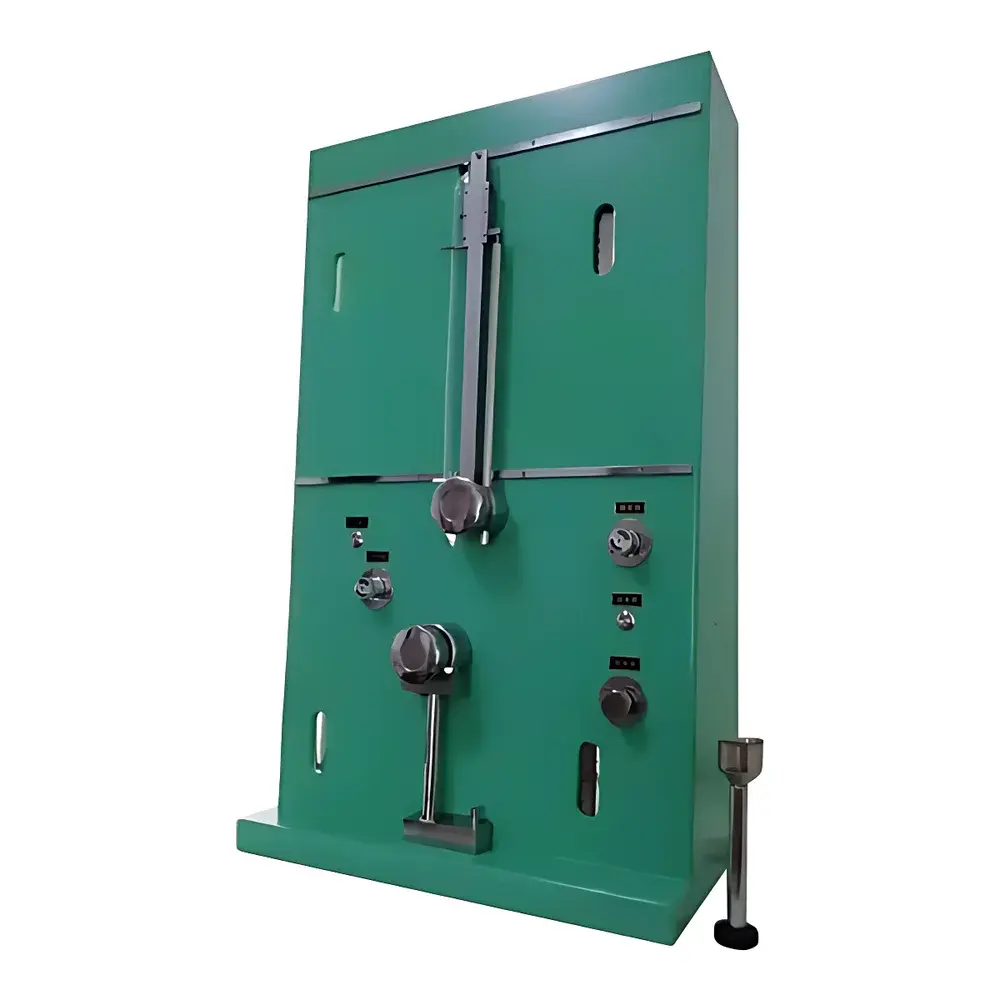
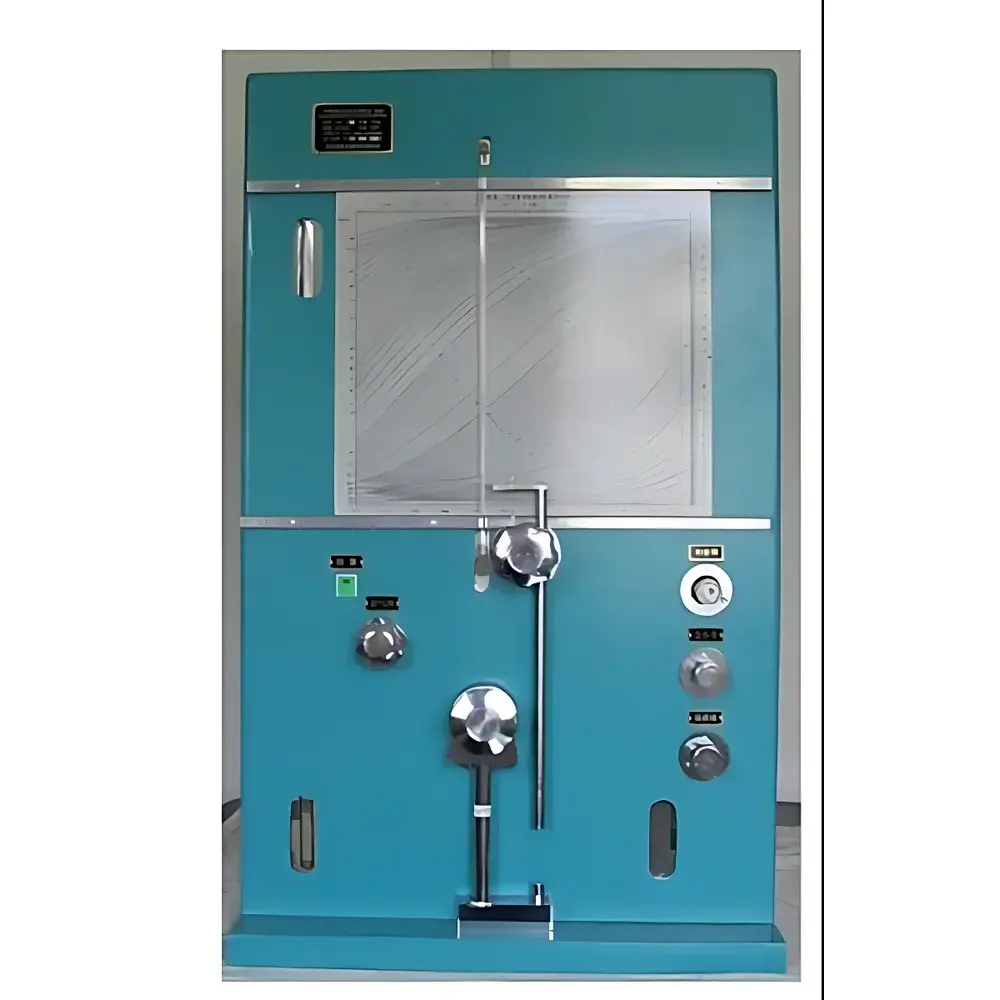
Aode AODE-305-PSI-4 Gas Permeation Particle Size Analyzer
| Brand | Aode |
|---|---|
| Origin | Liaoning, China |
| Manufacturer Type | Manufacturer |
| Country of Origin | Domestic (China) |
| Model | AODE-305-PSI-4 |
| Product Type | Intelligent |
| Display Interface | PC-based software |
| Measurement Range | 0.20–50 µm |
| Repeatability | ±3% |
| Porosity Range | 0.25–0.95 |
| Inlet Gas Pressure | 3 kPa (typical operating pressure for stable laminar flow) |
Overview
The Aode AODE-305-PSI-4 Gas Permeation Particle Size Analyzer is an intelligent, benchtop instrument engineered for the rapid and reproducible determination of average particle size and specific surface area of dry, free-flowing powders via gas permeation (also known as air permeability or Gurley-type principle). It implements the standardized “Zhang Ruifu Method” — a nationally recognized physical characterization technique codified in GB 11107–1989 and ISO 10070:1991. Unlike laser diffraction or dynamic light scattering, this method relies on the quantitative relationship between laminar gas flow resistance through a consolidated powder bed and its effective specific surface area, under controlled porosity and compressive loading. The analyzer operates under steady-state, low-pressure (≤3 kPa) air flow conditions, where pressure drop across a fixed-height, uniformly compacted powder column is measured using a precision U-tube manometer. From this differential pressure, combined with empirically validated geometric and material parameters (e.g., bulk density, bed porosity, and sample thickness), the instrument calculates the characteristic particle size Dk (envelope surface-area-equivalent diameter) and derived metrics including Dv (full surface-area-equivalent diameter), Sk, Sv, and Sw (mass-, volume-, and weight-based specific surface areas). Its design prioritizes robustness, traceable calibration, and compliance-ready operation for routine QC/QA environments in regulated industries.
Key Features
- Intelligent PC-based control interface with automated data logging, real-time pressure stabilization monitoring, and built-in calculation algorithms aligned with GB 11107–1989 and ISO 10070:1991
- Dual-mode measurement capability: PSI-4A configuration with integrated quick-calculation panel for direct Dk readout at α = 1; PSI-4B configuration with digital caliper integration for high-precision L (bed thickness) and H (manometer height) measurement
- Stable air supply system featuring a low-noise micro-diaphragm pump, desiccant dryer (color-indicating silica gel), water-column pressure regulator, and calibrated precision valve
- High-reproducibility pneumatic circuit with dual-stage pressure control: vertical pressure gauge for source pressure verification (500 ± 0.5 mm H2O) and U-tube manometer for sample pressure drop measurement
- Modular sample holder assembly with compression device, porous sintered support, fast-filter paper system, and leak-tight rubber-seated clamping mechanism
- Compliance-enabling hardware features: calibrated standard tube for periodic valve verification, traceable manometer zeroing procedure, and documented calibration protocols for pressure, thickness, and porosity
Sample Compatibility & Compliance
The AODE-305-PSI-4 is validated for use with metallic, ceramic, polymeric, and inorganic compound powders exhibiting free-flowing behavior and minimal agglomeration. Typical applications include metal injection molding (MIM) feedstocks, battery cathode/anode materials, catalyst supports, pharmaceutical excipients, food-grade starches, and nuclear fuel precursors. Sample requirements include moisture content < 0.5% w/w and absence of volatile binders or surfactants that may alter bed structure during compression. The instrument complies with the metrological framework of ISO/IEC 17025 for testing laboratories and supports GLP/GMP documentation workflows through audit-trail-capable software (optional add-on). While not inherently 21 CFR Part 11 compliant out-of-the-box, its PC interface architecture permits integration with validated electronic lab notebook (ELN) systems supporting electronic signatures and change control. All calibration procedures—including U-tube leveling, inlet pressure regulation, and precision valve verification—are fully documented in the operator manual and align with ASTM D3764 (Standard Test Method for Air Permeability of Powdered Solids) principles.
Software & Data Management
The instrument interfaces exclusively via Windows-compatible PC software providing guided workflow navigation, parameter entry (α, ρe, εp), real-time manometer visualization, and automatic Dk/Dv/Sk/Sv computation per ISO 10070 equations. Raw pressure readings, calculated porosity, bed thickness, and final particle size results are exportable in CSV and PDF formats. Software includes configurable report templates with embedded metadata (operator ID, date/time stamp, instrument serial number, calibration status flags). For regulated environments, optional software modules offer user access control, electronic signature capture, and full audit trail generation meeting FDA 21 CFR Part 11 Annex 11 requirements. Data integrity is reinforced by write-protected result archives and version-controlled calculation algorithms traceable to published national standards.
Applications
- Quality control of sintered metal powders (e.g., stainless steel 316L, Ti-6Al-4V) in additive manufacturing feedstock qualification
- Routine monitoring of catalyst particle size distribution in petrochemical R&D labs
- Batch release testing of pharmaceutical excipients (e.g., microcrystalline cellulose, lactose monohydrate) per USP & Ph. Eur. guidelines on powder flow and surface area
- Characterization of battery electrode materials (LiCoO2, NMC, graphite) for correlation with slurry rheology and electrode density
- Research-scale evaluation of nanoparticle agglomeration state via Dv/Dk ratio analysis under variable compaction pressures
- Process development support for spray-dried ceramic precursors and fused silica fumed silica grades
FAQ
What physical principle does the AODE-305-PSI-4 rely on?
It applies Darcy’s law for laminar gas flow through porous media, correlating measured pressure drop across a consolidated powder bed with its specific surface area and envelope-equivalent particle diameter (Dk).
Is the instrument suitable for nanoparticles below 100 nm?
Yes—when operated in Dv mode with multi-porosity compression cycles, it resolves sub-micron particles down to ~200 nm; however, independent validation (e.g., TEM or BET) is recommended for particles < 500 nm.
How often must the precision valve be recalibrated?
Calibration is required after any mechanical disturbance or at least once per week under continuous operation, using the supplied certified standard tube.
Can the system measure wet or cohesive powders?
No—it requires oven-dried, non-hygroscopic, free-flowing powders; moisture or binder content introduces uncontrolled pore structure variability.
Does the software support LIMS integration?
Yes—via configurable ODBC drivers and HL7-compliant data export, enabling bidirectional communication with major laboratory information management systems.



