
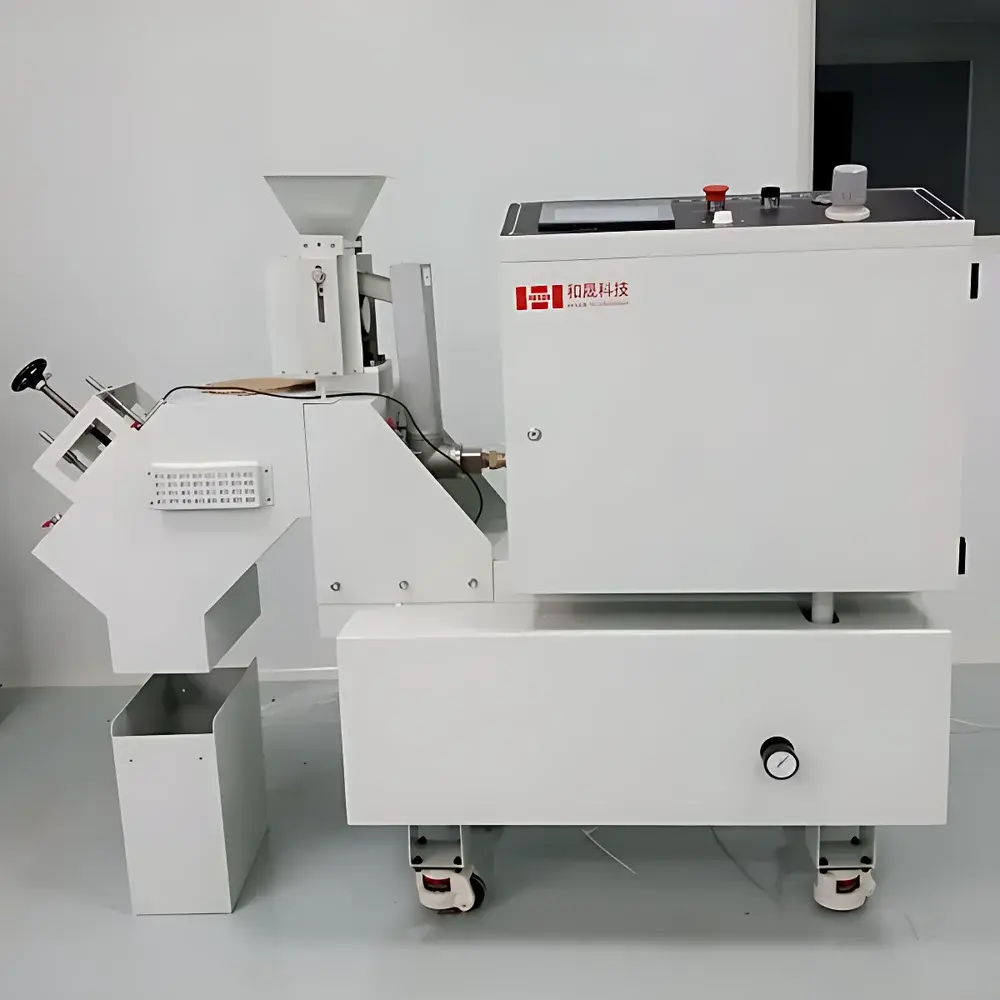
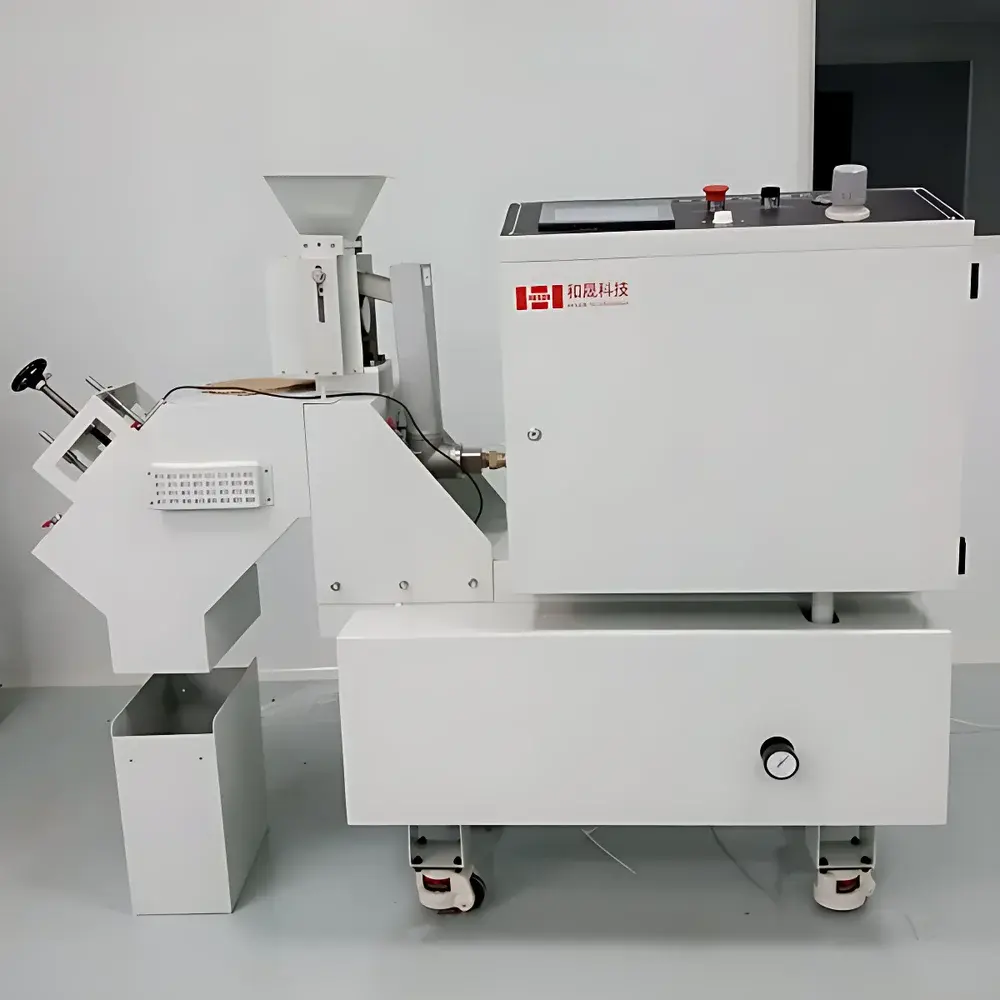
HESON HS-SS-1A Gravel Impact Tester
| Brand | HESON |
|---|---|
| Origin | Shanghai, China |
| Manufacturer Type | Manufacturer |
| Product Category | Domestic |
| Model | HS-SS-1A Gravel Impact Tester |
| Price Range | USD 7,000 – 14,000 |
| Operating Pressure Range | 0–1 MPa (adjustable) |
| Air Flow Rate | 0–0.08 m³/s (adjustable) |
| Compressed Air Pipe ID | ≥12.7 mm |
| Air Reservoir Volume | 136 L |
| Impact Nozzle ID | 52.6 mm, Length: 290 mm |
| Max Specimen Dimensions | Width ≤105 mm, Thickness ≤30 mm |
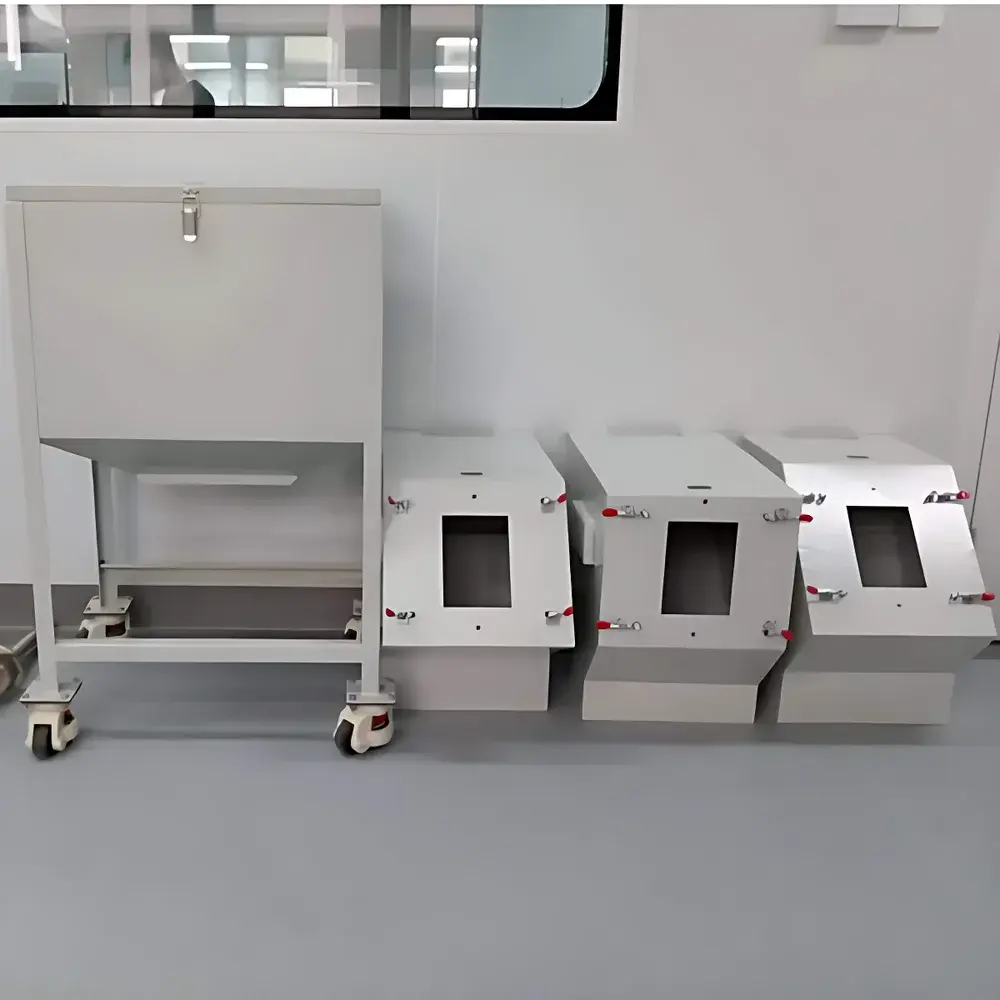
| Impact Angles | SAE 45°/90°, VDA 54°/90°, Radiator-specific chamber |
| Sound Pressure Level | ≤130 dB(A) |
| Feed Mechanism | Electromagnetic vibratory feeder |
| Test Media | Gravel, Sand, Steel Shot, Iron Shot |
| Operating Mode | Continuous-duty |
| Compliance Standards | SAE J400, ISO 20567-1:2005, DIN 55996-1:2001, ASTM D3170-03(2007), GME 60268-96, GMW14700, GM9508P, MGR ES30.AD.149, NES M0007 Sec.28, DIN EN ISO 20567-1:2007, FLTM BI 157-06 |
Overview
The HESON HS-SS-1A Gravel Impact Tester is an engineered physical property testing instrument designed for quantitative evaluation of coating durability against high-velocity particulate impact—primarily in automotive component development and quality assurance. It operates on the principle of controlled pneumatic propulsion, accelerating standardized gravel or shot media to a precisely regulated exit velocity (19.4 m/s at 8 bar) toward a fixed specimen surface. This replicates real-world mechanical stress conditions encountered by vehicle underbody components, suspension parts, and axle housings during operation on gravel roads or abrasive terrain. The system conforms to internationally recognized test protocols including SAE J400 (Chips Resistance of Automotive Coatings), ISO 20567-1 (Paints and Varnishes — Determination of Stone-Chipping Resistance — Part 1: Multiple Impact Test), and DIN 55996-1, ensuring data traceability and cross-laboratory comparability. Its modular architecture—comprising interchangeable impact chambers, adjustable nozzle assemblies, and standardized feed mechanisms—supports rigorous adherence to test method requirements across multiple OEM specifications.
Key Features
- Modular pneumatic impact system with fully replaceable standard components: impact gun assembly, collision chamber (including SAE 45°/90°, VDA 54°/90°, and radiator-specific configurations), specimen fixture, vibratory feed hopper, and integrated control panel.
- Precisely regulated compressed air delivery: adjustable operating pressure (0–1 MPa) and volumetric flow rate (0–0.08 m³/s), maintained via internal 136 L reservoir and calibrated nozzle valves to ensure consistent projectile velocity and repeatability.
- Electromagnetically driven vibratory feeder enabling precise, stepless control of abrasive media feed rate—critical for maintaining defined impact frequency and statistical sample coverage per test cycle.
- Standardized impact parameters: projectile mass 60 g, tip geometry 105° included angle, spherical cap diameter 32 mm, Vickers hardness ≥400 HV—aligned with ISO 20567-1 Annex C requirements.
- Continuous-duty rated design with acoustic enclosure; sound pressure level ≤130 dB(A) under full operational load, compliant with occupational safety thresholds for laboratory environments.
- Specimen compatibility: accommodates flat or curved substrates up to 105 mm width and 30 mm thickness—suitable for full axle sections or representative coated coupons per GMW14700 and GME 60268-96 sampling guidelines.
Sample Compatibility & Compliance
The HS-SS-1A is strictly intended for testing rigid, non-hazardous solid specimens coated with automotive-grade primers, basecoats, clearcoats, or protective polymer systems. It explicitly excludes flammable, explosive, volatile, corrosive, biological, or fluid samples—ensuring operator safety and equipment integrity. All test procedures follow GLP-aligned execution protocols, with documented calibration of pressure transducers, flow meters, and timing circuits traceable to national standards. The system supports audit-ready compliance with ISO/IEC 17025 requirements for testing laboratories, and its operational parameters meet the environmental constraints specified in ASTM E171 (5–35 °C ambient temperature, ≤85% RH). Test reports generated using this instrument satisfy OEM submission criteria for coating qualification under Ford WSS-M2P146-A2, BMW GS 90010, and VW TL 226.
Software & Data Management
While the HS-SS-1A operates via hardwired electro-pneumatic controls for deterministic repeatability, optional digital integration modules support RS-485 or Ethernet-based communication with external SCADA or LIMS platforms. These interfaces enable timestamped logging of pressure setpoints, feed duration, total impact count, and chamber temperature—facilitating 21 CFR Part 11-compliant electronic records when paired with validated software environments. All parameter adjustments are mechanically locked post-calibration to prevent unauthorized deviation, and system diagnostics include real-time air pressure monitoring with automatic shutdown upon out-of-tolerance excursions. Audit trails for maintenance, calibration, and user access are retained locally for ≥12 months.
Applications
This tester serves critical roles in R&D validation of anti-chip coatings for chassis components, brake calipers, fuel tanks, and EV battery enclosures. It is routinely deployed in supplier qualification programs for Tier-1 automotive suppliers, particularly where coating performance must be demonstrated against multi-angle impact scenarios (e.g., VDA 54° for wheel arches, SAE 90° for rocker panels). In addition to stone-chip resistance, the system supports sand erosion assessment per ISO 4417 and ASTM D7027 when configured with graded silica media—enabling comparative evaluation of thermal-spray, epoxy-polyamide, and polyurea systems under accelerated abrasion loads. Its adaptability to diverse media types (steel shot, iron grit, natural gravel) also supports material science studies on substrate deformation mechanics and interfacial adhesion failure modes.
FAQ
What standards does the HS-SS-1A comply with?
It meets the mechanical and procedural requirements of SAE J400, ISO 20567-1:2005, DIN 55996-1:2001, ASTM D3170-03(2007), and multiple OEM specifications including GMW14700, GME 60268-96, and FLTM BI 157-06.
Is compressed air supply included?
No—the unit requires an external oil-free compressed air source capable of delivering ≥8 bar at ≥0.08 m³/s. An optional integrated air compressor module is available as a configurable accessory.
Can the impact angle be changed without tools?
Yes—collision chambers for SAE 45°, SAE 90°, VDA 54°, and radiator-specific geometries are tool-free swappable via precision-machined mounting interfaces.
How is specimen damage assessed post-test?
Per ISO 20567-1 Annex E, evaluation uses standardized visual grading scales (e.g., chip density, crater depth, delamination extent) under 10× magnification, with reference images provided in the operator manual.
What maintenance intervals are recommended?
Daily inspection of nozzle wear and feed chute clearance; monthly verification of pressure sensor linearity and vibratory feeder amplitude; annual full recalibration certified to ISO 9001:2015 metrology requirements.



