
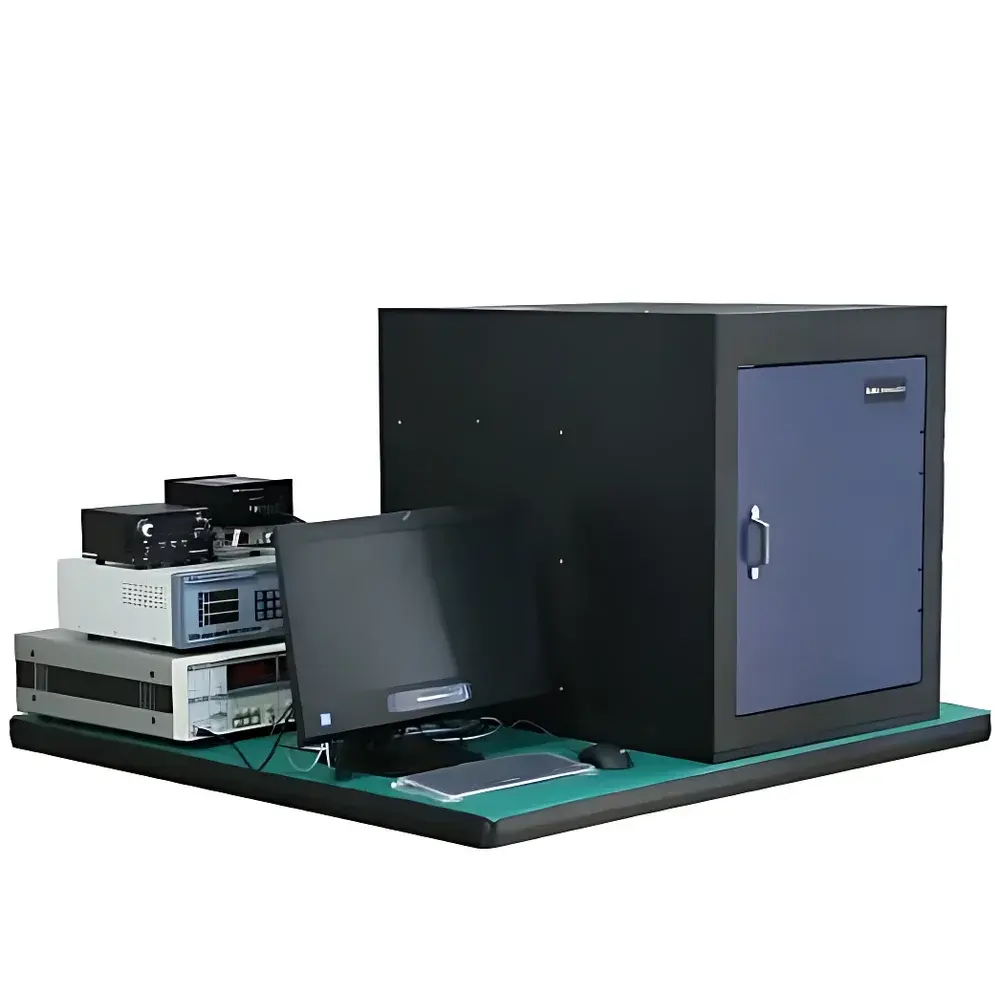
ZOLIX LBIC Laser Beam Induced Current Imaging System
| Brand | ZOLIX |
|---|---|
| Origin | Beijing, China |
| Manufacturer Type | Manufacturer |
| Origin Category | Domestic |
| Model | LBIC |
| Price Range | USD 14,000 – 28,000 |
| Excitation Source | Multiple stabilized continuous-wave lasers (e.g., 405 nm, 532 nm, 635 nm, 785 nm) |
| Laser Power Range | 0–30 mW, continuously adjustable |
| Focused Spot Size | < 50 µm |
| Power Stability | < 1% RMS over 8 hours |
| Measurement Repeatability | < 2% (RSD) |
| Microscopy | Interchangeable 10× and 20× objective lenses |
| Monitoring Camera | 1.3 MP industrial CMOS camera |
| Maximum Sample Area | 100 mm × 100 mm |
| XY Stage Resolution | 0.625 µm (closed-loop stepper motor) |
| Operating Temperature | 10–35 °C |
| Calibration Standard | NIM-traceable Si or InGaAs photodetectors |
| Compliance | ISO/IEC 17025-aligned calibration procedures, compatible with GLP documentation workflows |
Overview
The ZOLIX LBIC Laser Beam Induced Current Imaging System is a precision optoelectronic characterization platform engineered for spatially resolved mapping of photocurrent generation in semiconductor devices and functional photoactive materials. It operates on the fundamental principle of laser beam induced current (LBIC) — a scanning photocurrent technique wherein a focused, wavelength-specific laser spot is raster-scanned across a biased or unbiased device surface, and the resulting localized photocurrent is measured point-by-point using low-noise transimpedance amplification. Unlike integrated quantum efficiency measurements, LBIC provides direct, sub-50 µm spatial resolution of carrier collection efficiency, junction quality, defect distribution, and lateral conductivity variations — critical parameters in photovoltaic R&D, perovskite solar cell optimization, photodetector uniformity validation, and failure analysis of microelectronic optoelectronic assemblies.
Key Features
- Sub-50 µm spatial resolution enabled by high-numerical-aperture microscope objectives and diffraction-limited laser focusing
- Modular excitation architecture supporting multiple CW laser wavelengths (405 nm to 785 nm), each independently power-stabilized (<1% RMS drift)
- Closed-loop motorized XYZ stage with 0.625 µm positional repeatability and programmable scan patterns (raster, line, grid, custom ROI)
- Integrated optical path design unifying excitation, imaging, and real-time monitoring channels — eliminating alignment drift between scan and visual feedback
- Low-noise current measurement electronics featuring selectable gain ranges (1 pA to 100 µA full scale) and 24-bit ADC resolution
- NIM-traceable Si and InGaAs reference detectors for absolute photocurrent calibration and cross-wavelength responsivity normalization
Sample Compatibility & Compliance
The LBIC system accommodates rigid and flexible substrates up to 100 mm × 100 mm and 25 mm thickness, including silicon wafers, thin-film solar cells (CIGS, CdTe, perovskites), organic photodetectors, and lateral heterojunction test structures. Samples are mounted on vacuum or mechanical clamping stages to ensure thermal and mechanical stability during extended scans. All hardware control and data acquisition modules comply with CE electromagnetic compatibility (EMC) directives. Calibration protocols follow ISO/IEC 17025 guidelines; detector calibrations are traceable to the National Institute of Metrology (NIM), China. The system supports audit-ready data logging aligned with GLP requirements, including timestamped metadata, operator ID, environmental conditions (temperature/humidity), and instrument configuration snapshots.
Software & Data Management
ZOLIX LBIC Control Suite is a Windows-based application built on LabVIEW Real-Time architecture, offering synchronized hardware control, real-time current visualization, and post-processing analytics. Key capabilities include: automated dark-current subtraction, pixel-wise responsivity normalization, line-scan profile extraction, FFT-based spatial frequency analysis, overlay of optical micrographs with photocurrent maps, and export to HDF5, TIFF, and CSV formats. The software enforces role-based user access control (administrator, technician, reviewer), maintains full audit trails of all measurement parameters and modifications (per FDA 21 CFR Part 11 principles), and generates PDF reports compliant with internal QA templates or external peer-review submission standards.
Applications
- Spatial mapping of minority carrier diffusion length and recombination velocity in crystalline and polycrystalline Si solar cells
- Identification of shunt paths, grain boundary barriers, and local series resistance in thin-film photovoltaics
- Quantitative evaluation of interface quality at p–n, p–i–n, and Schottky junctions via LBIC contrast ratio analysis
- Correlation of LBIC response with cathodoluminescence (CL) or electron beam induced current (EBIC) datasets
- Process development feedback for lithography, etching, and passivation steps in optoelectronic device fabrication
- Non-destructive screening of large-area perovskite modules for pinhole-induced current leakage
FAQ
What laser wavelengths are supported out-of-the-box?
Standard configurations include 405 nm, 532 nm, 635 nm, and 785 nm diode lasers. Custom wavelengths (e.g., 808 nm, 980 nm) can be integrated upon request.
Can the system perform time-resolved LBIC measurements?
No — this is a steady-state scanning LBIC platform. Time-resolved variants (TR-LBIC) require pulsed laser sources and gated detection, which are available as optional upgrades.
Is vacuum or inert atmosphere operation supported?
The base system operates in ambient air. A sealed sample chamber with N₂ purge port and viewport is available as an accessory for oxygen/moisture-sensitive materials.
How is electrical contact established during measurement?
Probes are manually positioned using micromanipulators with tungsten carbide tips. Four-point probe configurations and spring-loaded contact fixtures are supported for repeatable, low-resistance connections.
Does the software support batch processing of multiple LBIC maps?
Yes — the Batch Analysis Module enables automated alignment, normalization, and statistical comparison (mean, std dev, histogram, correlation) across datasets from different samples or process conditions.






