
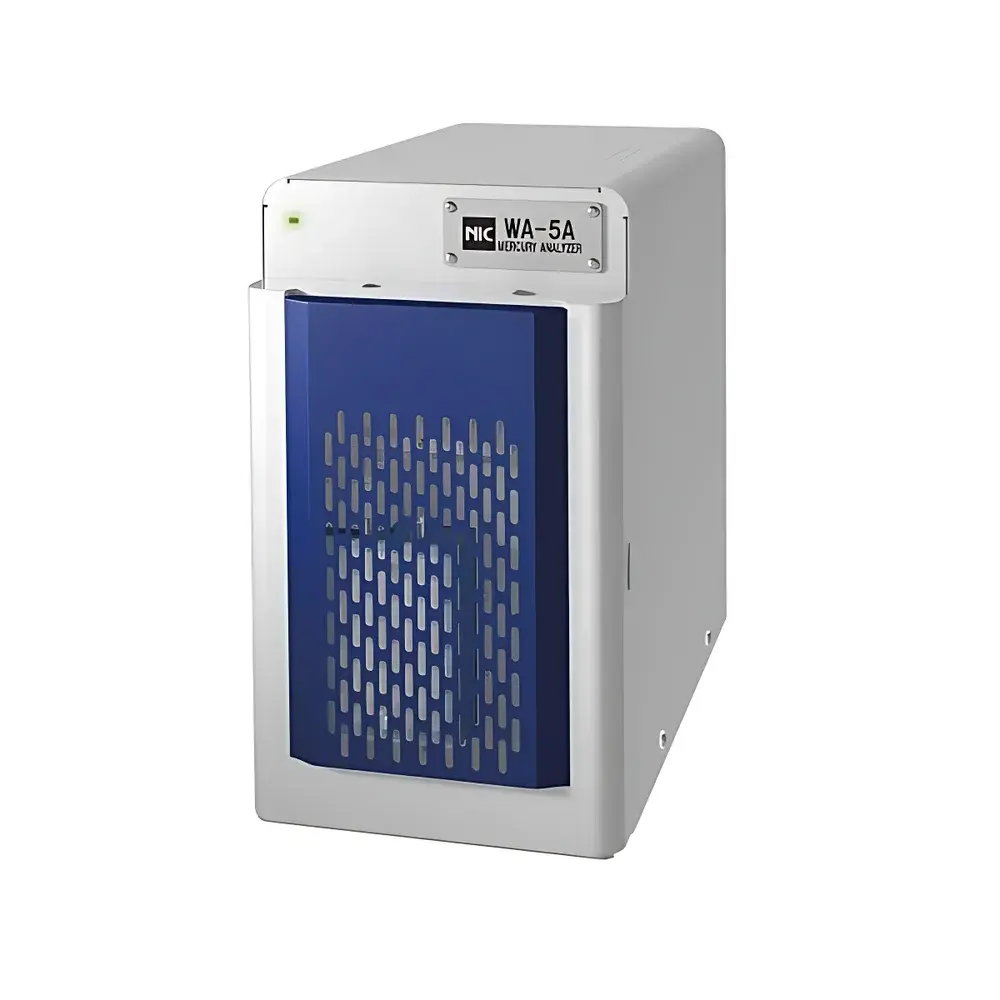
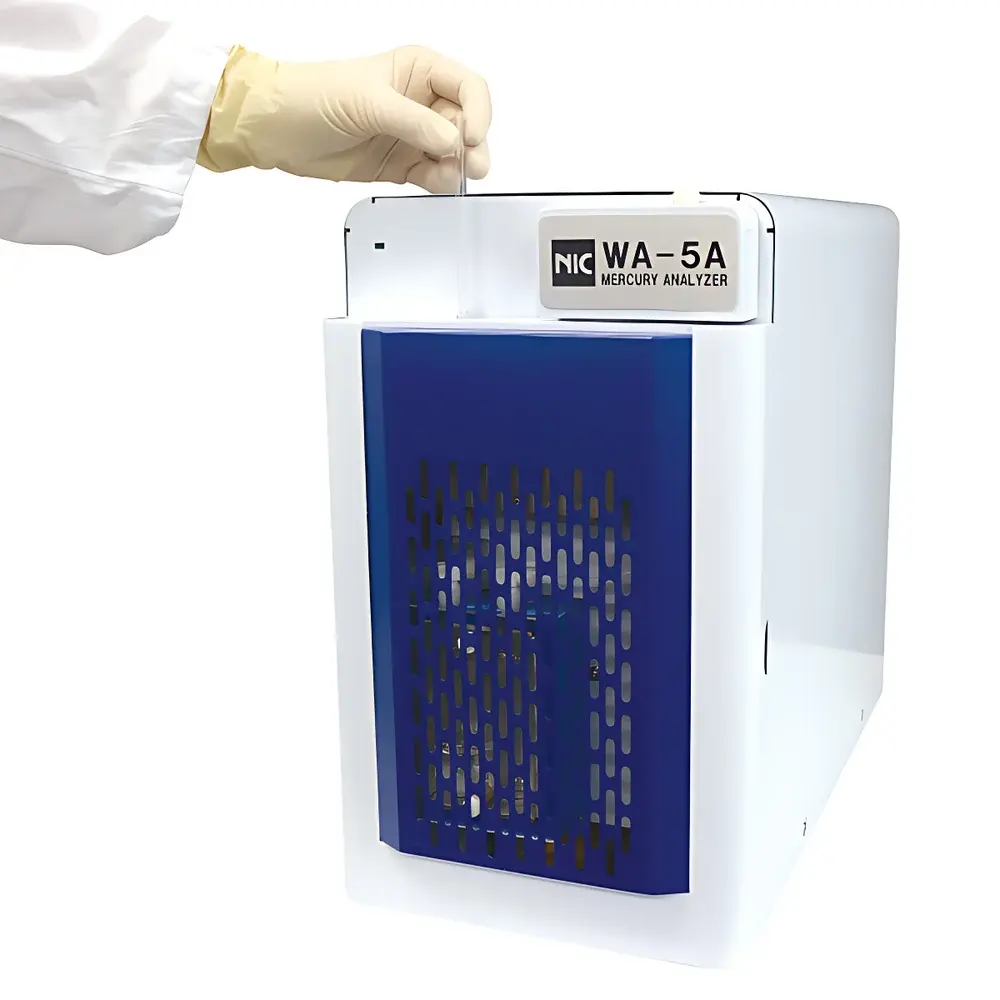
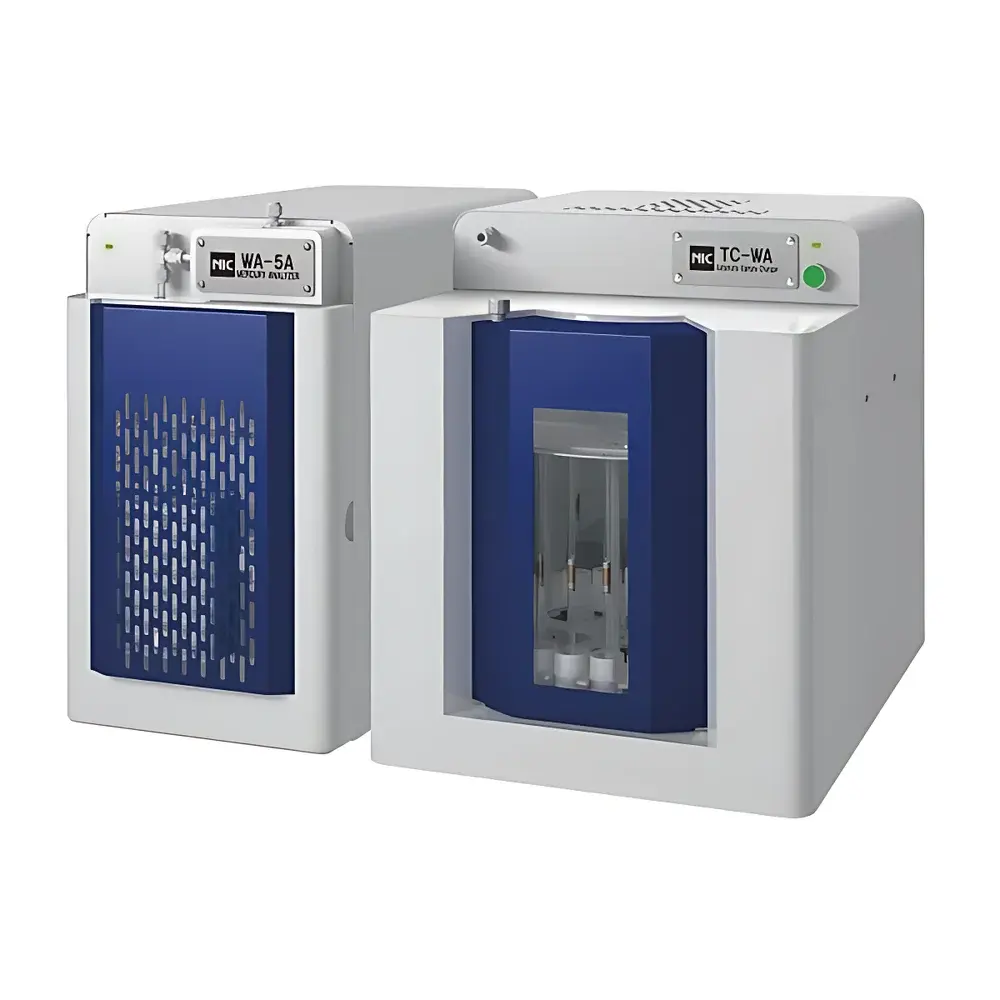
NIC WA-5A Cold Vapor Atomic Absorption Mercury Analyzer
| Brand | Nippon Instruments Corporation (NIC) |
|---|---|
| Origin | Japan |
| Model | WA-5A |
| Instrument Type | Benchtop Laboratory Analyzer |
| Measurement Principle | Cold Vapor Atomic Absorption Spectrometry (CVAAS) with Dual Gold Amalgamation |
| Detection Limit | 0.001 ng (1 pg) |
| Linear Range | 0.001 – 1000 ng |
| Compliance | ASTM D5954-98(2014)e1, ISO 6978-2:2005, ISO 20552, JIS K 0312, HJ 910–2017, GB 16781.2–2010, HJ 597–2011, HJ 543–2009 |
| Sample Forms | Gaseous matrices (ambient air, natural gas, shale gas, LPG, LNG, hydrogen), aqueous samples (with S-MA/AQUA accessory) |
Overview
The NIC WA-5A is a benchtop cold vapor atomic absorption spectrometer (CVAAS) engineered for ultra-trace quantification of total gaseous mercury (TGM) in diverse gaseous and aqueous environmental and industrial matrices. It operates on the well-established principle of gold amalgamation coupled with CVAAS detection—where elemental mercury (Hg⁰) is selectively preconcentrated onto dual gold-coated quartz sand traps, thermally desorbed, and atomized in a quartz cell for absorbance measurement at 253.7 nm. This methodology is fully aligned with internationally recognized reference protocols including ASTM D5954, ISO 6978-2, and Japanese Ministry of the Environment guidelines for manual determination of hazardous air pollutants. The WA-5A delivers sub-picogram detection capability without requiring external carrier gases, relying instead on an integrated, self-regenerating indoor air purification system to generate ultra-clean purge air—a design feature that enhances operational robustness in both laboratory and field-deployable configurations.
Key Features
- Dual gold amalgamation architecture: Two sequential gold-coated quartz sand traps ensure quantitative Hg⁰ capture and interference-free preconcentration—first trap for sampling, second for analytical refinement.
- Carrier-gas-free operation: Integrated HEPA + activated carbon filtration system purifies ambient air to <0.1 ppb Hg background, eliminating dependency on compressed gas cylinders and reducing consumable costs.
- Modular sample introduction: Supports direct analysis of N160 mercury collection tubes, Tedlar® bag sampling (with integrated mass flow control), pressurized cylinder analysis (via LP-WA vaporizer), and aqueous mercury determination (with S-MA/AQUA kit).
- Automated high-throughput capability: Optional TC-WA 30-position thermal desorption autosampler enables unattended, sequential analysis of pre-collected mercury traps—ideal for long-term ambient air monitoring campaigns.
- Robust gold amalgamation media: NIC-synthesized gold-coated quartz sand exhibits exceptional thermal stability (>400 °C), acid resistance, and >100-cycle reusability without performance degradation.
- Optimized optical detection: Dual-beam CVAAS detector with auto-ranging capability ensures linear response across the full 0.001–1000 ng dynamic range; no manual gain adjustment required.
Sample Compatibility & Compliance
The WA-5A accommodates gaseous samples spanning ambient air, stack emissions, natural gas, shale gas, liquefied petroleum gas (LPG), liquefied natural gas (LNG), hydrogen, and other hydrocarbon streams. With the S-MA impactor accessory and AQUA kit, it extends to aqueous matrices—including boiler feedwater, process water, wastewater, seawater, and drinking water—following EPA-aligned acid digestion and SnCl₂ reduction. All configurations comply with regulatory measurement frameworks: U.S. EPA Method 1631 (modified), ASTM D5954-98(2014)e1, ISO 6978-2:2005 (natural gas), ISO 20552 (ambient air), JIS K 0312 (Japan), and Chinese standards HJ 910–2017 and GB 16781.2–2010. The system supports audit-ready data integrity per FDA 21 CFR Part 11 when paired with validated software and electronic signature workflows.
Software & Data Management
WA-5A is controlled via NIC’s proprietary Mercury Analysis Software (MAS v4.x), a Windows-based application supporting method setup, sequence programming, real-time signal visualization, calibration curve generation (linear/log-linear), and automated report export (PDF/CSV). The software logs all instrument parameters—including trap temperatures, desorption profiles, flow rates, lamp energy, and baseline drift—with timestamped audit trails. For GLP/GMP environments, optional 21 CFR Part 11 compliance packages include user access controls, electronic signatures, and immutable raw data archiving. Data files are structured to support LIMS integration via ASTM E1384-compliant ASCII output formats.
Applications
- Ambient and workplace air monitoring for TGM compliance with WHO, EU Air Quality Directive, and national emission limits.
- Mercury speciation support in fossil fuel processing: quantification of Hg⁰ in natural gas feedstocks prior to amine scrubbing or sulfur recovery units.
- Upstream oil & gas: verification of mercury levels in LNG export streams per ISO 8502 and GPA 2261 specifications.
- Environmental remediation: screening of soil vapor extraction effluents and landfill gas.
- Water quality assurance: trace-level total mercury analysis in industrial process waters and municipal wastewater following ISO 12846 and EN 12338 protocols.
- Research laboratories: method development for mercury redox chemistry, sorbent breakthrough studies, and inter-laboratory validation exercises.
FAQ
Does the WA-5A require external carrier gas?
No. It utilizes an internal air purification module to generate carrier-grade air from ambient laboratory air.
Can mercury collection tubes be reused?
Yes. NIC’s proprietary gold-coated quartz sand traps are designed for ≥100 analytical cycles with consistent recovery (>95%) after thermal regeneration.
What is the minimum sample volume for Tedlar® bag analysis?
As low as 10 mL, depending on Hg concentration and desired detection confidence; typical volumes range from 50–500 mL with flow-controlled introduction.
Is aqueous mercury analysis possible without acid digestion?
No. Total mercury determination in water requires oxidative acid digestion (e.g., BrCl/HNO₃) prior to SnCl₂ reduction to convert organomercurials and Hg²⁺ to Hg⁰.
How does the TC-WA autosampler prevent cross-contamination between samples?
TC-WA maintains a slight positive pressure of purified air across the sample tray and seals each tube position during standby—eliminating ambient Hg ingress during unattended operation.




