
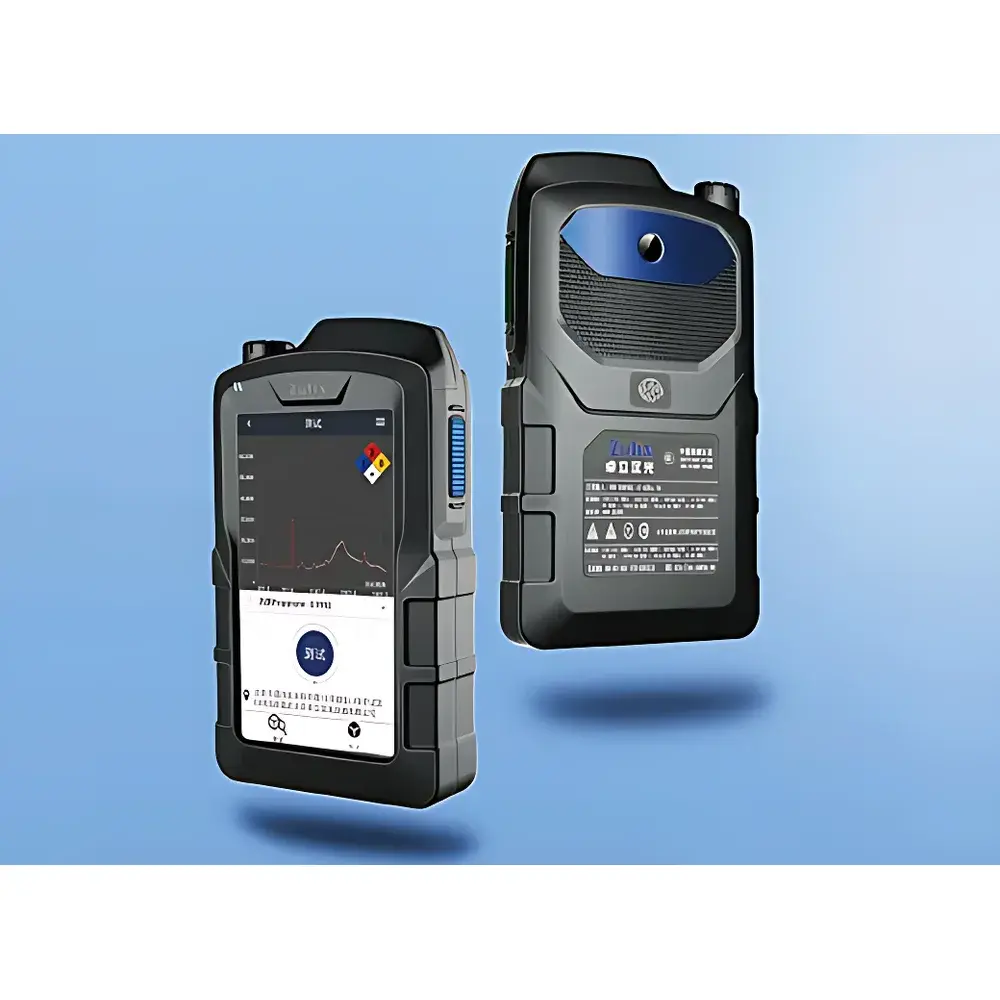
ZOLIX Finder Edge Portable Handheld Raman Spectrometer
| Brand | ZOLIX |
|---|---|
| Origin | Beijing, China |
| Manufacturer Type | Original Equipment Manufacturer (OEM) |
| Product Category | Domestic |
| Model | Finder Edge |
| Instrument Type | Portable/Handheld Raman Spectrometer |
| Spectral Range | 200–2000 cm⁻¹ |
| Spectral Resolution | 6 cm⁻¹ |
| Spatial Resolution | Micron-level |
| Low-Wavenumber Cutoff | 150 cm⁻¹ |
| Spectral Repeatability | ≤ ±0.15 cm⁻¹ |
Overview
The ZOLIX Finder Edge Portable Handheld Raman Spectrometer is an engineered solution for field-deployable molecular identification based on inelastic light scattering—the fundamental principle of Raman spectroscopy. Designed for real-time, non-contact, and non-destructive chemical analysis, the Finder Edge leverages spatially coupled optical architecture, low-noise electronics, and embedded chemometric algorithms to deliver laboratory-grade spectral fidelity in a rugged, palm-sized form factor. Its 785 nm excitation laser—optimized for reduced fluorescence interference—enables high signal-to-noise ratio spectra at low power (<50 mW), minimizing thermal degradation or photodamage to sensitive samples including pharmaceuticals, polymers, and biological tissues. The instrument operates without sample preparation, supporting direct measurement through transparent and semi-transparent barriers such as glass vials, plastic pouches, laminated packaging, and sealed containers—making it suitable for regulated environments where sample integrity and chain-of-custody must be preserved.
Key Features
- True handheld ergonomics: Weighing under 1.2 kg with integrated rechargeable Li-ion battery supporting 4–6 hours of continuous operation in ambient temperatures from −10 °C to +50 °C
- Micron-scale spatial resolution enabled by precision-aligned collimation and focusing optics, facilitating localized analysis of heterogeneous surfaces and layered materials
- Embedded 7-inch capacitive touchscreen with intuitive GUI; all operations initiated via single-button press—no prior spectroscopic training required
- Onboard spectral library search engine with dynamic matching algorithms compliant with ASTM E1840-22 for spectral correlation and identity assignment
- Support for user-defined spectral libraries with role-based access control, audit trail logging, and electronic signature capability aligned with FDA 21 CFR Part 11 requirements
- Modular firmware architecture enabling over-the-air (OTA) updates and hardware-agnostic software expansion for future SERS probe integration or multi-modal sensor fusion
Sample Compatibility & Compliance
The Finder Edge accommodates solid, liquid, gel, and powder samples across diverse matrices—including pharmaceutical tablets, food commodities (fruits, dairy, oils), environmental swabs, forensic trace evidence, and controlled substances. It complies with ISO/IEC 17025:2017 general requirements for competence of testing laboratories and supports method validation per ICH Q2(R2). For regulated pharmaceutical applications, the system meets GMP Annex 11 and USP criteria for spectroscopic identification, including mandatory pass/fail reporting, batch-level traceability, and barcode/QR code-driven sample registration. All spectral data are stored in vendor-neutral .spc format with embedded metadata (timestamp, operator ID, GPS coordinates if enabled, instrument calibration status), ensuring full traceability for GLP/GMP audits.
Software & Data Management
ZOLIX RamanView™ software provides both standalone and networked deployment options. The embedded OS supports local database creation, hierarchical user permissions (administrator, analyst, reviewer), and encrypted export of spectral datasets to LIMS or enterprise analytics platforms. Advanced features include PCA-based outlier detection, spectral subtraction for background correction, and automated peak annotation using NIST Chemistry WebBook reference standards. For cloud-enabled workflows, optional ZOLIX CloudLink™ module facilitates secure TLS 1.3–encrypted upload to private AWS S3 buckets, enabling centralized spectral repository management, cross-site comparison, and AI-assisted pattern recognition for trend analysis—critical for national food safety surveillance or narcotics intelligence fusion centers.
Applications
- Pharmaceutical Quality Control: Raw material identification (APIs, excipients), counterfeit drug screening, packaging material verification, and in-process monitoring of lyophilized formulations
- Food & Agricultural Safety: Detection of adulterants (melamine, Sudan dyes), pesticide residues (organophosphates, neonicotinoids), veterinary drug contaminants (chloramphenicol, nitrofurans), and mycotoxins in cereals and feedstuffs
- Forensic & Homeland Security: Field identification of illicit drugs (fentanyl analogues, synthetic cannabinoids), explosives precursors (TATP, HMTD), chemical warfare agents (VX, sarin simulants), and toxic industrial chemicals (cyanides, phosphine)
- Materials Science: Polymorph screening of crystalline APIs, carbon nanotube chirality mapping, graphene layer counting, and catalyst surface characterization
- Environmental Monitoring: In-situ detection of microplastics in water samples, hydrocarbon contamination in soil, and heavy metal complexes in wastewater effluents using SERS-active substrates
FAQ
Does the Finder Edge support Good Manufacturing Practice (GMP) compliance?
Yes—the instrument includes 21 CFR Part 11–compliant electronic signatures, audit trails, and configurable user roles to meet pharmaceutical manufacturing and quality control requirements.
Can the spectral library be updated or expanded in the field?
Yes—libraries can be imported via USB or secure OTA update; users may create custom libraries with spectral metadata, confidence thresholds, and decision rules.
Is calibration traceable to NIST standards?
Yes—factory calibration uses NIST-traceable polystyrene and silicon reference standards; users may perform routine verification using included calibration check samples.
What types of sample containers are compatible with through-barrier measurement?
Standard borosilicate glass vials (≥1 mm wall thickness), PET and HDPE packaging, laminated foil pouches, and clear acrylic containers—all validated per ASTM E2594-21 for transmission efficiency and spectral fidelity.
How is data security managed during cloud synchronization?
All communications use TLS 1.3 encryption; data-at-rest is AES-256 encrypted; cloud storage adheres to ISO/IEC 27001:2022 controls and supports private VPC deployment.
Related Products





