
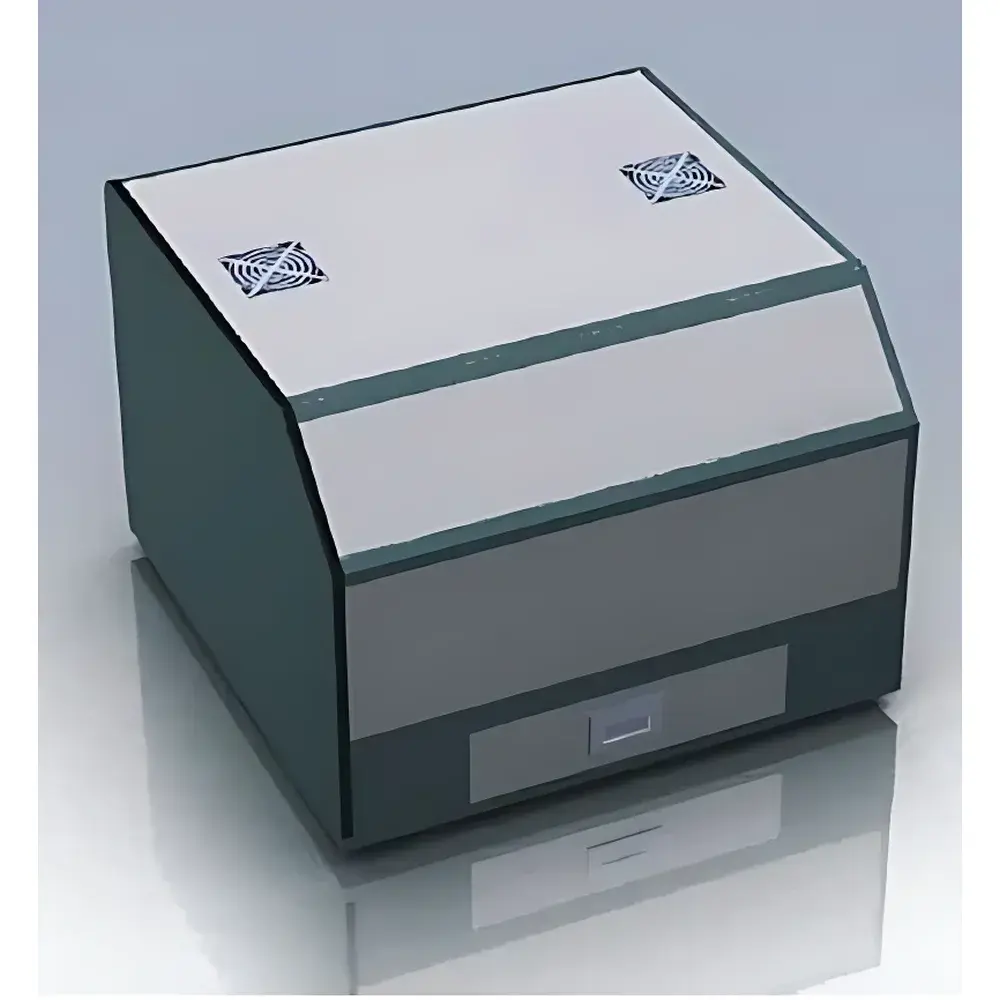
ZOLIX GaiaTracer Hyperspectral Document Examination Instrument
| Brand | ZOLIX |
|---|---|
| Origin | Beijing, China |
| Manufacturer Type | Original Equipment Manufacturer (OEM) |
| Product Origin | Domestic (China) |
| Model | GaiaTracer |
| Pricing | Available upon Request |
Overview
The ZOLIX GaiaTracer Hyperspectral Document Examination Instrument is a laboratory-grade, push-broom scanning hyperspectral imaging system engineered for forensic document analysis and non-destructive material characterization. It operates on the principle of spatial-spectral data fusion—capturing contiguous, narrow-band spectral reflectance (or fluorescence) signatures across a defined wavelength range while preserving high-fidelity spatial registration. Unlike conventional RGB or multispectral imaging, which samples only 3–10 discrete bands, the GaiaTracer acquires hundreds of spectrally resolved bands (typically spanning 400–1000 nm), generating a three-dimensional data cube (x, y, λ) where each pixel contains a full reflectance spectrum. This enables chemically specific identification and differentiation of inks, toners, paper substrates, erasures, alterations, and latent marks based on intrinsic optical absorption and scattering properties—without physical contact or sample preparation.
Key Features
- Transmission-type volume holographic grating optical engine: Delivers high diffraction efficiency (>85% across visible–NIR), minimal polarization dependence (<±2% efficiency variation), and smooth spectral response—critical for quantitative spectral fidelity and inter-sample comparability.
- High spatial resolution: Equipped with a scientific-grade CMOS sensor (e.g., 1920 × 1200 pixels) and precision motorized translation stage, enabling sub-millimeter spatial sampling and reproducible line-scan acquisition.
- Optimized spectral sampling: Configurable spectral resolution (typically 2.5–5 nm FWHM) and spectral range (standard: 400–1000 nm; optional extensions to 350–1700 nm with detector swap).
- Integrated illumination: Uniform, collimated LED-based broadband source with selectable spectral filters and polarization control for optimized contrast in ink discrimination and substrate interference suppression.
- Rugged optomechanical architecture: Aluminum alloy frame, vibration-damped optical bench, and temperature-stabilized grating mount ensure long-term measurement stability under lab and mobile forensic unit conditions.
Sample Compatibility & Compliance
The GaiaTracer supports flat, rigid, and semi-flexible document specimens—including handwritten notes, printed banknotes, passports, contracts, questioned signatures, and charred or faded archival materials. Its non-contact, non-invasive design complies with ISO/IEC 17025 requirements for forensic instrumentation validation. Data acquisition workflows are compatible with GLP- and GMP-aligned documentation practices. While not certified to FDA 21 CFR Part 11 out-of-the-box, the system’s raw data export (ENVI .hdr/.img, TIFF stack, or HDF5) supports integration into validated LIMS or forensic case management systems requiring audit-trail capability.
Software & Data Management
The instrument ships with ZOLIX Hyperspectral Analysis Suite (ZHAS), a Windows-based application supporting real-time preview, spectral calibration (using NIST-traceable reference standards), radiometric correction, and geometric rectification. Core analytical modules include spectral angle mapper (SAM), matched filtering, endmember extraction (e.g., VCA, N-FINDR), and PCA-based anomaly detection. All processing steps generate timestamped metadata logs. Export formats include ASCII spectra (.csv), spectral libraries (.sli), and georeferenced ENVI-compatible cubes. API access (via Python SDK) enables automation of batch analysis, integration with machine learning pipelines (e.g., SVM, random forest classifiers trained on ink spectral databases), and custom spectral library deployment.
Applications
- Forensic document examination: Detection of ink layer sequence, obliterated text, erased annotations, and counterfeit currency via spectral unmixing and differential absorption mapping.
- Historical manuscript analysis: Identification of iron gall vs. carbon-based inks, pigment degradation assessment, and recovery of faded writing without UV-induced photodamage.
- Counterfeit detection: Discrimination of OEM vs. third-party toners, security thread verification, and microtext authenticity screening.
- Material forensics: Differentiation of paper fiber composition, sizing agents, and coating additives through NIR spectral fingerprinting.
- Research applications: Development of spectral reference libraries for forensic casework, validation of spectral classification algorithms, and method development per ASTM E2926 (Standard Guide for Forensic Document Examination).
FAQ
What spectral range does the standard GaiaTracer configuration cover?
The base model operates from 400 nm to 1000 nm with ~2.8 nm spectral sampling interval; extended configurations support 350–1700 nm using InGaAs detectors.
Is the system suitable for field deployment in crime scene units?
Yes—the GaiaTracer is designed for benchtop and mobile forensic lab use; optional battery-powered illumination and ruggedized transport cases are available.
Does it require external calibration standards?
Yes—NIST-traceable reflectance standards (e.g., Spectralon®) and wavelength calibration sources (Hg-Ar lamp) are required for initial setup and periodic verification.
Can it interface with third-party forensic software platforms?
Yes—raw data exports are format-agnostic (ENVI, TIFF, HDF5); Python SDK enables direct integration with MATLAB, ENVI, or custom forensic analytics environments.
How is spectral data validated for courtroom admissibility?
Data integrity is maintained via embedded metadata (acquisition time, instrument ID, calibration status); users must follow documented SOPs aligned with ISO 21043 (forensic science—general requirements) and Daubert/Kumho criteria for methodology validation.



