
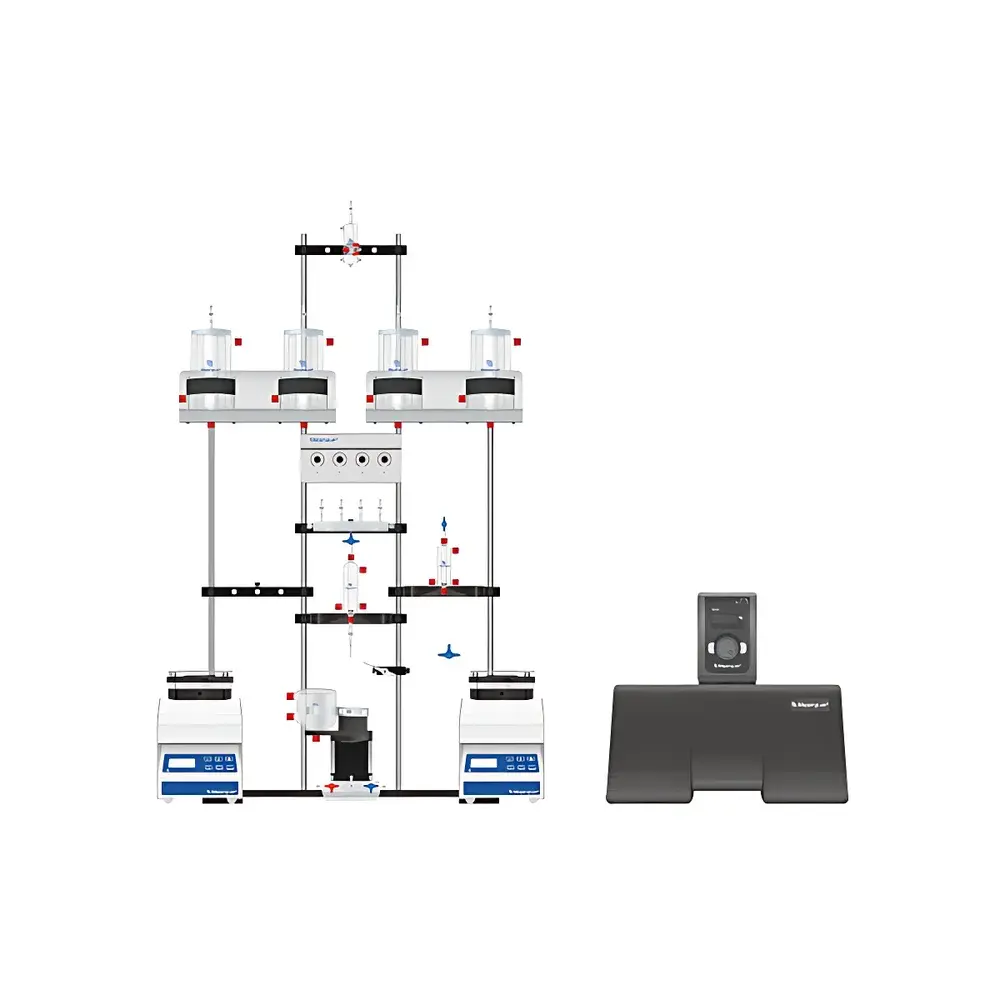
MappingLab SG-WH012 Working Heart Ex Vivo Cardiac Perfusion System
| Brand | MappingLab |
|---|---|
| Origin | Beijing, China |
| Model | SG-WH012 |
| Instrument Type | Manual |
| Temperature Control Range | Ambient to 100 °C |
| Flow Rate Range | 0.02–380 mL/min |
| Pump Speed Range | 0.1–100 rpm (bidirectional adjustable) |
| Temperature Accuracy | ±0.5 °C |
| Water Bath Dimensions | 390 × 330 × 180 mm |
| Perfusion Chamber Volume | 200 mL / 500 mL |
| Return Reservoir Volume | 100 mL / 200 mL |
| Speed Resolution | 0.1 rpm |
| Peristaltic Pump Dimensions | 232 × 142 × 149 mm |
| Operating Environment | 0–40 °C, RH < 80% |
| Ingress Protection Rating | IP31 |
Overview
The MappingLab SG-WH012 Working Heart Ex Vivo Cardiac Perfusion System is a manually operated, modular platform engineered for high-fidelity isolated heart experimentation under controlled physiological conditions. Based on the classic working heart and Langendorff perfusion paradigms, the system enables dual-mode operation—either constant-flow or constant-pressure perfusion—allowing researchers to replicate in vivo hemodynamic loading conditions while eliminating confounding neurohumoral influences. The core architecture integrates three functionally interdependent subsystems: a precision temperature-regulated water bath, a bidirectional peristaltic perfusion circuit with fine-resolution flow control, and an oxygenated nutrient delivery module. Designed for reproducible ex vivo cardiac physiology studies, it supports real-time assessment of contractile performance (e.g., left ventricular developed pressure, dP/dtmax), coronary flow dynamics, and electrophysiological stability across multiple species including mice, rats, guinea pigs, and rabbits.
Key Features
- Manual dual-mode perfusion control: switchable between constant-flow and constant-pressure configurations via calibrated bypass valves and pressure regulators
- High-stability thermal management: digitally regulated water bath (ambient to 100 °C) with ±0.5 °C accuracy and uniform temperature distribution across chamber volume
- Precision fluid handling: peristaltic pump with 0.1–100 rpm bidirectional speed control, 0.1 rpm resolution, and linear flow response from 0.02 to 380 mL/min
- Modular chamber design: interchangeable perfusion chambers (200 mL and 500 mL options) and return reservoirs (100 mL and 200 mL) optimized for species-specific heart size and metabolic demand
- Integrated oxygenation interface: standardized gas inlet ports compatible with carbogen (95% O2/5% CO2) or custom gas mixtures for Krebs-Henseleit buffer saturation
- IP31-rated enclosure: dust-protected housing suitable for standard laboratory environments (0–40 °C, RH < 80%) with reinforced tubing pathways and leak-resistant fittings
Sample Compatibility & Compliance
The SG-WH012 accommodates intact, excised hearts from small- to medium-sized mammals without requiring surgical modification beyond standard cannulation protocols. Its chamber geometry and flow dynamics have been validated for murine (15–25 g), rat (200–400 g), guinea pig (300–600 g), and rabbit (2–4 kg) preparations. All wetted components are constructed from medical-grade, autoclavable polymers compliant with ISO 10993-5 (cytotoxicity) and USP Class VI standards. While the system itself does not carry CE or FDA 510(k) designation as a standalone device, its operational parameters align with widely accepted experimental standards referenced in peer-reviewed cardiovascular physiology literature—including AHA Scientific Statements, NIH SOPs for ex vivo organ models, and ISO/IEC 17025-accredited lab protocols for method validation. Data acquisition interfaces support integration with third-party transducers (e.g., Millar catheter-tip pressure sensors, ADInstruments PowerLab) meeting IEC 60601-1 electrical safety requirements.
Software & Data Management
As a manually operated platform, the SG-WH012 does not include embedded firmware or proprietary software. Instead, it is designed for seamless interoperability with industry-standard data acquisition systems such as LabChart (ADInstruments), Spike2 (CED), or AcqKnowledge (BIOPAC). Analog outputs from external pressure, flow, and ECG sensors connect directly to compatible DAQ hardware via BNC or DIN connectors. All calibration procedures—flow rate verification using gravimetric methods, temperature sensor validation against NIST-traceable thermistors, and pressure transducer zeroing—are documented in the user manual following GLP-aligned practices. Audit trails for instrument setup, solution composition, and environmental logs may be maintained externally in accordance with 21 CFR Part 11-compliant electronic lab notebooks when integrated into regulated research environments.
Applications
- Assessment of myocardial contractility and relaxation kinetics under variable preload and afterload conditions
- Evaluation of ischemia-reperfusion injury and cardioprotective interventions (e.g., ischemic preconditioning, pharmacological agents)
- Pharmacological profiling of ion channel modulators, inotropes, and antiarrhythmic compounds
- Electrophysiological mapping of action potential propagation and arrhythmia induction using multi-electrode arrays or optical voltage-sensitive dyes
- Metabolic studies coupling perfusate sampling with HPLC or enzymatic assays for lactate, glucose, and ATP turnover
- Validation of genetically modified or disease-model rodent hearts (e.g., hypertrophic cardiomyopathy, diabetic cardiomyopathy)
FAQ
Can the SG-WH012 be used for both Langendorff and Working Heart modes?
Yes—the system includes configurable cannulation manifolds, pressure-regulating resistors, and adjustable outflow pathways to support either retrograde aortic perfusion (Langendorff) or anterograde left atrial inflow with aortic outflow (Working Heart).
Is temperature control stable across the full 0–100 °C range?
The water bath maintains ±0.5 °C accuracy within its operating envelope (ambient to 100 °C); stability is verified at setpoints commonly used in cardiac studies (37 °C, 32 °C, and 25 °C) per internal validation reports.
What types of oxygenation systems are compatible?
Standard glass or stainless-steel bubble oxygenators and membrane oxygenators with 1/4″–3/8″ barbed fittings can be integrated upstream of the perfusion chamber using provided mounting brackets and silicone tubing.
Does the system meet regulatory requirements for preclinical safety studies?
While the SG-WH012 is not certified as a medical device, its design, materials, and operational repeatability conform to methodological expectations outlined in ICH S7B and FDA guidance for nonclinical cardiovascular safety assessment.
Are replacement parts and consumables available internationally?
Yes—peristaltic pump tubing (Pharmed BPT, Tygon®), chamber gaskets, and calibrated pressure transducers are stocked globally through authorized MappingLab distribution partners and ship with lot-specific traceability documentation.
Related Products




