
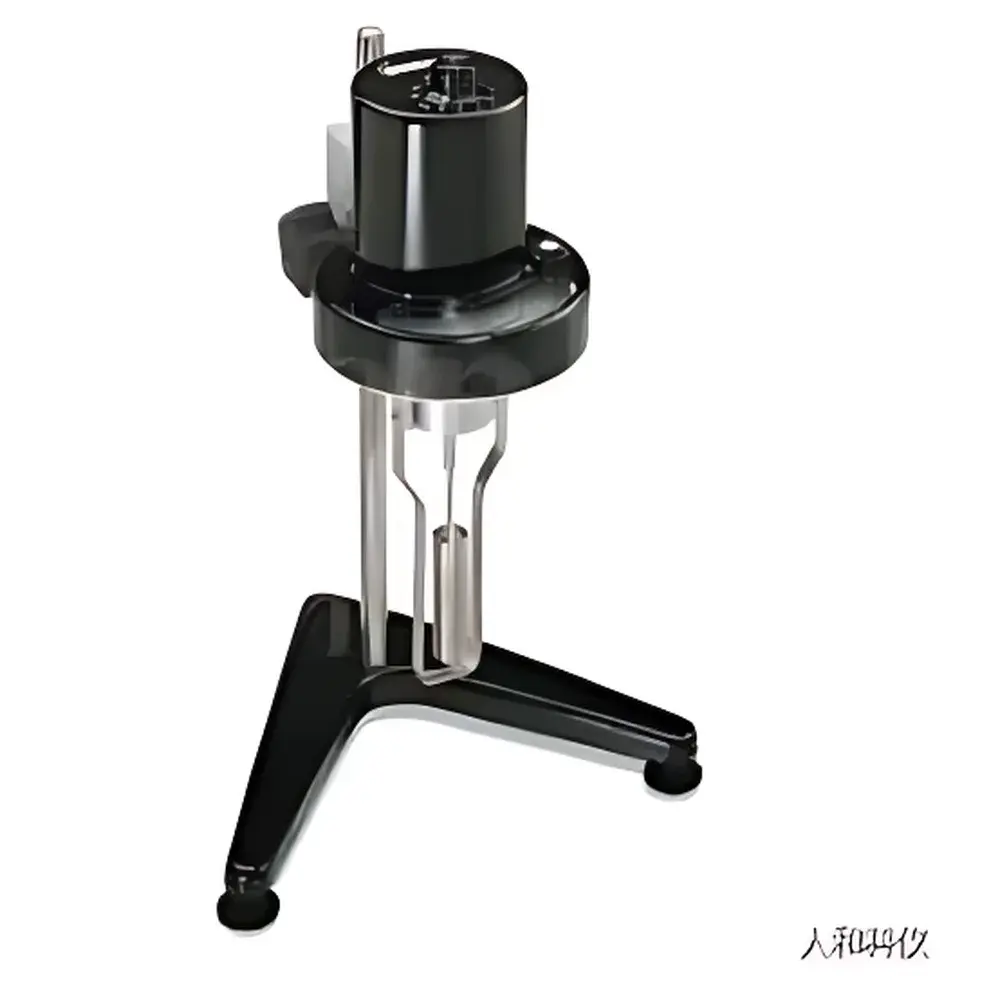
Brookfield LVT/RVT/HAT/HBT Series Analog Dial Viscometers
| Brand | Brookfield |
|---|---|
| Origin | USA |
| Model Variants | LVT, RVT, HAT, HBT |
| Instrument Type | Rotational Viscometer (Analog Dial) |
| Viscosity Range | 1–64 × 10⁶ mPa·s (cP) |
| Accuracy | ±1% of full-scale range |
| Repeatability | ±0.2% |
| Operating Temperature | Ambient |
| Motor Type | Low-noise DC motor |
| Compliance | UL Class 1, Group D (explosion-proof variants available without motor) |
| Standard Accessories | Instrument body, set of spindles, support stand, guard leg, carrying case |
| Compatibility | Fully compatible with all Brookfield accessories (e.g., UL Adapter, thermosel systems, small sample adapters) |
Overview
The Brookfield LVT/RVT/HAT/HBT Series Analog Dial Viscometers are precision-engineered rotational viscometers designed for reliable, repeatable measurement of dynamic viscosity in laboratory and industrial quality control environments. Based on the well-established Couette flow principle—where torque required to rotate a spindle at constant speed within a fluid is directly proportional to its shear viscosity—these instruments deliver robust performance across four calibrated sensitivity ranges. Each model employs a calibrated spring-and-dial mechanical system to indicate percent torque (%Torque), which can be converted to absolute viscosity (cP or mPa·s) using standardized spindle geometry, rotational speed, and calibration constants traceable to NIST-certified reference oils. Unlike digital instruments, the analog design offers inherent immunity to electromagnetic interference and eliminates dependency on firmware or software updates—making it especially suitable for regulated manufacturing floors, field service labs, and educational settings where operational simplicity and long-term stability are prioritized.
Key Features
- Mechanically driven analog dial display providing real-time %Torque indication with direct visual interpretation and minimal training requirements
- Four model families (LVT, RVT, HAT, HBT) engineered for distinct viscosity ranges—from low-viscosity liquids (1 cP minimum with UL Adapter) to highly viscous pastes and gels (up to 64 million cP)
- UL-listed explosion-proof configurations available for hazardous locations (Class 1, Group D), compliant with NEC Article 500 when used without integrated motor drive
- High-reliability DC motor delivering consistent speed control across 8–10 RPM increments per model; operating speeds range from 0.3 to 100 RPM depending on spindle selection and model
- ±1% full-scale accuracy and ±0.2% repeatability under ISO 2555 and ASTM D2196-compliant test conditions
- Modular mechanical architecture supporting universal interchangeability with all Brookfield accessories—including temperature-controlled jackets, small-volume sample chambers, and extended-length spindles
- Integrated guard leg ensures consistent immersion depth and minimizes edge effects during measurement
Sample Compatibility & Compliance
These viscometers accommodate a broad spectrum of Newtonian and mildly non-Newtonian materials, including solvents, paints, adhesives, food products (e.g., peanut butter, chocolate, honey), construction sealants, asphalt binders, epoxy resins, and pharmaceutical ointments. Spindle selection (LV, RV, HA, HB types) must align with both expected viscosity magnitude and sample rheological behavior—e.g., HA/HB spindles are optimized for high-torque, low-shear-rate applications involving thixotropic or yield-stress fluids. All models meet general-purpose compliance requirements for QC laboratories operating under GLP and GMP frameworks. While the analog interface does not support electronic audit trails, documented calibration records, spindle identification logs, and operator verification signatures satisfy FDA 21 CFR Part 11 predicate rules for paper-based systems. Traceable calibration certificates are issued per ISO/IEC 17025-accredited procedures.
Software & Data Management
As fully analog instruments, the LVT/RVT/HAT/HBT series do not incorporate embedded microprocessors, data logging, or USB connectivity. Viscosity values are manually recorded from the dial readout after applying the appropriate conversion factor (provided in the included calibration manual). For laboratories requiring digital documentation, Brookfield offers optional analog-to-digital converter kits (e.g., DV+ Interface) that digitize %Torque output for integration into LIMS or Excel-based reporting workflows. All calibration data, spindle specifications, and speed tables are maintained in the printed Operator’s Manual (PN: M/100-200), which includes ASTM D1200 and ISO 2555 cross-referenced test protocols.
Applications
- QC testing of coatings and inks for consistency prior to spray application or gravure printing
- Routine monitoring of asphalt penetration grade and polymer-modified binder stability
- Batch release verification of pharmaceutical gels and topical suspensions per USP
- Viscosity profiling of edible oils, syrups, and dairy emulsions during thermal processing
- Process validation of epoxy curing kinetics via time-dependent viscosity sweeps (using timed manual readings)
- Educational demonstration of Newtonian fluid behavior, shear-thinning response, and yield stress estimation
FAQ
What is the minimum measurable viscosity for the LVT model?
With the optional UL Adapter accessory, the LVT achieves 1 cP; with standard LV spindles, the practical lower limit is 15 cP.
Can I use the same spindle across all four models (LVT/RVT/HAT/HBT)?
No—spindles are model-specific and mechanically keyed to prevent incorrect installation; LV spindles are not interchangeable with HA or HB units.
Is calibration required before each use?
Periodic verification against certified reference standards is recommended per ISO/IEC 17025; daily zero-checks and routine spindle inspection suffice for most QC applications.
Does the instrument comply with ASTM D2196?
Yes—the LVT/RVT/HAT/HBT series meets all mechanical and procedural requirements specified in ASTM D2196 for rotational viscometry of paints and related materials.
How is temperature controlled during measurement?
Temperature regulation requires external accessories: Brookfield Thermosel systems or water-jacketed sample cups (sold separately) integrate seamlessly with the standard support stand and guard leg assembly.
Related Products



