
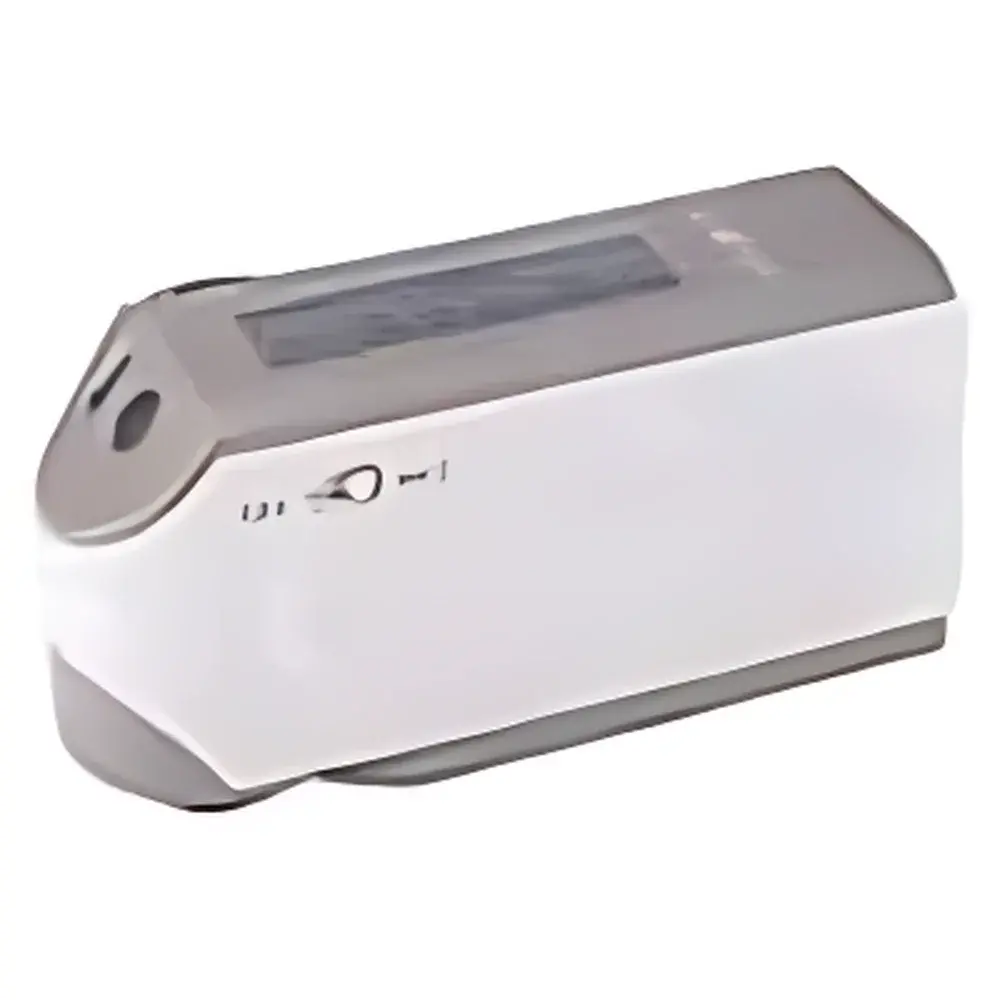

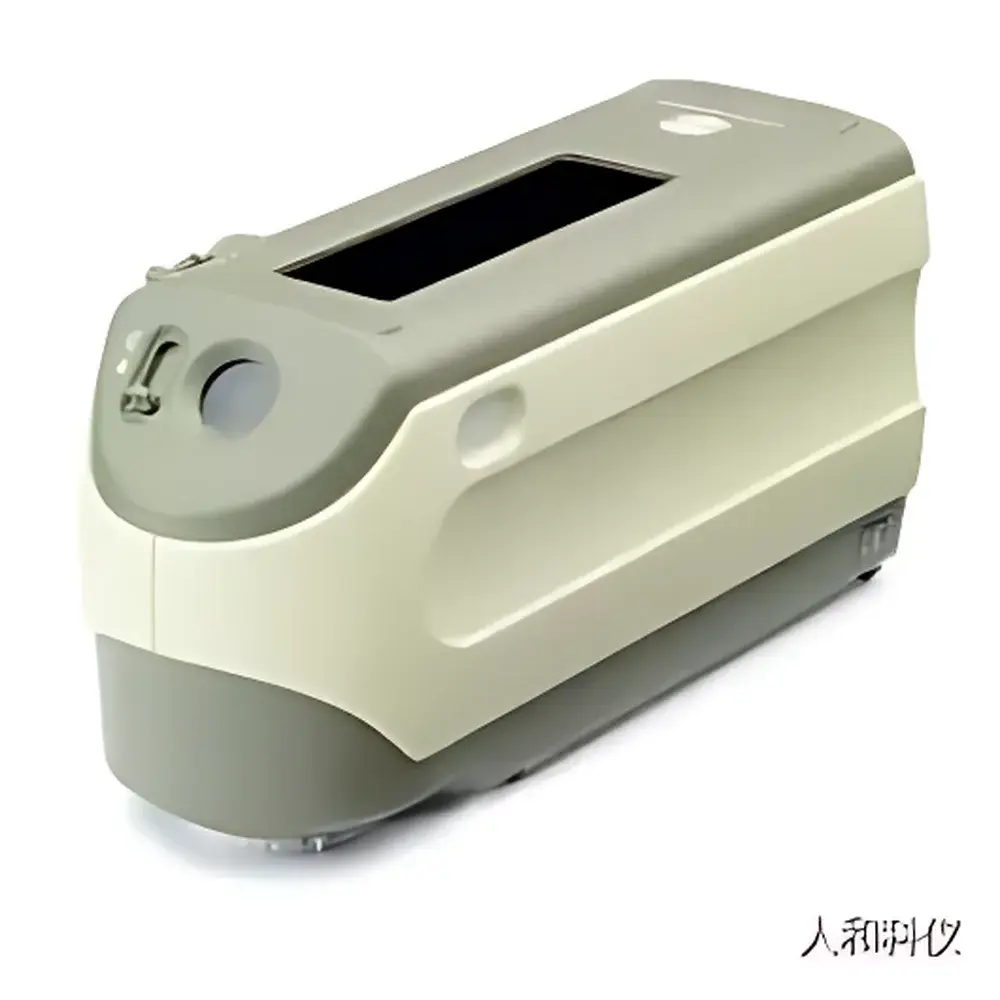

Konica Minolta CM-2500c / CM-2600d Portable Spectrophotometer
| Brand | Konica Minolta |
|---|---|
| Origin | Japan |
| Model | CM-2500c / CM-2600d |
| Instrument Type | Portable Spectrophotometer |
| Optical Geometry | 45°/0° (CM-2500c) / d/8° integrating sphere with SCI & SCE simultaneous measurement (CM-2600d) |
| Light Source | Pulsed Xenon Lamp(s) |
| Spectral Range | 360–740 nm |
| Spectral Interval | 10 nm |
| FWHM | ~10 nm |
| Repeatability | ΔE*ab ≤ 0.04 (CM-2600d, MAV/SCI, 30 measurements) or ≤ 0.05 (CM-2500c) |
| Reflectance Range | 0–175% |
| Resolution | 0.01% |
| Measurement Time | ~1.5 s (standard), ~2 s (fluorescence mode) |
| Aperture Options | MAV Φ8 mm / Φ11 mm |
| Data Storage | 1700 measurements (CM-2600d), 700 (CM-2500c) |
| Compliance | CIE No. 15, ISO 7724-1, ASTM E1164, DIN 5033-7, JIS Z8722 Condition C |
| UV Adjustment | Digital real-time UV correction (CM-2600d only) |
| Interface | RS-232C |
| Power | 4 × AA batteries or AC adapter |
| Dimensions (W×H×D) | 69 × 96 × 193 mm |
| Weight | ~670 g (battery-free) |
Overview
The Konica Minolta CM-2500c and CM-2600d are high-precision portable spectrophotometers engineered for reliable color measurement in industrial quality control and R&D environments. Designed for traceable, repeatable color evaluation under real-world conditions, both models employ advanced optical architectures grounded in CIE-defined geometries. The CM-2500c utilizes a 45°/0° annular illumination system—optimized to emulate human visual perception—where light is delivered at 45° around the sample perimeter and collected perpendicularly, minimizing directional bias and enhancing inter-instrument agreement for textured or directional surfaces. In contrast, the CM-2600d implements a dual-beam d/8° integrating sphere configuration compliant with ISO 7724-1 and ASTM E1164, enabling simultaneous measurement of Specular Component Included (SCI) and Specular Component Excluded (SCE) reflectance—a critical capability for evaluating both material-inherent color (SCI) and surface-appearance color (SCE) without repositioning or recalibration. Both instruments operate across a full visible spectrum (360–740 nm) at 10 nm intervals, with spectral bandwidths of approximately 10 nm (FWHM), ensuring compatibility with major color difference formulas (CIE L*a*b*, CIEDE2000, CMC, CIE94) and industry-standard illuminants (D65, A, F2, D50, etc.).
Key Features
- Optical flexibility: CM-2500c delivers high repeatability via its 45°/0° geometry; CM-2600d supports dual-mode d/8° sphere optics with true SCI/SCE concurrent acquisition in ≤1.5 seconds.
- Digital UV correction: CM-2600d incorporates real-time, software-based UV adjustment—eliminating mechanical filter swaps and enabling accurate measurement of fluorescent whitening agents (FWAs) and optically brightened materials per ISO 105-J03 and AATCC TM183.
- Multi-aperture adaptability: Interchangeable MAV (Φ8 mm) and SAV (Φ3 mm) measurement ports allow precise targeting of heterogeneous or small-area samples, including automotive trim, printed labels, textile swatches, and molded plastic components.
- Robust field operation: Weighing only ~670 g and measuring 69 × 96 × 193 mm, both units feature sealed optical paths, shock-resistant housing, and battery-powered mobility (up to 1,000 measurements per AA battery set).
- Human-centered interface: Integrated navigation wheel enables intuitive parameter selection and menu navigation with one hand; 180° rotatable LCD ensures legibility during multi-angle measurement—including overhead, vertical, or inverted positioning.
- Low-maintenance architecture: Solid-state design minimizes moving parts; no mechanical UV filters or aperture changers require servicing—supporting GLP-compliant long-term deployment with minimal calibration drift.
Sample Compatibility & Compliance
The CM-2500c and CM-2600d are validated for non-destructive reflectance measurement of flat, curved, textured, and moderately glossy surfaces—including injection-molded plastics, coil-coated metals, laminated films, paperboard packaging, painted automotive interiors, and cosmetic compacts. Their optical designs conform to international metrological standards: CIE Publication 15:2018, ISO 7724-1:2022 (colorimetry), ASTM E1164-22 (spectrophotometric measurement), DIN 5033-7:2018 (color measurement geometry), and JIS Z8722:2012 (Condition C). The CM-2600d further meets requirements for regulatory color consistency in FDA-regulated industries (e.g., pharmaceutical packaging per USP , cosmetic labeling per ISO 8596), supporting audit-ready data export with timestamped metadata and user authentication logs when paired with SpectraMagic™ NX software.
Software & Data Management
Data capture and analysis are enabled through Konica Minolta’s SpectraMagic™ NX software (sold separately), which provides full compliance with 21 CFR Part 11 for electronic records and signatures—including role-based access control, audit trail generation, and secure password-protected method templates. The instrument stores up to 1,700 measurement records (CM-2600d) or 700 (CM-2500c), each containing full spectral data (31 points), tristimulus values, multiple color spaces (L*a*b*, L*C*h, Yxy, XYZ), whiteness/yellowness indices (ASTM E313, ISO 2470), and pass/fail thresholds defined by rectangular or elliptical ΔE*ab tolerances. RS-232C serial output supports integration into automated QC workflows and LIMS environments. All stored data include measurement geometry (SCI/SCE), aperture size, illuminant/observer condition, and UV correction status—ensuring full traceability from raw spectrum to final specification decision.
Applications
These spectrophotometers serve as primary color verification tools across regulated and high-volume manufacturing sectors. In automotive supply chains, they validate color match between interior trims, dashboards, and seat fabrics against master standards under D65 illumination. In coatings and ink production, they quantify batch-to-batch consistency of solvent-based, waterborne, and UV-curable systems—especially where fluorescence or metamerism must be controlled. Packaging converters use them to verify Pantone®-matched flexographic prints on corrugated board and metallized films. Plastics processors rely on their portability to perform in-line checks at extrusion lines and injection molding cells. Additional applications include quality assurance of medical device housings (ISO 10993-10 biocompatibility color stability), textile dye lots (AATCC Evaluation Procedure 1), and architectural coatings subject to ASTM D2244 color difference limits.
FAQ
What is the difference between the 45°/0° geometry (CM-2500c) and d/8° sphere (CM-2600d)?
The 45°/0° system replicates viewing angle-dependent appearance and is ideal for directional surfaces like brushed metal or grained leather. The d/8° sphere averages reflectance over all angles and enables SCI/SCE separation—essential for detecting pigment dispersion differences or surface texture effects.
Can these instruments measure transparent or translucent samples?
No—they are designed exclusively for opaque or diffusely reflecting solid surfaces. Transmission or haze measurement requires dedicated transmission spectrophotometers (e.g., CM-700d with transmission attachment).
Is UV calibration required before every measurement?
No. The CM-2600d performs digital UV correction in real time using stored reference spectra; only routine white calibration (daily or per shift) is recommended for optimal accuracy.
Does the instrument support custom color tolerance ellipses (e.g., MacAdam ellipses)?
Yes—SpectraMagic™ NX allows definition of user-specified CIELAB or CIEDE2000 tolerance regions aligned with perceptual uniformity, including elliptical ΔE boundaries scaled per industry-specific acceptance criteria.
Are firmware updates and calibration services available internationally?
Yes—Konica Minolta maintains certified service centers in >40 countries offering NIST-traceable recalibration, firmware upgrades, and technical validation reports compliant with ISO/IEC 17025.



