
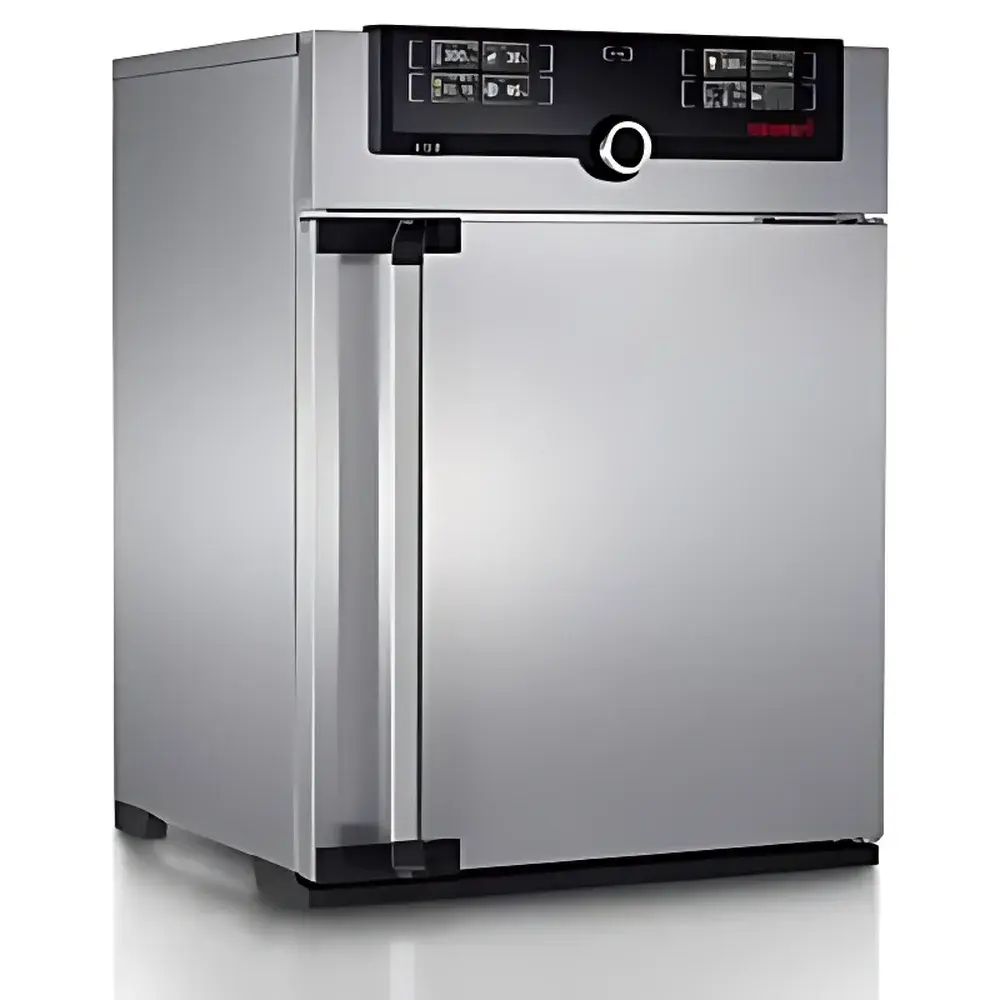
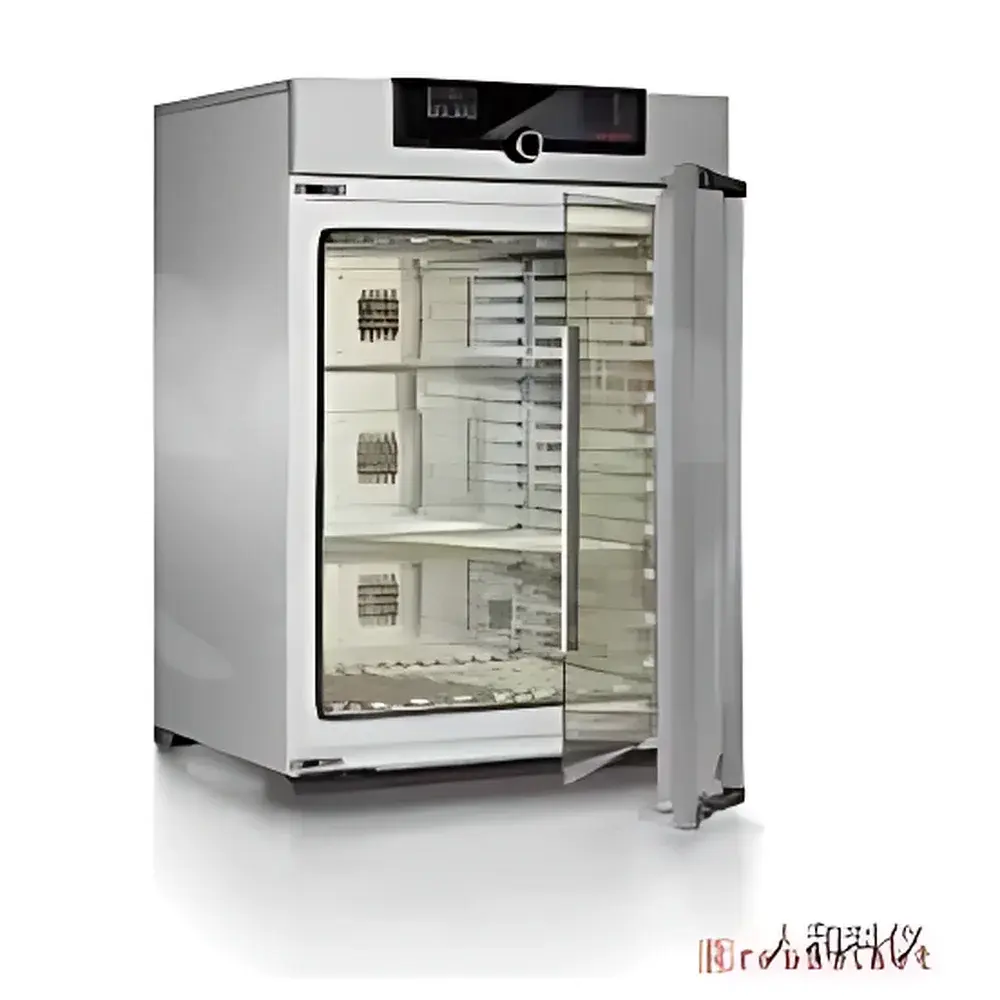
MEMMERT HPP260 Photostability and Temperature-Humidity Controlled Chamber
| Brand | MEMMERT |
|---|---|
| Origin | Germany |
| Model | HPP260 |
| Instrument Type | Upright Environmental Test Chamber |
| Internal Volume | 256 L |
| Internal Dimensions (W×H×D) | 640 × 800 × 500 mm |
| External Dimensions (W×H×D) | 824 × 1186 × 774 mm |
| Weight (Net/Gross) | 103 / 121 kg |
| Temperature Range (Dark) | 0–70 °C |
| Temperature Range (Illuminated) | 10–40 °C |
| Temperature Setpoint Accuracy | ±0.1 K |
| Humidity Range (Dark) | 10–90 %RH |
| Humidity Range (Illuminated) | 10–85 %RH |
| Humidity Setpoint Accuracy | ±1 %RH |
| Standard Shelves | 2 pcs (Max. 9) |
| Construction | AISI 304 Stainless Steel (1.4301) Interior |
| Cooling Technology | Peltier-based Thermoelectric System |
| Compliance | ICH Q1A(R3), RoHS, GLP-ready |
Overview
The MEMMERT HPP260 is a precision-engineered photostability and temperature-humidity controlled chamber designed explicitly for long-term stability testing of pharmaceuticals, biologics, and advanced materials in compliance with ICH Q1A(R3) guidelines. Unlike conventional refrigerated chambers relying on vapor-compression cycles, the HPP260 employs solid-state Peltier thermoelectric modules for both heating and cooling—enabling bidirectional thermal control without refrigerants, oil lubrication, or mechanical compressors. This architecture delivers exceptional setpoint stability (±0.1 K temperature, ±1 %RH humidity), near-silent operation (<45 dB(A)), and intrinsic containment: the chamber interior is hermetically sealed from ambient air exchange, eliminating cross-contamination risks and ensuring unambiguous environmental isolation during critical stability studies. The all-AISI 304 (1.4301) stainless steel inner chamber—electropolished and passivated—provides corrosion resistance, non-porous surface integrity, and full compatibility with cleaning validation protocols required under GMP environments.
Key Features
- Peltier-based dual-mode climate control: Achieves precise, energy-efficient temperature regulation across 0–70 °C (dark) and 10–40 °C (illuminated), with no ozone-depleting refrigerants or maintenance-intensive compressors.
- Integrated photostability illumination system: Compliant with ICH Q1B, featuring UV-A/UV-B and visible light sources calibrated to deliver defined irradiance levels (e.g., 1.2 million lux·hr visible, 200 W/m² UV) across uniform exposure zones.
- Dynamic humidity management: Independent steam-based humidification and desiccant-assisted dehumidification maintain 10–90 %RH (dark) and 10–85 %RH (illuminated) with minimal hysteresis—even under challenging ambient conditions (e.g., >35 °C / >80 %RH lab environments).
- GLP- and GMP-aligned hardware architecture: All internal surfaces are electropolished stainless steel; door gaskets meet ISO 14644-1 Class 5 particulate requirements; chamber integrity verified via helium leak testing per ASTM E493.
- Modular shelving system: Two standard perforated shelves included; up to nine shelves configurable to optimize sample density while preserving laminar airflow and thermal homogeneity (validated per ISO 16770 Annex A).
Sample Compatibility & Compliance
The HPP260 supports diverse sample formats—including vials, blister packs, syringes, and primary packaging—without compromising environmental fidelity. Its sealed interior prevents ingress of airborne particulates, VOCs, or microbial contaminants, making it suitable for stability testing of sterile products and high-potency compounds. Regulatory alignment includes full support for IQ/OQ/PQ qualification documentation packages, audit-ready electronic log files (with time-stamped parameter history), and optional 21 CFR Part 11-compliant software modules. The chamber satisfies ICH Q1A(R3) requirements for long-term, accelerated, and intermediate storage conditions, including Zone IVa (30 °C / 65 %RH) and photostability Condition 1 (cool white fluorescent + near-UV). It also conforms to RoHS Directive 2011/65/EU and EU Regulation (EC) No 1935/2004 for material safety.
Software & Data Management
Equipped with MEMMERT’s proprietary *APT.line™* control software, the HPP260 provides real-time monitoring, remote access via Ethernet/Wi-Fi, and automated data logging at user-defined intervals (down to 1-second resolution). All recorded parameters—including chamber temperature, relative humidity, light irradiance, door-open events, and system alarms—are stored in encrypted CSV and PDF formats compliant with ALCOA+ principles. Optional *APT.control* software enables multi-chamber synchronization, deviation alerting via email/SMS, and electronic signature workflows aligned with FDA 21 CFR Part 11 Subpart C. Audit trails include immutable timestamps, operator IDs, and change history for every parameter modification—fully traceable during regulatory inspections.
Applications
- ICH-compliant stability studies for drug substance and product registration dossiers (CTD Modules 3.2.P.8 and 3.2.S.7)
- Photostability testing per ICH Q1B and USP
- Accelerated aging of medical device packaging (ISO 11607-1)
- Material degradation analysis under controlled thermo-hygrometric stress (e.g., polymers, excipients, printed electronics)
- Reference standard storage under certified environmental conditions (USP , Ph. Eur. 2.2.45)
- Environmental stress screening of biologics and mRNA formulations
FAQ
Does the HPP260 require external water supply or drainage?
No—the integrated steam humidifier uses a self-contained 3.5 L reservoir with automatic level monitoring and dry-run protection.
Can the chamber operate continuously at 40 °C with 85 %RH under illumination?
Yes—its Peltier-based thermal management and active desiccant regeneration ensure stable setpoint maintenance even at maximum specified operating limits.
Is calibration traceable to national standards?
All factory calibrations are performed using NIST-traceable reference sensors; on-site calibration kits and accredited third-party services are available.
What validation documentation is provided?
Standard delivery includes IQ/OQ templates, as-built drawings, material certifications (EN 10088-1 for 1.4301), and a Declaration of Conformity per EU Machinery Directive 2006/42/EC.
How is temperature uniformity validated inside the working chamber?
Uniformity is verified per ISO 16770 using 9-point sensor mapping (per shelf level); typical results show ≤ ±0.4 K deviation across the entire 256 L volume at 25 °C / 60 %RH.



