BAUR IRG 4000 Integrated Pulse Reflection Tester for Cable Fault Location Systems
| Brand | BAUR |
|---|---|
| Origin | Austria |
| Model | IRG 4000 |
| Pulse Voltage | 20–200 V |
| Pulse Width | 20 ns–1.3 ms |
| Output Impedance | 8–2,000 Ω |
| Input Gain Dynamic Range | 107 dB (−63 to +44 dB) |
| Measurement Range | 10 m–1,000 km (at v/2 = 80 m/μs) |
| Accuracy | ±0.1% of reading |
| Sampling Rate | 400 MHz |
| Resolution | 0.1 m (at v/2 = 80 m/μs) |
| Propagation Velocity (v/2) | 20–150 m/μs (adjustable) |
| Insulation Resistance Test | 1,000 V, 0 Ω–5 GΩ |
| Operating System | Windows 11/10 (64-bit), ≥8 GB RAM, ≥1280×1024 display |
| Storage | >100,000 measurements (SSD-dependent) |
| Power Supply | 100–240 V AC, 50/60 Hz, 150 VA |
| Safety Rating | CAT II/600 V (TDR cables optional CAT IV/600 V) |
| Environmental Operating Range | 0–50°C (extended: −20–60°C) |
| Compliance | CE (2014/35/EU Low Voltage Directive, 2014/30/EU EMC Directive) |
Overview
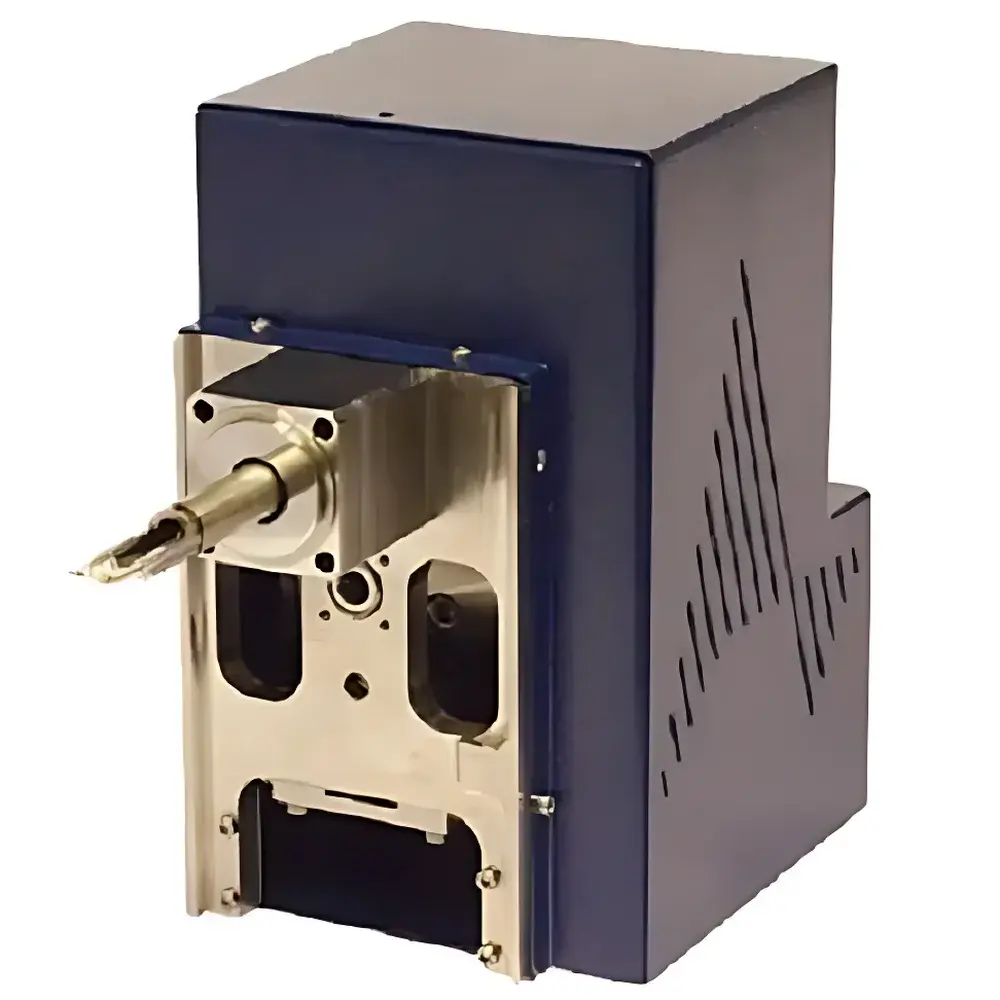
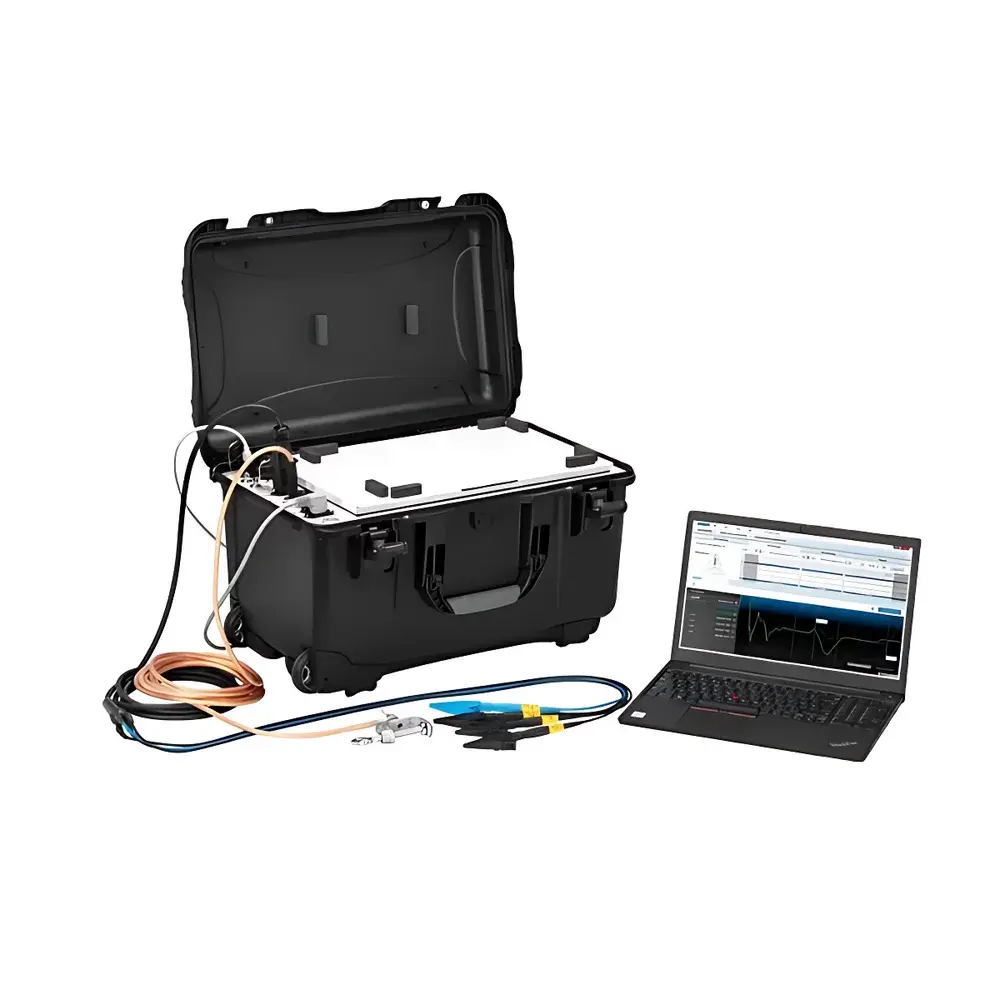
The BAUR IRG 4000 is an integrated pulse reflection tester engineered for high-precision cable fault location within BAUR’s modular cable diagnostic ecosystem. It operates on the Time-Domain Reflectometry (TDR) principle—transmitting calibrated low-energy voltage pulses into energized or de-energized power cables and analyzing reflected waveforms to identify impedance discontinuities caused by faults such as open circuits, short circuits, water trees, partial discharges, or moisture ingress. Unlike standalone TDR units, the IRG 4000 is not a portable field instrument but a core hardware module embedded within BAUR’s comprehensive fault location platforms—including titron®, transcable 4000, and Syscompact 4000 systems—enabling synchronized operation with high-voltage surge generators, arc reflection units, and GIS-integrated mapping software. Its architecture supports both single-phase and three-phase cable topologies, including shielded, armored, and buried distribution networks up to 35 kV.
Key Features
- Industrial-grade embedded PC with real-time waveform acquisition and onboard signal processing, eliminating external latency and ensuring deterministic timing control for sub-meter resolution.
- Adaptive SIM/MIM (Selective Impulse Measurement / Multi-Impulse Matching) algorithm—exclusive to titron®-integrated configurations—that acquires 20 independent reflections per high-voltage pulse and selects the optimal waveform based on signal-to-noise ratio and phase coherence, significantly improving repeatability for intermittent or moisture-affected faults.
- Configurable propagation velocity (v/2) from 20 to 150 m/μs, allowing precise calibration across diverse cable types—including XLPE, PILC, EPR, and submarine cables—with dielectric constant compensation.
- Four operational measurement modes: automatic distance calculation, differential comparison (for comparative baseline analysis), averaging (to suppress noise in low-SNR environments), continuous monitoring (for transient fault capture), and envelope detection (optimized for intermittent faults).
- Integrated insulation resistance testing at 1,000 V DC with 5 GΩ upper range and 0.1% measurement accuracy, supporting IEEE 43 and IEC 60204-1 compliance checks prior to high-voltage diagnostics.
Sample Compatibility & Compliance
The IRG 4000 is validated for use with medium-voltage (MV) and low-voltage (LV) power distribution cables rated up to 35 kV. It accommodates conductor cross-sections from 16 mm² to 1,000 mm² and supports both metallic and non-metallic sheaths. The unit meets EN 61000-6-3 (EMC emission limits) and EN 61000-6-2 (immunity requirements), and carries CE marking under the EU Low Voltage Directive 2014/35/EU and EMC Directive 2014/30/EU. For applications requiring regulatory traceability—such as utility asset management under ISO 55001 or grid maintenance governed by IEEE 1312—it supports audit-ready data logging with timestamped metadata, user authentication, and tamper-evident export via encrypted PDF reports (DB3 database format). Optional integration with statex® TD enables statistical trending of insulation degradation over time, aligning with predictive maintenance frameworks.
Software & Data Management
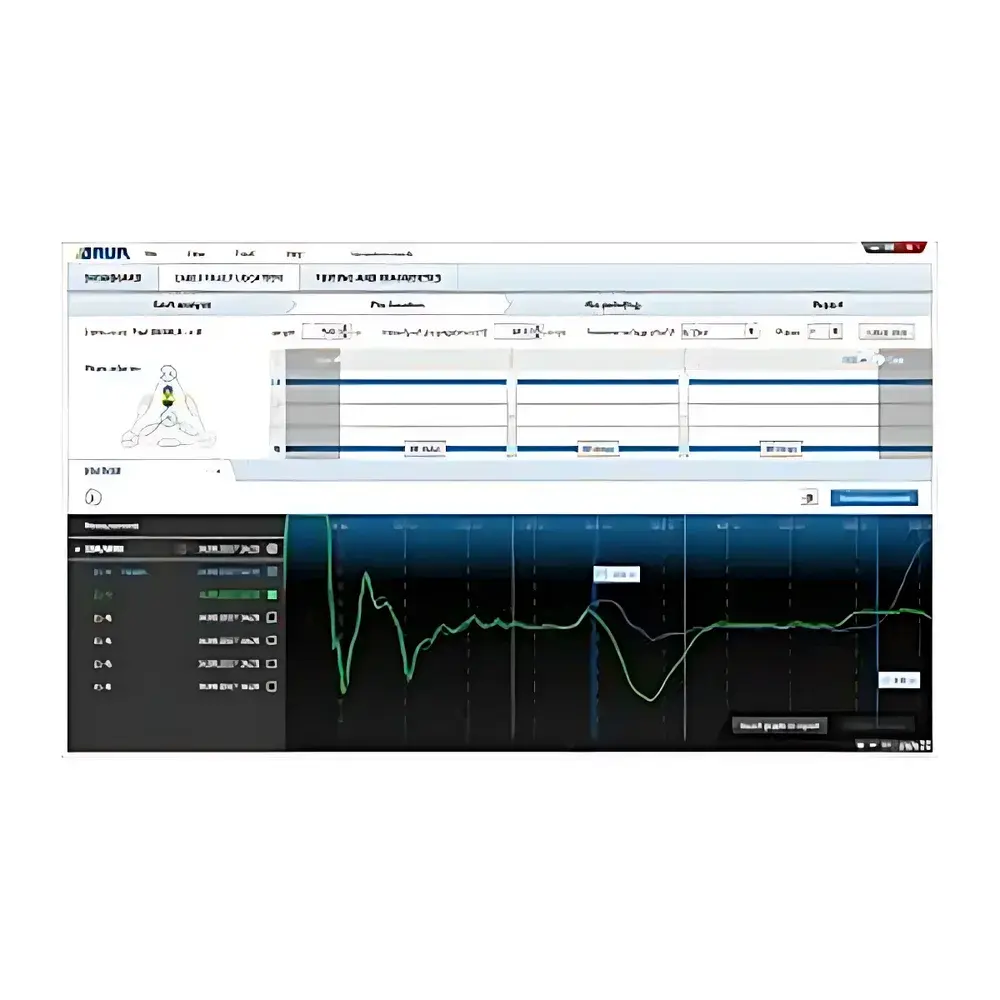
The IRG 4000 operates exclusively under BAUR’s proprietary software suite (BAUR Software 4), which provides full configuration, real-time visualization, automated report generation, and GIS-linked fault annotation. Measurement data is stored in a structured DB3 relational database with version-controlled schema, enabling SQL-based querying and long-term archival. Export formats include PDF (with embedded calibration certificates and operator signatures) and CSV (compatible with third-party analytics tools like MATLAB or Python pandas). When deployed with titron® systems, the IRG 4000 supports FDA 21 CFR Part 11-compliant electronic records through optional digital signature modules and audit trail activation—meeting GLP/GMP documentation standards for critical infrastructure operators subject to regulatory oversight. Remote firmware updates and parameter validation scripts are delivered via secure HTTPS channels with SHA-256 integrity verification.
Applications
- Pre-commissioning verification of newly installed MV/LV cables to detect manufacturing defects, installation damage, or improper jointing.
- Routine condition assessment of aging underground networks—especially where water treeing or partial discharge activity compromises dielectric integrity.
- Post-fault triage in utility distribution grids to isolate fault segments before dispatching repair crews, reducing outage duration and crew exposure.
- Validation of remedial actions after cable rejuvenation (e.g., fluid injection) or joint replacement, using baseline vs. post-intervention waveform comparisons.
- Research and development of novel cable materials and shielding architectures, leveraging high-resolution reflection profiling to correlate physical defect morphology with electrical signature anomalies.
FAQ
Is the IRG 4000 a standalone instrument?
No—the IRG 4000 is a system-level hardware module designed for integration into BAUR’s cable fault location platforms (e.g., titron®, transcable 4000). It cannot operate independently without host software, HV surge source synchronization, and calibration databases.
What cable types does it support?
It supports all common power cable constructions: single-core and three-core XLPE, PVC, EPR, PILC, and oil-filled cables—with configurable velocity settings to accommodate variations in insulation permittivity and sheath geometry.
Does it comply with international testing standards?
Yes—its TDR methodology aligns with IEEE Std 400.2-2013 (Guide for Field Testing of Shielded Power Cable Systems Using Very Low Frequency) and IEC 60502-2 (Power cables with extruded insulation). Insulation resistance testing conforms to IEC 60204-1 and IEEE 43.
Can measurement data be exported for regulatory submission?
Yes—PDF reports include digital signatures, calibration traceability, environmental metadata (temperature, humidity), and operator credentials. CSV exports retain raw waveform samples and parameter logs for forensic reanalysis.
What safety certifications apply during live-line testing?
The IRG 4000 itself is rated CAT II/600 V. When used with BAUR’s certified TDR cables and surge generators, the complete measurement chain may achieve CAT IV/600 V rating—subject to proper grounding, PPE protocols, and adherence to ENA TS 43-24 or equivalent national grid safety codes.
Related Products