
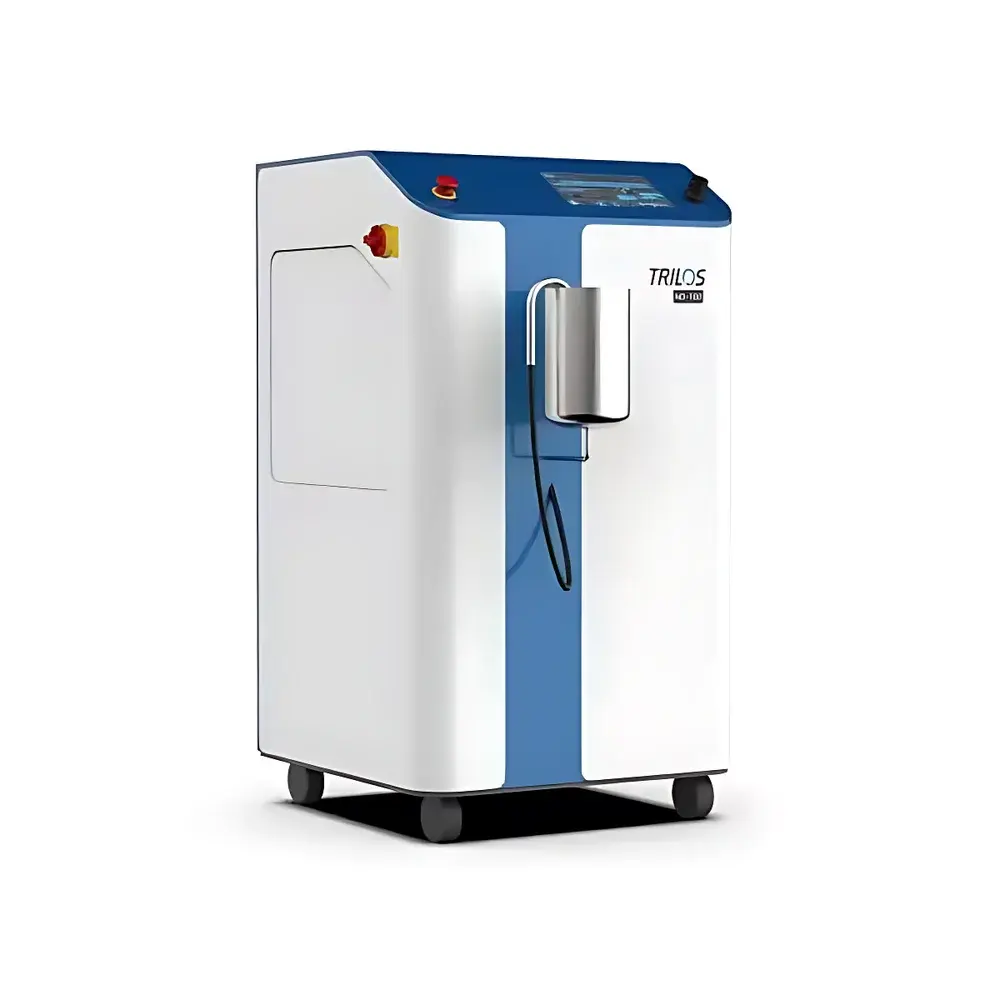
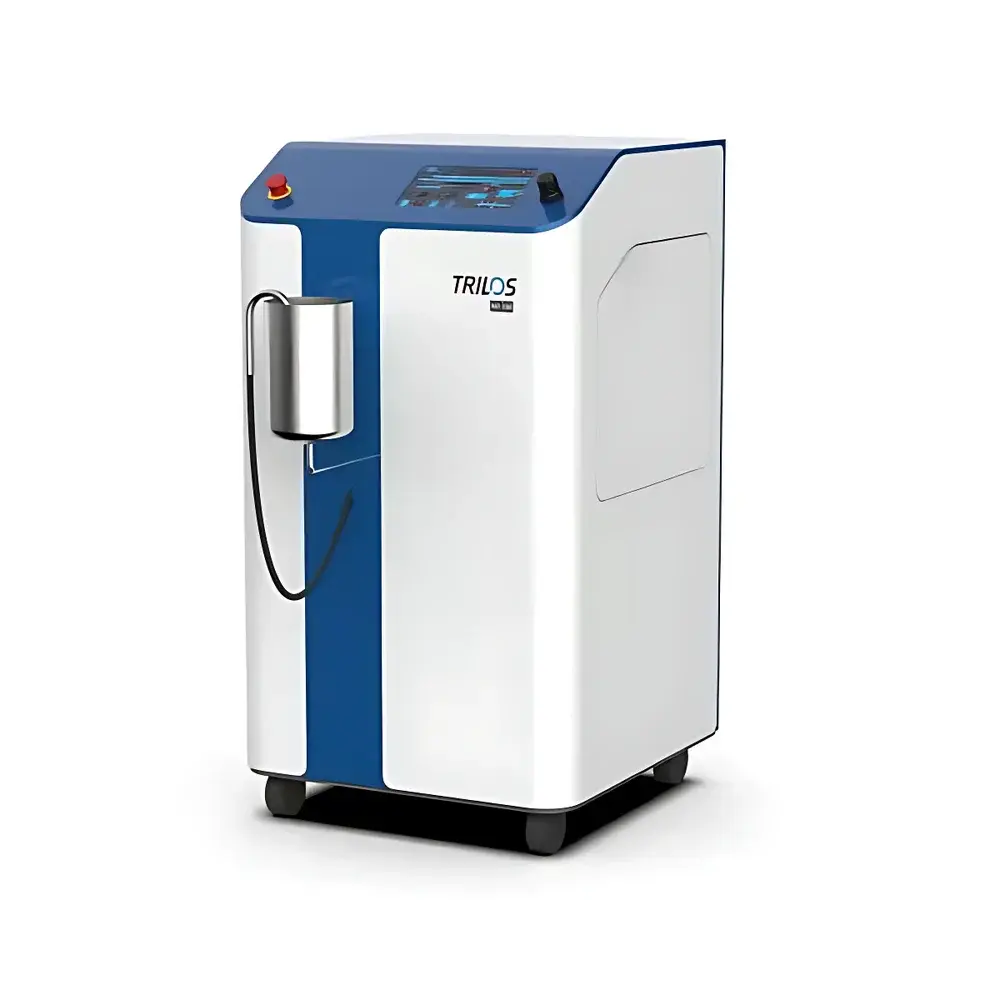
TRILOS ND100 Ultra-High-Pressure Microfluidic Nanohomogenizer
| Brand | TRILOS |
|---|---|
| Origin | USA |
| Model | ND100 |
| Instrument Type | High-Pressure Microfluidic Homogenizer |
| Dimensions (W×D×H) | 650 × 650 × 1350 mm |
| Processing Capacity | 5 L/h |
| Maximum Operating Pressure | 3000 bar (300 MPa / 43,500 psi) |
| Design Pressure | 3500 bar (350 MPa / 50,750 psi) |
| Minimum Sample Volume | 30 mL |
| Max. Feed Particle Size | ≤300 µm |
| Max. Feed Viscosity | ≤2000 cP |
| Temperature Control Range | 4–10 °C (during homogenization) |
| Max. Inlet Temperature | ≤90 °C |
| Homogenizing Chamber Material | 100% Synthetic Diamond |
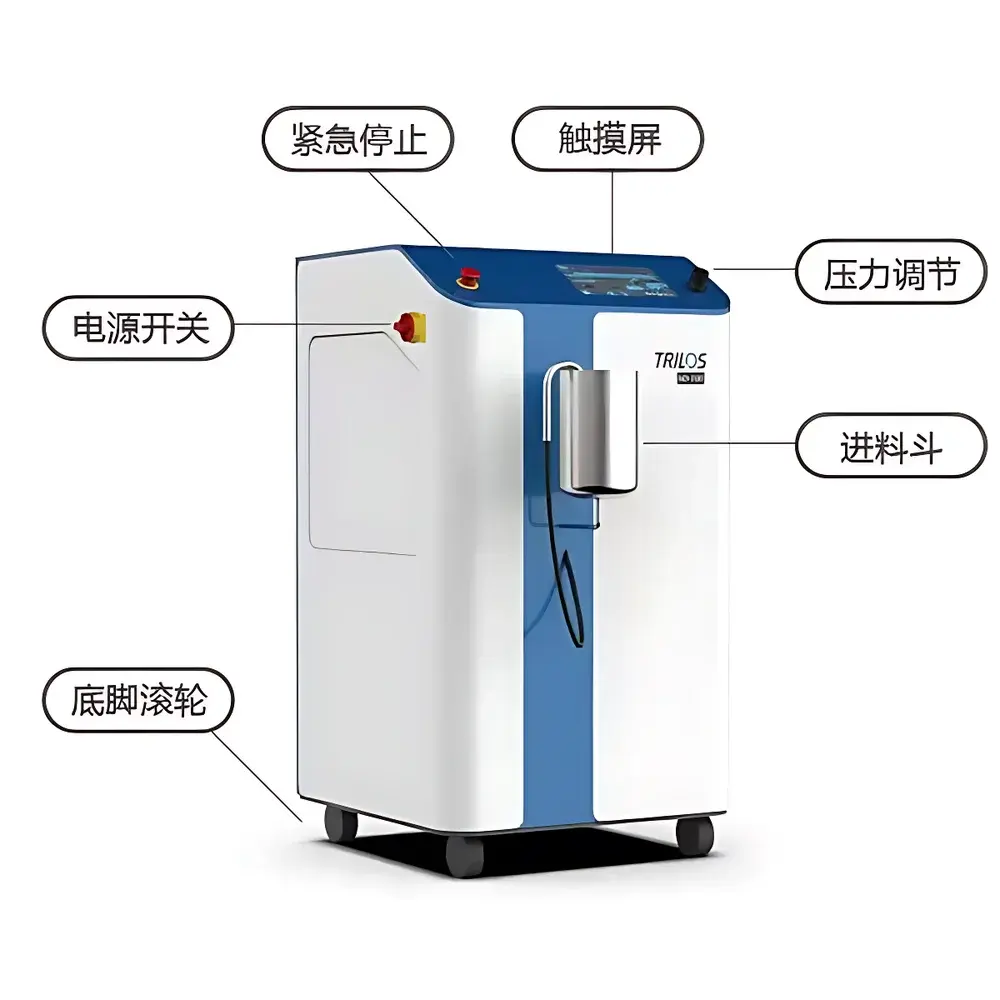
| Control Interface | 10-inch Industrial Touchscreen PLC System |
| Compliance | CE Machinery Directive 2006/42/EC |
| Data Interface | USB for real-time curve logging and audit-ready export |
Overview
The TRILOS ND100 Ultra-High-Pressure Microfluidic Nanohomogenizer is an engineered solution for reproducible, scalable nanoscale particle size reduction and dispersion under precisely controlled hydraulic conditions. It operates on the principle of microfluidic interaction—where sample fluid is pressurized to up to 3000 bar and forced through fixed-geometry microchannels (Z-type or Y-type interaction chambers) fabricated entirely from synthetic diamond. This process subjects suspended particles to simultaneous high-velocity shear, turbulent eddy impaction, cavitation-induced fragmentation, and transient thermal gradients—collectively enabling sub-100 nm mean particle diameter (MPD) generation with narrow polydispersity index (PDI < 0.1). Unlike valve-based homogenizers, the ND100 eliminates mechanical wear-related drift by replacing adjustable metal valves with rigid, chemically inert diamond microchannels—ensuring long-term pressure stability, zero metal leaching, and batch-to-batch equivalence critical in GMP-compliant development workflows.
Key Features
- Synthetic diamond interaction chamber (Z/Y geometry) rated for continuous operation at 3000 bar, with design margin to 3500 bar
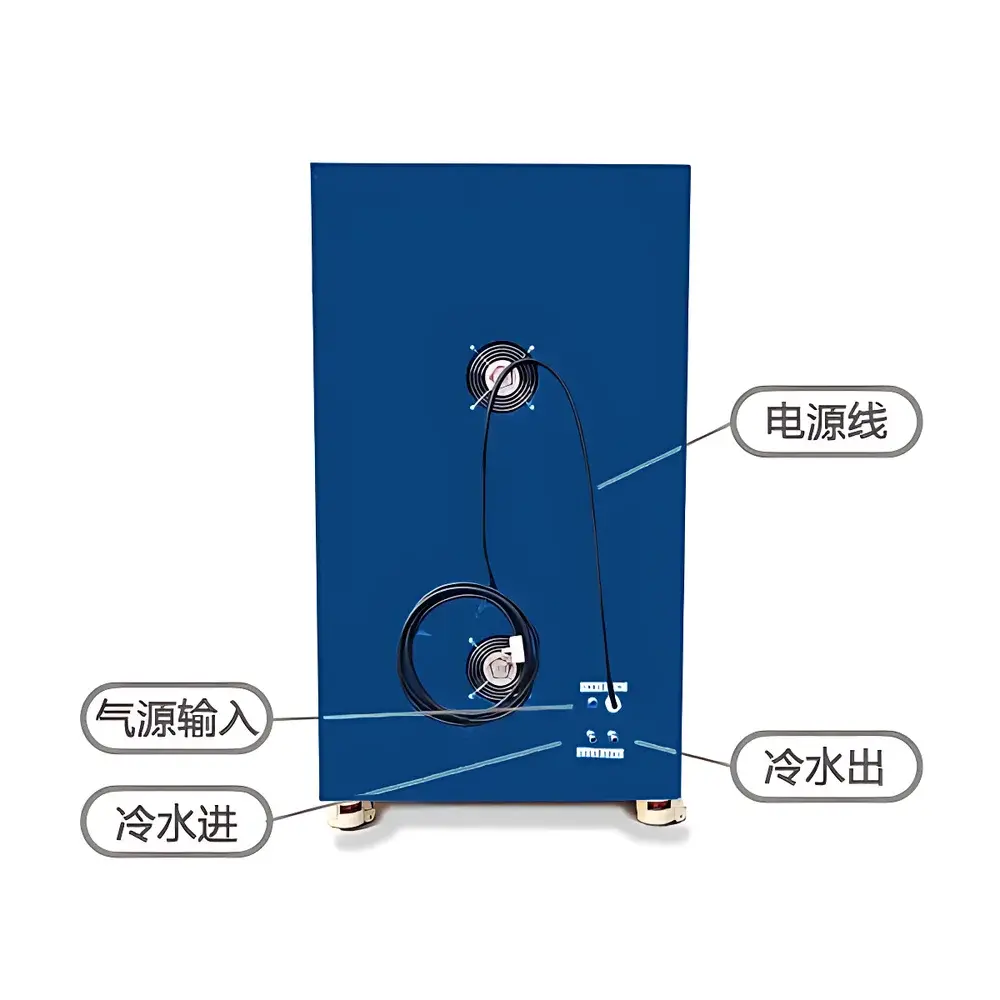
- Integrated chiller interface supporting active temperature control of homogenized output between 4 °C and 10 °C
- PLC-driven 10-inch industrial touchscreen HMI with real-time pressure, flow, and temperature trending; USB data export compliant with 21 CFR Part 11 audit trail requirements
- Zero-residue fluid path architecture: fully drainable pump head, non-return inlet valve eliminating priming steps, and automated post-run flush sequence
- Modular split-body pump housing enabling rapid disassembly, visual inspection, and validated cleaning without tools
- Digital pressure transduction with ±1 bar resolution and NIST-traceable calibration certificate included
- Automatic safety shutdown on feed interruption, overtemperature, or pressure deviation exceeding ±2% setpoint
Sample Compatibility & Compliance
The ND100 accommodates aqueous, organic, and biphasic systems—including lipids, polymers, biologics, ceramic precursors, and conductive nanoparticle suspensions—with viscosity tolerance up to 2000 cP and maximum feed particle size ≤300 µm. Its all-diamond fluidic path ensures compatibility with aggressive solvents (e.g., chloroform, DMF), low-pH buffers, and high-salt formulations without corrosion or surface adsorption artifacts. The system complies with EU Machinery Directive 2006/42/EC (CE-marked), meets ISO 13849-1 PL e functional safety requirements for emergency stop circuitry, and supports GLP/GMP documentation via timestamped, user-logged operational records. Optional IQ/OQ protocols are available for installation and operational qualification per ASTM E2500 and ICH Q5C guidelines.
Software & Data Management
The embedded PLC firmware provides deterministic real-time control with 100 ms loop cycle time. All process parameters—including pressure ramp rate, dwell time per pass, total volume processed, and thermal deviation—are logged to internal memory and exportable via USB as CSV or PDF reports. Audit trails include operator ID, timestamp, parameter changes, and alarm events—structured to satisfy FDA 21 CFR Part 11 electronic record requirements. No cloud dependency: data remains on-device unless explicitly exported. Optional Ethernet/IP integration enables SCADA-level supervision in centralized lab automation environments.
Applications
- Pharmaceutical nanomedicine: Liposomal doxorubicin, solid lipid nanoparticles (SLN), nanoemulsions, and PEGylated micelles requiring <150 nm target size and <0.15 PDI
- Bioprocessing: Mammalian cell lysis for intracellular protein recovery, viral vector purification, and exosome isolation with minimal RNA degradation
- Food & nutraceuticals: Nanoencapsulation of curcumin, resveratrol, or omega-3 oils to enhance bioavailability and oxidative stability
- Advanced materials: Graphene oxide dispersions, quantum dot inks, and conductive silver pastes for printed electronics
- Academic research: Fundamental studies of mechanochemical bond cleavage, polymer chain scission kinetics, and crystalline phase transformation under extreme hydrodynamic stress
FAQ
What distinguishes microfluidic homogenization from traditional valve-based high-pressure homogenization?
Microfluidic systems use fixed-geometry diamond chambers that deliver consistent shear history across all passes, whereas valve-based units rely on adjustable mechanical clearances prone to erosion and calibration drift.
Can the ND100 process heat-sensitive biologics without denaturation?
Yes—the integrated chiller interface maintains outlet temperature between 4 °C and 10 °C during operation, and adiabatic heating is minimized by single-pass optimization and low residence time (<150 ms) in the chamber.
Is the system compatible with sterile processing requirements?
The fully drainable, smooth-surface fluid path supports SIP (steam-in-place) up to 121 °C and meets ASME BPE surface finish standards (Ra ≤ 0.4 µm) when configured with electropolished wetted parts.
How is validation support provided for regulated environments?
TRILOS supplies factory-verified IQ/OQ templates aligned with Annex 15 and ASTM E2500, including pressure sensor calibration certificates, material traceability dossiers, and cybersecurity assessment summaries for network-connected configurations.



