
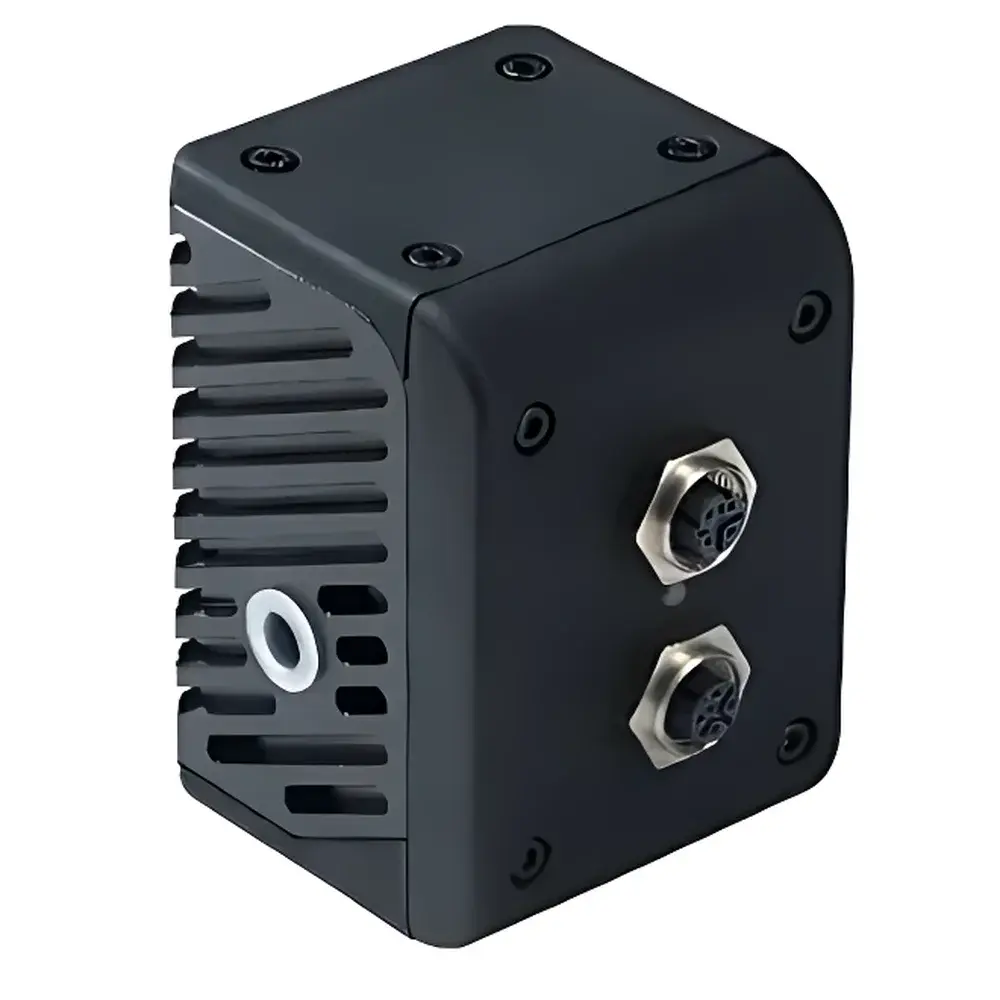
Atten2 OilWear S120 Online Oil Wear Particle Analyzer
| Brand | Atten2 |
|---|---|
| Origin | Spain |
| Product Type | Online Instrument |
| Detection Parameters | Mechanical Contaminants (Particulate Matter) |
| Particle Detection Threshold | ≥4 µm |
| Compliance | ISO 4406, NAS 1638 |
| Fluid Compatibility | Hydraulic Oil, Lubricating Oil, Mineral Oil, Synthetic Oil, Fuel Oil, Coolants, Cutting Fluids, Cleaning Solutions |
| Data Transmission | Wired Ethernet Gateway / Wireless (Wi-Fi/4G) |
| AI Engine | Trained on >500 Commercial Lubricant Models & Iron Spectroscopy Image Database |
| Software | Cloud-Enabled Diagnostic Platform with Audit Trail & GLP/GMP-Ready Reporting |
Overview
The Atten2 OilWear S120 Online Oil Wear Particle Analyzer is an industrial-grade, real-time lubricant health monitoring system engineered for predictive maintenance in mission-critical rotating and hydraulic equipment. It operates on a validated digital image analysis principle—capturing high-resolution in-line micrographs of flowing oil via an optically calibrated flow cell, then applying deterministic morphological classification algorithms to quantify particle count, size distribution (≥4 µm), shape descriptors (aspect ratio, convexity, Feret diameter), and grayscale intensity profiles. Unlike conventional particle counters relying solely on light obscuration or pore-blockage methods, the S120 integrates multi-feature image analytics to perform root-cause wear mode attribution—including fatigue spalling, cutting abrasion, adhesive scuffing, and pitting corrosion—based on ASTM D7690-22 (Standard Guide for Image Analysis of Wear Debris) and ISO 18436-4 (Condition Monitoring and Diagnostics of Machines – Requirements for Qualification of Personnel – Part 4: Oil Analysis). Its optical architecture is sealed, pressure-rated (up to 10 bar), and compatible with continuous bypass-loop installation without interrupting primary lubrication circuits.
Key Features
- Real-time particulate monitoring at flow rates up to 1.2 L/min, with automatic baseline correction for fluid color drift and bubble discrimination via temporal sequence analysis
- Dual-spectrum illumination (white LED + near-infrared) to suppress specular reflection and enhance contrast for metallic vs. non-metallic debris differentiation
- Embedded AI inference engine trained on over 12 million manually classified wear particle images from laboratory ferrography datasets and field-collected samples
- Preloaded reference models for 500+ commercial lubricants—including OEM-specified turbine oils, gear oils, and aviation synthetics—with optional custom model calibration using customer-supplied reference oil batches
- Integrated viscosity proxy estimation via dynamic refractive index correlation and additive depletion trend tracking using UV-Vis spectral absorption bands (220–350 nm)
- Compliance-ready data logging: time-stamped metadata, operator ID, sensor calibration history, and full raw image archive stored locally (SD card) and synchronized to secure cloud infrastructure
Sample Compatibility & Compliance
The S120 is validated for continuous operation in mineral-based, PAO, ester, and polyglycol lubricants; hydraulic fluids (ISO L-HM, L-HV); turbine oils (ISO L-TGA, L-TGB); diesel and jet fuels (ASTM D975, D1655); water-glycol and phosphate-ester fire-resistant fluids; and aqueous coolants (pH 5.5–9.5). All wetted components are constructed from 316L stainless steel, sapphire windows, and FKM elastomers, ensuring chemical resistance per NACE MR0175/ISO 15156. The system meets electromagnetic compatibility requirements per EN 61326-1 and carries CE marking under the EU Machinery Directive 2006/42/EC. Reporting outputs conform to ISO 4406:2017 (fluid cleanliness codes), NAS 1638 Class Code, and support audit trails compliant with FDA 21 CFR Part 11 and EU Annex 11 for regulated environments.
Software & Data Management
The OilWear Cloud Platform provides browser-accessible dashboards with configurable alert thresholds (per ISO 4406 code delta, particle count rate, wear mode shift probability), automated report generation (PDF/CSV), and integration with CMMS (Maximo, SAP PM) and SCADA systems via OPC UA or RESTful API. Each measurement includes full traceability: raw image stack, feature vector export, confidence scoring per wear classification, and version-controlled algorithm metadata. Data retention policies support 10-year archival with SHA-256 hash verification. For GxP-regulated users, optional 21 CFR Part 11 modules include electronic signatures, role-based access control, and change history logs for all analytical parameters and reporting templates.
Applications
The S120 delivers actionable diagnostics across energy, transportation, and heavy industry: wind turbine gearbox oil health monitoring (IEC 61400-25); coal mining conveyor drive train condition assessment; marine main engine lube oil surveillance (IMO MARPOL Annex VI compliance); rail traction motor bearing wear forecasting; nuclear power plant auxiliary pump lubricant integrity validation; and aerospace ground support equipment hydraulic fluid contamination trending. In hydroelectric facilities, it reduces unplanned outage duration by enabling root-cause identification prior to catastrophic bearing failure—field deployments demonstrate 98% uptime improvement versus scheduled oil change intervals alone. Its ability to detect early-stage fatigue wear (sub-10 µm spall fragments) allows intervention before secondary damage propagates.
FAQ
Does the S120 require oil sampling or offline lab analysis?
No. It performs fully autonomous, in-line analysis without interrupting system operation or requiring manual sample extraction.
Can it distinguish between wear debris and air bubbles or fiber contaminants?
Yes. Temporal video analysis and multi-angle edge detection differentiate transient bubbles (high motion velocity, low aspect ratio variance) from solid particles, while fiber morphology is excluded via length-to-width filtering per ISO 4406 Annex B.
Is custom lubricant model development supported?
Yes. Atten2 offers certified model development services using customer-provided oil batches and historical ferrography data, delivered with full validation documentation per ISO/IEC 17025.
What cybersecurity protocols protect data transmission?
All wireless communication uses TLS 1.3 encryption; wired gateways support IEEE 802.1X authentication and VLAN segmentation. Firmware updates are cryptographically signed and verified pre-installation.
How often does the optical path require cleaning or recalibration?
The self-cleaning flow cell design minimizes fouling; recommended inspection interval is every 6 months or 5,000 operating hours—calibration verification is performed automatically during each startup sequence.





