
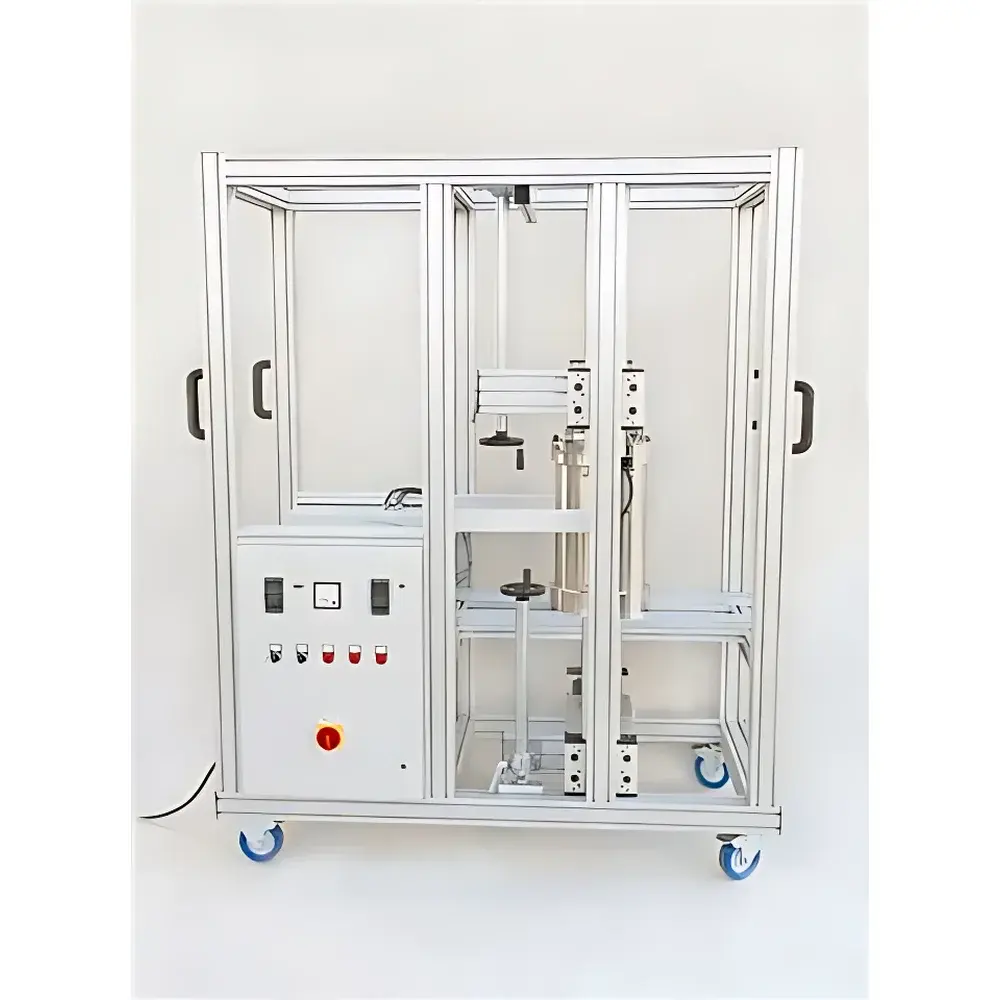
MaxiClave High-Temperature and High-Pressure Autoclave Testing System
| Origin | Germany |
|---|---|
| Manufacturer Type | Authorized Distributor |
| Origin Category | Imported |
| Model | MaxiClave |
| Price Range | USD 135,000 – 270,000 (FOB) |
| Usable Volume | Medium-scale |
| Construction Material | ASTM A276 Type 316 Stainless Steel |
| Maximum Operating Pressure | Up to 700 bar (HPII) / 1000 bar (custom) |
| Nominal Capacity | 1000 mL |
| Ultimate Vacuum | ≤ 1×10⁻⁵ Torr |
| Temperature Range | −269°C to 1300°C (model-dependent) |
| Heating Configuration | Hot-wall or cold-wall variants available |
Overview
The MaxiClave High-Temperature and High-Pressure Autoclave Testing System is an engineered solution for controlled simulation of extreme thermobaric environments encountered in upstream oil & gas, fossil fuel processing, nuclear materials research, and advanced energy systems development. Designed around fundamental principles of hydrothermal reaction kinetics and accelerated corrosion testing, the system enables precise replication of in-situ service conditions—including supercritical water, sour gas (H₂S/CO₂), high-temperature steam, and reactive chemical media—within a rigorously sealed, instrumented pressure vessel. Its modular architecture supports both single-vessel qualification studies and multi-reactor parallel testing configurations, facilitating statistically robust material screening per ASTM G150, ISO 15156, NACE TM0177, and API RP 14E protocols.
Key Features
- Two primary thermal architectures: Hot-wall reactors (direct resistive heating of vessel body) for uniform temperature distribution up to 1100°C; Cold-wall reactors (external furnace + internal sample holder) enabling ultra-high temperatures up to 1300°C with minimized thermal stress on vessel walls.
- Pressure-rated vessels constructed from vacuum-melted, low-carbon ASTM A276 Type 316 stainless steel, certified to PED 2014/68/EU and ASME Section VIII Div. 1 design standards.
- Integrated pressure containment system featuring double-sealed conical closure, nickel-alloy gasketing (Inconel 718 or Haynes 276), and redundant overpressure protection via rupture disc + safety valve cascade.
- Real-time monitoring suite including Class I, Division 1–rated pressure transducers (0.05% FS accuracy), calibrated K-type and S-type thermocouples (±0.5°C traceable to NIST), and digital mass flow controllers for reactive gas dosing.
- Modular feed-throughs supporting electrical leads, optical fibers, pH/ORP probes, and capillary sampling lines—all rated to full operating pressure and temperature.
Sample Compatibility & Compliance
The MaxiClave accommodates solid coupons (ASTM G1, G31), welded joints, powder compacts, catalyst beds, and tubular specimens up to 28 mm OD. Reaction media include aqueous brines, organic solvents, supercritical CO₂, H₂S-saturated solutions, molten salts, and simulated flue gases. All standard configurations comply with GLP documentation requirements and support audit-ready data logging aligned with FDA 21 CFR Part 11 electronic record integrity guidelines. Optional third-party calibration certificates (DAkkS or UKAS accredited) are available for pressure, temperature, and vacuum subsystems.
Software & Data Management
The system operates under MaxiControl v4.2—a deterministic real-time control platform running on embedded Linux. It provides synchronized acquisition at 10 Hz across all sensors, configurable ramp/soak profiles, automated pressure compensation algorithms, and event-triggered data export in CSV, HDF5, and ASTM E1434-compliant formats. Integrated cybersecurity features include TLS 1.2 encryption for remote access, role-based user permissions, and immutable audit trails recording operator ID, timestamp, parameter changes, and alarm events—fully compliant with ISO/IEC 17025 Clause 7.7 and EU Annex 11 requirements for computerized system validation.
Applications
- Corrosion resistance evaluation of pipeline steels, duplex stainless steels, and Ni-based alloys under simulated sour service (NACE MR0175/ISO 15156).
- Hydrothermal stability testing of ceramic matrix composites and refractory coatings in supercritical water oxidation (SCWO) environments.
- Catalyst deactivation studies under high-pressure syngas (H₂/CO) and steam reforming conditions.
- Thermal decomposition kinetics of energetic materials and battery electrolytes under inert or oxidizing atmospheres.
- Geochemical modeling of mineral-fluid interactions at crustal and mantle-relevant P–T conditions (e.g., quartz dissolution rates, clay mineral transformation).
FAQ
What is the maximum allowable working pressure for standard MaxiClave configurations?
Standard hot-wall models operate up to 350 bar (HPII); cold-wall variants reach 40–100 bar depending on temperature range. Custom designs support up to 1000 bar with specialized forging and non-destructive examination (UT/RT per ASME BPVC V).
Can the system be validated for GMP-regulated pharmaceutical process development?
Yes—when equipped with IQ/OQ documentation packages, electronic signature modules, and 21 CFR Part 11-compliant audit logs, the MaxiClave meets ICH Q5C and Q7 requirements for stability-indicating reaction studies.
Is vacuum capability integrated into the base configuration?
All units include a primary turbomolecular pumping station achieving ≤1×10⁻⁵ Torr, with optional cryo-trapping for moisture-sensitive reactions and residual gas analysis (RGA) integration.
Do you offer turnkey installation and commissioning services?
Yes—factory-trained engineers perform site assessment, mechanical/electrical integration, performance qualification (PQ) per ISO 17025, and operator certification training onsite.
Are replacement parts and long-term calibration support available?
Full spares inventory is maintained in Hamburg and Singapore; annual calibration contracts include metrological traceability, uncertainty budgets, and certificate issuance per ISO/IEC 17025.



