
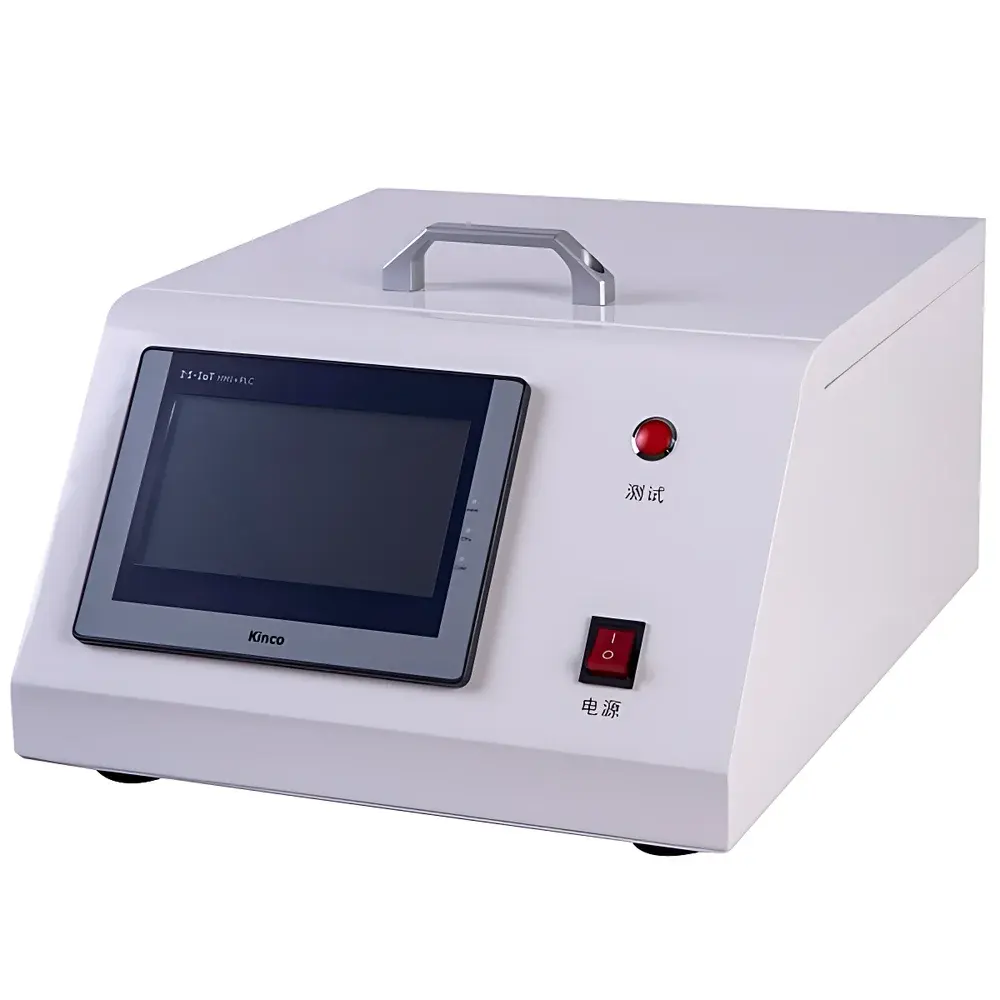
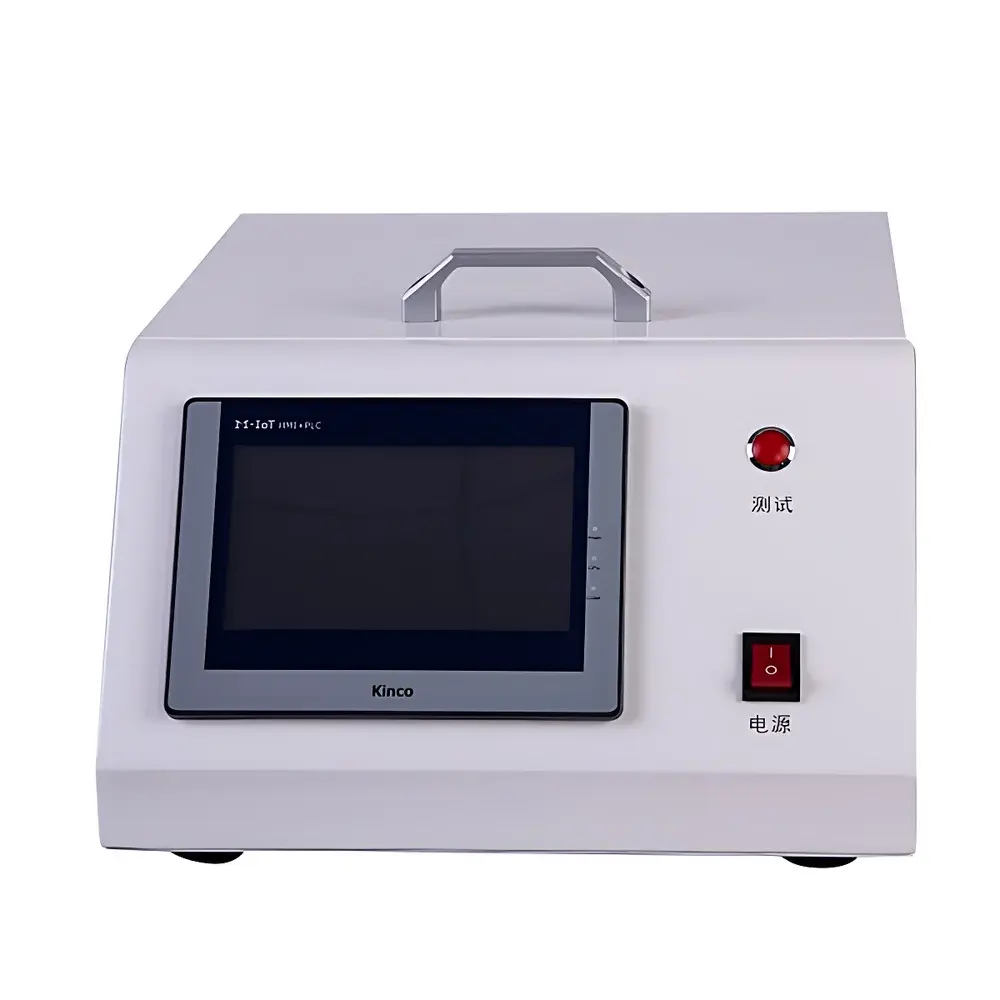
Aerospace ZST-212 Volume & Surface Resistivity Tester
| Brand | Aerospace |
|---|---|
| Origin | Beijing, China |
| Model | ZST-212 Volume & Surface Resistivity Tester |
| Test Voltage Range | 10 V – 1000 V DC (7 precision-adjustable steps, ±1% accuracy) |
| Volume Resistivity Range | 1×10⁴ Ω·cm to 1×10¹⁸ Ω·cm (15 auto-ranging decades, ±5% accuracy at 23°C ±2°C, 50% RH ±5%, 100 V) |
| Surface Resistivity Range | 1×10³ Ω to 1×10¹⁷ Ω (14 auto-ranging decades, ±6% accuracy under same conditions) |
| Minimum Detectable Current | 1×10⁻¹⁴ A |
| Input Impedance | >1×10¹⁴ Ω |
| Electrode System | Tri-electrode configuration (guard, measuring, high-voltage electrodes) |
| Compliance | GB/T 1410–2006, GB/T 31338–2015, ASTM D257–14, IEC 60093:2016, JJG 690–2015 (Class II) |
Overview
The Aerospace ZST-212 Volume & Surface Resistivity Tester is a precision metrology instrument engineered for the quantitative evaluation of electrical insulation performance in solid, liquid, and powdered dielectric materials. It operates on the fundamental principles of direct-current (DC) resistivity measurement in accordance with the guarded electrode method defined in IEC 60093 and ASTM D257. The system employs a tri-electrode configuration—comprising a central measuring electrode, an annular guard electrode, and an outer high-voltage electrode—to eliminate surface leakage currents and isolate bulk conduction paths. This architecture ensures traceable, reproducible determination of both volume resistivity (ρv) and surface resistivity (ρs) across an ultra-wide dynamic range (10⁴–10¹⁸ Ω·cm and 10³–10¹⁷ Ω, respectively), making it suitable for R&D validation, quality assurance in polymer compounding, and regulatory compliance testing in electronics and aerospace material supply chains.
Key Features
- Tri-electrode measurement architecture with independently grounded guard ring to suppress edge effects and parasitic surface conduction.
- Seven-step programmable DC test voltage output (10 V, 50 V, 100 V, 250 V, 500 V, 1000 V), each calibrated to ±1% accuracy with ripple ≤1 mV (at 1000 V).
- Electrostatic meter-based measurement circuitry featuring input impedance >1×10¹⁴ Ω and a 24-bit ADC with sub-picoampere current resolution (1×10⁻¹⁴ A minimum detectable).
- Gold-plated brass electrodes (≥5 µm Au layer thickness) mounted on ultra-high-resistivity PTFE supports (ρ >1×10²⁰ Ω·cm) to minimize stray leakage paths.
- Motorized sample stage with 50 mm travel, 0.5 mm/s speed, and ±0.1 mm positioning repeatability; integrated polyimide film surface for electrostatic mitigation.
- Embedded ARM controller with real-time background noise compensation (50 ms sampling interval) and automatic range switching across 15 volume and 14 surface resistivity decades.
- 7-inch capacitive touchscreen interface (800×480) displaying live current decay curves, environmental metadata (T/RH), and pass/fail flags per GB/T 1410 criteria.
Sample Compatibility & Compliance
The ZST-212 accommodates standardized geometries per international test methods: solid discs (≥74 mm diameter, 1–30 mm thickness), liquids (≥100 mL in borosilicate glass cell), and pressed powder pellets (74 mm diameter, 2–5 mm thick, formed at 10 MPa). Its mechanical design—including adjustable electrode parallelism (±0.01 mm fine-tuning), PTFE-insulated mounting, and anti-static coated aluminum frame—ensures dimensional stability under variable thermal and humidity loads (10–40°C, 20–80% RH non-condensing). The instrument fully complies with GB/T 1410–2006 (equivalent to IEC 60093), GB/T 31338–2015 for powders, and ASTM D257–14. Calibration traceability follows JJG 690–2015 (Class II), and electromagnetic compatibility meets GB/T 17626.2 (ESD) and GB/T 17626.3 (RF fields). For regulated environments, data logging includes time-stamped audit trails compatible with GLP/GMP documentation workflows.
Software & Data Management
Firmware-integrated test algorithms automate voltage ramping, charging time selection (10 s to 120 s), and post-stabilization resistivity computation using standardized geometric correction factors (e.g., ρv = Rv × A/d; ρs = Rs × πD/ln(D₂/D₁)). Up to 1000 test records—including raw current vs. time arrays, environmental parameters, operator ID, and calibration timestamps—are stored internally. Export is supported via USB 2.0 to Excel-compatible .csv files formatted per GB/T 1410 Annex B requirements. While native software does not implement FDA 21 CFR Part 11 electronic signature controls, audit logs capture all parameter changes and measurement events, enabling third-party LIMS integration for full ALCOA+ data integrity compliance.
Applications
- Insulation Material Development: Quantification of ρv in epoxy resins, PTFE, and PPS to correlate molecular weight distribution or ionic impurity content with breakdown thresholds.
- PCB & Electronic Substrate QA: Low-voltage (10 V) surface resistivity mapping between solder pads to verify cleaning efficacy and absence of conductive residues.
- Thin-Film Dielectrics: Characterization of SiO₂ layers on silicon wafers using micro-electrode accessories, with strict control of ambient humidity (<30% RH) to avoid hydration-induced conductivity artifacts.
- Conductive Polymer Screening: Evaluation of PEDOT:PSS film uniformity via multi-point ρs measurements, supporting formulation optimization for flexible electronics.
- High-Temperature Ceramics: Optional heating stage (up to 200°C) enables in-situ ρs monitoring of Al₂O₃ or BN under thermal stress, with inert gas purge ports to prevent oxidation during testing.
FAQ
What standards does the ZST-212 directly support?
It is fully aligned with GB/T 1410–2006, GB/T 31338–2015, ASTM D257–14, and IEC 60093:2016 for methodology, and JJG 690–2015 for calibration verification.
Can the instrument measure low-conductivity liquids like deionized water?
Yes—when used with the dedicated glass test cell and proper pre-conditioning (chromic acid cleaning, 105°C bake-out), it achieves reliable results down to ~1×10⁴ Ω·cm, provided ambient humidity is controlled below 40% RH.
Is operator training required for compliant operation?
While intuitive, proper execution of guard electrode grounding, environmental stabilization (2 h equilibration), and post-test discharge protocols requires documented SOP adherence—especially for ISO/IEC 17025-accredited labs.
How often must the system be recalibrated?
Annual calibration against certified reference resistors (e.g., 1×10¹² Ω, ±2%) is recommended; short-circuit and open-circuit verification should be performed weekly or after electrode maintenance.
Does the ZST-212 support automated reporting for regulatory submissions?
It generates timestamped, environment-logged reports exportable to Excel; however, full 21 CFR Part 11 compliance requires integration with validated third-party LIMS or ELN platforms.




