
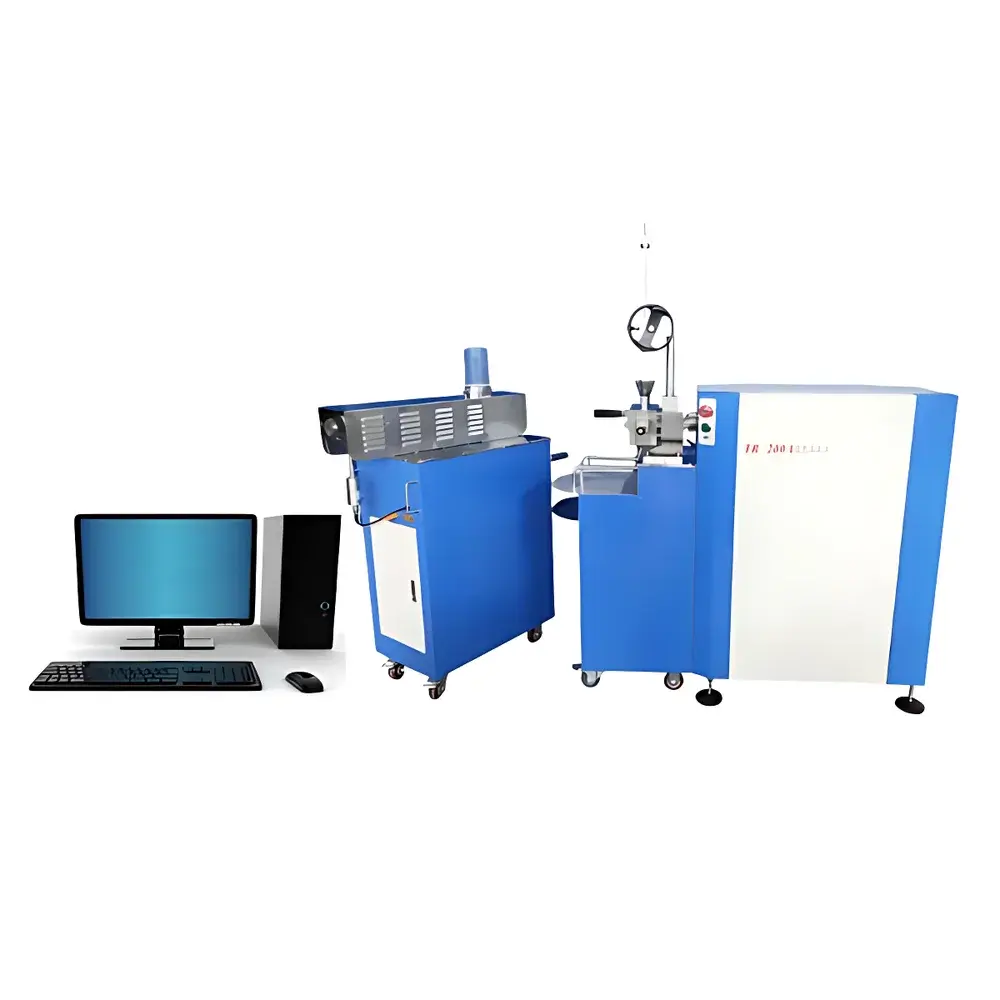
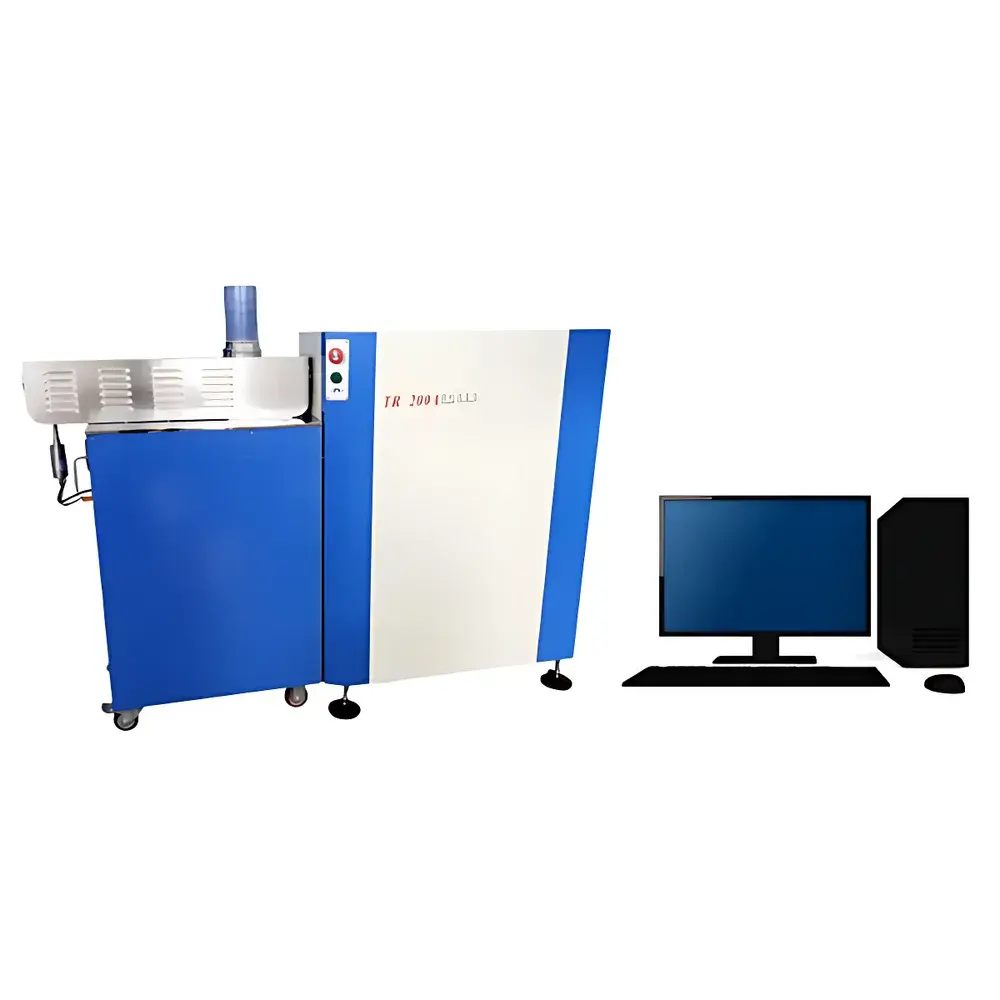
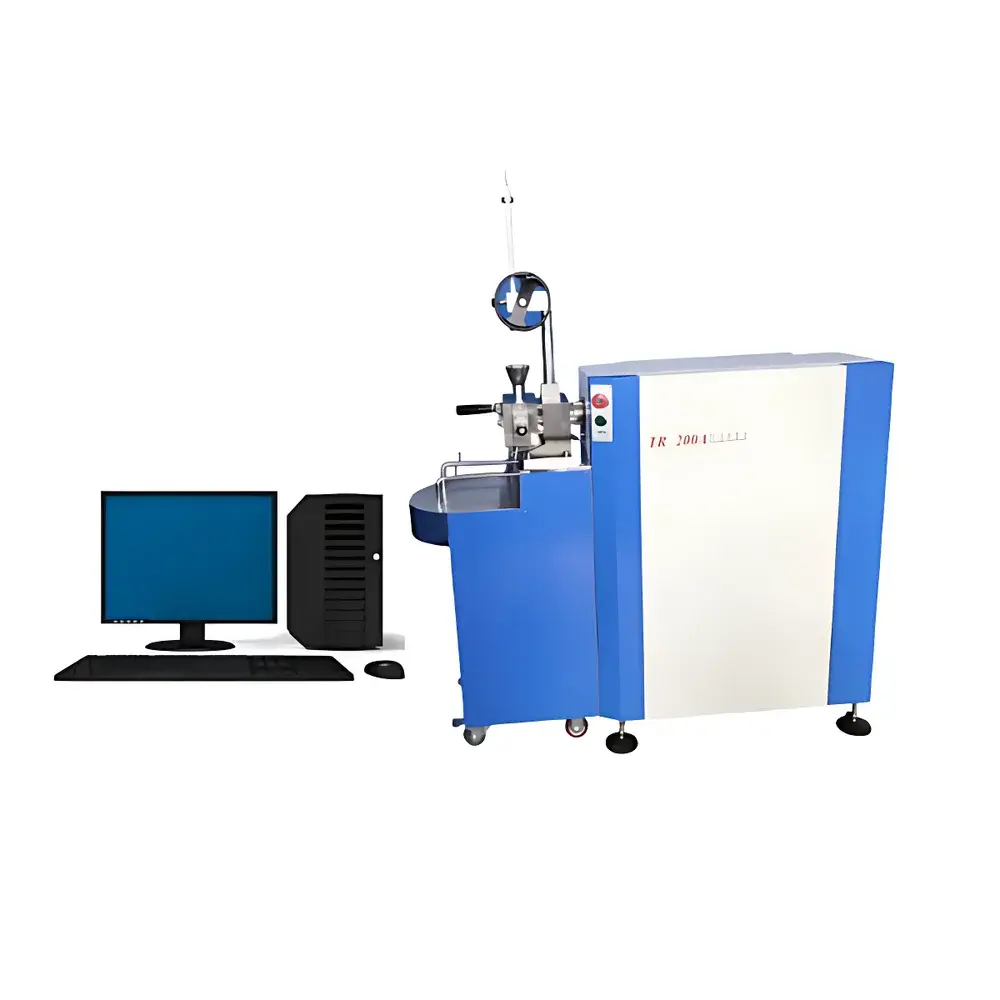
Aerospace TR-200A Torque Rheometer
| Brand | Aerospace |
|---|---|
| Origin | Beijing, China |
| Model | TR-200A |
| Instrument Type | Torque Rheometer |
| Sample State | Solid (powder, granules, pellets) |
| Sample Viscosity Range | Low-to-Medium Melt Viscosity |
| Motor & Drive | Panasonic AC Servo Motor with Integrated Controller |
| Temperature Range | Ambient to 350 °C (5-zone independent control) |
| Speed Range | 0.1–2000 rpm |
| Max Torque | 300 N·mm (0–200 N·m full-scale measurement range) |
| Torque Resolution | ±0.3% FS |
| Speed Control Accuracy | ±0.2% FS |
| Temperature Control Accuracy | ±0.5 °C |
| Pressure Measurement Range (optional) | 0.1–100 MPa |
| Pressure Accuracy | ±0.3% FS |
| Data Acquisition Rate | 50 Hz |
| Power Supply | AC 380 V, 7.5 kW |
Overview
The Aerospace TR-200A Torque Rheometer is an integrated, computer-controlled laboratory-scale processing rheometer engineered for quantitative assessment of polymer melt rheology and thermo-mechanical process behavior under shear-dominated conditions. It operates on the principle of controlled-shear torque measurement during dynamic mixing or extrusion, where torque, temperature, rotational speed, and—optionally—melt pressure are continuously monitored as real-time process variables. Unlike capillary or rotational rheometers optimized for steady-state viscosity profiling, the TR-200A replicates industrial compounding, kneading, and extrusion environments at lab scale, enabling direct correlation between laboratory data and production-scale processing parameters such as screw speed, residence time distribution, thermal history, and shear intensity. Its modular architecture supports interchangeable processing units—including a 60 mL intermeshing batch mixer (standard), optional 200 mL mixer, and a 20 mm single-screw extruder (L/D = 25:1)—each equipped with independent temperature zoning, K-type thermocouples, and high-fidelity torque transduction.
Key Features
- Modular, bus-based system architecture with host controller managing synchronized acquisition from multiple intelligent processing units (mixer, extruder, pressure sensor modules)
- Panasonic AC servo motor with 3.0 kW rated output and 15:1 (mixer) or 20:1 (200 mL unit) precision planetary gearbox for stable low-speed torque generation down to 0.1 rpm
- Five independently controlled heating zones (ambient to 350 °C) with ±0.5 °C stability; each zone employs PID regulation and K-type thermocouple feedback
- High-resolution torque sensing (±0.3% FS) across 0–200 N·m range, supporting both transient startup characterization and steady-state equilibrium analysis
- Real-time 50 Hz data acquisition for torque, temperature, speed, and pressure—enabling detection of subtle transitions such as gelation onset, crosslinking inflection, or thermal degradation thresholds
- Configurable rotor geometries (Roller, Banbury, Cam, Delta) for tailored shear field profiles in the 60 mL and 200 mL mixers
- Extrusion module features 38CrMoAlA nitrided barrel and screw, 25:1 L/D ratio, compression ratio 2.5:1, and interchangeable capillary dies (L/D = 20:1, 30:1, 40:1; Ø1.27 mm standard)
Sample Compatibility & Compliance
The TR-200A is validated for solid-state feedstocks including thermoplastic pellets, PVC powder formulations, thermoset prepolymers, elastomer compounds, and filled composites. It accommodates materials with complex thermal histories—such as those undergoing curing, vulcanization, or reactive extrusion—by maintaining precise temperature ramping profiles and capturing torque evolution correlated with chemical conversion. The system meets general requirements for ISO 11443 (plastics — determination of the melt mass-flow rate and melt volume-flow rate of thermoplastics), ASTM D2538 (torque rheometry of polyvinyl chloride resins), and supports GLP-compliant workflows through audit-trail-enabled software logging. While not certified to FDA 21 CFR Part 11 out-of-the-box, its data export architecture (CSV, XML) and timestamped metadata support integration into validated laboratory information management systems (LIMS) for regulated environments.
Software & Data Management
The native Windows-based control and analysis suite provides synchronized visualization of up to four real-time process variables (torque, temperature, speed, pressure) with adjustable time-base scaling. Built-in modules include polymer melt viscosity calculation (via Mooney or Rabinowitsch corrections), extrudate swell analysis, mixing energy integration, and crosslinking kinetics modeling using torque inflection point detection. All raw datasets are stored with full metadata (user ID, timestamp, instrument configuration, calibration status) and support batch comparison, statistical trend analysis, and export to third-party platforms (MATLAB, Origin, JMP). Data files comply with FAIR principles (Findable, Accessible, Interoperable, Reusable) and retain traceability to hardware calibration certificates.
Applications
- Formulation development and optimization of UPVC compound thermal stability and fusion behavior
- Thermoplastic processing window mapping: identifying optimal screw speed–temperature combinations for minimal degradation and maximal dispersion
- Quantitative evaluation of crosslinking kinetics in unsaturated polyester and epoxy systems via torque rise rate and gel point determination
- Sulfur vulcanization profiling of natural and synthetic rubbers under shear
- Filler dispersion efficiency assessment using torque homogeneity indices and power consumption integrals
- Educational demonstration of viscoelastic transition phenomena (glass transition, melting, decomposition) through controlled ramp-and-hold protocols
FAQ
What sample forms are compatible with the TR-200A?
Solid feedstocks only—granules, powders, pellets, or pre-compounded blocks. Liquid monomers or low-viscosity solutions require solvent-assisted feeding and are not recommended without custom adapter hardware.
Can the system perform ASTM D3835-compliant melt flow index simulation?
No—it does not replicate the standardized dead-weight piston geometry of MFI testers. However, it generates shear-rate-dependent viscosity curves that correlate strongly with processability metrics used in extrusion and injection molding design.
Is the 200 mL mixer included by default?
No—the 60 mL intermeshing mixer is standard equipment. The 200 mL unit is an optional add-on with separate mechanical and thermal specifications.
Does the software support automated method sequencing for unattended operation?
Yes—users can define multi-step temperature ramps, speed profiles, and dwell periods with conditional triggers (e.g., hold until torque stabilizes within ±2% for 60 s).
Are calibration certificates provided for torque and temperature sensors?
Factory calibration reports are supplied with each instrument shipment. NIST-traceable recalibration services are available upon request with documented uncertainty budgets.



