
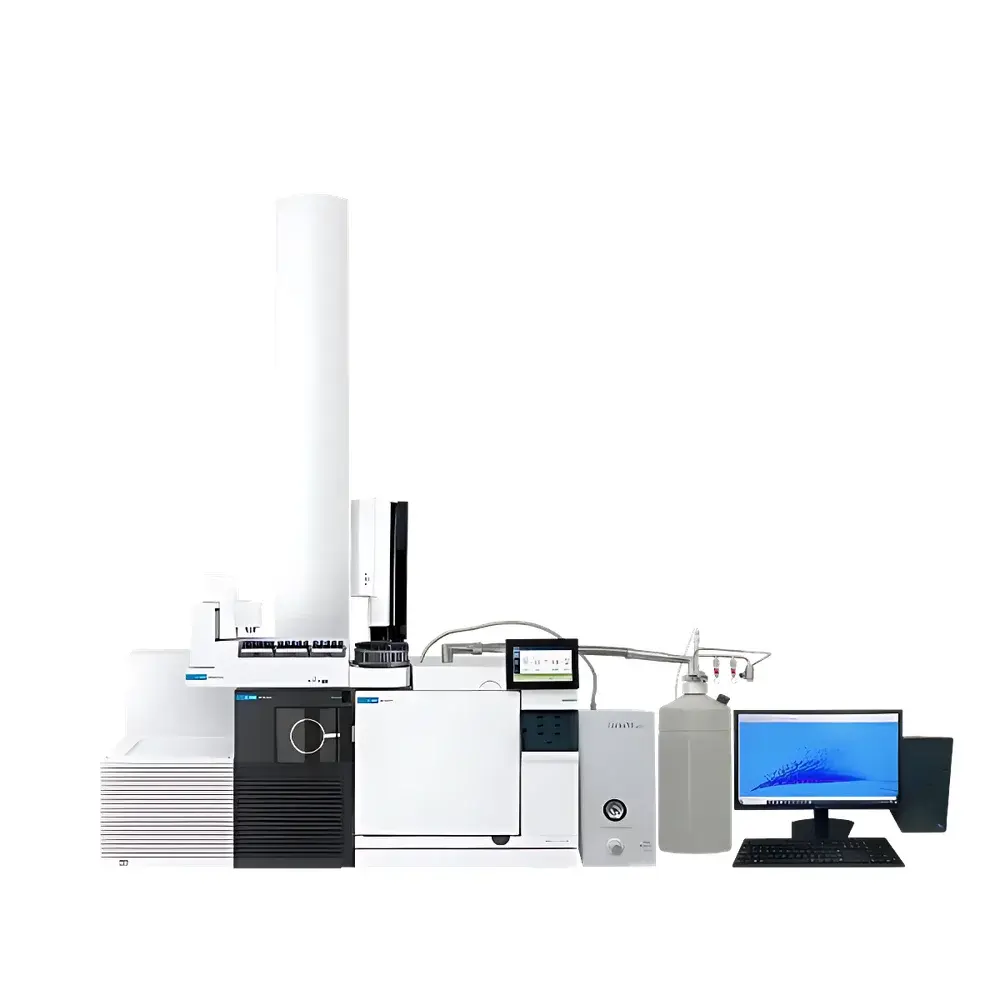
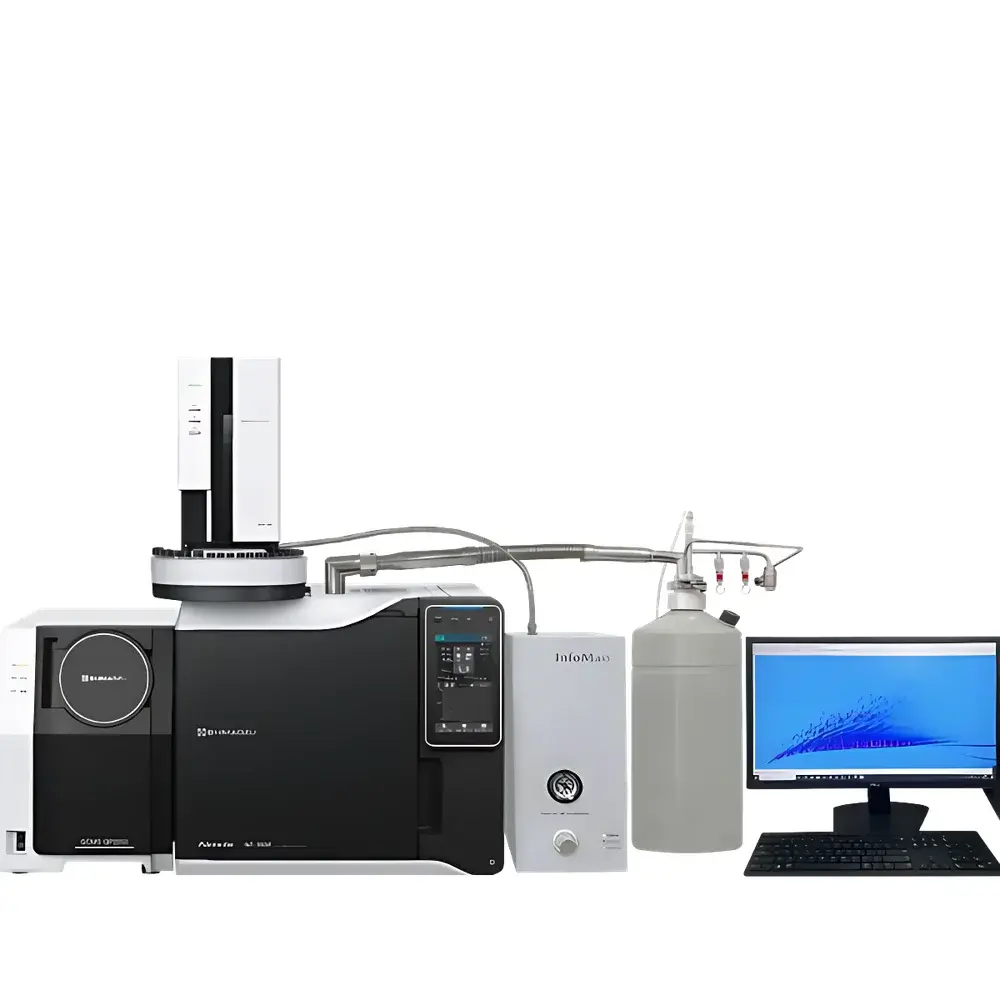
InFoMass L10 Comprehensive Two-Dimensional Gas Chromatography Modulator
| Brand | InFoMass |
|---|---|
| Origin | Beijing, China |
| Model | L10 |
| Cooling Options | Liquid Nitrogen (−189 °C) or Electronic (−90 °C) |
| Modulation Range | C₄–C₄₅ (LN₂ mode) |
| Column Configuration | Dual-column serial coupling via cryogenic loop modulator |
| Modulation Cycle | Programmable |
| Cold Jet Flow | Precisely controllable |
| Software Compatibility | MDCTM (GC Image LCC) |
| Structural Design | Fixed-angle column routing bracket eliminating manual alignment calibration |
| Moving Parts | None |
Overview
The InFoMass L10 Comprehensive Two-Dimensional Gas Chromatography (GC×GC) Modulator is an engineered solution for high-resolution separation of complex volatile and semi-volatile organic mixtures. It implements the fundamental principle of comprehensive two-dimensional chromatography: sequential separation across two orthogonal columns—typically differing in polarity and length—interfaced via a cryogenic loop-based modulator. Effluent from the first dimension (¹D) column is periodically trapped, focused, and re-injected as narrow, discrete pulses into the second dimension (²D) column. This modulation process achieves peak capacity multiplication (typically 10–100× that of 1D-GC), significantly enhancing resolution, sensitivity, and structured chromatographic patterns essential for pattern recognition and compound class identification.
Key Features
- Cryogenic Loop Architecture: Utilizes a robust, maintenance-free loop design with no moving mechanical components—ensuring long-term operational stability and minimizing downtime associated with valve-based or mechanical modulators.
- Dual-Cooling Flexibility: Supports both liquid nitrogen (LN₂) and electronic cooling configurations. LN₂ mode delivers −189 °C cold jet temperature for broad-range modulation of light hydrocarbons (C₄) through heavy polycyclic aromatics (C₄₅); electronic cooling provides −90 °C operation ideal for routine analysis of mid-to-high molecular weight compounds (C₇–C₄₅) without cryogen handling.
- Fixed-Angle Column Routing Bracket: A patented geometric mounting system eliminates iterative column alignment and manual calibration. This design ensures repeatable spatial positioning of capillary connections, directly contributing to inter-run reproducibility of retention times and modulation fidelity.
- Programmable Modulation Parameters: Enables precise control over modulation period (typically 2–10 s), cold jet duration, and thermal desorption pulse profile—allowing method optimization for diverse sample matrices and analyte volatility ranges.
- Universal GC Integration: Designed for seamless mechanical and thermal integration with all major gas chromatograph platforms (Agilent, Thermo Fisher, Shimadzu, PerkinElmer), including compatibility with oven dimensions, detector interfaces, and carrier gas flow management systems.
Sample Compatibility & Compliance
The L10 modulator supports analysis of complex mixtures containing hundreds to thousands of components—including petrochemical streams, environmental extracts (e.g., PAHs, PCBs, pesticides), food volatiles (esters, aldehydes, terpenes), metabolites in biological fluids, and forensic ignitable liquid residues. Its performance aligns with established analytical frameworks: modulation consistency meets ASTM D7213 (for petroleum distillates) and ISO 16000-6 (indoor air VOC analysis) requirements; data integrity workflows support GLP-compliant environments when paired with audit-trail-enabled software. While the modulator itself is not a regulated device, its use in regulated applications (e.g., EPA Method 8270D, USP ) benefits from traceable calibration protocols and documented system suitability testing per laboratory SOPs.
Software & Data Management
The L10 is fully compatible with MDCTM—the industry-standard processing engine embedded in GC Image LCC software. This platform enables automated peak detection, deconvolution of co-eluting signals, contour plot generation, structured retention time alignment (via ¹D/²D retention indexing), and class-based pattern visualization (e.g., alkane ladders, aromatic clusters). All modulation timing parameters are logged with timestamped metadata. When deployed in validated environments, GC Image LCC supports 21 CFR Part 11 compliance through user authentication, electronic signatures, and immutable audit trails—critical for pharmaceutical impurity profiling or regulatory submission workflows.
Applications
- Environmental monitoring: Source apportionment of urban air particulates, sediment contaminant fingerprinting, and wastewater effluent screening.
- Petrochemical analysis: Detailed hydrocarbon analysis (DHA), biomarker profiling in crude oils, and catalyst deactivation studies.
- Food & flavor science: Discrimination of geographic origin (e.g., olive oil, honey, wine), authenticity verification, and off-flavor compound tracking.
- Metabolomics: Unbiased profiling of volatile metabolites in breath, urine, or tissue headspace—enabling disease biomarker discovery.
- Forensic toxicology & fire debris analysis: Identification of ignitable liquid residues (ILRs) per NFPA 921 and ASTM E1387 guidelines.
FAQ
What is the minimum required temperature for effective modulation of C₄ hydrocarbons?
Liquid nitrogen cooling (−189 °C) is necessary to achieve sufficient trapping efficiency for early-eluting, highly volatile compounds such as butanes and isobutanes.
Can the L10 be retrofitted onto an existing single-dimension GC system?
Yes—provided the GC oven accommodates dual-column routing and has sufficient space for modulator mounting; standard GC pneumatic modules and temperature controllers require no modification.
Is electronic cooling sufficient for environmental PAH analysis?
Yes—polycyclic aromatic hydrocarbons (C₁₀–C₃₀) are effectively modulated at −90 °C; electronic cooling avoids logistical constraints of LN₂ while maintaining >95% modulation efficiency for this compound class.
Does the L10 support heart-cutting (LC-GC) configurations?
No—the L10 is designed exclusively for comprehensive (full) two-dimensional modulation; it does not incorporate switching valves required for selective heart-cutting.
How is system suitability verified during routine operation?
Using certified n-alkane standards (e.g., C₈–C₃₀), laboratories assess modulation width (target: ≤100 ms), peak symmetry in ²D, and orthogonality index derived from ¹D/²D retention correlation plots.





