
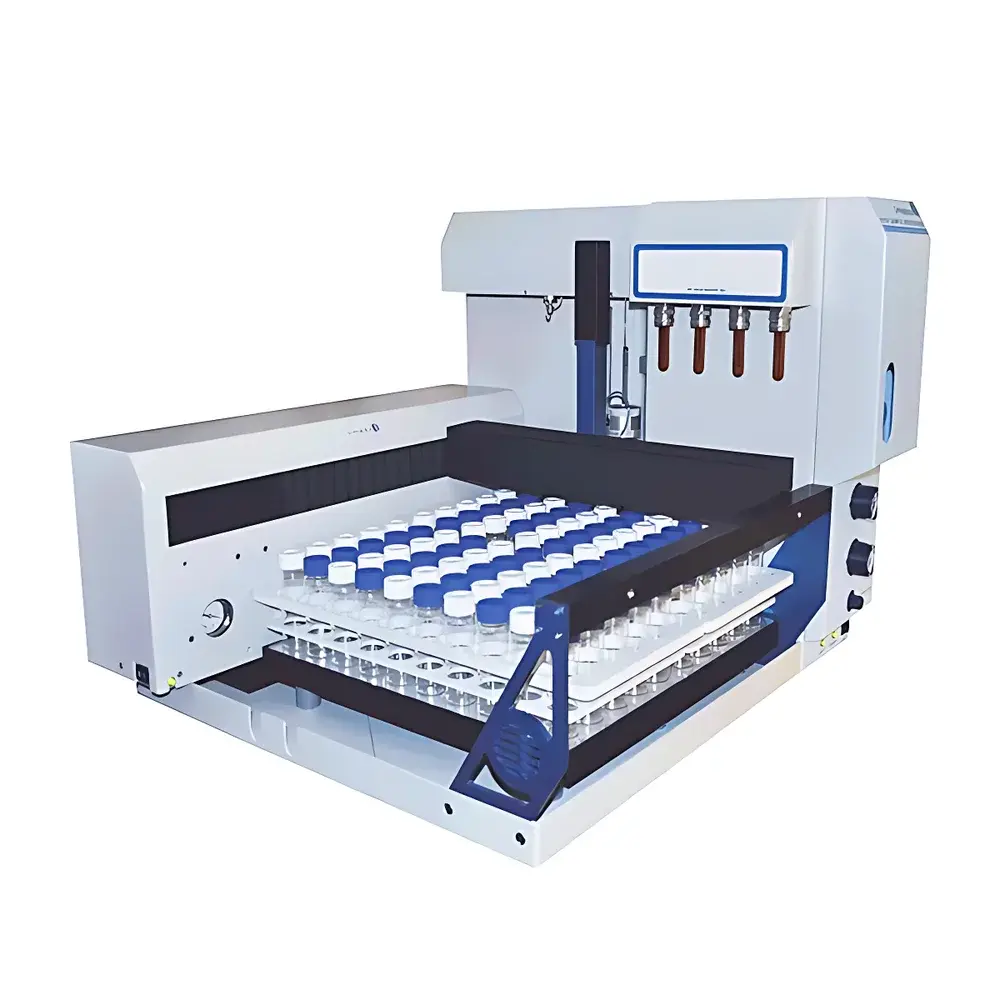
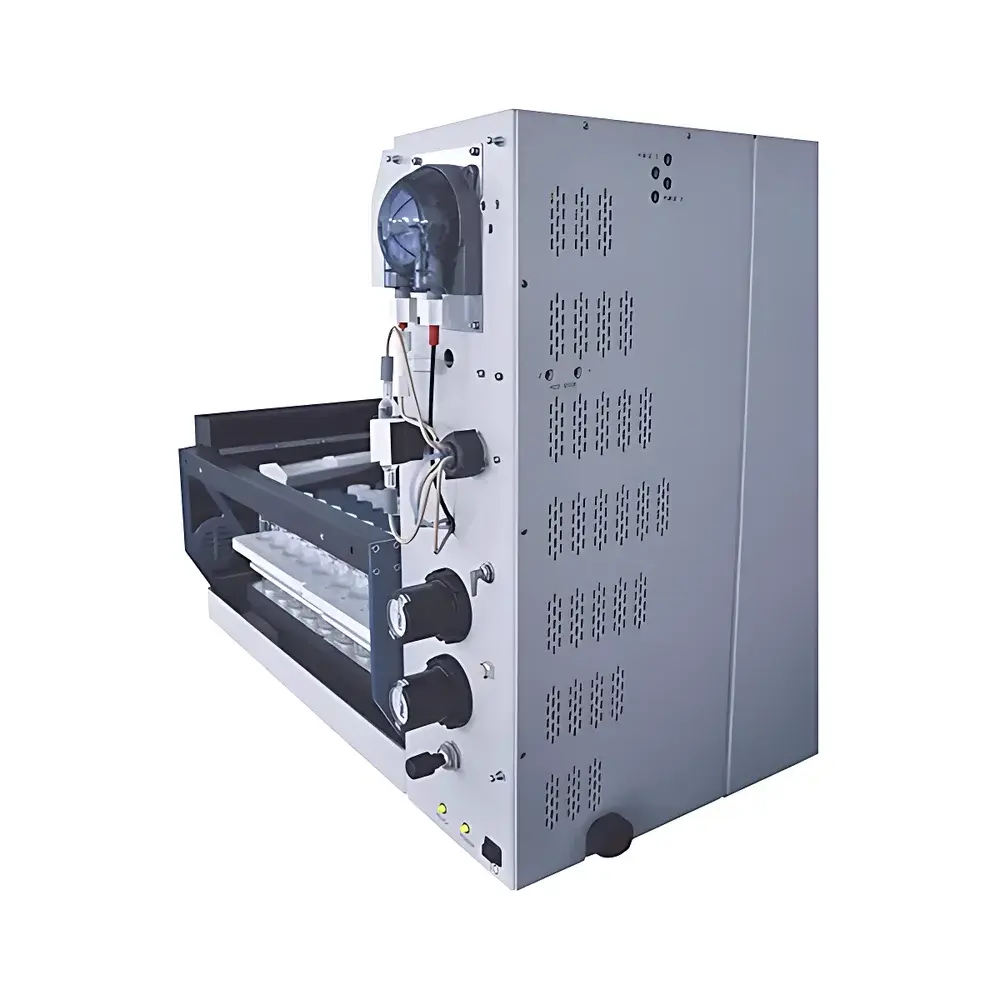
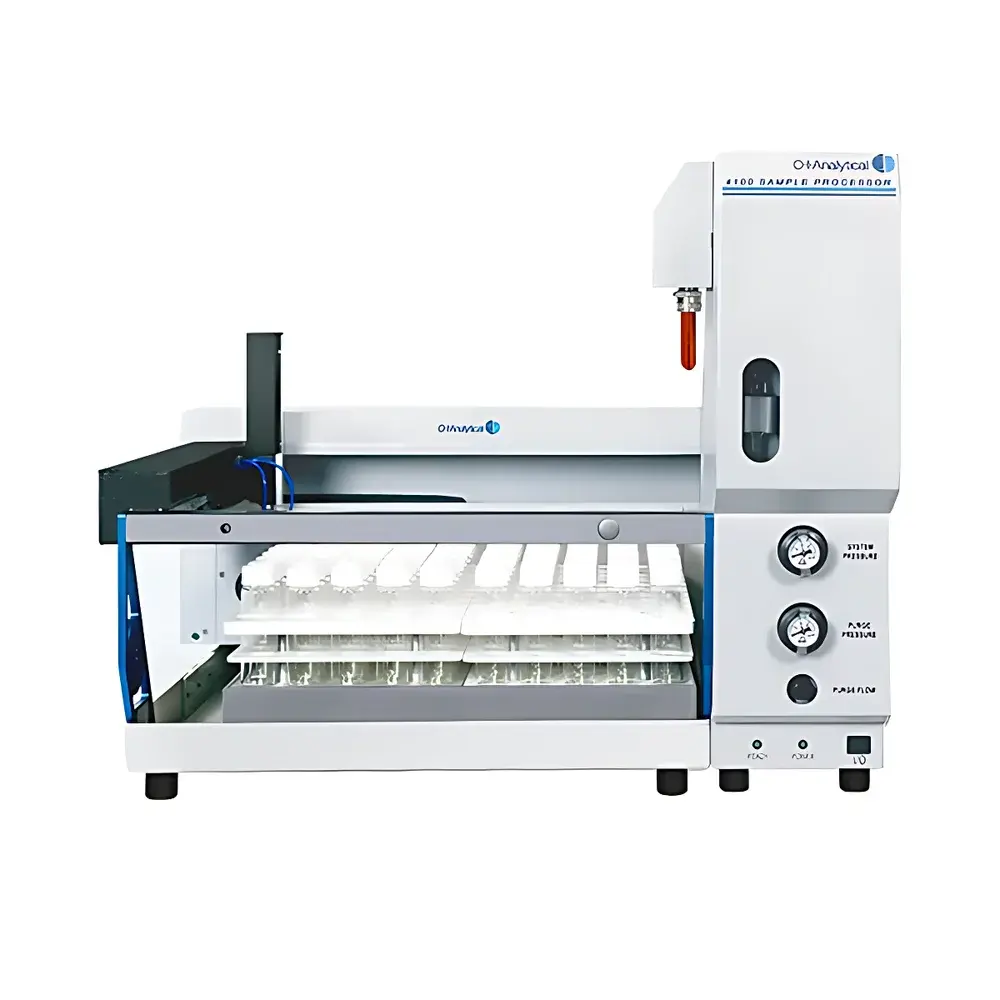
OI Analytical 4100 Automated Water and Soil Purge and Trap Sampler
| Brand | OI Analytical |
|---|---|
| Origin | USA |
| Model | 4100 |
| Sample Tray Capacity | 100 positions |
| Injection Precision | RSD ≤ 10% |
| Trap Temperature Range | up to 450 °C |
| Purge Sample Heating Range | ambient to 150 °C |
| Sample Vial Cooling Range | 4–10 °C |
Overview
The OI Analytical 4100 Automated Water and Soil Purge and Trap Sampler is a high-integrity, method-compliant autosampling platform engineered for trace-level volatile organic compound (VOC) analysis in environmental matrices. Designed specifically to interface with purge and trap concentrators—including the Eclipse 4760 and third-party systems—the 4100 implements standardized gas-phase extraction principles per USEPA Methods 5021A, 5030B, 5035A, and ASTM D3690. Its dual-path architecture enables fully automated, unattended processing of heterogeneous sample types—liquid (drinking water, wastewater, groundwater) and solid (soil, sediment, sludge)—within a single analytical sequence. This eliminates manual reconfiguration, reduces analyst exposure to hazardous VOCs, and ensures consistent purge efficiency across matrix-dependent conditions through programmable temperature control of sample vials, purge zones, and trap desorption stages.
Key Features
- Integrated 100-position carousel with dual-zone tray management: 51 positions support refrigerated storage (4–10 °C), critical for preserving VOC integrity in aqueous samples prior to purge.
- Patented hot-water rinse system: post-purge, all fluidic pathways—including transfer lines, valves, and sparge needles—are flushed with 100 °C deionized water under controlled helium flow, significantly reducing carryover (<0.1% typical for chlorinated ethenes).
- Dual independent internal standard and surrogate addition: two precision syringe pumps deliver calibrated volumes of isotopically labeled or structural analog standards directly into each vial pre-purge, supporting quantitative correction per EPA 5035 requirements.
- Matrix-adaptive sample conditioning: programmable vial agitation (orbital shaking), adjustable purge temperature (ambient to 150 °C), and user-defined sparge needle depth ensure optimal mass transfer from solids and viscous liquids.
- Method-flexible sequencing: multiple EPA or laboratory-developed methods—including different purge times, trap desorption profiles, and calibration schemes—can be interleaved within one run file without hardware reconfiguration.
- Robust pneumatic architecture: stainless-steel and PFA-wetted components, zero-dead-volume fittings, and helium-purged electronics enclosure meet long-term operational demands in regulated environmental labs.
Sample Compatibility & Compliance
The 4100 accommodates standard 40-mL VOC vials (with septa), 22-mL soil vials (with crimp caps), and custom containers up to 120 mm height. Solid-phase samples are processed using closed-system pressurized purging per Method 5035A, minimizing VOC loss during headspace equilibration. All thermal zones—including trap oven (up to 450 °C), purge heater, and vial cooler—are independently PID-controlled and logged with NIST-traceable calibration records. The system supports full audit trail generation aligned with 21 CFR Part 11 requirements when used with optional OI’s Windows-based Control Software, including electronic signatures, change history, and user access levels. It is routinely validated for GLP/GMP environmental testing laboratories performing compliance monitoring under Clean Water Act (CWA) and Resource Conservation and Recovery Act (RCRA) mandates.
Software & Data Management
The optional OI 4100 Control Software (Windows® 10/11 compatible) provides full remote operation via Ethernet or USB. Users define method parameters—including purge time, bake-out cycles, internal standard volume, dilution factors, and vial cooling schedules—through an intuitive graphical interface. Real-time status monitoring displays valve actuation, temperature setpoints, helium pressure, and error codes. All method files, run logs, and instrument events are stored in encrypted SQLite databases with automatic backup. Raw data export supports CSV, XML, and LIMS-compatible formats (ASTM E1381, ASTM E1461). Software validation packages—including IQ/OQ documentation, test scripts, and UAT reports—are available for regulated environments.
Applications
The 4100 delivers reproducible VOC quantitation in routine and non-routine applications: regulatory compliance testing of drinking water per EPA 524.2; landfill leachate screening per SW-846 Method 8260D; soil vapor intrusion assessment using ASTM D7985; and forensic environmental forensics involving BTEX, chlorinated solvents, and fuel oxygenates. Its ability to co-process water and soil in one batch improves lab throughput by >40% compared to legacy single-matrix samplers, while hot-water cleaning extends trap lifetime and reduces maintenance frequency.
FAQ
Does the 4100 require dedicated helium supply regulation?
Yes—consistent helium pressure (typically 30–60 psi) and flow control (±1 mL/min) are essential for method reproducibility; an external pressure regulator and mass flow controller are recommended.
Can the 4100 be integrated with GC-MS systems from vendors other than OI?
Yes—its TTL and RS-232/485 interfaces support synchronization with any GC or concentrator that accepts external trigger signals and method parameter commands.
Is the hot-water rinse function compatible with all trap materials?
It is validated for use with fused silica, stainless steel, and Tenax®-based traps; users should verify thermal stability limits of proprietary trap media before enabling 100 °C rinse cycles.
What calibration verification is required for RSD ≤10% performance?
Daily system suitability tests using certified VOC spiking standards (e.g., TO-14A mix) at three concentration levels are required per EPA 5021A Section 8.3.
How is sample integrity maintained during extended unattended runs?
The 4–10 °C vial cooling zone, combined with inert helium blanket over open vials during agitation, suppresses microbial activity and VOC volatilization for up to 72-hour queue execution.
Related Products




