
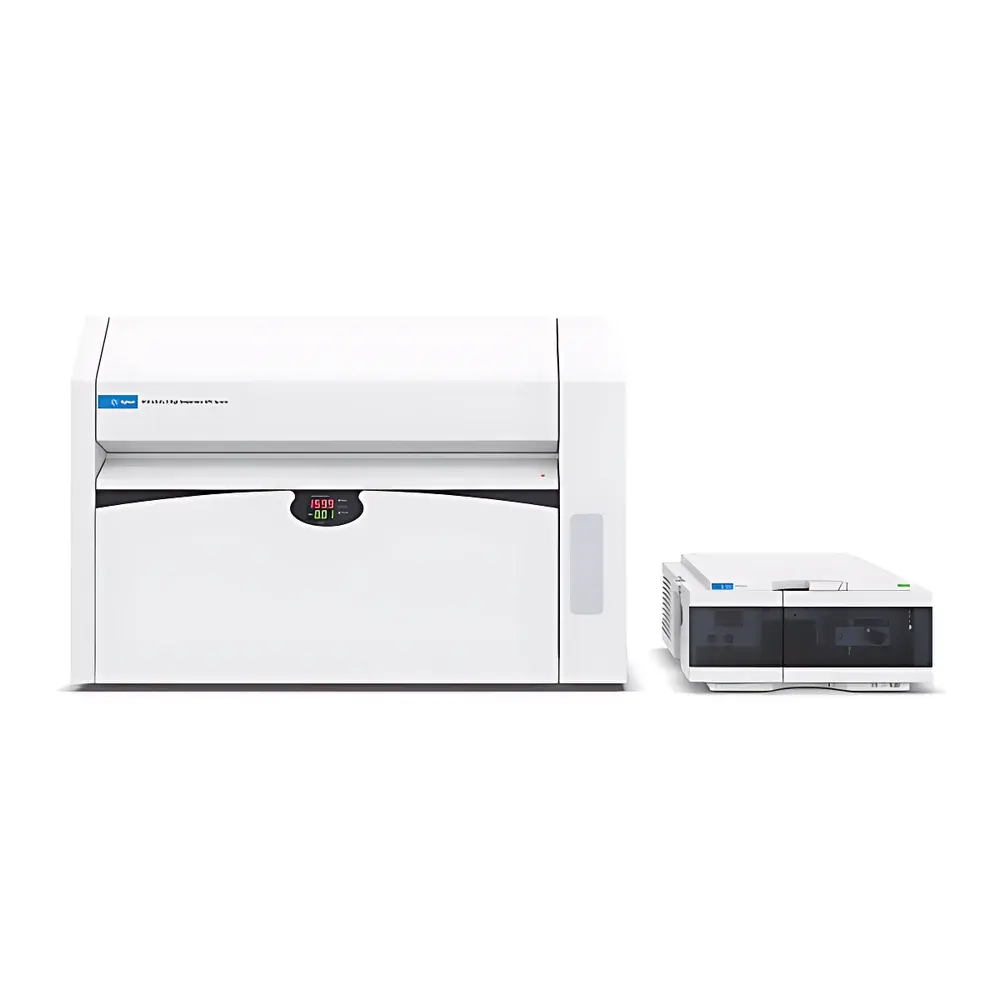
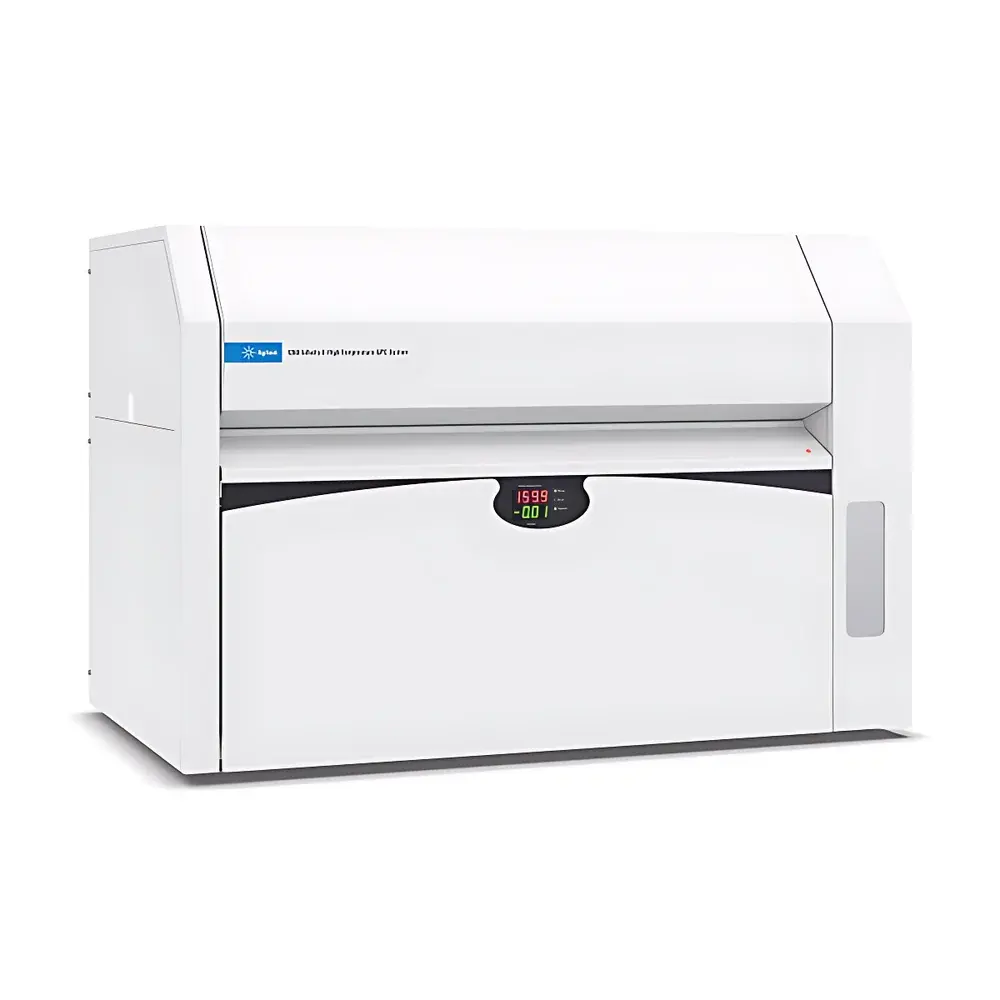
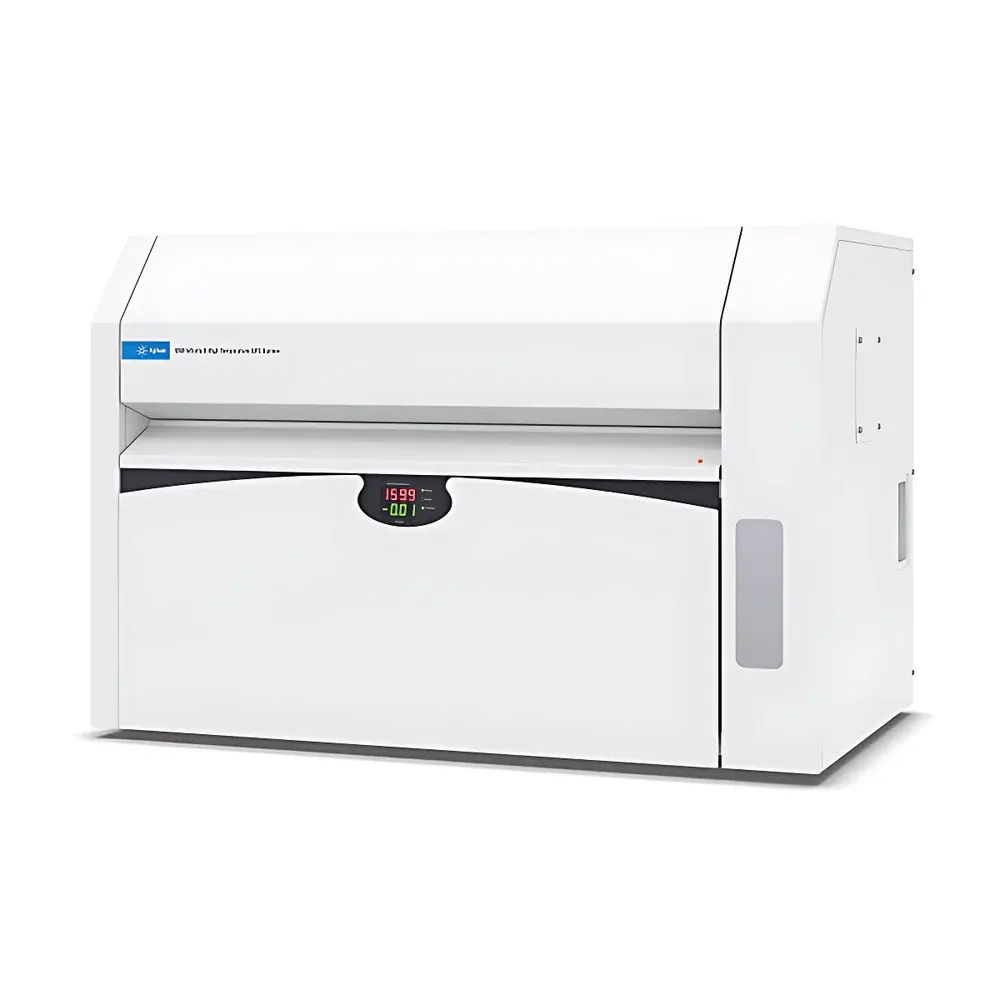
Agilent 1260 Infinity II HT GPC High-Temperature Gel Permeation Chromatograph
| Brand | Agilent Technologies |
|---|---|
| Origin | United Kingdom |
| Manufacturer Type | Authorized Distributor |
| Origin Category | Imported Instrument |
| Model | 1260 Infinity II HT GPC |
| Pricing | Available Upon Request |
Overview
The Agilent 1260 Infinity II HT GPC is a high-temperature gel permeation chromatography system engineered for precise, reproducible molecular weight characterization of thermally stable and semi-crystalline polymers. Operating on the principle of size-exclusion chromatography (SEC), it separates macromolecules in solution based on their hydrodynamic volume in a given solvent, enabling quantitative determination of absolute or relative molecular weight distributions (MWD). Designed specifically for elevated-temperature applications—up to 180 °C—the system maintains thermal stability across the entire flow path, including autosampler, column oven, and detectors. This eliminates thermal gradients that cause band broadening or retention time drift, ensuring high-resolution separation of polyolefins (e.g., PE, PP), polystyrene (PS), polyphenylene sulfide (PPS), and other engineering thermoplastics with molecular weights extending beyond 107 g/mol.
Key Features
- Integrated high-temperature compartment: All critical components—including the thermostatted autosampler, column oven, and detector modules—are housed within a single, precisely controlled thermal zone (up to 180 °C), minimizing temperature-induced retention variability and improving inter-run reproducibility.
- Multi-detector compatibility: Supports simultaneous coupling of refractive index (RI), differential viscometry (DV), and multi-angle laser light scattering (MALS) detectors—enabling concurrent measurement of Mw, Mn, Mv, Mz, dispersity (Đ), intrinsic viscosity, branching ratio, and root-mean-square radius (Rg).
- Robust solvent compatibility: Optimized for use with high-boiling-point organic solvents such as 1,2,4-trichlorobenzene (TCB), o-dichlorobenzene (o-DCB), and trichloroethylene, with inert fluidic pathways resistant to corrosion and thermal degradation.
- Advanced pump architecture: Dual-piston, pulse-free high-pressure pumping system delivering stable flow rates from 0.05 to 2.0 mL/min with pressure capability up to 600 bar—ensuring consistent elution under demanding high-temperature SEC conditions.
- Column selection flexibility: Compatible with a wide range of high-temperature SEC columns (e.g., Agilent PLgel, Waters Styragel HT, and Polymer Standards Service HT columns), supporting linear calibration, universal calibration (via viscometer), and absolute calibration (via MALS).
Sample Compatibility & Compliance
The system accommodates solid and melt-processable polymer samples requiring dissolution in hot solvents, including polyethylene (PE), polypropylene (PP), polystyrene (PS), polyphenylene sulfide (PPS), polyether ether ketone (PEEK), and specialty copolymers used in aerospace composites and optoelectronic materials. It supports ASTM D5296, ISO 16014, and USP guidelines for SEC methodology validation. Data acquisition and processing comply with 21 CFR Part 11 requirements when configured with Agilent OpenLab CDS and appropriate audit trail settings, facilitating GLP/GMP-aligned laboratory workflows.
Software & Data Management
Controlled via Agilent OpenLab CDS (ChemStation Edition or OpenLab ECM), the platform provides full method development, sequence management, real-time chromatogram visualization, and automated calculation of molecular weight averages, polydispersity index, Mark–Houwink parameters (K and α), and branching metrics. Batch processing tools support statistical comparison across sample sets, while raw data files (.D format) are stored in vendor-neutral, timestamped directories compliant with long-term archival standards. Optional integration with LIMS systems enables traceable sample routing and electronic signature enforcement.
Applications
- Molecular weight distribution analysis of polyolefins during catalyst development and process optimization.
- Branching quantification in LLDPE and metallocene-catalyzed polyethylenes using triple-detection SEC.
- Thermal stability assessment of high-performance resins prior to composite fabrication.
- Quality control of polymer batches in regulated manufacturing environments (e.g., medical device polymers, automotive under-hood materials).
- Structure–property correlation studies linking Rg, intrinsic viscosity, and branching architecture to mechanical performance.
FAQ
What is the maximum operating temperature for the column oven and detector compartment?
The integrated thermal zone is rated for continuous operation up to 180 °C, with ±0.1 °C temperature stability over time.
Can this system be upgraded to include light scattering detection?
Yes—the platform features standardized optical interfaces and fluidic ports compatible with third-party and Agilent MALS detectors, with full software integration via OpenLab CDS.
Is calibration with narrow-standard polystyrene applicable for polyolefin analysis?
No—universal calibration using a viscometer or absolute calibration via MALS is required for accurate molecular weight determination of polyolefins in TCB at elevated temperatures.
Does the system support automated sample preparation?
While the 1260 Infinity II HT GPC does not include an integrated dissolution station, it is fully compatible with external heated autosamplers (e.g., Agilent 1260 Infinity II Thermostat) and robotic liquid handlers equipped with temperature-controlled vial racks.
How is data integrity ensured during regulatory audits?
When deployed with OpenLab ECM and configured with electronic signatures, audit trails, and role-based access control, the system meets FDA 21 CFR Part 11 and EU Annex 11 requirements for electronic records and signatures.




