
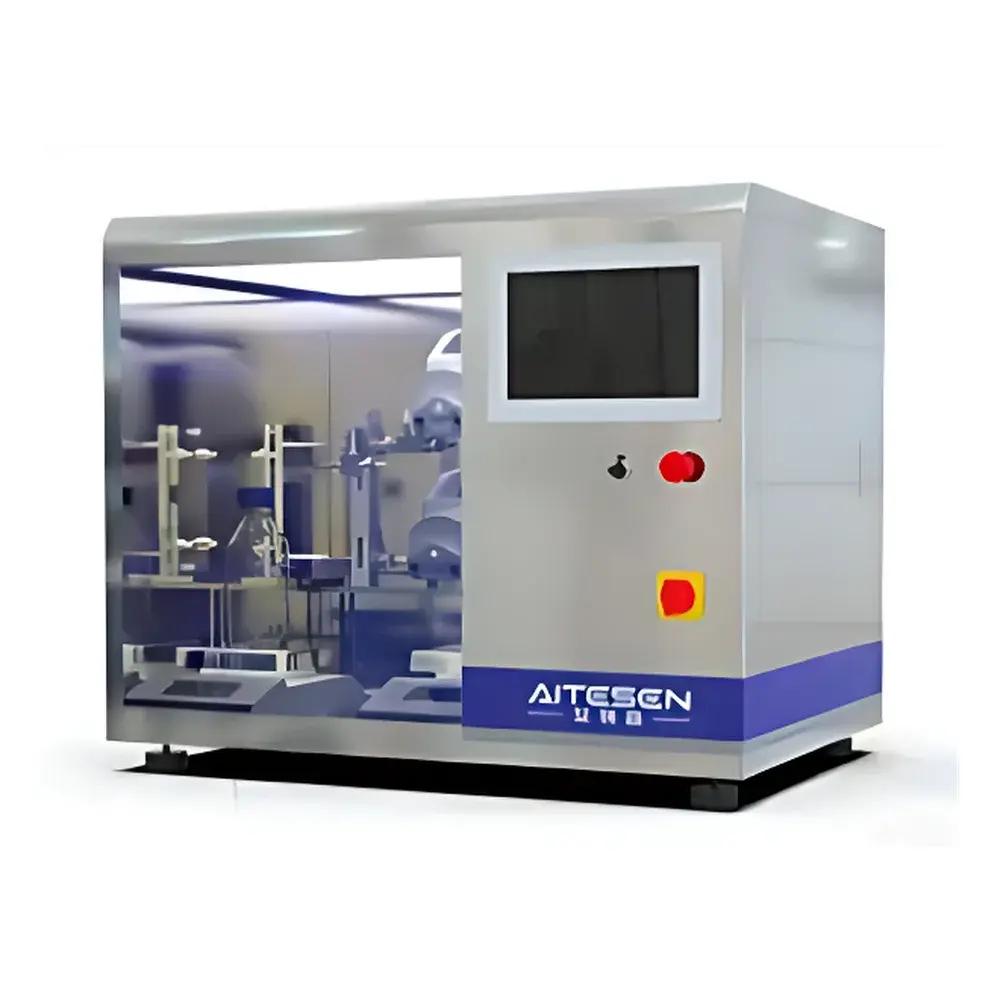
Aitesen LDS-L2 Laboratory-Scale Tangential Flow Filtration (TFF) System for Liposome and LNP Processing
| Brand | Aitesen |
|---|---|
| Origin | Jiangsu, China |
| Manufacturer Type | Authorized Distributor |
| Product Category | Domestic |
| Model | LDS-L2 |
| Pricing | Upon Request |
Overview
The Aitesen LDS-L2 is a benchtop tangential flow filtration (TFF) system engineered for precise, scalable process development in biopharmaceutical R&D—specifically optimized for liposome and lipid nanoparticle (LNP) processing. It operates on the fundamental principle of crossflow membrane separation: feed solution is recirculated parallel to the membrane surface under controlled pressure, minimizing concentration polarization and fouling while enabling high-recovery concentration, buffer exchange (diafiltration), endotoxin removal, and purification based on molecular size exclusion. Unlike dead-end filtration, TFF maintains consistent flux over time by sweeping solutes away from the membrane interface—critical for fragile nanocarriers such as doxorubicin hydrochloride liposomes, irinotecan liposomes, mRNA-LNPs, and siRNA-LNPs. The LDS-L2 serves as a bridge between early-stage formulation screening and clinical-scale manufacturing, delivering reproducible, GMP-aligned process parameters—including transmembrane pressure (TMP), feed pressure (Pf), retentate pressure (Pr), permeate pressure (Pp), and ΔP—that directly inform technology transfer to production-grade TFF skids.
Key Features
- Compact, modular architecture designed for laboratory fume hoods or cleanroom-adjacent environments; footprint < 0.5 m²
- Real-time monitoring of critical hydraulic parameters via integrated digital display: Pf, Pr, Pp, TMP, and ΔP—with configurable alarm thresholds
- Gravimetric control mode enabled via precision load cell (0–4100 g range, ±0.5 g resolution) for automated diafiltration endpoint detection
- Wide operational flow range (1–2200 mL/min) accommodates both low-volume screening (≥30 mL minimum sample volume) and intermediate-scale process optimization
- Pressure control within –1 to +5 bar range, supporting both low-shear ultrafiltration (UF) and gentle microfiltration (MF) applications
- Compatibility with standard single-use and reusable membrane formats: flat-sheet PES/cellulose cassettes (5–1000 kDa MWCO) and hollow-fiber modules (0.01–0.1 m² effective area)
- Chemically resistant wetted path (316L SS tubing, silicone/PFTE seals) validated for aqueous buffers, ethanol-containing formulations, and low-pH viral vector wash solutions
Sample Compatibility & Compliance
The LDS-L2 supports diverse biologics and nanomedicine workflows under current Good Manufacturing Practice (cGMP)-informed operating conditions. It is routinely deployed in labs conducting USP , ISO 13485-aligned purification studies and preclinical batch releases compliant with ICH Q5A(R2) and Q5D guidelines. Membrane compatibility spans low-protein-binding regenerated cellulose (RC), polyethersulfone (PES), and hydrophilic PVDF—validated for recovery of >90% encapsulated mRNA in LNPs following diafiltration against Tris-sucrose or histidine-acetate buffers. Endotoxin reduction ≥3-log10 is achievable using 0.02 µm MF membranes per ASTM F838-20 protocols. All pressure sensors are NIST-traceable; data logging meets ALCOA+ principles when paired with optional 21 CFR Part 11-compliant software modules (available upon request).
Software & Data Management
While the base LDS-L2 operates in autonomous mode via front-panel HMI, optional PC-based control software enables method storage, audit-trail generation, and export of timestamped CSV files containing all monitored parameters at user-defined intervals (1–60 s). Raw data includes real-time weight change rate (dW/dt), cumulative permeate volume, and calculated flux (LMH). Software modules support IQ/OQ documentation templates aligned with FDA guidance on computerized systems in pharmaceutical manufacturing. All system events—including pump start/stop, pressure limit breaches, and temperature deviations—are logged with operator ID and electronic signature capability.
Applications
- Liposome drug product development: concentration and buffer exchange of anthracycline- and camptothecin-loaded vesicles prior to sterile filtration
- mRNA-LNP final formulation: removal of unencapsulated RNA and residual ethanol post-mixing, with simultaneous exchange into cryoprotectant buffers
- Viral vector purification: clarification of lentiviral or AAV harvests via 0.22 µm TFF followed by 100 kDa UF concentration
- Monoclonal antibody polishing: aggregate removal and formulation into histidine-based storage buffers
- Cell lysate processing: separation of intact cells from debris using 0.45 µm MF cassettes, followed by target protein capture via 300 kDa UF
- Process characterization studies: Design-of-Experiments (DoE) mapping of TMP vs. flux decay, shear sensitivity of LNPs across flow velocities, and membrane fouling kinetics
FAQ
What is the minimum recommended sample volume for reliable operation?
The LDS-L2 is validated for stable recirculation starting at 30 mL total system volume—including retentate loop, pump head, and cassette hold-up—ensuring laminar flow dynamics and accurate TMP calculation.
Can the system be used for sterile processing?
Yes—when equipped with gamma-irradiated, pre-sterilized single-use cassettes and connected to a Class A/B isolator via aseptic connectors, the LDS-L2 supports sterile buffer exchange under ISO 14644-1 Class 5 conditions.
Is remote monitoring supported?
Standard Ethernet connectivity allows integration into lab-wide SCADA networks; Modbus TCP and OPC UA drivers are available as add-on firmware packages.
How is membrane fouling mitigated during extended runs?
The system implements programmable backpulse cycles (0.5–5 s duration) and variable-speed peristaltic recirculation to disrupt cake layer formation without compromising particle integrity.
Does Aitesen provide validation support for regulatory submissions?
Yes—comprehensive DQ/IQ/OQ protocols, risk assessments (per ISO 14971), and raw test data packages are supplied for each configured system, including calibration certificates for all pressure transducers and load cells.





