
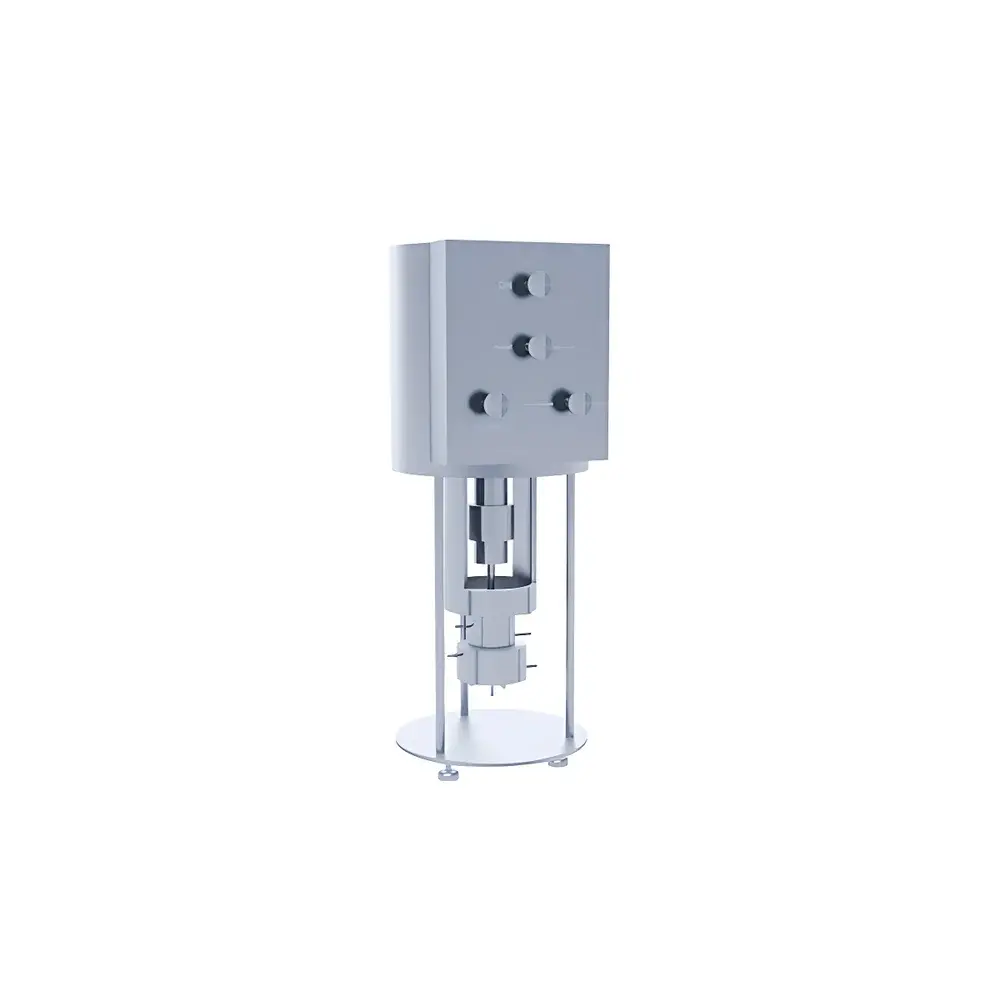
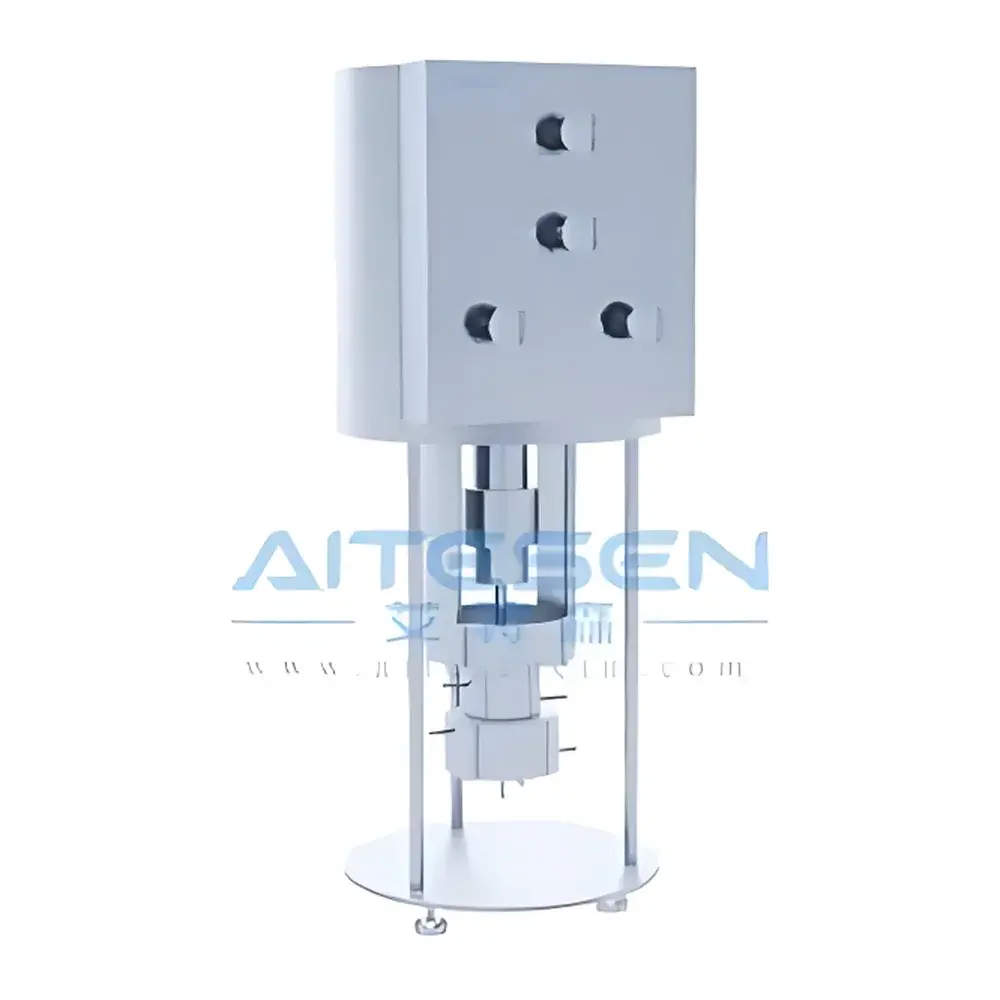
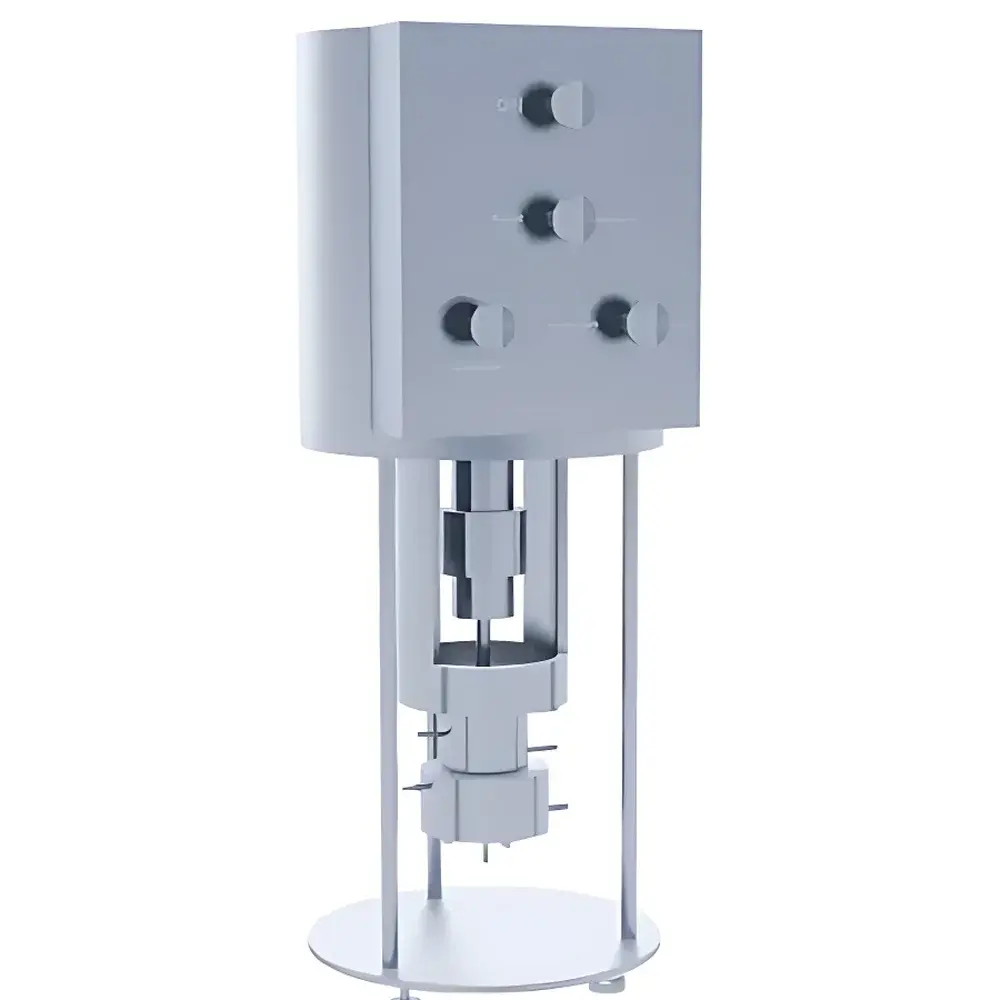
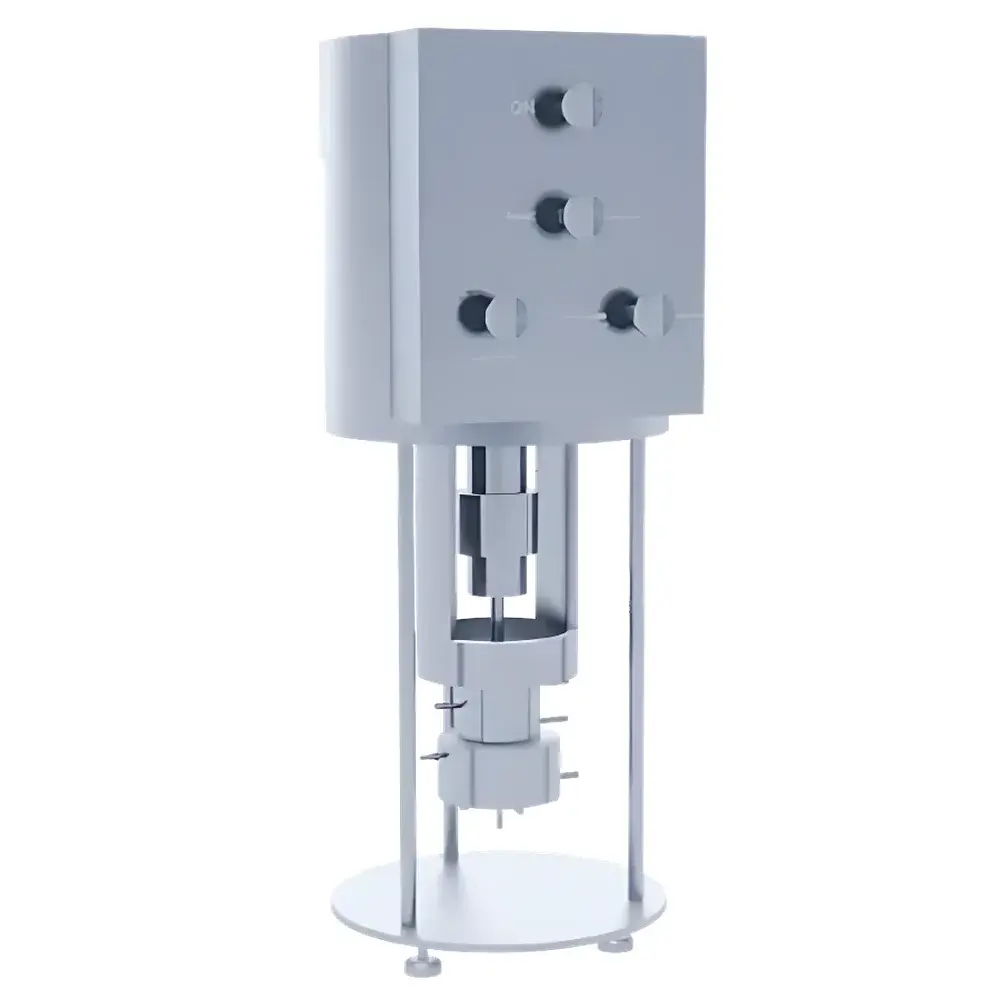
Aitesen Extru25-20 Desktop Liposome Extruder
| Brand | Aitesen |
|---|---|
| Origin | Jiangsu, China |
| Manufacturer Type | Authorized Distributor |
| Country of Origin | China |
| Model | Extru25-20 |
| Instrument Type | High-Pressure Pneumatic Extruder |
| Dimensions (W×D×H) | 280 × 440 × 260 mm |
| Sample Volume Range | 0–20 mL |
| Maximum Operating Pressure | 25 MPa |
| Final Particle Size Range | 50–1000 nm |
| Maximum Product Concentration | 200 mg/mL |
| Operating Temperature Range | 5–80 °C |
| Construction Material | SS316L |
| Membrane Diameter | 25 mm |
| Power Source | Compressed Nitrogen Gas |
| Residual Volume | < 10 µL |
| Temperature Control | Integrated Jacketed Chamber with External Circulator Compatibility |
| Regulatory Compliance | All elastomeric components (O-rings, gaskets) FDA-compliant per 21 CFR §177.2600 |
Overview
The Aitesen Extru25-20 Desktop Liposome Extruder is a precision-engineered, pneumatically driven high-pressure extrusion system designed for reproducible size reduction and homogenization of lipid-based nanocarriers. It operates on the principle of controlled shear-induced membrane extrusion: lipid vesicles are forced under regulated nitrogen pressure through polycarbonate (PC) track-etched membranes with defined pore sizes (typically 50 nm to 200 nm), inducing uniform deformation and fusion-fission events that yield monodisperse liposomal populations. Unlike mechanical homogenizers or sonication-based methods, this system delivers deterministic particle size control without thermal degradation or chemical denaturation—critical for preserving encapsulated therapeutics such as doxorubicin, amphotericin B, paclitaxel, oxaliplatin, irinotecan, and siRNA. The integrated temperature-controlled jacket enables precise thermal management across the entire extrusion cycle (5–80 °C), accommodating phospholipid phase transition requirements (e.g., DPPC at ~41 °C) to maintain bilayer fluidity and extrusion efficiency.
Key Features
- High-pressure capability up to 25 MPa ensures consistent extrusion through sub-100 nm membranes—even for viscous, high-concentration formulations (up to 200 mg/mL).
- Zero-residue chamber design minimizes sample loss; total recoverable volume exceeds 98% of loaded dose (0–20 mL batch capacity).
- Full-SS316L wetted path—including piston, cylinder, support plates, and filter holders—ensures corrosion resistance, cleanability, and compatibility with organic solvents and acidic/basic buffers.
- FDA-compliant elastomers (O-rings, gaskets) conform to 21 CFR §177.2600, supporting use in GMP-regulated preclinical and clinical manufacturing environments.
- Modular, tool-free assembly enables rapid membrane exchange, cleaning, and autoclave-compatible sterilization (121 °C, 20 min, saturated steam).
- Integrated thermal jacket accepts standard external recirculating chillers or heaters, enabling real-time temperature stabilization during extrusion—essential for thermosensitive payloads and phase-dependent lipid behavior.
- Pneumatic actuation eliminates electrical hazards in laboratory settings and provides smooth, pulse-free pressure delivery with fine-grained regulation via external pressure regulator.
Sample Compatibility & Compliance
The Extru25-20 accommodates a broad spectrum of lipid nanoparticle (LNP) and liposomal formulations, including cationic, anionic, PEGylated, and ligand-targeted systems. It has been validated for extrusion of multilamellar vesicles (MLVs), small unilamellar vesicles (SUVs), and large unilamellar vesicles (LUVs), as well as albumin-bound nanoparticles (e.g., nab-paclitaxel analogues) and nucleic acid-loaded carriers (siRNA, mRNA, plasmid DNA). All contact surfaces comply with ISO 10993-5 (cytotoxicity) and USP for plastic materials. The system supports GLP/GMP documentation workflows: pressure, temperature, and cycle count can be logged externally via analog outputs or integrated into facility SCADA systems. It meets cleanroom Class ISO 5–7 operational requirements when installed with appropriate HVAC and handling protocols.
Software & Data Management
While the Extru25-20 operates as a standalone hardware platform, its pneumatic interface and thermal jacket are fully compatible with third-party process monitoring systems. Analog 4–20 mA outputs for pressure and temperature enable connection to PLCs or data acquisition units (e.g., National Instruments DAQ, LabVIEW). Users may implement audit-trail-capable logging aligned with FDA 21 CFR Part 11 requirements using validated external software—particularly relevant for QC release testing in regulated development labs. Batch records—including membrane lot number, extrusion cycles, inlet pressure, jacket setpoint, and ambient conditions—can be archived in structured CSV or PDF formats for regulatory submission.
Applications
- Preparation of GMP-grade liposomal drug products for IND-enabling toxicology and pharmacokinetic studies.
- Process development of LNP formulations for mRNA vaccine candidates and gene-silencing therapeutics.
- Reproducible generation of reference standards for dynamic light scattering (DLS), NTA, and TEM characterization.
- Scale-down modeling of industrial extrusion processes (e.g., correlating 25 mm lab-scale data with 100+ mm production systems).
- Routine quality control of liposome size distribution (targeting PDI < 0.1) and polydispersity index stability across multiple extrusion passes.
- Thermally guided optimization of lipid phase behavior—e.g., extruding DPPC:cholesterol mixtures above and below Tm to assess lamellarity and encapsulation retention.
FAQ
What membrane pore sizes are compatible with the Extru25-20?
Standard polycarbonate membranes with nominal pore diameters of 50 nm, 100 nm, 200 nm, and 400 nm (Whatman Nuclepore™ or Sterlitech equivalents) are mechanically and chemically compatible. Membranes must be 25 mm diameter, supported by stainless-steel filter plates.
Can the system process sterile samples under aseptic conditions?
Yes—when assembled in a laminar flow hood and sterilized via autoclaving (121 °C, 20 min), the unit supports aseptic processing. All wetted parts are non-pyrogenic post-sterilization.
Is temperature calibration traceable to NIST standards?
The jacket inlet/outlet ports accept PT100 sensors; users may integrate NIST-traceable probes and calibrate independently per ASTM E74 or ISO/IEC 17025 guidelines.
How many extrusion cycles are typically required to achieve target size distribution?
For most MLV-to-SUV transitions, 11–21 passes (5–10 full forward-backward cycles) through 100 nm membranes at 15–20 MPa yield PDI < 0.1 and mean diameter ≤ 100 nm—validated by DLS and cryo-TEM.
Does the system support inline particle size monitoring?
Not natively—but the outlet port is fitted with a 1/4″ Swagelok® compression fitting, enabling direct coupling to microfluidic DLS or FFF systems for real-time analytics.



