
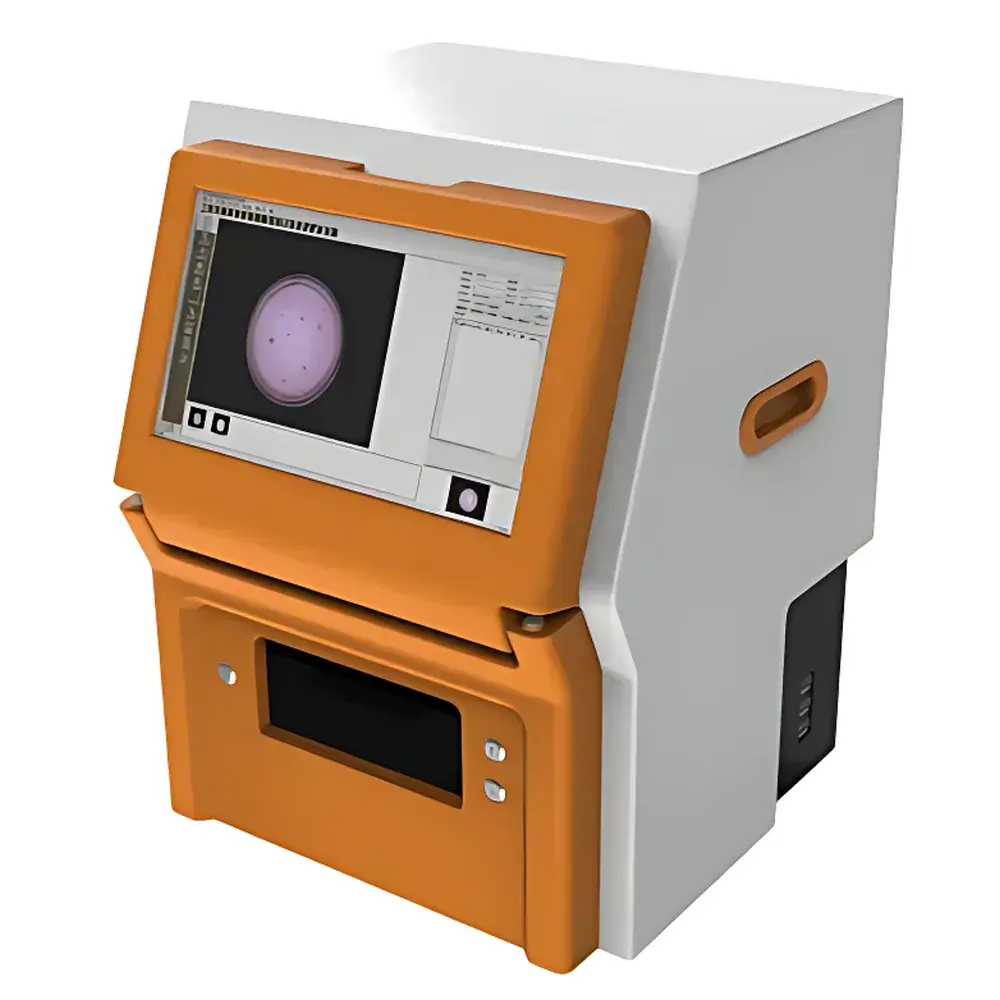
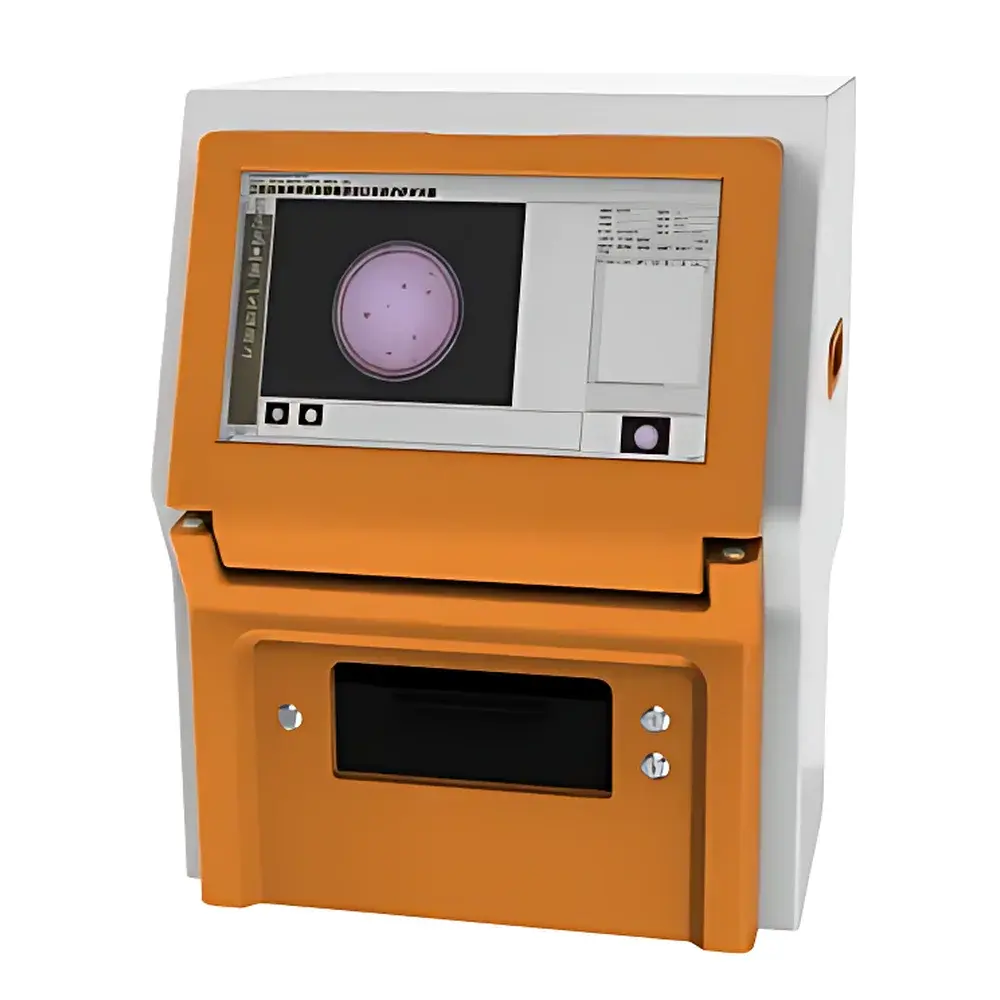
HengAo HCC-90C Fully Automated Colony Counter
| Brand | Tianjin HengAo |
|---|---|
| Origin | Tianjin, China |
| Manufacturer Type | Direct Manufacturer |
| Instrument Type | Fully Automated Colony Counter |
| Counting Speed | < 0.5 s per image |
| Data Export Format | Excel (.xlsx) |
| User Interface | Touchscreen GUI with integrated software |
| Compliance | Designed for ISO 4833-1:2013, ISO 6887-1:2017, and USP <61> microbiological testing workflows |
Overview
The HengAo HCC-90C Fully Automated Colony Counter is an optical imaging-based microbiological enumeration system engineered for precision, repeatability, and regulatory alignment in routine and high-throughput microbial testing laboratories. It employs high-resolution digital imaging combined with adaptive threshold segmentation algorithms to detect, classify, and enumerate viable microbial colonies grown on standard agar plates (e.g., PCA, TSA, VRBA, or Sabouraud Dextrose Agar). Unlike manual or semi-automated systems, the HCC-90C performs full-frame analysis without user-defined ROI selection—capturing the entire Petri dish surface at consistent illumination and focus. Its core measurement principle relies on contrast-based morphological recognition calibrated against colony size (≥20 µm diameter), circularity, edge gradient, and grayscale intensity differentials relative to background agar. The instrument is designed for integration into GLP- and GMP-compliant environments where auditability, traceability, and operator-independent results are essential.
Key Features
- Fully automated image acquisition and analysis—no manual threshold tuning required
- Sub-0.5-second per-plate counting cycle time, supporting ≥120 plates/hour throughput in continuous operation
- Integrated 10-megapixel CMOS sensor with uniform LED ring illumination (5000 K CCT, ±5% intensity uniformity across 90 mm field of view)
- Multi-color colony labeling: automatic assignment of distinct color codes based on size, shape, or user-defined morphology classes
- Advanced cluster separation algorithm for fused or overlapping colonies using watershed-based topographic segmentation
- Background noise suppression via dynamic local contrast enhancement and agar texture modeling
- On-screen zoom (up to 8× digital magnification) with pixel-level navigation for morphological verification
- Touchscreen interface with intuitive icon-driven workflow—no external keyboard or mouse required
- Embedded storage (32 GB SSD) + USB 3.0 export for raw images, count logs, and metadata
Sample Compatibility & Compliance
The HCC-90C accommodates standard 90 mm and 100 mm Petri dishes (including vented, gridded, and non-vented variants), as well as 55 mm plates with optional adapter. It supports all common solid media types—including nutrient-rich, selective, differential, and chromogenic agars—without hardware modification. Validation documentation includes performance qualification (PQ) protocols aligned with ISO/IEC 17025:2017 requirements for microbiological testing equipment. Software functionality complies with data integrity principles outlined in FDA 21 CFR Part 11 (electronic signatures, audit trail, user access levels), and supports configurable electronic records retention per laboratory SOPs. The system meets the analytical sensitivity and reproducibility criteria specified in ISO 4833-1:2013 (horizontal method for microbiology—detection and enumeration of microorganisms) and ISO 6887-1:2017 (preparation of test samples and dilution methods).
Software & Data Management
The proprietary HengAo ColonyVision™ software (v3.2+) runs natively on the device’s embedded Linux platform and provides complete lifecycle management of colony count data. Each analysis session generates a timestamped record containing original image, processed binary mask, colony coordinates, size distribution histogram, and statistical summary (total count, mean colony area, CV%). All data—including operator ID, plate ID, medium type, incubation time, and environmental notes—is stored in structured SQLite format and exportable to Excel (.xlsx) with embedded formulas for QC trending. Audit trails log every user action (image capture, parameter adjustment, count override, file export) with immutable timestamps and IP/user identifiers. Optional network mode enables secure SFTP upload to LIMS or centralized NAS repositories, with TLS 1.2 encryption and configurable retention policies.
Applications
The HCC-90C serves as a primary enumeration tool in quality control laboratories across regulated industries. In food and beverage manufacturing, it supports shelf-life studies, raw material screening, and finished-product release testing per AOAC Official Methods and FDA Bacteriological Analytical Manual (BAM) guidelines. In pharmaceutical QC, it fulfills compendial requirements for bioburden testing (USP , EP 2.6.12) and environmental monitoring programs under Annex 1. Clinical microbiology labs utilize it for quantitative culture analysis of urine, wound swabs, and respiratory specimens. Additional use cases include water utility compliance (EPA Method 1603), cosmetic preservative efficacy testing (ISO 11930), and academic research involving mutant strain quantification, biofilm detachment assays, or antimicrobial susceptibility endpoint determination.
FAQ
Does the HCC-90C support custom agar media calibration?
Yes—users may define new media profiles via reference plate training using up to 10 known-count standards per profile.
Can colony counts be manually corrected after automated analysis?
Yes—interactive editing tools allow drag-to-select, merge, split, or delete individual colonies with full audit trail logging.
Is remote software update supported?
Yes—firmware and software updates can be installed via USB drive or authenticated HTTPS download through the web-based admin portal.
What is the recommended maintenance interval?
Optical calibration verification is advised every 6 months; LED illumination uniformity and sensor focus should be validated annually per IQ/OQ documentation templates provided.
Does the system meet IEC 61000-4 electromagnetic compatibility standards?
Yes—the HCC-90C complies with IEC 61000-4-2 (ESD), -4-3 (radiated RF), and -4-4 (electrical fast transient) immunity requirements for laboratory equipment.





