
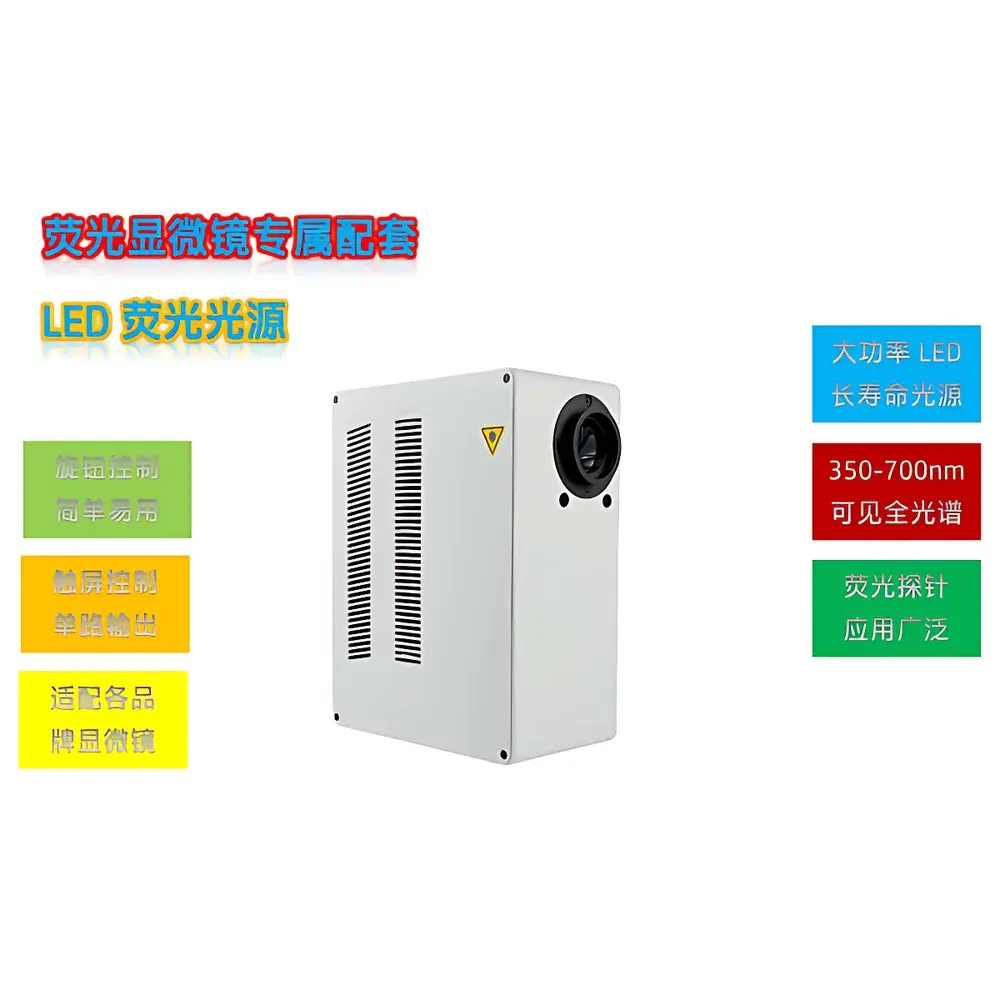
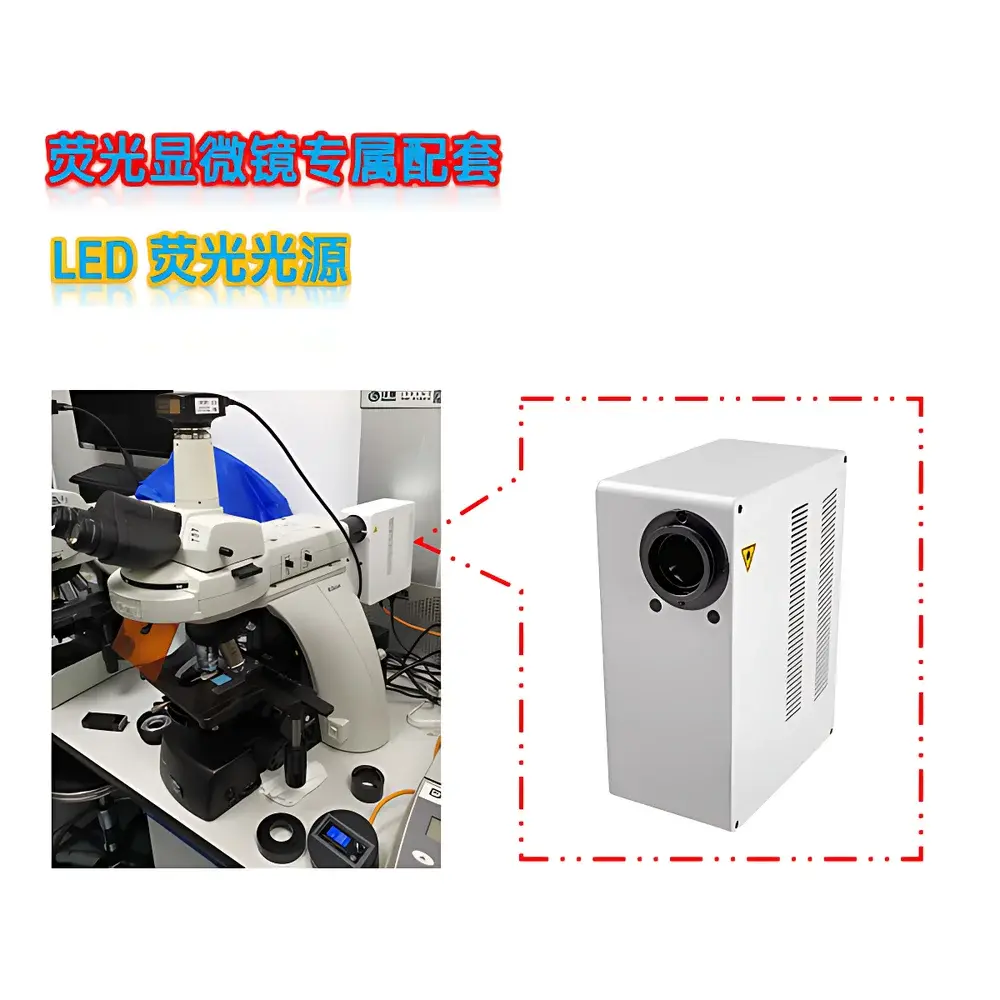
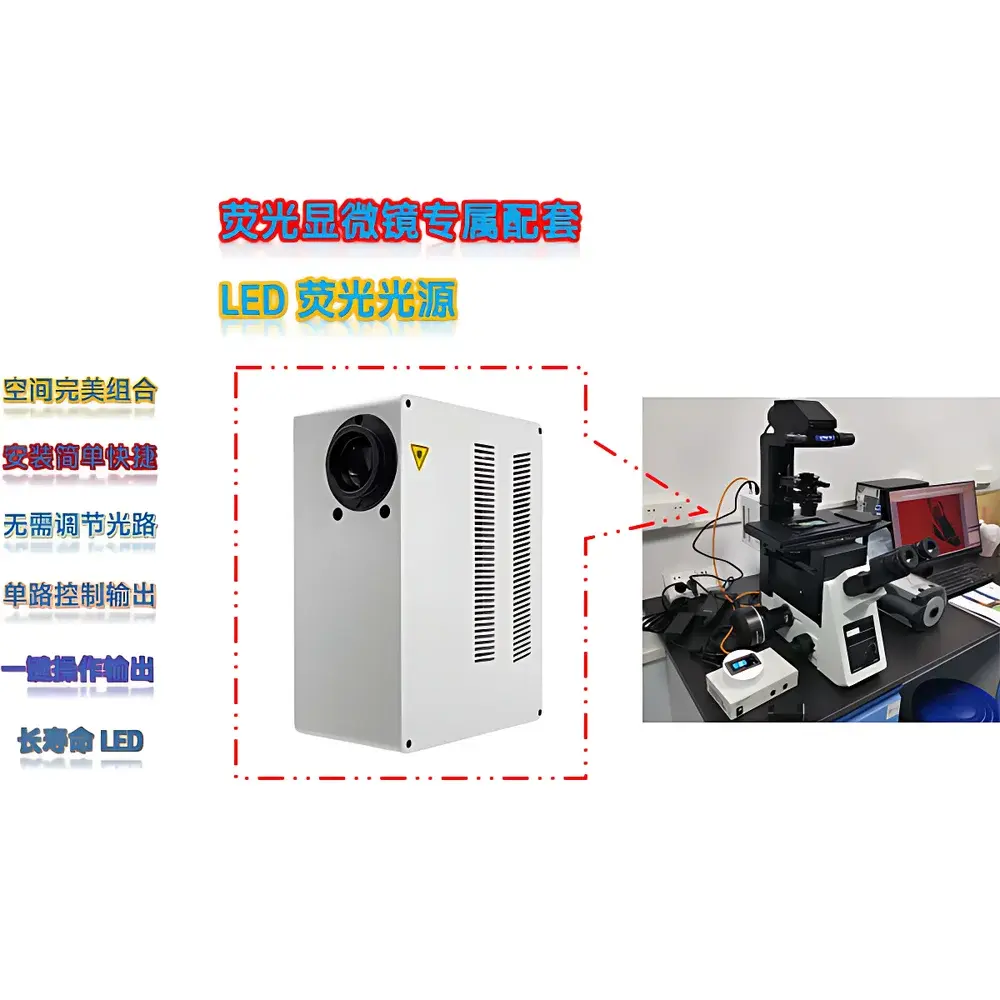
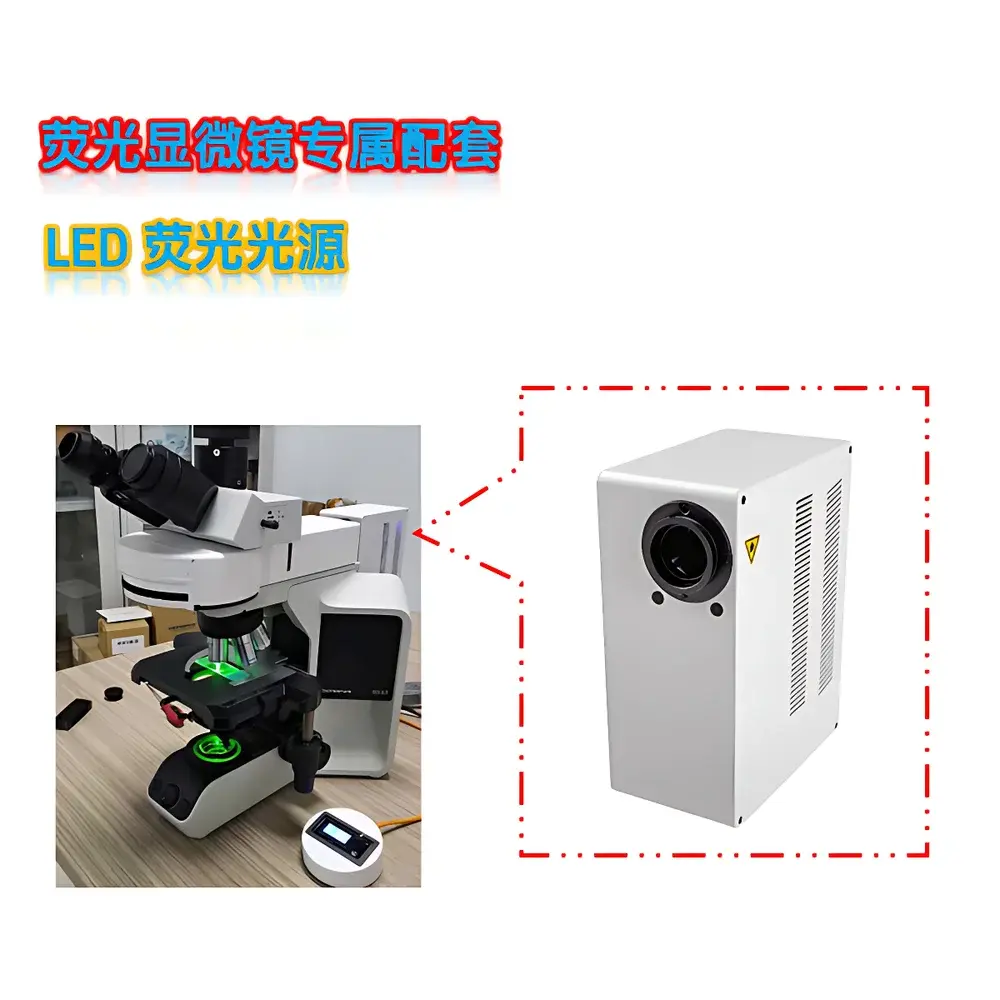
Laite Ti-XLED-400 LED Fluorescence Illumination System for Nikon ECLIPSE Ti2 Inverted Microscopes
| Brand | Laite |
|---|---|
| Origin | Guangdong, China |
| Manufacturer Type | OEM/ODM Manufacturer |
| Product Category | Domestic (China-made) |
| Model | Ti-XLED-400 |
| Illumination Source | High-Power Fiber-Coupled LED |
| LED Power | 80 W |
| Excitation Modality | Epifluorescence via Spinning-Disk-Compatible Filter Cube Mount |
| Control Interface | Rotary Knob and Touchscreen Panel |
| Microscope Compatibility | Nikon ECLIPSE Ti2 Series Inverted Platforms |
| Instrument Class | Research-Grade Fluorescence Illumination Module |
| Medical Device Classification | Non-Medical Device |
| Fluorescence Architecture | Modular Fiber-Optic Coupled Light Engine |
Overview
The Laite Ti-XLED-400 is a purpose-engineered, fiber-coupled LED fluorescence illumination system designed as a direct, drop-in replacement for mercury arc lamps on Nikon ECLIPSE Ti2-series inverted research microscopes. Unlike traditional broad-spectrum Hg/Xe sources, the Ti-XLED-400 employs high-brightness, spectrally stabilized LEDs with narrow-band emission profiles—optimized to match common fluorophore excitation maxima (e.g., DAPI, FITC, TRITC, Cy5). Its optical architecture integrates thermally managed LED emitters, precision collimation optics, and low-numerical-aperture multimode fiber coupling to deliver uniform, stable, and repeatable illumination across the field of view. The system eliminates warm-up delays, spectral drift, and hazardous UV emissions inherent in mercury lamps—while maintaining full compatibility with the Ti2’s existing fluorescence filter turret, shutter control logic, and hardware synchronization interfaces (TTL/USB). Engineered for long-term stability under continuous operation, the Ti-XLED-400 supports quantitative live-cell imaging, time-lapse fluorescence monitoring, and multi-channel co-localization experiments requiring high photometric reproducibility.
Key Features
- Fiber-coupled 80 W LED light engine delivering >1.2 W optical output per channel at peak emission wavelengths (365 nm, 470 nm, 560 nm, 630 nm configurable)
- Integrated thermal regulation with closed-loop fan control and real-time junction temperature monitoring ensures <±0.5% intensity drift over 4-hour continuous operation
- Native compatibility with Nikon Ti2’s epifluorescence path—including mechanical shutter synchronization, filter cube auto-recognition signals, and TTL-triggered exposure timing
- Dual-control interface: analog rotary intensity knob for rapid manual adjustment + capacitive touchscreen panel supporting preset recall, ramping profiles, and channel grouping
- Modular design enables field-upgradeable LED modules and wavelength-specific filter inserts without disassembly of the microscope base
- No ozone generation, no mercury disposal requirements, and CE-compliant electrical safety (EN 61000-6-3, EN 61000-6-4)
Sample Compatibility & Compliance
The Ti-XLED-400 is validated for use with standard glass-bottom culture dishes (e.g., MatTek P35G-1.5-14-C), chambered coverslips, and microfluidic cell culture devices compatible with Ti2-stage geometry. Its low-heat output (<1.8 W thermal load delivered to objective collar) minimizes thermal drift during extended Z-stack acquisition. The system complies with ISO 13485–aligned manufacturing controls and meets IEC 61000 electromagnetic compatibility standards for laboratory environments. While not classified as a medical device under FDA 21 CFR Part 809 or EU MDR Annex XVI, its performance characteristics align with ASTM E2879-22 (Standard Practice for Quantitative Fluorescence Microscopy) and support GLP/GMP-aligned documentation workflows when paired with Nikon NIS-Elements software audit trail features.
Software & Data Management
The Ti-XLED-400 communicates natively with Nikon NIS-Elements AR/VR via USB 2.0 HID protocol, enabling synchronized channel activation, intensity logging, and exposure parameter embedding within acquired image metadata (TIFF/ND2). Firmware supports firmware-over-the-air (FOTA) updates through the Laite L-Link Utility suite (Windows/macOS), which provides intensity calibration reports traceable to NIST-traceable photodiode reference standards. All intensity settings, exposure durations, and channel sequences are exportable as CSV for integration into automated imaging pipelines (e.g., Python-based MicroManager plugins or KNIME workflows). Full audit trail functionality—including user login, timestamped parameter changes, and session-level export logs—is retained for regulatory review.
Applications
- Long-term live-cell calcium imaging using GCaMP variants under low-phototoxicity blue/green excitation
- Multi-color immunofluorescence quantification in fixed tissue sections with minimal spectral bleed-through
- High-speed spinning-disk confocal imaging requiring precise TTL-gated LED pulsing (min. pulse width: 10 µs)
- Time-lapse tracking of fluorescently labeled organelles (mitochondria, lysosomes, ER) with sub-second frame intervals
- Developmental biology studies in zebrafish or C. elegans embryos requiring stable, vibration-free illumination
- Quality control of fluorescent bead standards (e.g., TetraSpeck, Rainbow Calibration Particles) for microscope validation protocols
FAQ
Is the Ti-XLED-400 compatible with Nikon Ti2-E and Ti2-A configurations?
Yes—the system mounts directly to the Ti2’s rear port and maintains full electronic handshake with both motorized and manual base variants.
Does it require modification of the Ti2’s fluorescence filter turret?
No—filter cubes retain native mechanical indexing; only the lamp housing is replaced.
Can intensity be controlled programmatically via third-party software?
Yes—USB HID commands are publicly documented in the Laite Developer SDK (v2.1+), supporting Micro-Manager, MATLAB Image Acquisition Toolbox, and custom LabVIEW VIs.
What is the expected LED lifetime at nominal output?
Rated for ≥20,000 hours at 80% initial luminous flux (L80), based on accelerated life testing per IES LM-80-15.
Is fiber alignment required during installation?
No—the system ships pre-aligned with Nikon-matched focal plane and NA matching; no user collimation tools are needed.
Related Products




