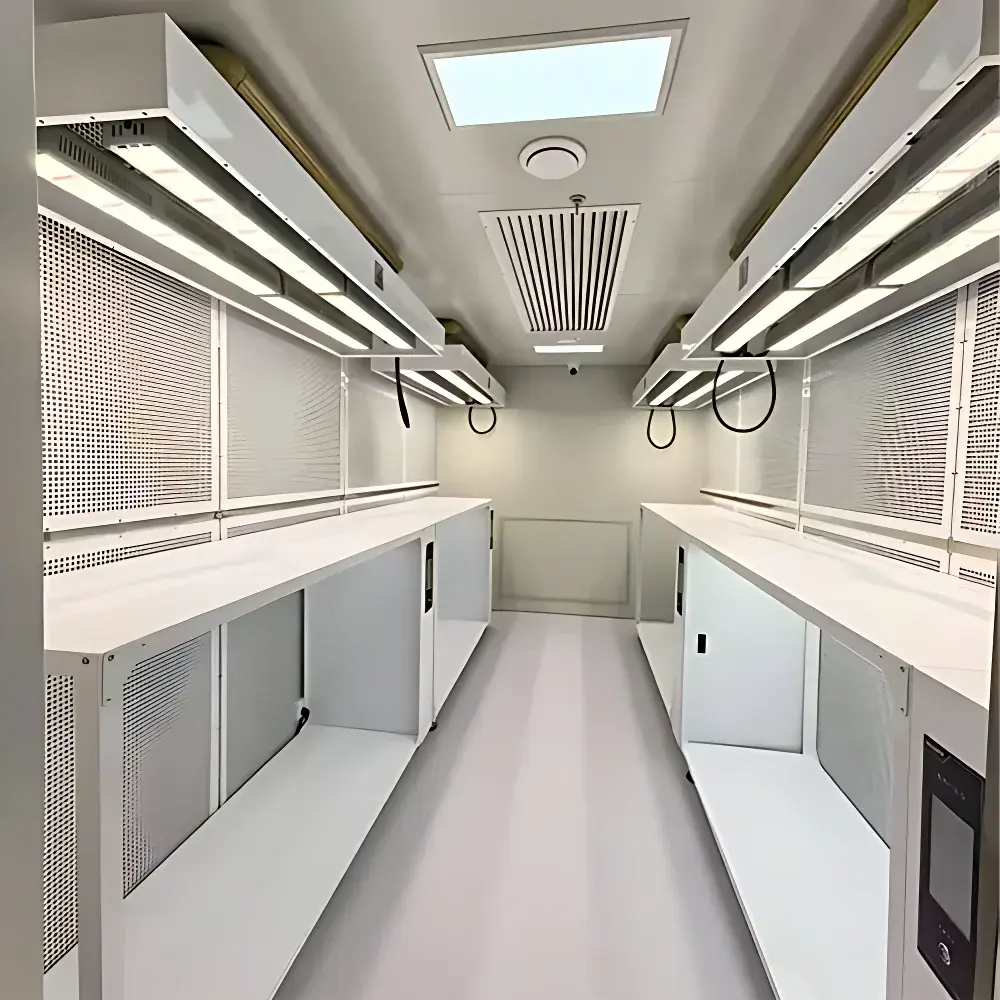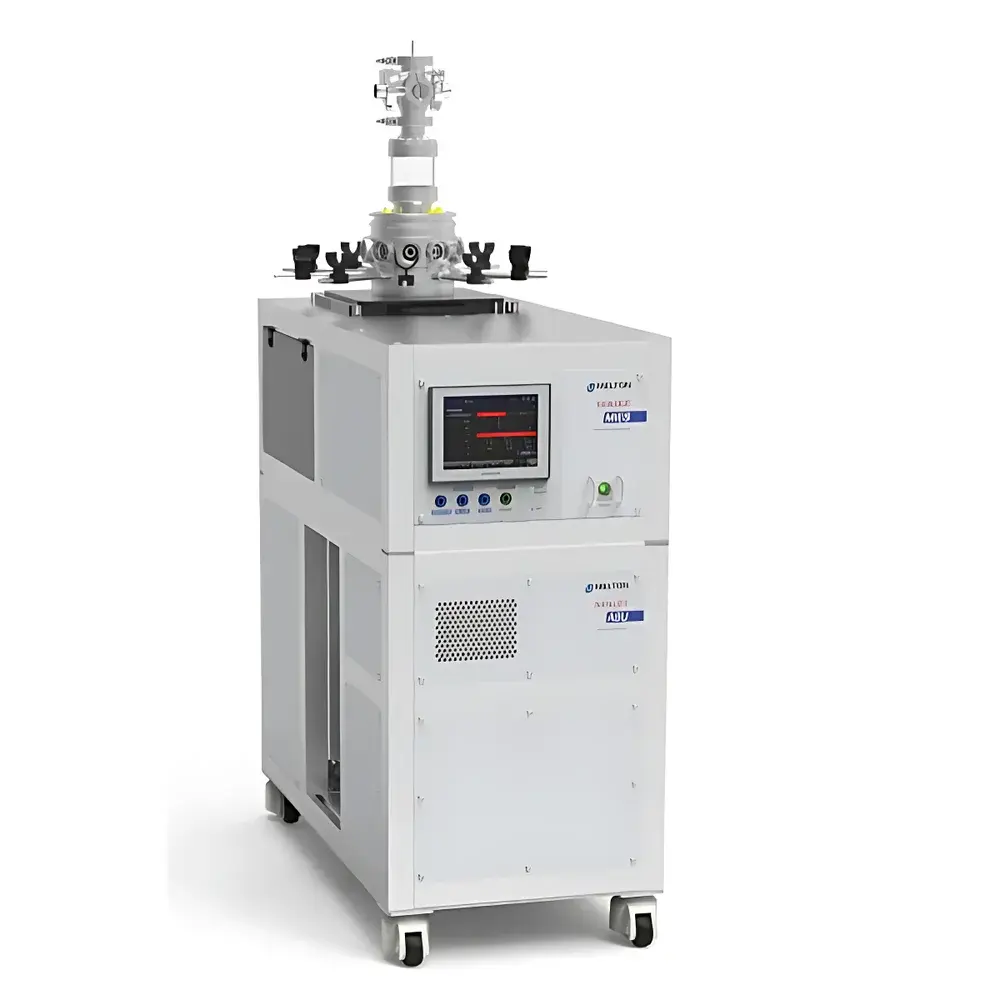
Melton Lab INHALOGIC MIES-N Non-Human Primate Nose-Only Inhalation Exposure System
| Brand | Melton Lab |
|---|---|
| Origin | Shanghai, China |
| Manufacturer Type | Direct Manufacturer |
| Regional Category | Domestic (China) |
| Model | INHALOGIC MIES-N |
| Pricing | Upon Request |
Overview
The Melton Lab INHALOGIC MIES-N is a fully integrated, mobile nose-only inhalation exposure system engineered for regulatory-compliant toxicological and pharmacological studies in non-human primates (NHPs), dogs, and mini-pigs. It operates on the principle of controlled aerosol generation and dynamic chamber-based delivery, ensuring precise, reproducible, and physiologically relevant respiratory dosing. Unlike systemic or oral administration routes, nose-only exposure minimizes dermal and gastrointestinal contamination, thereby improving dose accuracy and pharmacokinetic fidelity. The system maintains laminar airflow patterns within the exposure manifold to achieve >95% aerosol concentration uniformity across all animal ports—validated per OECD TG 412 and ASTM E1716–20 guidelines. Its modular architecture supports seamless integration into GLP-certified laboratories, with built-in redundancy for critical subsystems including aerosol delivery, real-time environmental monitoring, and exhaust abatement.
Key Features
- Mobile, self-contained platform with integrated casters, leveling feet, and structural rigidity for stable operation in vivarium or core facility environments
- Dual-mode control interface: local touchscreen HMI (Human-Machine Interface) with intuitive workflow navigation and remote Ethernet/OPC UA-enabled supervision via centralized lab management software
- Scalable animal capacity: accommodates up to 10 NHPs (e.g., cynomolgus macaques, rhesus macaques) using individually adjustable nose-only restraint tubes with ergonomic head support and positive-pressure breathing interfaces
- Robust reliability: MTBF (Mean Time Between Failures) exceeds 10,000 hours, validated under continuous 24/7 operation at nominal aerosol load conditions
- Comprehensive environmental monitoring suite: real-time measurement of temperature (±0.3 °C), relative humidity (±2% RH), static pressure differential (±0.5 Pa), and aerosol mass concentration (via integrated photometric sensor calibrated against gravimetric reference)
- Integrated HEPA + activated carbon exhaust treatment: ensures operator safety and compliance with ISO 14644-1 Class 7 cleanroom-compatible exhaust discharge standards
Sample Compatibility & Compliance
The INHALOGIC MIES-N supports a broad spectrum of test atmospheres, including liquid nebulized formulations (e.g., monoclonal antibodies, small-molecule suspensions), dry powder aerosols (DPI), vapor-phase compounds (e.g., volatile organic compounds, anesthetics), and combustion-generated particulates (e.g., tobacco smoke, diesel exhaust). All wetted components are constructed from 316L stainless steel, borosilicate glass, or USP Class VI-certified polymers to prevent leaching or adsorption artifacts. The system is designed and documented to meet OECD Principles of Good Laboratory Practice (GLP), with full audit trails, electronic signature capability, and data integrity controls aligned with FDA 21 CFR Part 11 and EU Annex 11 requirements. Validation protocols—including IQ/OQ/PQ documentation packages—are provided as part of the turnkey delivery.
Software & Data Management
The embedded INHALOGIC Control Suite v3.2 provides synchronized acquisition of exposure parameters (flow rate, pressure drop, aerosol concentration, chamber T/RH), animal-specific respiration metrics (via optional integrated plethysmography module), and alarm-triggered event logging. Raw data is stored in vendor-neutral HDF5 format with embedded metadata (ISO/IEC 11179-compliant), enabling direct import into statistical platforms such as SAS, R, or Python-based analysis pipelines. Remote access supports up to 200 systems under a single supervisory node, allowing multi-site study coordination with time-synchronized exposure start/stop commands and centralized calibration status tracking. Audit logs record all user actions—including parameter changes, manual overrides, and calibration events—with immutable timestamps and operator ID linkage.
Applications
- Toxicological assessment of inhaled pharmaceuticals, agrochemicals, and industrial chemicals per OECD TG 412 (subacute inhalation), TG 413 (subchronic), and TG 418 (respiratory sensitization)
- Preclinical modeling of chronic obstructive pulmonary disease (COPD), asthma, idiopathic pulmonary fibrosis (IPF), and viral/bacterial respiratory infection pathogenesis
- Regulatory submission support for PMTA (Premarket Tobacco Product Applications) and HPHC (Harmful and Potentially Harmful Constituents) profiling in tobacco and nicotine delivery systems
- Environmental health research on ambient particulate matter (PM2.5, PM10), wildfire smoke, and nanoparticle inhalation kinetics
- Pharmacokinetic/pharmacodynamic (PK/PD) correlation studies requiring route-specific bioavailability quantification
FAQ
Does the system comply with OECD GLP requirements for regulatory submissions?
Yes—the INHALOGIC MIES-N is delivered as a validated, documentation-complete GLP-ready system, including full traceability of calibration certificates, maintenance logs, and electronic audit trail configuration.
Can the system be adapted for rodent studies?
While optimized for NHPs, dogs, and mini-pigs, compatible rodent nose-only modules (for rats/mice) are available as optional add-ons with independent flow control and size-adjustable restraint interfaces.
Is third-party aerosol generator integration supported?
Yes—the system features standardized 1/4″ Swagelok® inlet ports and analog/digital I/O for seamless interoperability with commercial nebulizers (e.g., Aeroneb®, MicroAir®), dry powder dispersers (e.g., RD-1000), and vapor generators.
What level of technical support is provided post-installation?
Melton Lab offers lifetime remote diagnostics, biannual preventive maintenance visits, and priority response SLA (≤4 business hours for critical faults) under the standard service agreement.
Related Products