
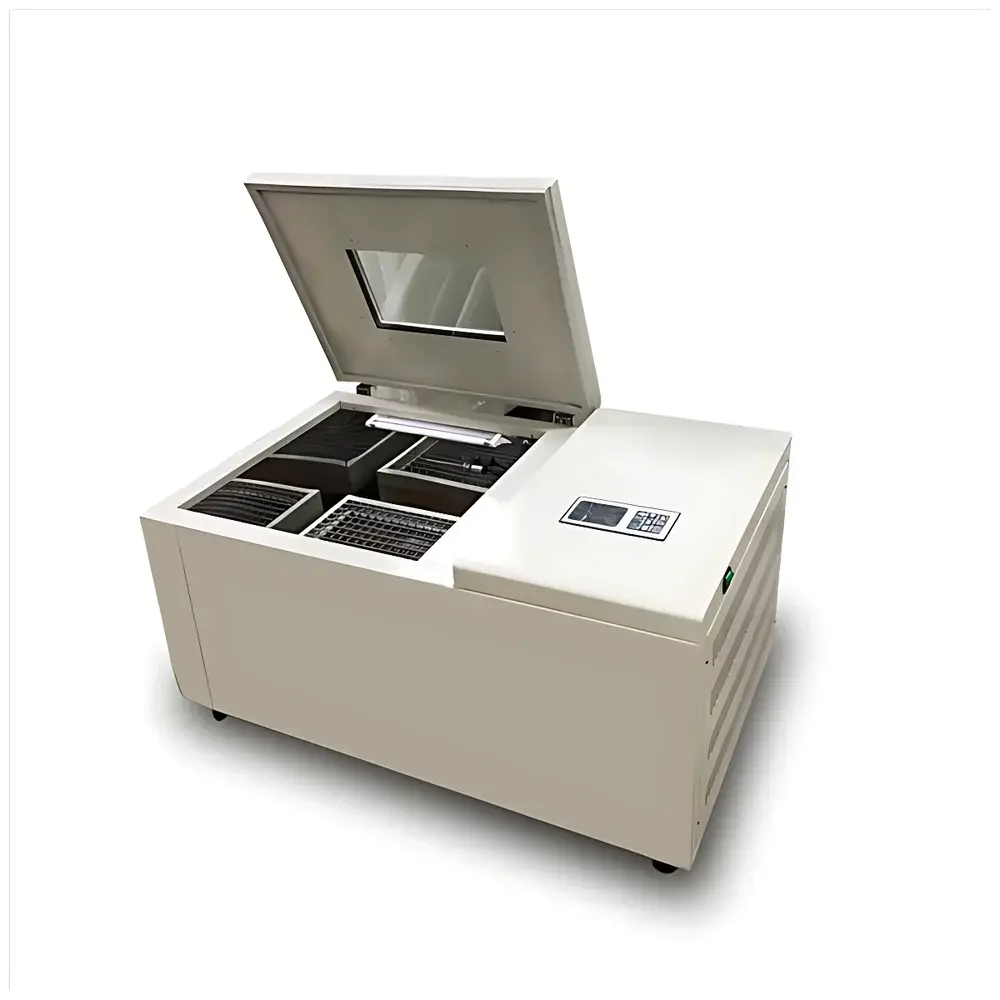
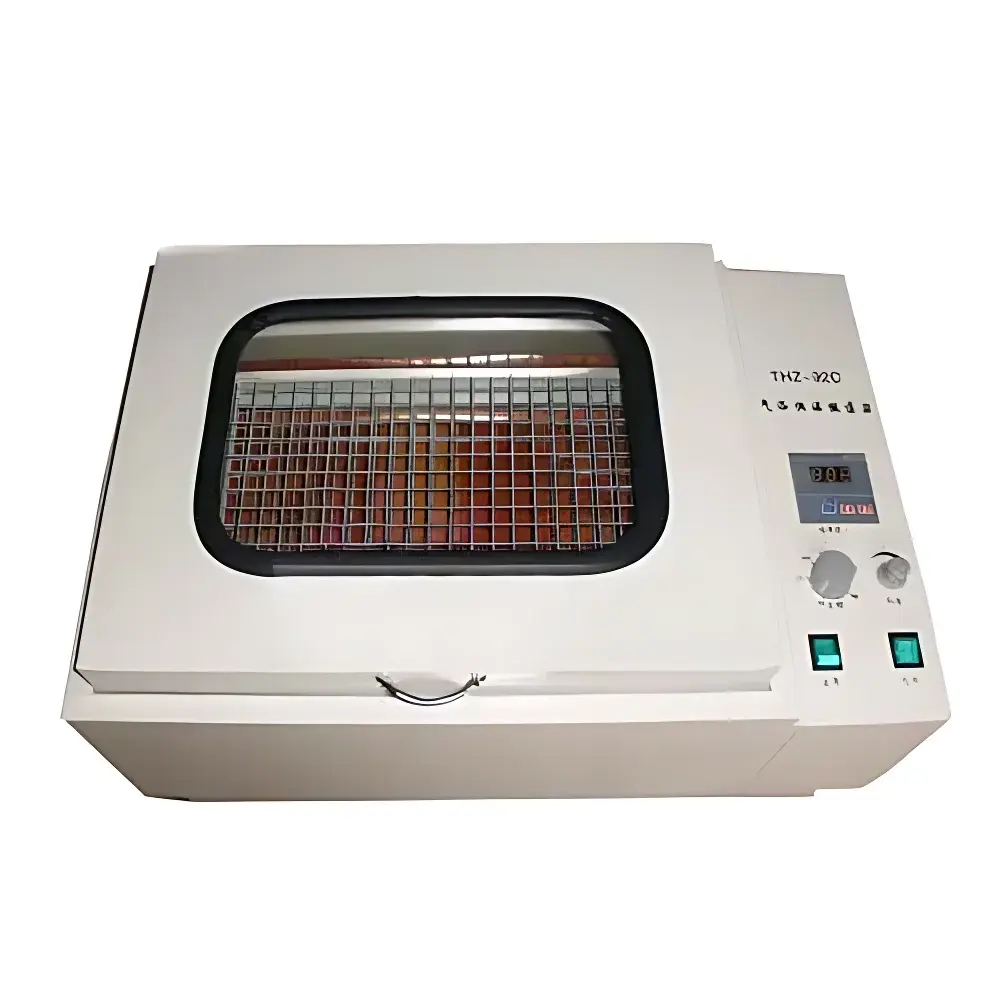
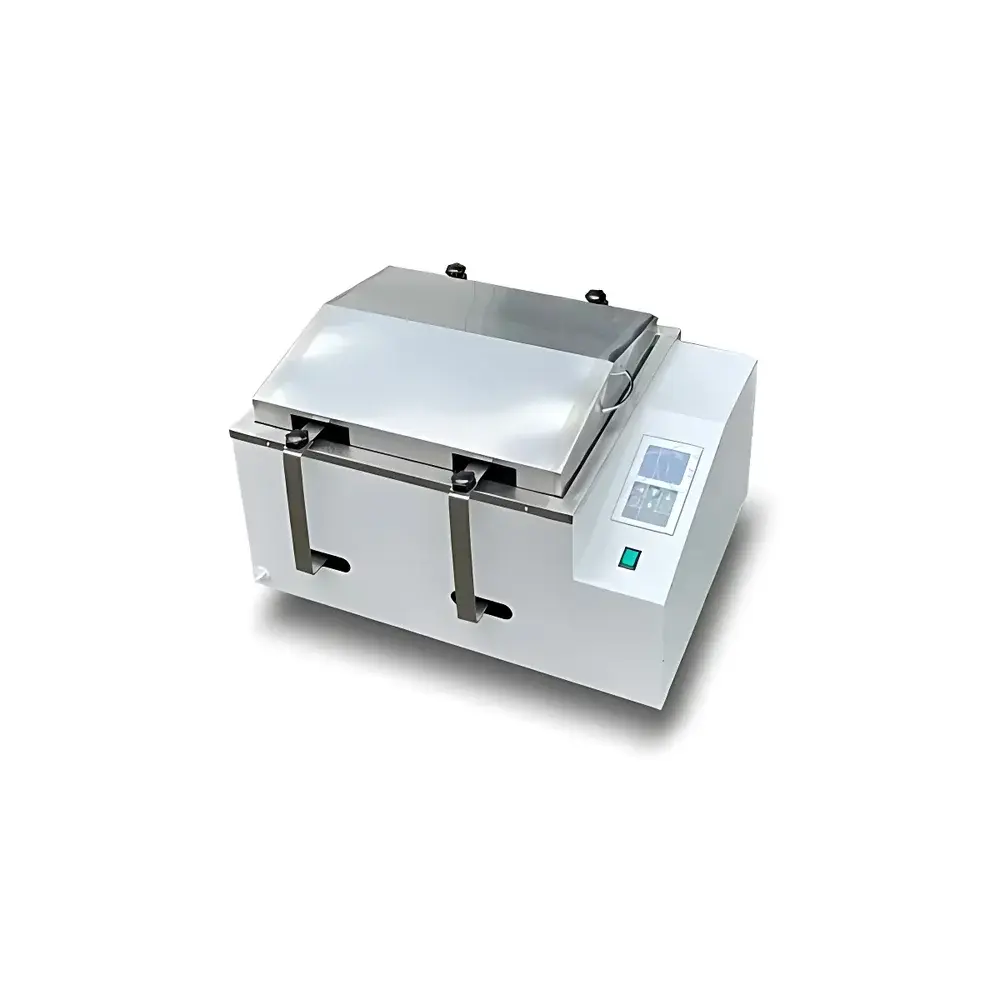
Chuanheng Instrument THZ-92C Reciprocating Air-Bath Incubator Shaker
| Brand | Chuanheng Instrument |
|---|---|
| Origin | Zhejiang, China |
| Manufacturer Type | Direct Manufacturer |
| Instrument Type | Air-Bath Incubator Shaker (Reciprocating) |
| Model | THZ-92C |
| Timing Range | 0–1439 min (24 h 59 min) |
| Oscillation Amplitude | 25 mm |
| Speed Range | 0–300 rpm |
| Temperature Range | Ambient +5°C to 60°C |
| Temperature Accuracy | ±0.5°C |
| Heating Power | 400 W |
| Tray Dimensions | 440 × 350 mm |
| Capacity | 50 mL × 35, 100 mL × 30, 250 mL × 20, or 500 mL × 12 |
| External Dimensions | 700 × 500 × 470 mm |
| Construction | Stainless Steel Interior Chamber |
| Control System | Microprocessor-Based Digital PID Controller with LED Display |
| Drive Mechanism | Electronically Controlled DC Motor with Mechanical Timer |
| Compliance | Designed for GLP-compliant laboratory environments |
Overview
The Chuanheng Instrument THZ-92C Reciprocating Air-Bath Incubator Shaker is an engineered platform for precise temperature-controlled oscillation of biological and biochemical samples in non-aqueous environments. Unlike water-bath shakers, this air-bath design utilizes forced-air convection within a thermally insulated chamber to achieve uniform thermal distribution across the sample tray—eliminating risks associated with water contamination, evaporation loss, or condensation-related cross-contamination. Its reciprocating motion profile (linear back-and-forth displacement) delivers consistent shear stress suitable for suspension cultures, microbial growth studies, enzyme kinetics assays, and solubility testing where gentle yet reproducible agitation is required. The unit operates on a microprocessor-based PID temperature control system, ensuring stability within ±0.5°C across its full range (ambient +5°C to 60°C), and integrates real-time digital speed monitoring for traceable operational parameters.
Key Features
- Stainless steel interior chamber with corrosion-resistant finish, facilitating cleaning and long-term durability under repeated sterilization cycles.
- Digitally calibrated PID temperature controller with LED display—enabling intuitive setpoint entry, real-time readout, and immediate deviation feedback.
- Electronically regulated DC motor drive delivering smooth, low-vibration reciprocating motion from 0 to 300 rpm, with fine-grained speed resolution and repeatable ramp profiles.
- Mechanical timer offering programmable operation up to 1439 minutes (24 h 59 min), plus “continuous run” mode for extended incubation protocols.
- Spring-loaded universal bottle rack (440 × 350 mm) accommodating standard culture vessels—including 50 mL, 100 mL, 250 mL, and 500 mL flasks—with optimized weight distribution to minimize orbital drift during high-speed operation.
- Integrated safety interlocks: over-temperature cutoff, motor overload protection, and automatic shutdown upon door opening or abnormal thermal deviation.
Sample Compatibility & Compliance
The THZ-92C supports a broad spectrum of sample formats used in life science laboratories, including Erlenmeyer flasks, test tubes, petri dishes, and custom bioreactor vessels—provided mechanical stability and volume constraints are observed. Its air-bath architecture avoids immersion-related limitations, making it especially appropriate for volatile solvent systems, hydrophobic suspensions, or sealed anaerobic cultures where water ingress must be avoided. From a regulatory perspective, the instrument’s digital controls, stable thermal performance, and deterministic timing mechanism align with foundational requirements for GLP (Good Laboratory Practice) and ISO/IEC 17025-accredited testing environments. While not inherently 21 CFR Part 11 compliant (as it lacks audit-trail-capable software), its analog-digital hybrid interface allows integration into validated workflows via external data loggers meeting FDA validation criteria.
Software & Data Management
The THZ-92C operates as a standalone hardware platform without embedded network connectivity or proprietary software. All operational parameters—including set temperature, actual chamber temperature, speed setpoint, and elapsed time—are displayed locally on a high-contrast LED panel. For laboratories requiring electronic record retention, third-party USB or RS-232 data loggers may be connected via optional analog output ports (0–5 V or 4–20 mA) to capture time-stamped temperature and speed traces. This architecture supports traceability when paired with LIMS-integrated acquisition systems compliant with ALCOA+ principles (Attributable, Legible, Contemporaneous, Original, Accurate, Complete, Consistent, Enduring, Available).
Applications
- Microbial culture expansion under controlled aeration and thermal conditions for strain banking and inoculum preparation.
- Protein expression optimization in E. coli and yeast systems requiring defined agitation intensity and temperature ramping.
- Solid-phase extraction (SPE) and liquid–liquid partitioning protocols demanding uniform mixing without emulsion formation.
- Cell detachment and suspension homogenization prior to flow cytometry or viability assays.
- Environmental microbiology studies involving soil slurry enrichment or biofilm disruption under standardized shear conditions.
- Educational use in undergraduate and graduate teaching labs for demonstrating first-order kinetic modeling in batch culture systems.
FAQ
Is the THZ-92C suitable for use with flammable solvents?
Yes—its air-bath design eliminates water contact, and the stainless steel chamber meets basic explosion-proof handling guidelines when operated below the autoignition temperature of common organic solvents. However, external ventilation and spark-free environment compliance remain the user’s responsibility.
Can the oscillation direction be changed from reciprocating to orbital?
No—the THZ-92C is mechanically configured exclusively for linear reciprocating motion. Orbital or dual-mode functionality requires models designated THZ-92A (orbital) or THZ-92B (dual-function).
What maintenance intervals are recommended for long-term reliability?
Lubrication of the drive linkage every 6 months and calibration verification of temperature and speed sensors annually are advised. Cleaning of the air intake filter should occur weekly in high-dust environments.
Does the unit include a CO₂ or humidity control option?
No—this model provides only temperature and agitation control. Humidity or gas-phase regulation requires integration with external environmental chambers or specialized incubator-shaker hybrids.
How is thermal uniformity verified across the tray surface?
Uniformity is specified at ≤±0.8°C across the central 80% of the tray at 37°C steady state, per internal factory qualification using NIST-traceable PT100 probes at nine spatial points. Full validation reports are available upon request.



