
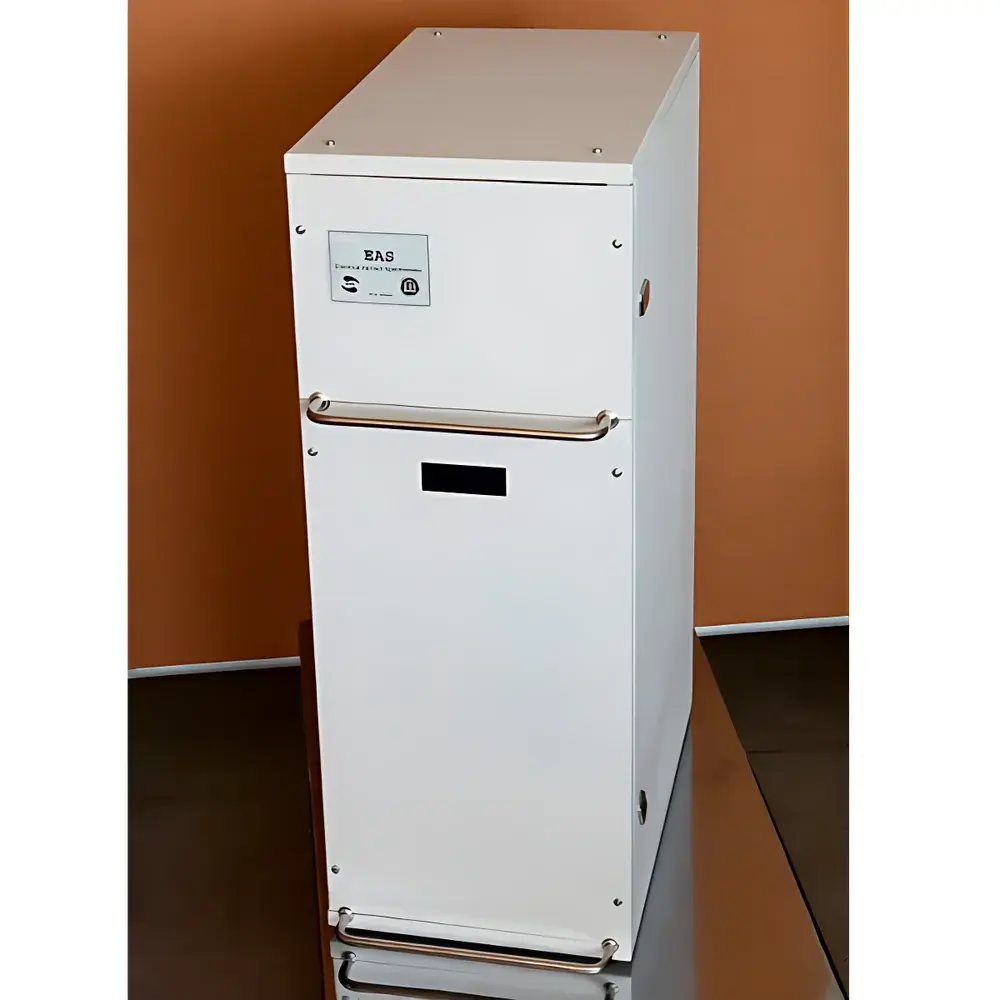
Airel EAS Wide-Range Electrical Aerosol Spectrometer
| Brand | Airel |
|---|---|
| Origin | Estonia |
| Manufacturer Type | Importer/Distributor |
| Country of Origin | Estonia |
| Model | EAS |
| Price | Upon Request |
Overview
The Airel EAS Wide-Range Electrical Aerosol Spectrometer is a high-performance, laboratory- and field-deployable instrument engineered for real-time, high-resolution measurement of aerosol particle size distribution across an exceptionally broad dynamic range—from 3 nm to 10 μm in aerodynamic (Stokes) equivalent diameter. Developed at the University of Tartu (Estonia), the EAS implements parallel differential mobility analysis (DMA) coupled with multi-channel electrostatic detection to deliver simultaneous quantification of number, surface area, and volume concentrations as functions of particle size. Unlike sequential scanning systems, its parallel architecture enables true second-by-second temporal resolution without compromising size resolution or statistical robustness—making it uniquely suited for monitoring rapidly evolving aerosol processes in ambient air, combustion plumes, indoor environments, and mobile platforms.
Key Features
- Integrated monolithic design: All critical components—including aerosol charging, DMA classification, electrostatic detection, flow control, and data acquisition—are housed within a single, vibration-damped chassis (60 kg, 310 × 580 × 820 mm), eliminating external modules and minimizing calibration drift.
- Adaptive volumetric flow control: Maintains precise 30 L/min total sampling flow (12 L/min for D-DMA + 18 L/min for E-DMA branches) under variable ambient pressure and filter loading conditions via closed-loop mass flow regulation.
- Dual-mode parallel DMA architecture: Combines diffusion-based charging and classification (D-DMA, 3–1000 nm) with field-assisted electrophoretic classification (E-DMA, 300 nm–10 μm), enabling seamless coverage across nucleation, accumulation, and coarse modes without manual reconfiguration.
- Non-radioactive unipolar corona charging: Eliminates regulatory constraints associated with radioactive sources while maintaining stable charge efficiency; software-controlled needle bias compensation mitigates performance degradation due to electrode contamination.
- High-throughput parallel electrometer array: 256 independent electrometer channels (64 per decade) provide simultaneous signal acquisition with sub-second integration time, supporting both high-concentration (>10⁶ p/cm³) and low-noise (<10² p/cm³) operational regimes.
- Remote operability & long-term autonomy: Ethernet-enabled firmware supports secure remote monitoring, diagnostic logging, firmware updates, and scheduled calibration checks—validated for unattended operation over multi-month field deployments without consumables beyond mains power (220 V AC).
Sample Compatibility & Compliance
The EAS accepts ambient air, ducted exhaust streams, and conditioned laboratory aerosols without dilution or pre-separation. Its inert stainless-steel and PTFE-wetted path ensures compatibility with hygroscopic, semi-volatile, and low-volatility organic aerosols. The instrument conforms to ISO 27891:2019 (aerosol instrumentation—performance verification of electrical mobility spectrometers), supports traceable calibration using NIST-traceable polystyrene latex (PSL) and sucrose nanoparticles, and meets CE marking requirements for electromagnetic compatibility (EN 61326-1) and safety (EN 61010-1). Data integrity protocols align with GLP principles, including audit-trail-enabled software logging, user-access controls, and timestamped raw-data archiving.
Software & Data Management
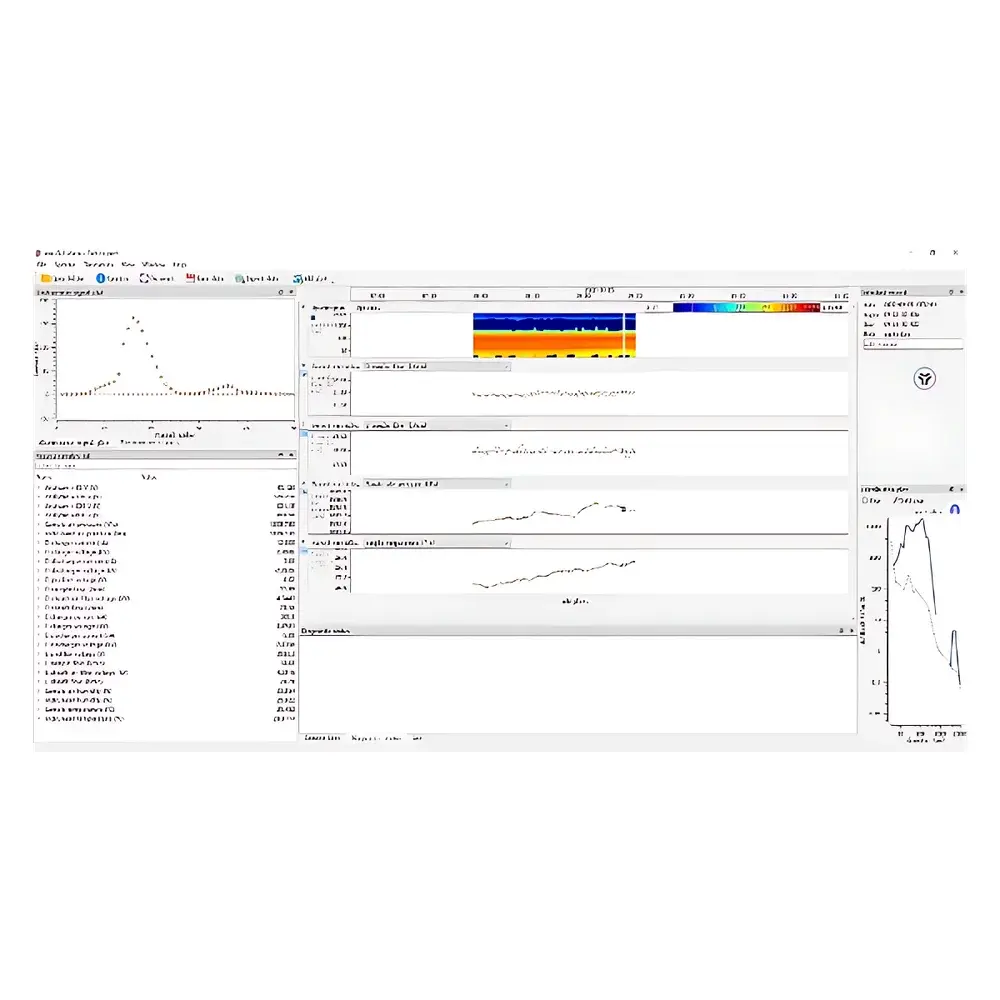
The EAS Control Suite (v5.x, Windows/Linux) provides real-time visualization of size-resolved concentration spectra, automated baseline correction, mobility-to-diameter conversion using calibrated transfer functions, and export of standardized netCDF-4 files compliant with ACTRIS and ICOS metadata schemas. Built-in scripting (Python API) enables integration with atmospheric modeling workflows (e.g., Mie scattering lookup tables, coagulation kernel calculations). All raw electrometer voltages and DMA voltage ramps are stored with full metadata (temperature, pressure, RH, flow rates), satisfying FAIR data principles. Software validation documentation is available upon request for regulated environments requiring 21 CFR Part 11 compliance.
Applications
- Ambient atmospheric aerosol monitoring: Long-term trend analysis of nucleation-mode particle formation, CCN-relevant accumulation mode dynamics, and coarse-mode dust/salt contributions.
- Indoor air quality assessment: Source apportionment of cooking, cleaning, and occupant-generated particles with second-scale resolution during occupancy cycles.
- Combustion aerosol characterization: Real-time profiling of soot primary particle size, agglomerate fractal dimension proxies, and volatile/semi-volatile partitioning during engine or biomass burn tests.
- Mobile platform deployment: Vehicle-mounted and airborne measurements (via optional shock-isolated mounting kit) for urban pollution mapping and vertical profile studies.
- Filter and scrubber efficiency testing: Quantifying penetration curves across full size ranges under realistic loading and flow conditions.
FAQ
Does the EAS require radioactive sources for particle charging?
No—the EAS uses a non-radioactive, software-stabilized unipolar corona discharge system.
Can the EAS operate unattended for extended periods?
Yes—field deployments exceeding 90 days have been validated with no consumables other than stable AC power and periodic remote diagnostics.
How is size calibration maintained across the full 3 nm–10 μm range?
Calibration is performed separately for D-DMA (using sub-100 nm PSL standards) and E-DMA (using 300 nm–5 μm sucrose and PSL standards); cross-over validation is conducted at 300–1000 nm overlap region.
Is the instrument suitable for shipboard or aircraft use?
Yes—the integrated mechanical damping system and wide operating temperature/humidity range (5–40 °C, 10–90% RH non-condensing) support marine and aerial deployment with optional environmental enclosures.
What data formats are supported for export and interoperability?
NetCDF-4 (primary), CSV (size-binned spectra), and HDF5 (raw electrometer time series), all embedded with CF-compliant metadata and instrument configuration logs.







