
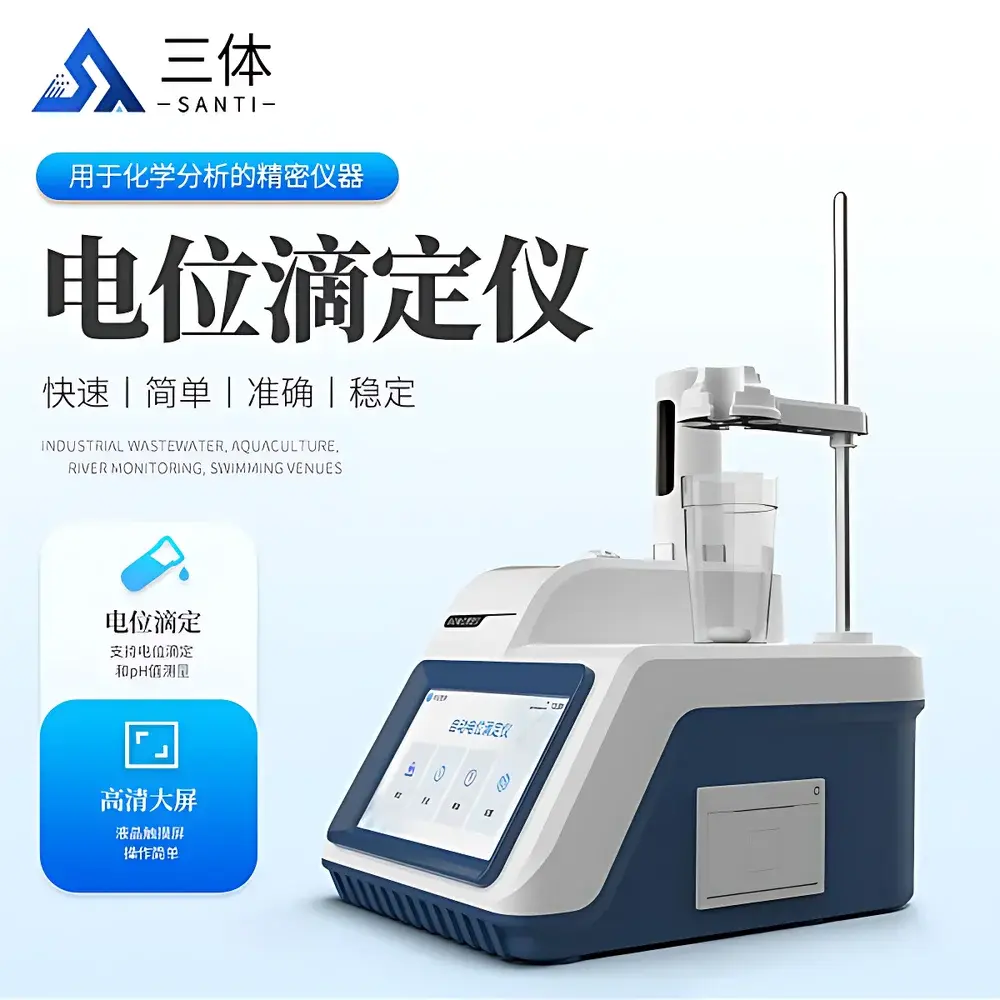
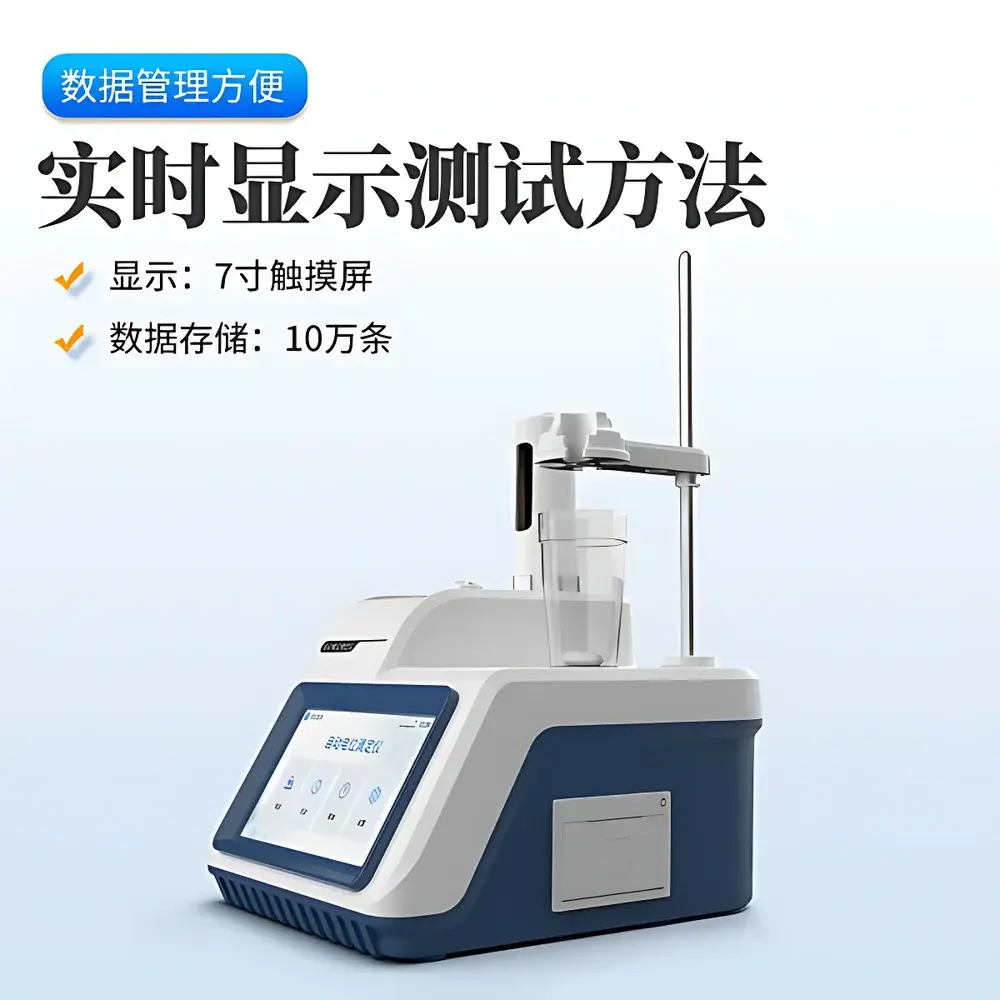
Santiyiqi ST-DW1 Automated Potentiometric Titrator
| Brand | Santiyiqi |
|---|---|
| Model | ST-DW1 |
| Origin | Shandong, China |
| Manufacturer Type | Direct Manufacturer |
| Power Supply | AC 110–240 V, 50–60 Hz |
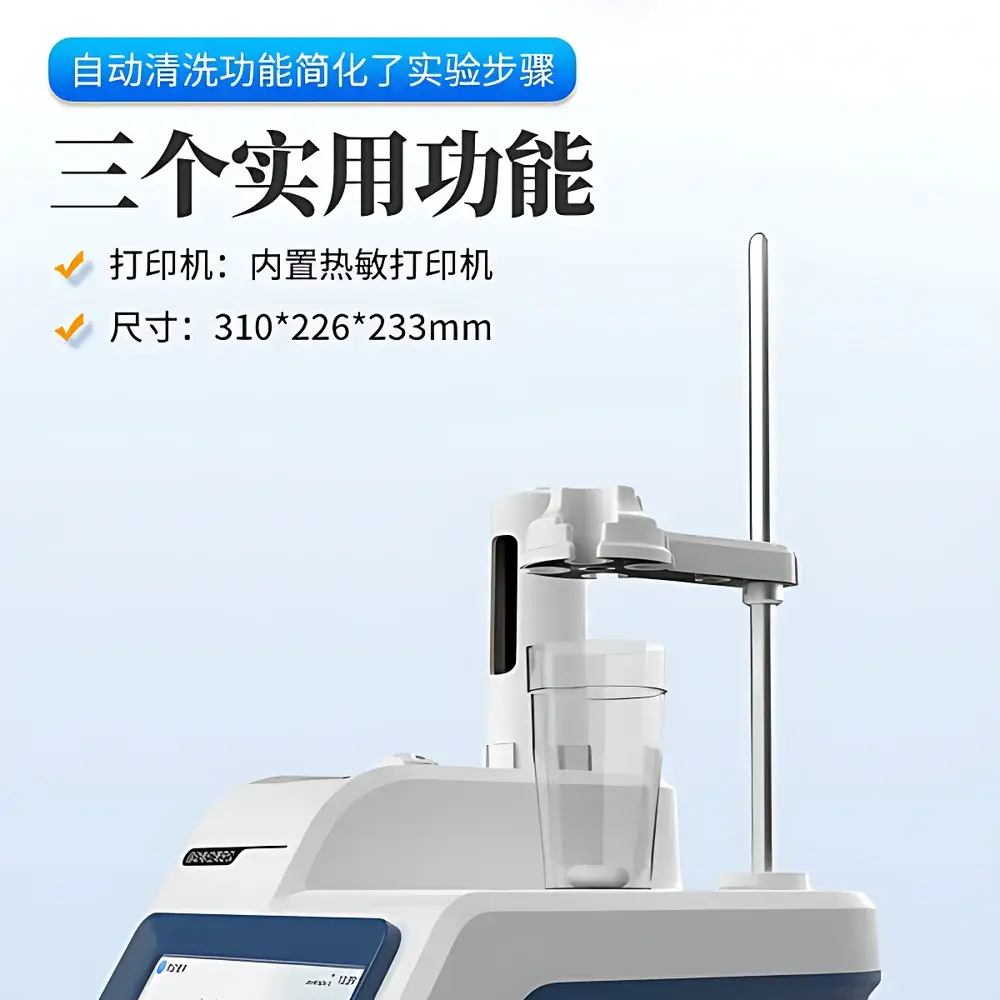
| Dimensions | 310 × 226 × 233 mm |
| Weight | 3.7 kg |
| Touchscreen | 7-inch Android 10 interface |
| Data Storage | Up to 100,000 records |
| Connectivity | USB, Wi-Fi, Ethernet |
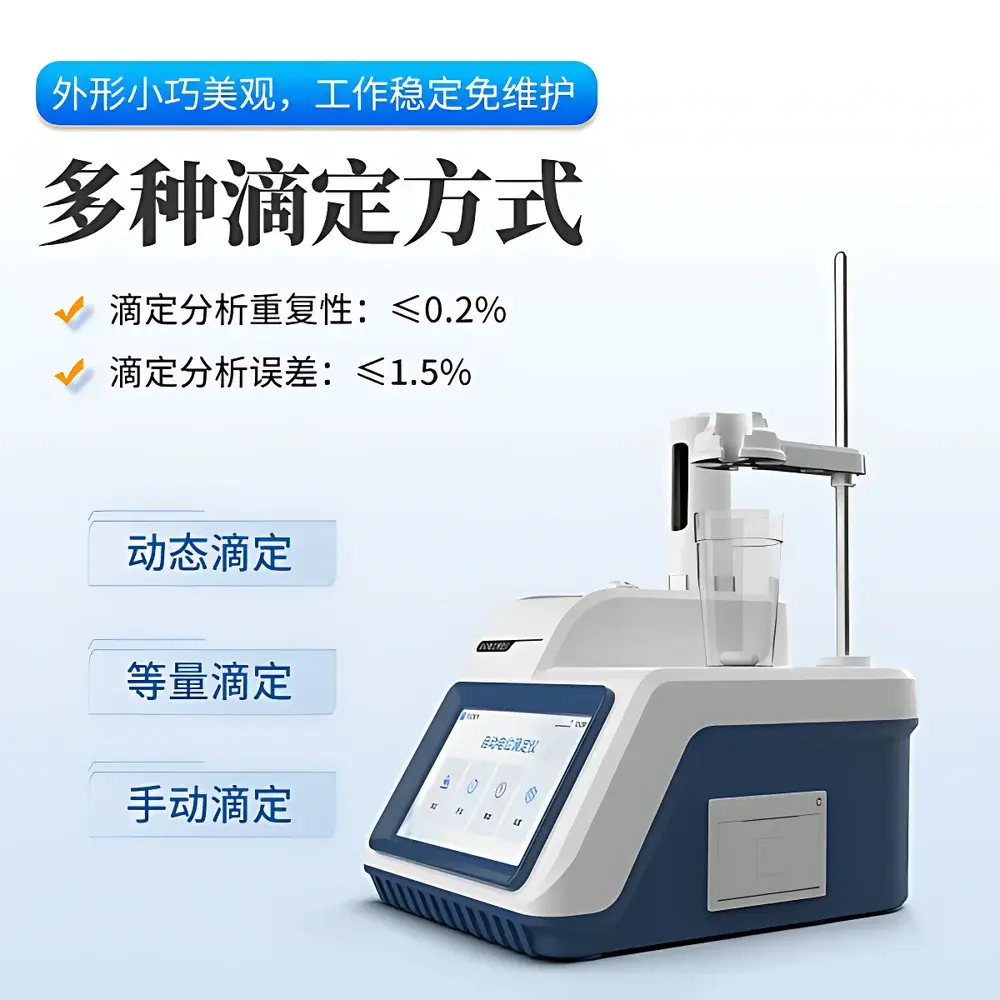
| Titration Accuracy | ≤1.5% |
| Repeatability | ≤0.2% |
| 10 mL Burette Capacity Accuracy | ±5 µL |
| 20 mL Burette Capacity Accuracy | ±10 µL |
| Potential Range | −2000 to +2000 mV |
| Potential Resolution | 0.1 mV |
| Potential Basic Error | ±0.25‰ of full scale |
| Potential Stability | ±0.3 mV / 3 h |
| pH Range | 0–14 |
| pH Resolution | 0.01 |
| pH Basic Error | ±0.01 |
| Temperature Measurement Range | −5 to 105 °C |
| Temperature Resolution | 0.1 °C |
| Temperature Basic Error | ±0.2 °C |
| Operating Environment | 0–40 °C, 10–75% RH |
| Storage Environment | 0–40 °C, 10–90% RH |
| Standard Electrodes | 6501 Glass Composite pH Electrode, 5004 Redox Electrode, 2616 Silver Composite Electrode (Cl⁻), T-2 ATC Temperature Probe |
| Burettes Included | 10 mL and 20 mL |
| Stirring | Integrated Magnetic Stirrer |
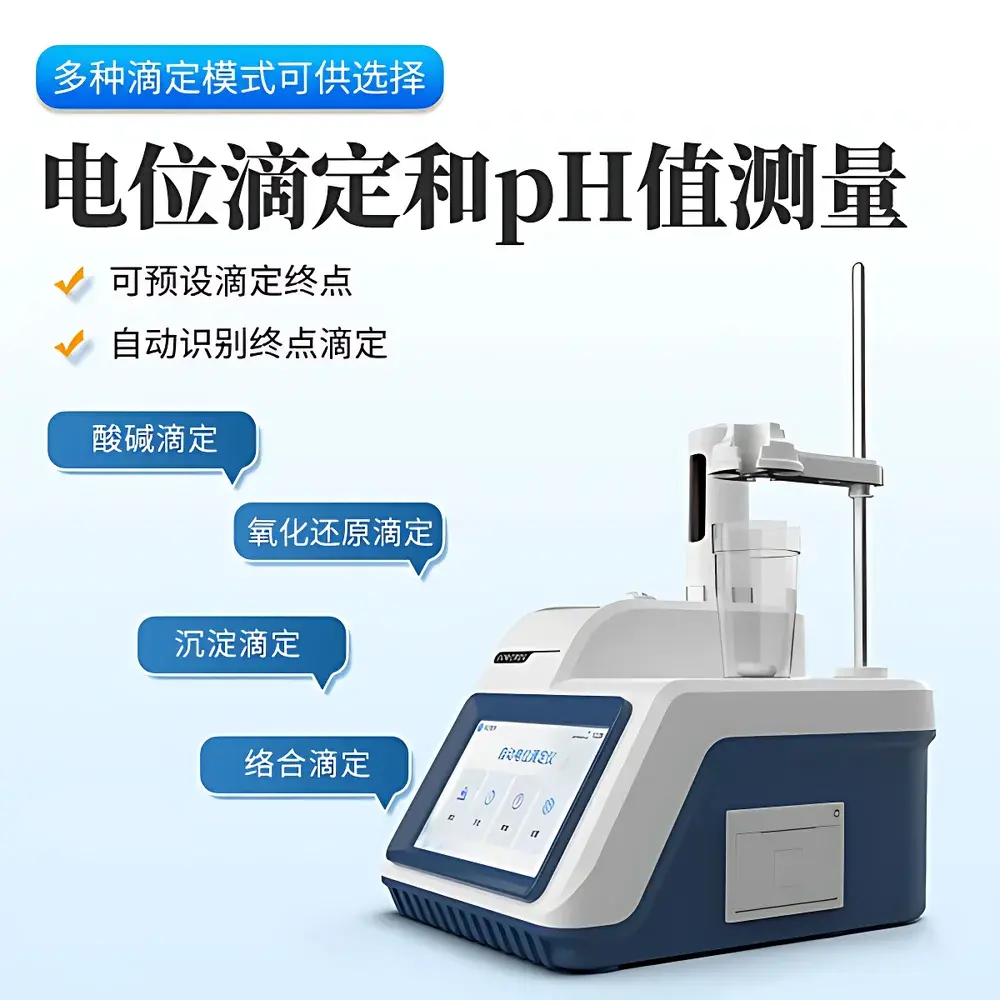
| Titration Modes | Dynamic, Equivalence-Point, Manual, Predefined Endpoint |
| Method Storage | ≥100 user-defined titration methods |
| Custom Calculation Formula Support | Yes |
| Auto-purge, Flush & Drain Functions | Yes |
Overview
The Santiyiqi ST-DW1 Automated Potentiometric Titrator is a precision-engineered laboratory instrument designed for quantitative chemical analysis based on potentiometric endpoint detection. It operates on the fundamental principle of measuring potential difference (mV) between a reference electrode and an indicator electrode immersed in the analyte solution, enabling highly reproducible identification of stoichiometric endpoints in acid-base, redox, precipitation, and complexometric titrations. Unlike manual or semi-automated systems, the ST-DW1 integrates closed-loop fluid handling, real-time electrochemical monitoring, and adaptive dosing logic—eliminating operator-dependent variability while maintaining full compliance with internationally recognized titration standards including ISO 8587, ASTM E2087, and USP <771>. Its architecture supports both routine QC workflows and method development in regulated environments, delivering traceable, auditable results suitable for GLP and GMP documentation requirements.
Key Features
- Multi-mode titration capability: dynamic titration with variable step size, equivalence-point detection via first/second derivative analysis, fixed-volume addition, and fully manual override.
- Modular expansion support: optional conductometric and dead-stop (amperometric) titration modules enable seamless adaptation to non-potentiometric methods without hardware replacement.
- Precision fluid delivery system: dual calibrated burettes (10 mL and 20 mL) with volumetric accuracy of ±5 µL and ±10 µL respectively, coupled with PEEK quick-connect fittings and chemically resistant PTFE tubing.
- Intelligent liquid handling utilities: automated air purge (to eliminate air bubbles), low-volume flush (minimizing reagent carryover), and controlled drain (preventing spillage during maintenance).
- Embedded Android 10 platform with 7-inch capacitive touchscreen: intuitive GUI supporting multi-language UI, real-time titration curve visualization, and on-device data review without external PC dependency.
- Comprehensive electrode compatibility: pre-configured support for glass pH, redox, silver/sulfide, and temperature-compensated electrodes; automatic electrode recognition and calibration logging per IUPAC-recommended protocols.
- Regulatory-ready data management: timestamped raw data export (CSV), audit trail with user login tracking, and electronic signature readiness aligned with FDA 21 CFR Part 11 principles.
Sample Compatibility & Compliance
The ST-DW1 accommodates aqueous and mildly organic solvent-based samples across diverse matrices—including food extracts, pharmaceutical excipients, wastewater effluents, crude oil fractions, battery electrolytes, and biological buffers. Its electrode interface complies with DIN 19263 and ASTM D1129 standards for electrode connection integrity and signal stability. All titration methods adhere to ISO/IEC 17025:2017 requirements for method validation parameters (repeatability ≤0.2%, accuracy ≤1.5%), and its built-in temperature compensation (T-2 ATC probe) ensures thermodynamic consistency per NIST SRM guidelines. The instrument’s firmware implements mandatory calibration verification checks prior to analysis initiation, satisfying internal QA checklists and external accreditation audits.
Software & Data Management
The embedded Android OS hosts a dedicated titration application with hierarchical user access levels (Operator, Supervisor, Administrator). Each titration run generates a structured metadata file containing method ID, electrode IDs, calibration history, environmental conditions, raw mV/pH vs. volume data, and final calculated concentration. Data can be exported via USB drive, network share, or secure Wi-Fi transfer to LIMS or ELN platforms. Internal storage retains ≥100,000 complete analyses with searchable filters by date, sample ID, or method name. The system supports custom formula entry using standard chemical notation (e.g., Cstd × Vstd / Vsample × dilution factor), with automatic unit conversion and error propagation estimation. All modifications to methods or configurations are logged with user ID and timestamp.
Applications
- Pharmaceutical QC: assay of active ingredients (e.g., aspirin hydrolysis, vitamin C redox titration), chloride content in APIs, residual catalyst quantification.
- Food & Beverage: total acidity (TA) in wines and juices, salt content in processed foods, peroxide value in edible oils.
- Environmental Testing: cyanide and fluoride in drinking water (ISO 6703), chloride in wastewater (ASTM D3223), alkalinity and hardness profiling.
- Chemical Manufacturing: acid number and saponification value in lubricants, free fatty acid determination in biodiesel (EN 14104).
- Academic Research: teaching potentiometric principles, developing novel titration protocols for metal ion speciation, kinetic endpoint studies.
FAQ
Does the ST-DW1 support GLP-compliant audit trails?
Yes—the system logs all critical events (method edits, calibration, result exports) with immutable timestamps and user authentication, meeting core GLP traceability requirements.
Can third-party electrodes be used with this titrator?
Yes—any electrode with standard BNC or DIN connectors and compatible output impedance (<100 MΩ) functions seamlessly; auto-recognition is limited to bundled electrodes only.
Is method validation documentation provided?
A comprehensive IQ/OQ protocol template is included in the installation qualification package, along with performance verification test procedures aligned with ISO 8655-6 for burette accuracy and IUPAC technical reports on potentiometric uncertainty.
How is temperature compensation handled during titration?
The integrated T-2 ATC probe continuously monitors solution temperature and applies Nernst equation correction in real time, ensuring accurate endpoint positioning across 0–105 °C.
What is the expected service life of the peristaltic pump and burette mechanisms?
Under normal use (≤500 titrations/month), the stepper-motor-driven burette assembly and PTFE-tubing fluid path are rated for >50,000 cycles; scheduled maintenance intervals are defined in the service manual.



