
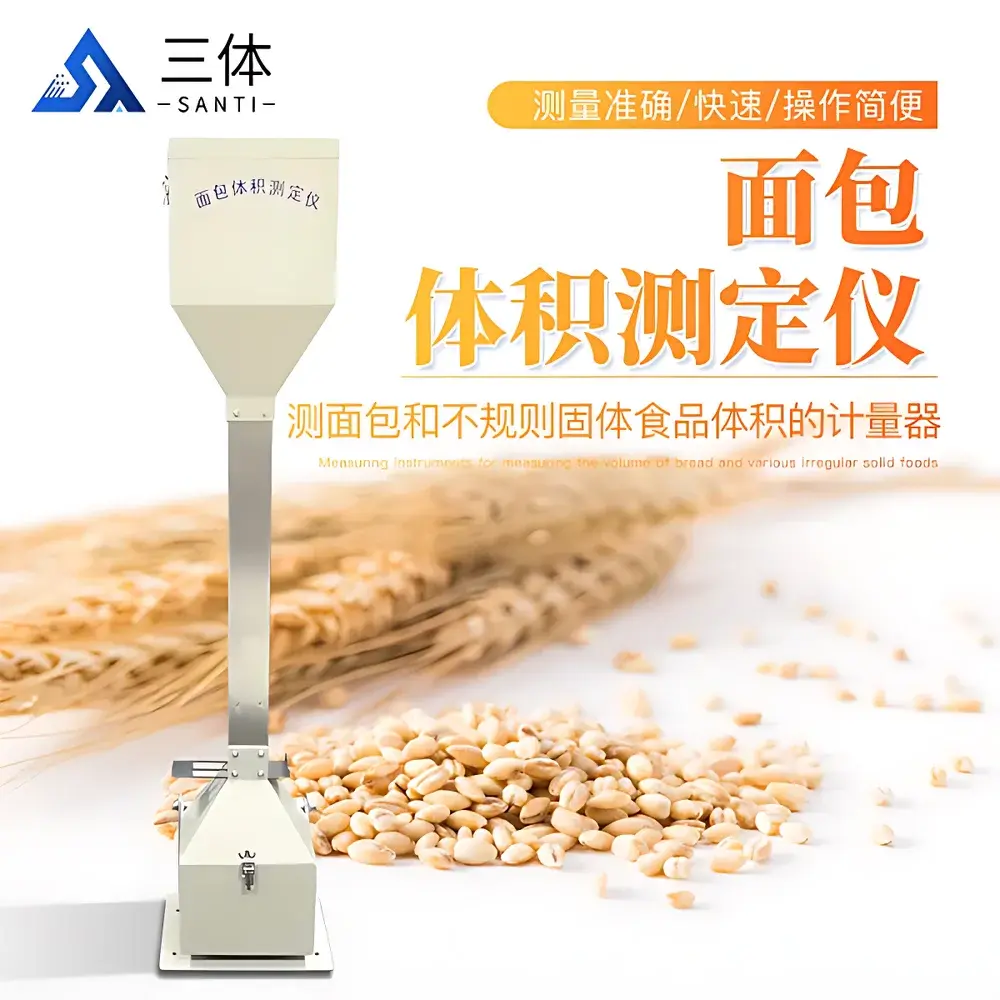
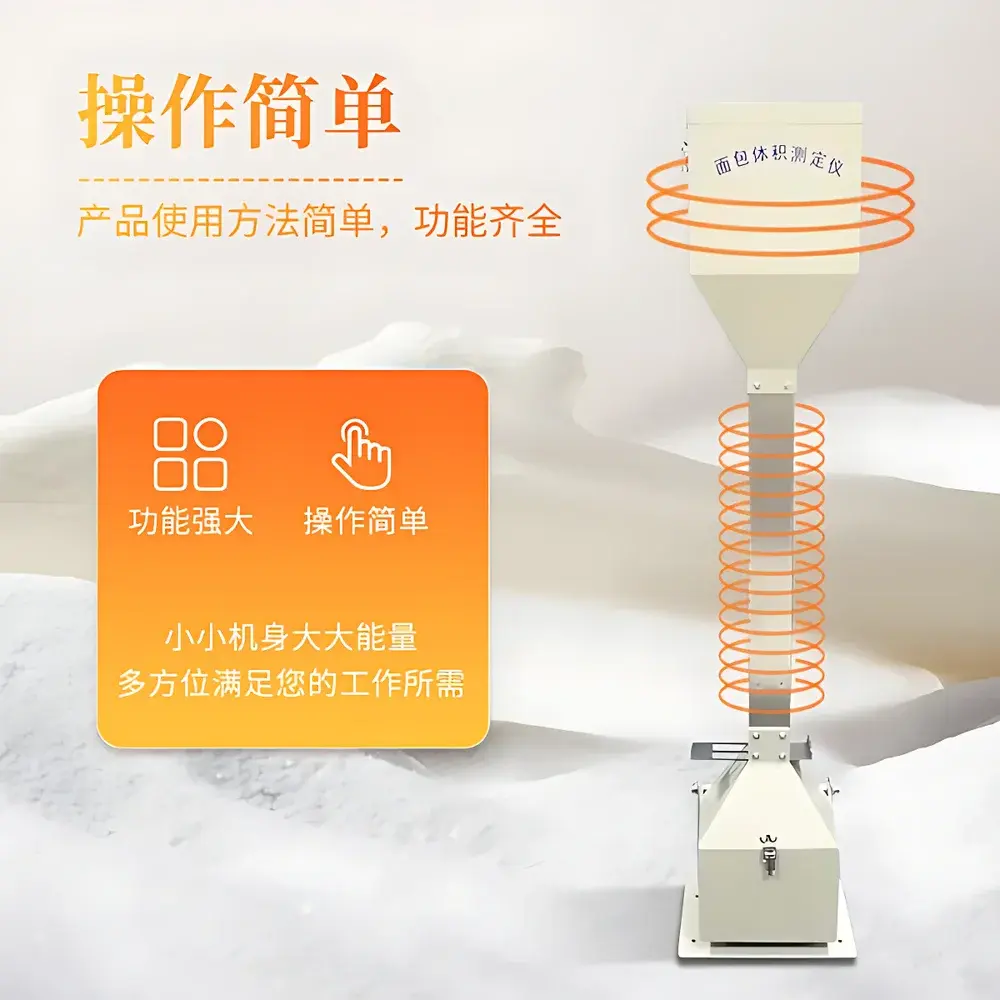
Santiyiqi ST-JMTY Solid Food Volume Measurer
| Brand | Santiyiqi |
|---|---|
| Origin | Shandong, China |
| Manufacturer Type | Direct Manufacturer |
| Country of Origin | China |
| Model | ST-JMTY |
| Price | USD 340 (FOB) |
| Dimensions | 850 × 200 × 130 mm |
| Measurement Range | 0–600 mL (Scale I), 400–1000 mL (Scale II) |
| Displacement Medium | Rapeseed (1–2 mm particle size) |
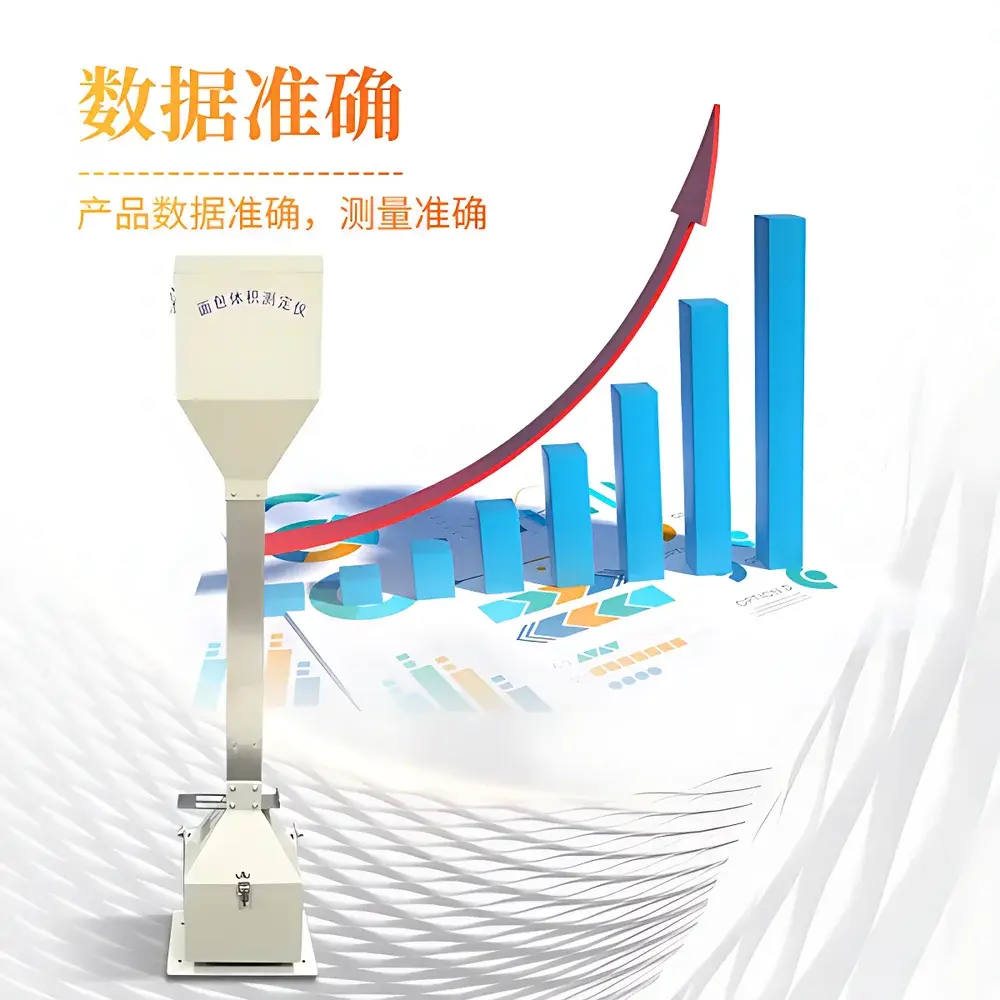
| Accuracy | ≤ ±1.0% |
| Repeatability | ≤ ±0.8% |
Overview
The Santiyiqi ST-JMTY Solid Food Volume Measurer is a dedicated volumetric displacement instrument engineered for the precise, non-destructive determination of the apparent volume of leavened bakery products—including bread loaves, steamed buns (mantou), and other irregularly shaped solid food specimens. It operates on the principle of Archimedean displacement using calibrated rapeseed as a granular displacement medium, eliminating reliance on water immersion (which may cause surface hydration or structural distortion) and avoiding optical assumptions inherent in 3D scanning methods. Designed specifically for cereal-based product evaluation, the ST-JMTY delivers traceable, operator-independent volume data critical for assessing dough expansion, gas retention, and final product quality in both R&D and QC environments. Its dual-scale graduated cylinder system enables high-resolution measurement across two complementary ranges—0–600 mL for small- to medium-sized samples (e.g., dinner rolls, mini-buns), and 400–1000 mL for larger specimens (e.g., standard loaf bread, large mantou)—ensuring optimal resolution without range-switching compromise.
Key Features
- Two-tier calibrated volumetric scale: Scale I (0–600 mL) with 5 mL graduation; Scale II (400–1000 mL) with 10 mL graduation—each independently verified against NIST-traceable standards.
- Optimized displacement medium: Pre-sieved rapeseed (1–2 mm nominal particle size) ensures uniform packing density, minimal interstitial void error, and consistent flow characteristics across repeated measurements.
- Robust mechanical architecture: Powder-coated steel frame with integrated leveling feet and vibration-dampening base plate minimizes environmental influence during filling and reading.
- Operator-independent protocol: Standardized sample placement procedure (flat-bottom orientation, gentle settling without compaction) supported by engraved reference marks on the cylinder housing.
- Compliance-ready design: Instrument geometry, scale calibration methodology, and procedural documentation align with requirements for internal method validation under ISO/IEC 17025 and GLP-aligned bakery testing workflows.
Sample Compatibility & Compliance
The ST-JMTY is validated for use with baked and steamed wheat-based products conforming to Chinese national and industry standards, including GB/T 14611–2008 (bread volume determination), GB/T 14612–2008 (mantou volume determination), SB/T 10139 (wheat flour for mantou), SB/T 10142 (wheat flour for cakes), GB/T 20981 (baking quality test for wheat flour), and GB/T 17320–1998 (mantou quality evaluation). It accommodates specimens with maximum dimensions of 200 mm (L) × 130 mm (W) × 120 mm (H) and surface textures ranging from smooth crusts to porous, fibrous interiors—provided the sample remains structurally intact during handling. The instrument does not support liquid-containing, highly hygroscopic, or friable samples (e.g., uncut layered pastries, fresh noodles), nor specimens exceeding 1000 mL apparent volume. All calibration and verification procedures are documented per ISO 9001 clause 7.1.5 and support audit readiness for internal quality systems.
Software & Data Management
The ST-JMTY is a manual, analog measurement system requiring no embedded electronics, firmware, or software. Volume readings are recorded directly from dual linear scales using standard laboratory notation practices. To support digital data integrity and regulatory compliance, users may integrate the instrument into electronic lab notebook (ELN) or LIMS platforms via standardized entry templates. Recommended practice includes logging: sample ID, test date/time, operator initials, ambient temperature/humidity (per GB/T 14611 Annex A), raw scale reading, applied correction factor (if any), and final reported volume (mL). For laboratories operating under FDA 21 CFR Part 11 or EU Annex 11 requirements, handwritten records must be contemporaneous, legible, and signed; scanned copies must retain original metadata and be stored with version-controlled access permissions.
Applications
- Bakery R&D: Quantifying specific volume (mL/g) to correlate flour functionality (e.g., protein content, falling number) with loaf symmetry and crumb structure.
- QC/QA in flour mills and bakeries: Routine monitoring of batch-to-batch consistency in mantou and bread production lines.
- Academic cereal science research: Supporting studies on yeast activity, enzyme supplementation, and sourdough fermentation kinetics through volumetric endpoints.
- Regulatory testing labs: Performing statutory volume assessments for product labeling compliance and trade specification verification.
- Food engineering education: Demonstrating fundamental principles of bulk density, displacement metrology, and standard method execution in undergraduate food technology curricula.
FAQ
What displacement medium is required, and can alternatives be used?
Rapeseed with a nominal particle size of 1–2 mm is specified and validated. Substitution with sand, millet, or plastic beads is not recommended—particle shape, density, and interstitial void fraction significantly affect repeatability and bias. Batch certification of rapeseed (including moisture content ≤10% w/w) is advised.
Is calibration traceable to national standards?
Yes—scale calibration is performed using certified volumetric glassware traceable to CNAS-accredited reference laboratories. A calibration certificate (valid for 12 months) is provided with each unit.
How is accuracy verified during daily use?
Users should perform a control check before each test session using a certified reference object (e.g., stainless steel cylinder of known volume, 500 ± 0.5 mL). Deviation >±1.0% requires re-leveling, cleaning, or recalibration.
Does the instrument comply with international bakery standards such as AACC or ICC methods?
While optimized for GB-series standards, the ST-JMTY’s displacement principle and operational parameters are functionally equivalent to AACC Method 10–05.01 (Volume of Baked Loaves) and ICC Standard No. 110/1 (Determination of Bread Volume), enabling cross-method comparability when procedural controls are harmonized.
Can it measure frozen or chilled samples?
Yes—provided surface condensation is removed prior to measurement and ambient temperature remains within 18–25°C during testing (per GB/T 14611 requirement). Thermal gradients affecting rapeseed density are negligible within this range.





