
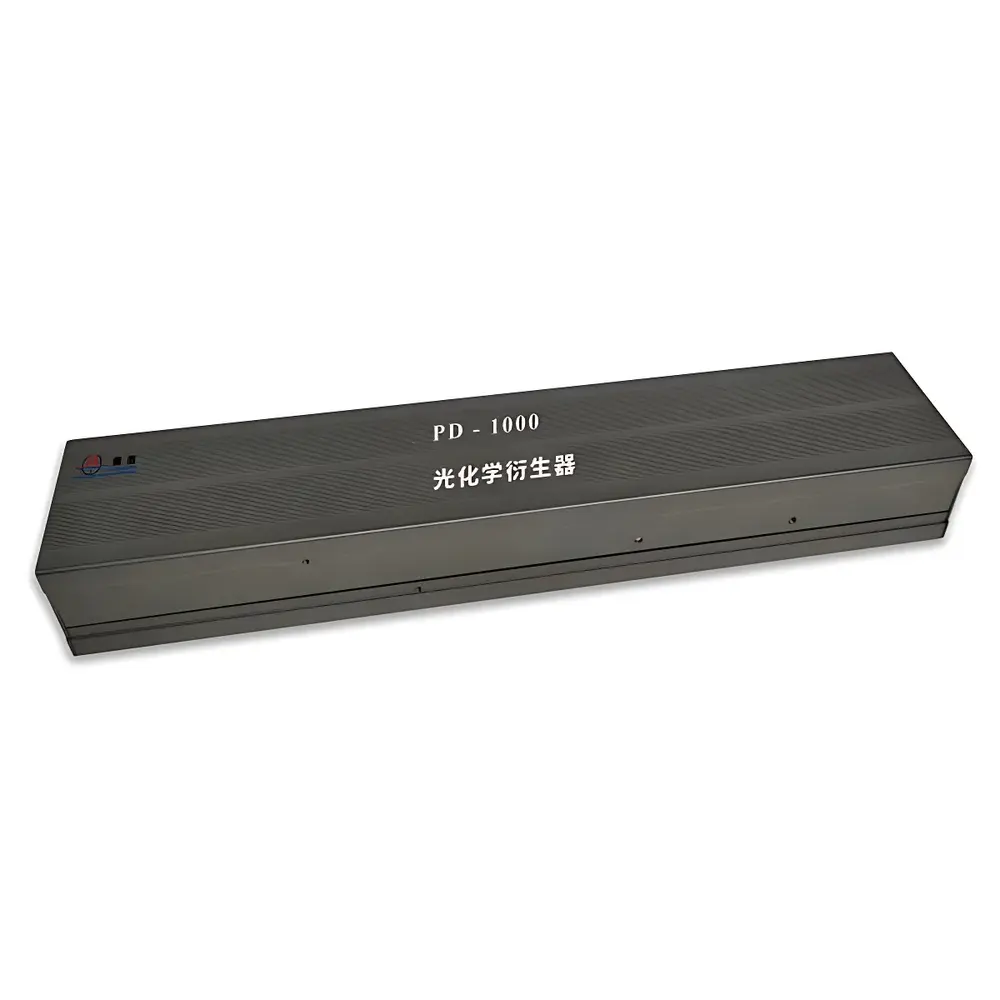
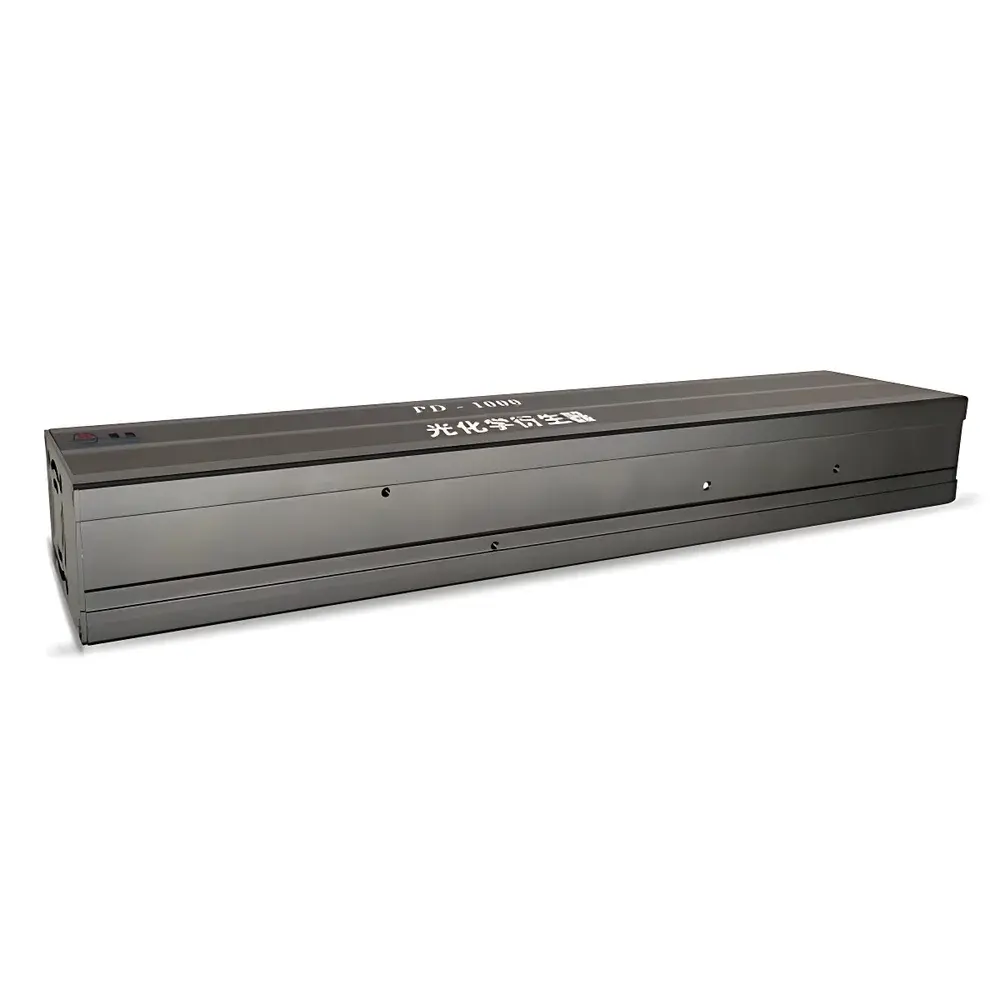
Unimicro PD-1000 Post-Column Photochemical Derivatization System
| Brand | Unimicro Technologies |
|---|---|
| Origin | Shanghai, China |
| Manufacturer Type | Direct Manufacturer |
| Product Origin | Domestic (China) |
| Model | PD-1000 |
| Temperature Range | Ambient |
| Derivatization Reagent Flow Rate | 3 mL/min |
| Reaction Tubing Material | Inert (e.g., PFA or FEP) |
Overview
The Unimicro PD-1000 Post-Column Photochemical Derivatization System is an engineered solution for enhancing the detection sensitivity and selectivity of non-UV-absorbing or weakly fluorescent analytes—particularly mycotoxins such as aflatoxins B₁, B₂, G₁, and G₂—in high-performance liquid chromatography (HPLC) workflows. It operates on the principle of controlled ultraviolet (UV) photochemical reaction, where post-column effluent is exposed to calibrated UV-C irradiation (typically 254 nm) within a precisely dimensioned, inert reaction coil. This induces structural modification—such as conversion of aflatoxin B₁ to its highly fluorescent 2′-hydroxy derivative—enabling robust fluorometric quantification with sub-ppb detection limits. Designed for seamless integration into existing HPLC systems, the PD-1000 functions without chemical reagents, eliminating derivatization reagent preparation, pump synchronization, or post-reaction quenching steps. Its ambient-temperature operation ensures compatibility with standard HPLC detectors and column chemistries while minimizing thermal degradation risks.
Key Features
- Reagent-free photochemical derivatization: Eliminates need for hazardous chemical reagents (e.g., bromine or iodine solutions), reducing operational complexity, waste disposal burden, and method variability.
- Inert reaction tubing (PFA/FEP): Chemically resistant, low-metal-leaching tubing ensures analyte integrity and long-term system stability under continuous UV exposure and organic solvent flow.
- Precisely optimized UV irradiation chamber: Engineered quartz sleeve and fixed-wavelength UV lamp (254 nm) deliver consistent photon flux across the reaction coil, ensuring high reproducibility (RSD < 2% for peak area over 24 h).
- Plug-and-play HPLC integration: Standard 1/16″ OD stainless steel or PEEK fittings; compatible with common HPLC flow rates (0.5–2.0 mL/min); minimal extra-column volume (< 15 µL).
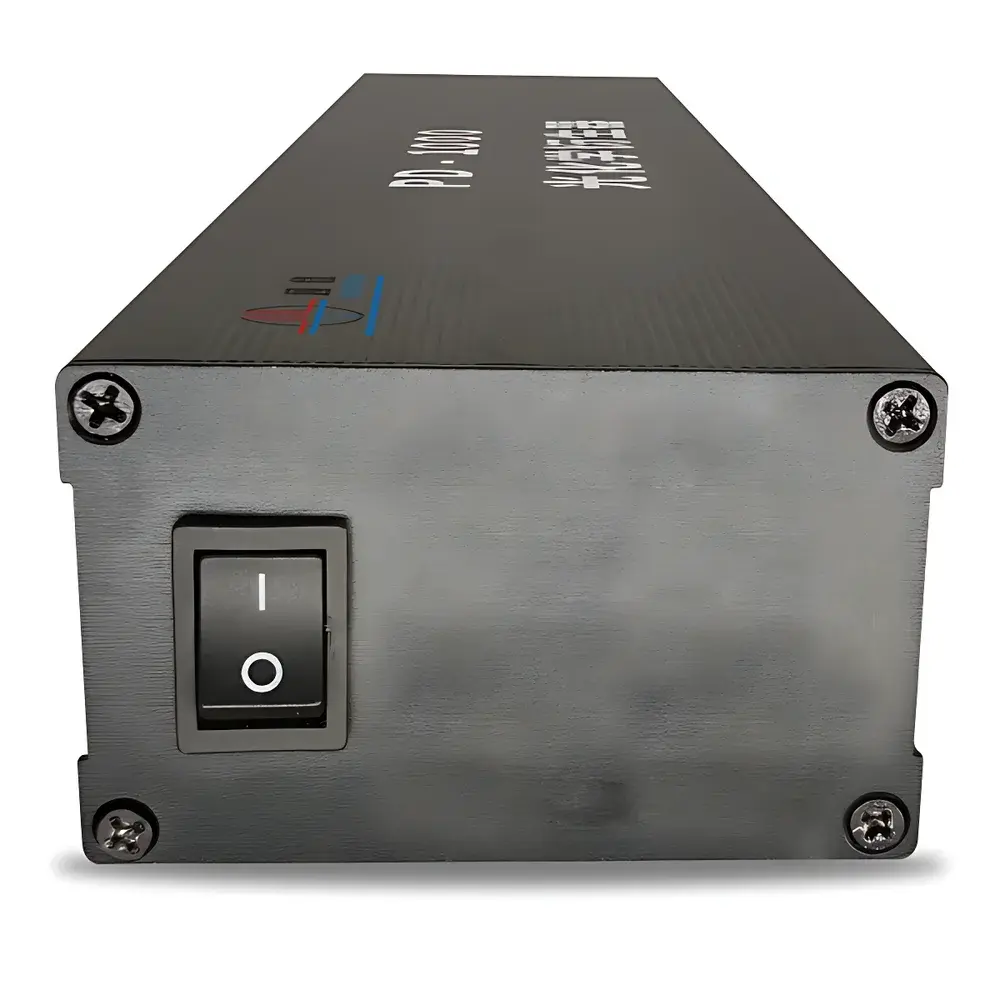
- Single-button operation: Dedicated power switch enables rapid system activation and deactivation; no software or external controller required for basic operation.
- Robust mechanical architecture: All-metal housing with integrated UV shielding meets IEC 61000-4-3 EMC standards; designed for continuous lab use in regulated environments.
Sample Compatibility & Compliance
The PD-1000 is validated for use with reversed-phase C18 columns and mobile phases containing water/acetonitrile or water/methanol gradients—common in AOAC Official Method 2005.08 and EU Commission Regulation (EC) No. 401/2006 for aflatoxin analysis. It supports derivatization of native aflatoxins, ochratoxin A (after hydrolysis), and other UV-activatable compounds requiring photolytic enhancement. The system complies with general laboratory safety requirements for UV-emitting devices (IEC 62471 Photobiological Safety Classification, Risk Group 2). While the PD-1000 itself is not a standalone regulated device, its use within analytical workflows supports adherence to GLP principles and FDA 21 CFR Part 11–compliant data integrity when paired with compliant HPLC data systems (e.g., Empower, Chromeleon, or OpenLab CDS).
Software & Data Management
The PD-1000 operates as a hardware-only module and does not include embedded firmware or proprietary software. It requires no driver installation or configuration—functionality is fully passive and detector-agnostic. All timing, data acquisition, and calibration are managed by the host HPLC data system. For laboratories implementing full traceability, the derivatization step is documented via instrument method parameters (e.g., “Photochemical Derivatization Enabled” flag), and audit trails for method changes are maintained within the CDS per ALCOA+ principles. When used with Unimicro’s MMT-3000 Multi-Mycotoxin Testing System, method templates—including gradient programs, integration events, and calibration curves—are pre-validated and aligned with ISO/IEC 17025 internal quality control protocols.
Applications
- Quantitative determination of aflatoxins in cereals, nuts, spices, and animal feed per AOAC 2005.08 and GB 5009.22–2016.
- Regulatory testing for EU Maximum Levels (MLs) in foodstuffs (Regulation (EC) No. 1881/2006) and infant formula (Commission Directive 2006/141/EC).
- Method development and validation for multi-mycotoxin LC-FLD workflows requiring enhanced signal-to-noise ratios without derivatization chemistry.
- Research applications in natural product chemistry involving photo-labile secondary metabolites requiring selective UV-mediated activation prior to detection.
- QC/QA labs performing routine batch release testing where method ruggedness, operator independence, and inter-laboratory reproducibility are critical.
FAQ
Does the PD-1000 require calibration or periodic lamp output verification?
Yes. UV lamp intensity should be verified every 500 operating hours using a NIST-traceable UV radiometer; lamp replacement is recommended after 1,000 hours or if derivatization efficiency drops below 95% of baseline.
Can the PD-1000 be used with UHPLC systems?
Yes, provided the system pressure remains within the reaction coil’s rated limit (≤ 30 MPa) and dwell volume is compensated in method development to avoid gradient distortion.
Is the reaction tubing replaceable, and what is its typical service life?
Yes—PFA reaction coils are field-replaceable and typically last ≥ 6 months under continuous use with acetonitrile/water mobile phases; lifetime decreases with chlorinated solvents or high-salt buffers.
Does Unimicro provide application notes or validation packages for regulatory submissions?
Yes—application notes covering AOAC, ISO, and Chinese national standard methods are available upon request; full IQ/OQ documentation and system suitability test protocols can be supplied for GMP-compliant installations.
What safety precautions are required during operation?
Operators must avoid direct exposure to UV-C radiation; the unit includes interlocked shielding—never operate with the cover removed—and ensure proper lab ventilation when handling solvent-rich effluents downstream.






