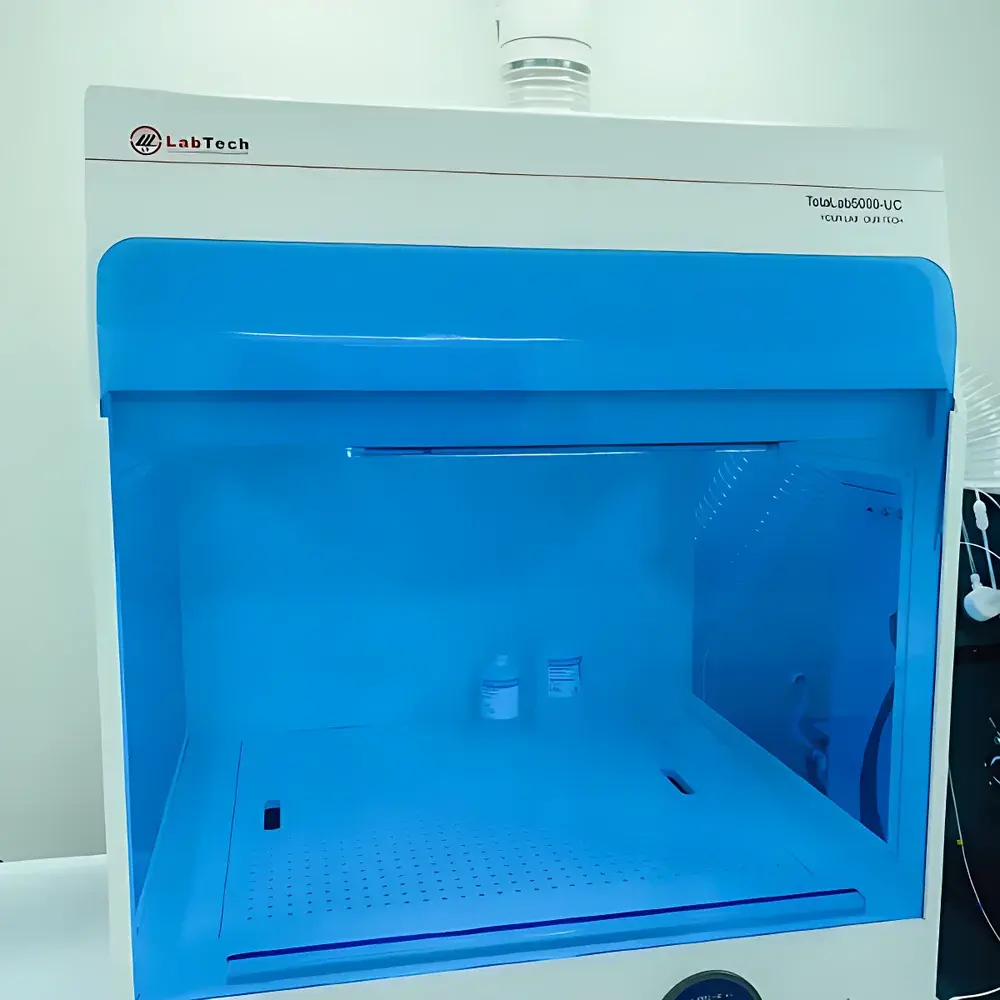
LabTech LabTech-5 Chemical Safety Cabinet
| Brand | LabTech |
|---|---|
| Origin | Beijing, China |
| Manufacturer Type | Manufacturer |
| Country of Origin | Domestic (China) |
| Model | LabTech-5 |
| Pricing | Upon Request |
Overview
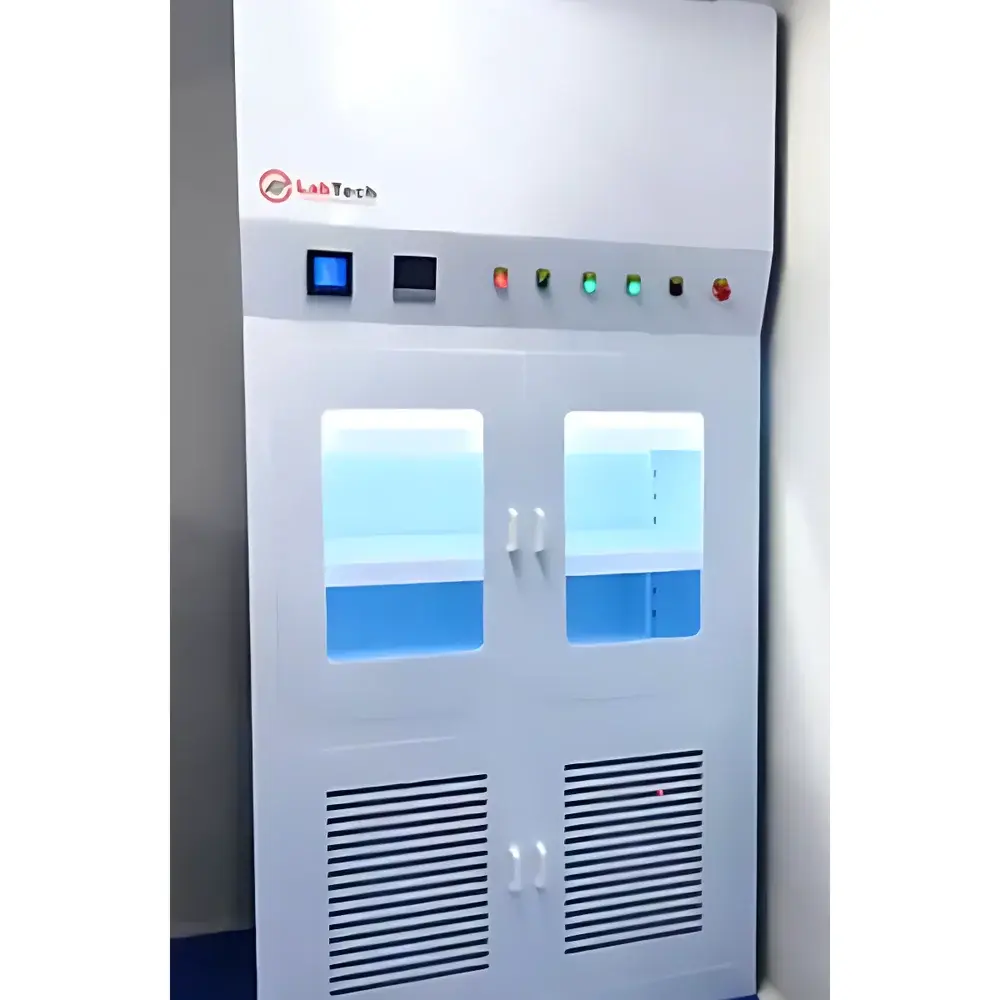
The LabTech LabTech-5 Chemical Safety Cabinet is an engineered containment solution designed specifically for trace and ultra-trace analytical sample preparation in modern laboratories. Unlike general-purpose fume hoods or laminar flow cabinets, this unit integrates controlled airborne particulate management with chemical vapor containment—operating on a hybrid principle combining unidirectional laminar airflow (ISO Class 5 / Class 100 cleanroom performance) and negative-pressure chemical exhaust. It is not a biosafety cabinet (BSC) nor a standard fume hood; rather, it serves as a dedicated low-background preparation workstation where both particulate contamination and volatile organic compound (VOC) interference must be simultaneously minimized. This dual-control architecture ensures integrity during critical pre-analytical steps such as acid digestion, solvent evaporation, standard dilution, and reference material handling—particularly for ICP-MS, GC-MS, and HR-ICP-OES applications requiring sub-pg/mL detection limits.
Key Features
- ISO Class 5 (Class 100) laminar airflow environment maintained across the work surface via HEPA-filtered vertical downflow (≥99.995% @ 0.3 µm), with optional ISO Class 4 (Class 10) configuration available upon specification
- Structural integrity ensured by seamless welded construction using lead-free, flame-retardant PVC板材 (UL 94 V-0 rated), eliminating metal corrosion risks and minimizing outgassing of organics
- Configurable airflow architecture: selectable modes include top-supply/top-exhaust, top-supply/bottom-exhaust, bottom-supply/top-exhaust, and recirculating (FFU-integrated) variants—each validated per ASHRAE 110 and EN 14175 protocols
- Integrated airflow monitoring with real-time differential pressure sensors and audible/visual alarms for face velocity deviation (>0.45 m/s nominal) or filter saturation
- Modular frame design supports field-adaptable integration with laboratory building services—including dedicated ducted exhaust routing, inert gas purging ports, and grounding terminals compliant with IEC 61000-6-4 EMC standards
Sample Compatibility & Compliance
The LabTech-5 accommodates a broad range of sample forms including open-vessel digestions (Teflon® PFA, quartz, borosilicate glass), volumetric flasks, autosampler vials, and certified reference material (CRM) storage trays. Its interior geometry and non-shedding surfaces are compatible with EPA Method 1638, ASTM D5673, and ISO/IEC 17025-accredited workflows. All electrical components meet CE marking requirements and RoHS Directive 2011/65/EU. Optional documentation packages support GLP and GMP audit readiness—including factory calibration certificates, airflow validation reports (per ISO 14644-3), and material compliance declarations (REACH SVHC, USP ). The cabinet does not replace full-room cleanroom infrastructure but functions as a validated point-of-use control zone aligned with ISO 14644-1 classification boundaries.
Software & Data Management
While the LabTech-5 operates as a standalone mechanical system, its optional digital interface module (LabTech SmartLink™) provides RS-485/Modbus RTU connectivity for integration into centralized laboratory infrastructure management platforms (LIMS or BMS). Logged parameters include cumulative operational hours, filter usage time, average face velocity, and alarm event timestamps—all stored locally with non-volatile memory retention for ≥12 months. Audit trail functionality complies with FDA 21 CFR Part 11 requirements when paired with validated user authentication and electronic signature modules. Raw data export is supported via USB-C or Ethernet (TCP/IP), formatted in CSV/JSON for traceability and trending analysis.
Applications
- Preparation of ultrapure calibration standards for elemental analysis (e.g., multi-element stock solutions for ICP-MS)
- Open-beaker acid digestion of environmental matrices (soils, sediments, biota) under low-Hg/low-As background conditions
- Low-level radiochemical separation workflows requiring alpha/beta particle exclusion
- Pharmaceutical impurity profiling where residual solvent carryover must be excluded from LC-MS injection sequences
- Reference material homogenization and subsampling in metrology laboratories accredited to ISO/IEC 17034
FAQ
Is the LabTech-5 certified to NSF/ANSI 49 or EN 12469?
No—it is not classified as a biological safety cabinet. Certification follows EN 14175 (fume hoods) and ISO 14644-1 (cleanroom performance), with validation reports provided per customer request.
Can the cabinet be connected to a central exhaust system?
Yes. All standard configurations include a 150 mm duct collar with static pressure compensation capability for integration into lab-wide exhaust networks.
What maintenance intervals are recommended for HEPA filters?
Filter replacement is condition-based: typically every 12–18 months under continuous operation, verified via in-situ DOP testing or pressure drop monitoring.
Does LabTech offer installation qualification (IQ) and operational qualification (OQ) documentation?
Yes—custom IQ/OQ protocols aligned with ISO/IEC 17025 or GMP Annex 15 can be supplied upon order confirmation.
Is the interior surface compatible with hydrofluoric acid (HF) handling?
Standard PVC construction is not HF-resistant; optional PTFE-coated stainless steel liners or fully fluoropolymer-lined variants are available as engineering change requests (ECR).