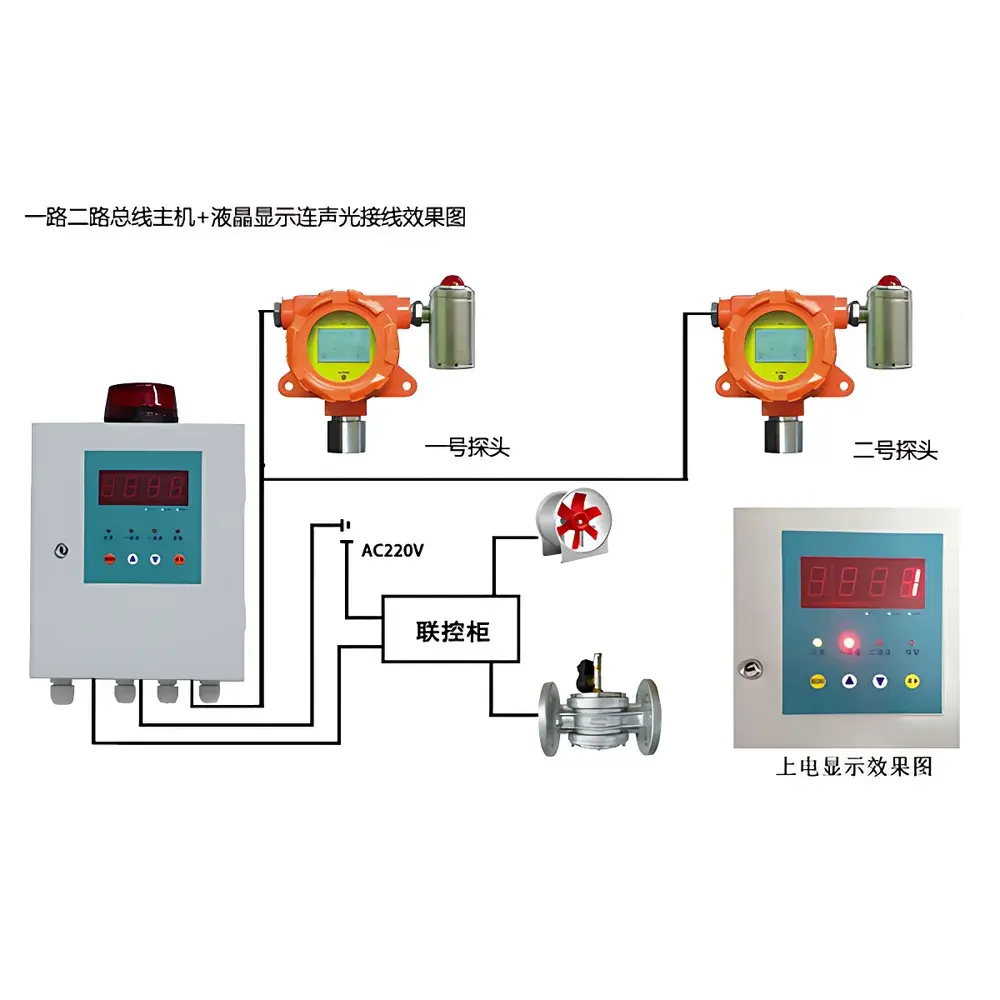
LabTech LabGas Centralized Gas Supply System Model LabTech-9
| Brand | LabTech |
|---|---|
| Origin | Beijing, China |
| Manufacturer Type | Direct Manufacturer |
| Country of Origin | China |
| Model | LabTech-9 |
| Pricing | Available Upon Request |
| Gas Distribution Architecture | Centralized, Zoned (Toxic/Flammable/Inert Separation) |
| Ventilation | 24/7 Intermittent + Emergency Exhaust |
| Pressure Regulation | Medium-Pressure Primary Supply with Secondary Pressure Reduction |
| Safety Systems | Low-Pressure Alarm, Gas Leak Detection (Toxic/Flammable Gases), Interlocked Emergency Exhaust Activation |
Overview
The LabTech LabGas Centralized Gas Supply System (Model LabTech-9) is an engineered infrastructure solution for modern analytical and research laboratories requiring reliable, safe, and segregated delivery of multiple gas types—including inert, flammable, oxidizing, and toxic gases. Designed in accordance with ISO 8573-1 (compressed air quality), CGA G-1.1 (gas cylinder handling), and NFPA 55 (standards for bulk oxygen and other oxidizers), the system implements a zoned distribution architecture to physically isolate hazardous gas lines from inert or non-reactive streams. It operates on a medium-pressure primary supply network (typically 5–10 bar), followed by precision secondary pressure reduction at point-of-use stations to deliver stable, contamination-controlled output pressures (e.g., 0.1–2.5 bar) compliant with instrument inlet specifications for GC, ICP-MS, FTIR, and laser-based systems. The architecture eliminates individual cylinder dependency at benchtops, reducing manual handling risks and enabling continuous operation across shifts.
Key Features
- Zoned gas routing with dedicated stainless-steel 316L piping networks for toxic (e.g., H₂S, Cl₂), flammable (e.g., H₂, CH₄), and inert (e.g., N₂, Ar, He) gases—preventing cross-contamination and ensuring regulatory segregation.
- 24/7 intermittent mechanical exhaust system in the central gas room, supplemented by fail-safe emergency exhaust activation triggered by gas sensor thresholds (per UL 61010-1 and EN 61000-6-4 EMC compliance).
- Redundant secondary pressure regulation at each outlet station, featuring dual-stage stainless-steel diaphragm regulators with ≤±0.5% setpoint stability and integrated particulate filtration (0.01 µm absolute).
- Real-time low-pressure monitoring with audible/visual alarms and programmable relay outputs for integration into building management systems (BMS) or lab-wide SCADA platforms.
- Automated leak detection subsystem utilizing electrochemical (for CO, H₂S, NH₃) and catalytic bead (for CH₄, H₂) sensors calibrated per ISO 10156, with alarm thresholds configurable to OSHA PEL or ACGIH TLV limits.
- Modular panel design supporting future expansion—up to 12 independent gas circuits per rack, scalable via standardized DIN-rail mounting and pneumatic quick-connect interfaces.
Sample Compatibility & Compliance
The LabTech-9 system accommodates all standard laboratory-grade gases supplied in high-pressure cylinders (e.g., 200–300 bar), liquid dewars (e.g., LN₂, LAr), or bulk tanks (e.g., on-site H₂ generators). It supports seamless integration with analytical instruments requiring ultra-high-purity (UHP) gas (e.g., ASTM D6352 for hydrocarbon analysis, ISO 8573-1 Class 1 for particle/oil/water content). All wetted components comply with USP material compatibility requirements for pharmaceutical environments and meet ASME B31.3 process piping design criteria. Documentation includes full FAT/SAT protocols, material traceability (MTRs), and third-party pressure vessel certification (PED 2014/68/EU).
Software & Data Management
While the LabTech-9 is primarily hardware-based, its optional Digital Monitoring Module (DMM-9) provides RS-485 Modbus RTU and Ethernet TCP/IP connectivity for centralized logging. Data points—including line pressure, flow rate (via optional thermal mass flow sensors), alarm status, and sensor calibration timestamps—are stored locally (SD card) and exportable in CSV/JSON format. Audit trails adhere to FDA 21 CFR Part 11 requirements when deployed with validated user authentication and electronic signature workflows. System logs retain ≥18 months of operational history and support GLP/GMP-compliant review cycles.
Applications
- Centralized gas delivery for multi-instrument labs (e.g., chromatography suites, elemental analysis labs, semiconductor metrology cleanrooms).
- Pharmaceutical QC/QA laboratories requiring validated, documented gas integrity per ICH Q5C and EU Annex 15.
- University core facilities managing diverse user groups with varying gas hazard profiles and usage schedules.
- Environmental testing labs deploying continuous emissions monitoring systems (CEMS) requiring certified zero-air and span gases.
- Research institutions operating synchrotron beamlines or plasma etch tools demanding ultra-stable, vibration-isolated gas supply.
FAQ
Does the LabTech-9 support integration with existing building automation systems?
Yes—via dry-contact relays and Modbus RTU/Ethernet, enabling alarm forwarding, remote status polling, and coordinated shutdown sequences with HVAC or fire suppression systems.
What certifications are provided with the system?
Factory Acceptance Test (FAT) report, material traceability documentation, pressure test certificates (hydrostatic & pneumatic), and optional third-party validation packages for GMP/GLP environments.
Can the system be configured for both cylinder banks and bulk gas sources?
Yes—dual-source manifolds allow automatic switchover between primary (bulk) and backup (cylinder) supplies without interruption, with pressure-synchronized changeover logic.
Is installation performed by LabTech engineers or authorized partners?
All installations are executed by LabTech-certified field service engineers following site-specific risk assessments and commissioning checklists aligned with ISO/IEC 17025 clause 5.3.
How often do gas sensors require recalibration?
Electrochemical sensors are calibrated every 6 months per ISO 17025; catalytic bead sensors undergo functional checks before each shift and full calibration annually or after exposure events.
Related Products