
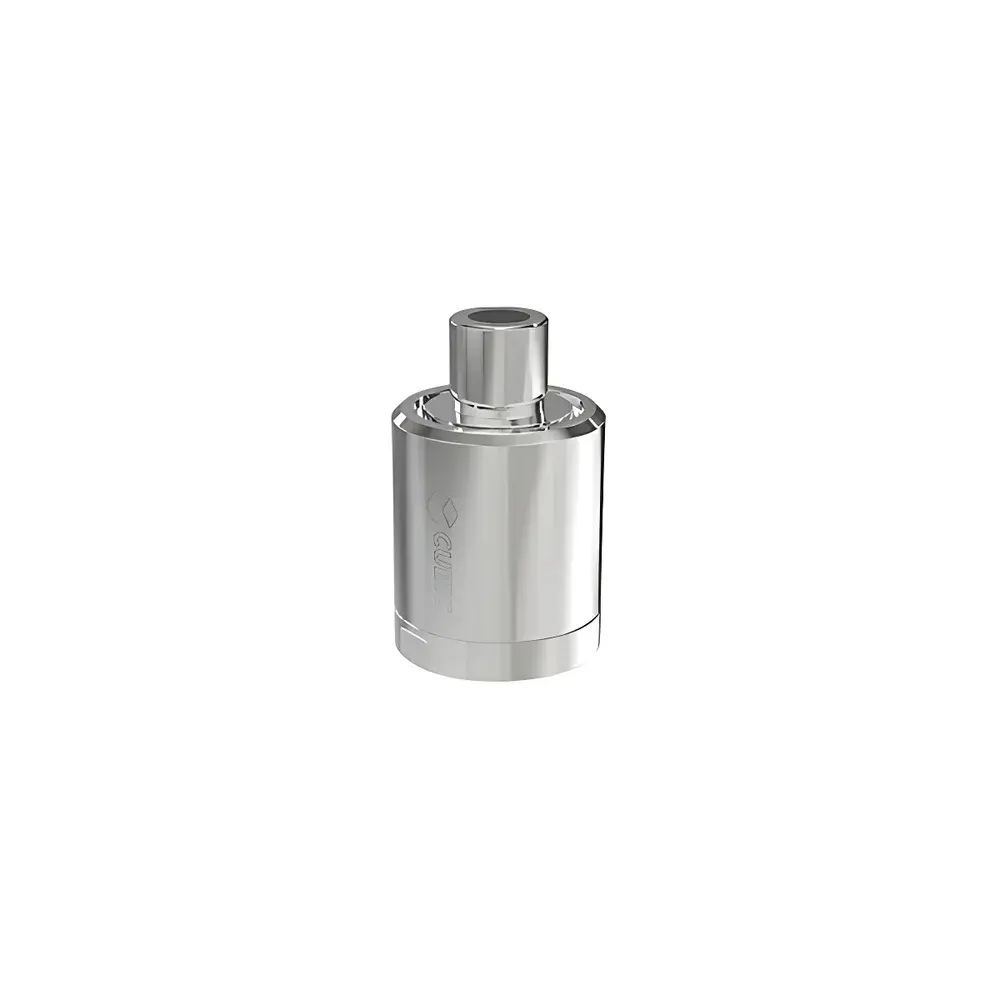
Cubic Gasboard-2501-05F TDLAS-Based Low-Power Methane Sensor
| Brand | Cubic |
|---|---|
| Origin | Hubei, China |
| Model | Gasboard-2501-05F |
| Detection Principle | Tunable Diode Laser Absorption Spectroscopy (TDLAS) |
| Target Gas | Methane (CH₄) |
| Measurement Range | 0–100% LEL |
| Accuracy | ±5% LEL |
| Resolution | 0.1% LEL |
| Response Time (T90) | <20 s |
| Operating Temperature | −25 °C to +55 °C |
| Operating Humidity | 0–98% RH (non-condensing) |
| Storage Conditions | −40 °C to +85 °C, 0–98% RH (non-condensing) |
| Supply Voltage | 3.2 V–5.5 V DC |
| Output Interface | TTL (3.0 V logic level) |
| Typical Current Consumption | 15 mA |
| Expected Service Life | ≥10 years |
| Selectivity | High specificity to CH₄ |
Overview
The Cubic Gasboard-2501-05F is a compact, OEM-grade methane (CH₄) sensor module engineered for continuous, reliable detection in industrial safety, natural gas infrastructure monitoring, landfill emissions control, and biogas process optimization. It employs Tunable Diode Laser Absorption Spectroscopy (TDLAS), a well-established optical gas sensing principle that exploits the unique near-infrared absorption line of methane at ~1653 nm. Unlike electrochemical or catalytic bead sensors, TDLAS provides inherent selectivity—eliminating cross-sensitivity to water vapor, carbon dioxide, carbon monoxide, hydrogen sulfide, and airborne particulates. The sensor integrates a hermetically sealed, thermally stabilized optical cavity with precision-machined flow path geometry and proprietary temperature compensation algorithms, ensuring stable baseline performance across its full operating range (−25 °C to +55 °C) without recalibration drift. Its solid-state architecture contains no consumables, moving parts, or chemical reagents—contributing directly to its rated 10-year service life under typical field conditions.
Key Features
- True TDLAS-based detection: Quantitative, physics-driven measurement traceable to NIST-referenced absorption cross-sections
- High selectivity: Immune to interference from humidity (0–98% RH non-condensing), dust, CO₂, CO, H₂S, and alkanes other than CH₄
- Low power consumption: Nominal 15 mA current draw at 3.3 V DC—enabling battery-powered or energy-harvesting deployments
- Fast response: T90 ≤ 20 seconds enables timely leak detection and alarm triggering per IEC 60079-29-1 requirements
- Modular OEM form factor: Standardized footprint and TTL-level digital interface simplify integration into custom enclosures, PLC systems, or wireless telemetry nodes
- Embedded temperature compensation: Real-time correction across full operating range eliminates need for external thermal management
- Robust mechanical design: IP65-rated housing option available; compatible with ATEX/IECEx Zone 1 mounting when integrated into certified assemblies
Sample Compatibility & Compliance
The Gasboard-2501-05F is designed for direct sampling of ambient air or process gas streams containing methane within the lower explosive limit (LEL) range (0–100% LEL = 0–5% v/v CH₄). It operates reliably in non-corrosive, non-condensing environments—including humid outdoor settings, underground utility vaults, and biogas upgrading skids. While the sensor itself is not CE-marked or UL-listed as a standalone device, it complies with core electromagnetic compatibility (EMC) and safety fundamentals per IEC 61000-4 series and IEC 61010-1 when integrated into end-user equipment. Its measurement methodology aligns with ISO 16000-23 (indoor air—methane determination) and supports compliance with OSHA 1910.120 (HAZWOPER) and EPA Method 21 (leak detection) when deployed in validated system configurations. For regulated applications requiring audit trails, the TTL interface supports firmware-updatable calibration logs and timestamped diagnostic registers.
Software & Data Management
The sensor communicates via asynchronous TTL serial protocol (3.0 V logic, 9600 bps default) supporting ASCII command sets for zero/span calibration, firmware version query, real-time concentration readout, and internal diagnostics (e.g., laser drive current, detector signal-to-noise ratio, temperature status). No proprietary drivers are required—integration is achieved using standard UART peripherals found in microcontrollers (ARM Cortex-M, ESP32), PLCs, or industrial gateways. Raw output is delivered as calibrated CH₄ concentration in %LEL with 0.1% LEL resolution. Optional host-side firmware libraries (C/C++ and Python) are available for implementing automatic baseline validation, drift compensation, and alarm state machine logic. All configuration parameters are stored in non-volatile memory with write-protection to prevent accidental corruption during power cycling.
Applications
- Natural gas distribution: Real-time monitoring at metering stations, regulator vaults, and compressor sites
- Landfill and wastewater treatment: Fugitive emission tracking and flare efficiency verification
- Biogas upgrading plants: CH₄ purity assurance upstream of membrane or PSA separation units
- Industrial refrigeration: Leak detection in low-charge ammonia/CH₄ hybrid systems
- Smart city infrastructure: Integration into streetlight-mounted environmental sensor nodes for urban gas grid surveillance
- OEM equipment integration: Embedded in portable leak detectors, fixed gas panels, and drone-based survey payloads
FAQ
Does the Gasboard-2501-05F require periodic calibration in the field?
Field calibration is recommended every 6–12 months depending on exposure history; however, built-in zero-tracking algorithms minimize drift between calibrations.
Can this sensor operate in explosive atmospheres?
The bare module is not intrinsically safe; it must be installed inside an explosion-proof enclosure or integrated into a certified system meeting ATEX/IECEx Zone 1 requirements.
Is humidity compensation handled internally?
Yes—temperature and humidity effects on laser wavelength and absorption path are compensated in real time using embedded polynomial models derived from multi-condition validation data.
What is the minimum detectable concentration?
At 0.1% LEL resolution and ±5% LEL accuracy, the effective detection limit is approximately 0.2% LEL (10 ppmv) under standard conditions.
How is long-term stability verified?
Cubic performs accelerated life testing per MIL-STD-810G protocols, including thermal cycling (−40 °C ↔ +85 °C), 85/85 humidity soak, and 10,000-hour continuous operation—supporting the 10-year service life claim.
Related Products







