
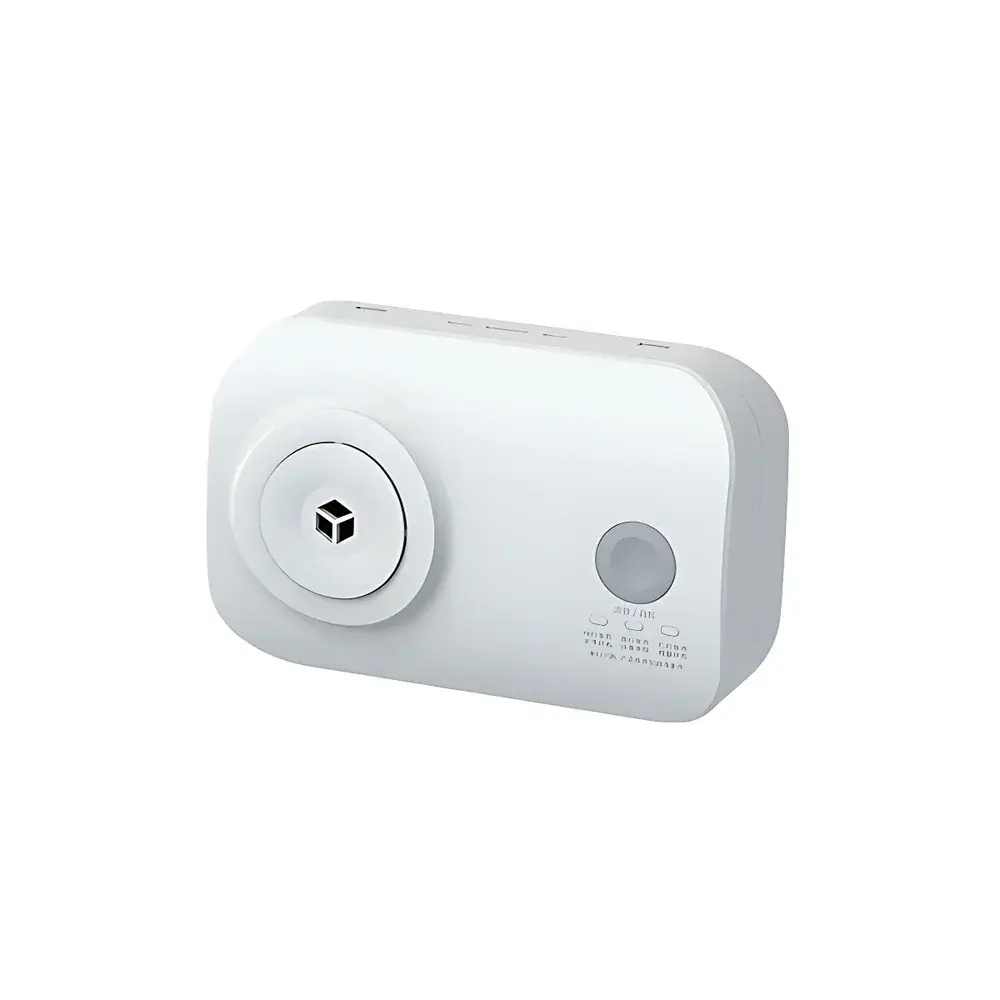
Cubic JM-AM4302 Residential Carbon Monoxide (CO) Detector
| Brand | Cubic |
|---|---|
| Model | JM-AM4302 |
| Detection Principle | Electrochemical |
| Gas Measured | CO |
| Range | 0–1000 ppm |
| Resolution | 1 ppm |
| Alarm Threshold | 220 ppm (adjustable) |
| Alarm Accuracy | ±40 ppm |
| Response Time | <60 s (diffusion mode) |
| Operating Temp. | −10°C to +50°C |
| Humidity Range | 0–90% RH |
| Power Supply | 3 VDC |
| Current Consumption | ≤1 mA |
| IP Rating | IP30 (per GB 23757) |
| Compliance | GB 15322.2–2019, UL 2034–2017, RoHS, China Fire Certification |
| Sensor Lifetime | 10 years |
| Dimensions | 84 × 84 × 33.5 mm |
| Weight | 260 g |
| Output Interface | UART serial (default) |
| Indication | Green (normal), Red (alarm), Yellow (fault or end-of-life) |
Overview
The Cubic JM-AM4302 Residential Carbon Monoxide (CO) Detector is a certified electrochemical gas sensing device engineered for continuous, reliable monitoring of carbon monoxide concentrations in indoor environments. It operates on the principle of selective electrochemical oxidation of CO at a working electrode, generating a current proportional to gas concentration—enabling linear, stable, and drift-compensated measurement across its full 0–1000 ppm range. Designed for residential and light commercial deployment—including kitchens, bedrooms, bathrooms, market halls, and auxiliary utility spaces—the detector meets stringent safety requirements defined in GB 15322.2–2019 (Chinese national standard for household combustible gas detectors) and UL 2034–2017 (U.S. standard for single- and multiple-station carbon monoxide alarms). Its compact form factor (84 × 84 × 33.5 mm), low-power architecture (≤1 mA operating current, 3 VDC supply), and robust 10-year sensor lifetime support long-term unattended operation without recalibration under typical indoor conditions.
Key Features
- Proprietary electrochemical CO sensor with high selectivity against common interferents including acetic acid and ethanol—minimizing false alarms in cooking or cleaning environments
- Full-temperature and full-range compensation algorithm ensuring ≤±40 ppm alarm accuracy across −10°C to +50°C and 0–90% RH
- Fast response time (<60 seconds, diffusion-mode) compliant with UL 2034 reaction benchmarks for early hazard detection
- Triple-color LED status indication: steady green (normal operation), steady red (CO alarm), steady or flashing yellow (fault condition or sensor end-of-life)
- Integrated self-diagnostic function verifying sensor integrity, circuit functionality, and battery/line power status at startup and during periodic intervals
- UART serial interface (default configuration) supporting integration into building management systems (BMS) or centralized alarm networks via RS-485 gateways or microcontroller interfaces
- IP30-rated enclosure per GB 23757, providing protection against solid objects ≥2.5 mm—suitable for wall-mounting in dry, non-hazardous indoor locations
Sample Compatibility & Compliance
The JM-AM4302 is validated for ambient air sampling only and is not intended for use in explosive atmospheres (ATEX/IECEx zones), high-velocity ducts, or corrosive industrial process streams. It complies with mandatory certification frameworks for residential life-safety equipment in China (GB 15322.2–2019) and North America (UL 2034–2017), including requirements for alarm sound pressure level (≥85 dB(A) at 3 m), fault signaling, and resistance to nuisance triggers. RoHS compliance confirms absence of restricted hazardous substances per Directive 2011/65/EU. While not explicitly certified to EN 50291 or ISO 19867, its electrochemical design, alarm thresholds, and environmental resilience align with internationally recognized best practices for domestic CO risk mitigation.
Software & Data Management
The detector operates as a standalone analog-to-digital endpoint with no embedded firmware update capability or cloud connectivity. Data output is delivered via UART TTL-level serial protocol (3.3 V logic, configurable baud rate), enabling direct connection to local microcontrollers (e.g., ESP32, Raspberry Pi Pico) or industrial RTUs for logging, threshold-based event triggering, or dashboard visualization. Raw CO concentration (ppm), alarm state flags, and diagnostic codes are transmitted in ASCII or binary frame formats—facilitating integration into custom SCADA or IoT edge deployments. No onboard storage or audit trail is provided; however, external systems may implement timestamped data capture compliant with GLP-aligned recordkeeping if deployed in regulated non-clinical facilities (e.g., dormitory safety monitoring per institutional EHS policy).
Applications
- Residential dwellings: Wall-mounted installation in sleeping areas, kitchens, and attached garages per NFPA 72 and local fire code guidance
- Small-scale commercial food service: Monitoring above stoves, near gas water heaters, or in enclosed food preparation zones of wet markets and canteens
- Utility infrastructure: Supplementary detection in meter rooms, boiler closets, and propane/LPG cylinder storage cabinets where ventilation may be intermittent
- Mobile and semi-permanent structures: Integration into RVs, modular housing units, and temporary worker accommodations where fixed HVAC-integrated CO monitoring is unavailable
- Educational and public facilities: Deployment in dormitory corridors, vocational training labs, and community centers serving populations with elevated vulnerability to CO poisoning
FAQ
What is the recommended mounting location for optimal CO detection?
Install the unit on a wall at breathing height (1.5–1.7 m above floor level) or on the ceiling—avoiding dead-air corners, behind furniture, or within 15 cm of walls or ceilings per UL 2034 guidelines. Do not place directly above cooking appliances or in steam-prone bathroom zones.
Does the JM-AM4302 require calibration during its service life?
No field calibration is specified by the manufacturer. The electrochemical sensor is factory-calibrated and stabilized; routine functional testing using certified CO test gas (e.g., 300 ppm in air) is recommended annually per GB 15322.2–2019 Clause 7.3.
How does the device handle sensor end-of-life notification?
Upon reaching its rated 10-year operational lifespan (or earlier in harsh environments), the yellow LED flashes at 1 Hz—indicating mandatory replacement. The unit continues alarm functionality until complete sensor failure but must be replaced to maintain certification validity.
Can the alarm threshold be modified in the field?
Yes—the 220 ppm alarm setpoint is adjustable via proprietary configuration tool (not user-accessible); modification requires authorized service personnel and revalidation per GB 15322.2–2019 Annex D.
Is the UART interface compatible with Modbus RTU or BACnet MS/TP?
No. The UART port provides raw sensor data and status codes only. Protocol translation to Modbus or BACnet requires an external gateway or host-side software layer.







