MAYZUM MAY-2001HPO Online Phosphating Passivation Bath Concentration Monitor
| Brand | MAYZUM |
|---|---|
| Origin | Guangdong, China |
| Manufacturer Type | Direct Manufacturer |
| Product Origin | Domestic (China) |
| Model | MAY-2001HPO |
| Price | USD 4,050 (FOB Guangdong) |
Overview
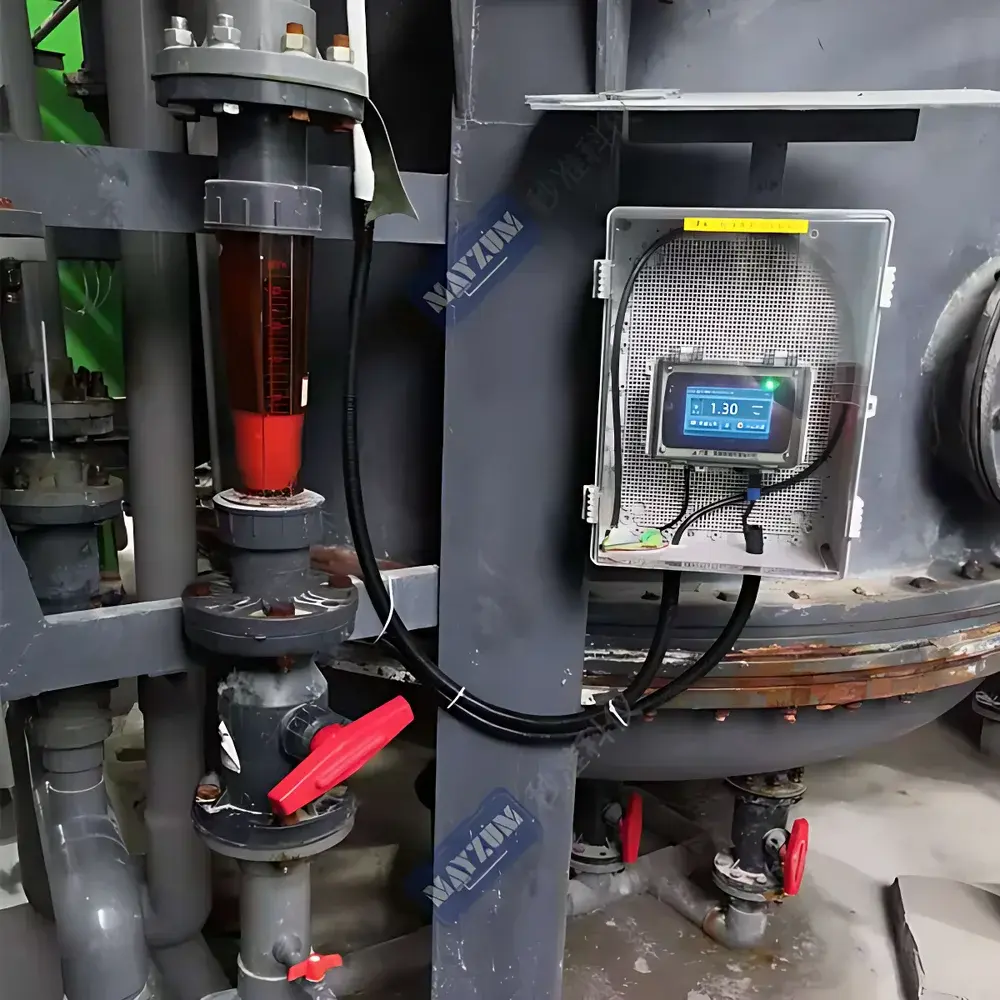
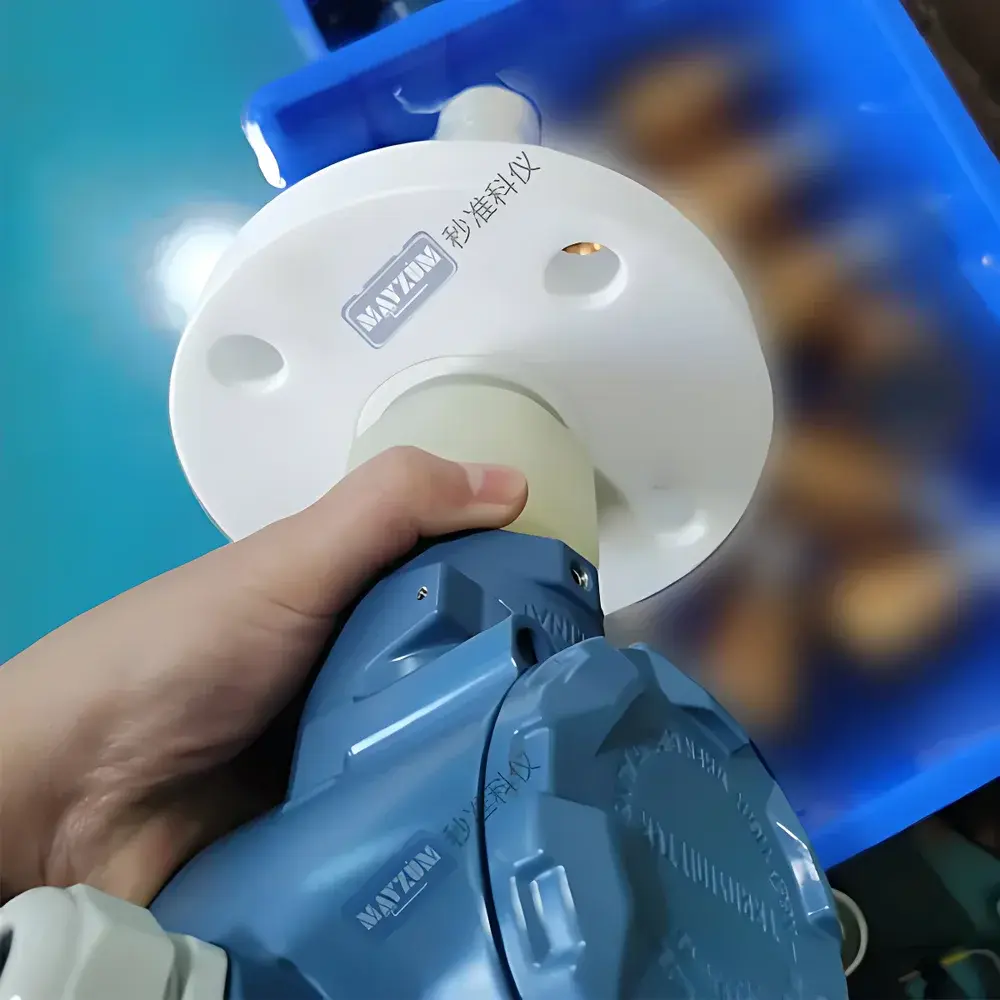
The MAYZUM MAY-2001HPO is an industrial-grade online concentration monitor engineered for continuous, real-time measurement of phosphating and passivation bath solutions in electroplating and metal surface treatment processes. It operates on the principle of vibrational density sensing: a precisely tuned resonant sensor—constructed from corrosion-resistant PTFE—is immersed directly in the process stream. As the liquid’s mass density changes with solute concentration, the natural resonant frequency of the vibrating element shifts proportionally. This frequency shift is detected via a high-stability piezoelectric transducer, conditioned through phase-shift and amplification circuitry, and converted into digital density (g/cm³), specific gravity, Baumé (°Bé), and mass percentage concentration values by an embedded 32-bit microcontroller. Critically, the system integrates a co-located PT100 platinum resistance thermometer to capture instantaneous bath temperature, enabling dynamic thermal compensation across 0–80 °C using empirically validated polynomial algorithms. This ensures metrological consistency despite typical operating temperature fluctuations (50–60 °C in phosphating lines), eliminating drift caused by thermal expansion effects on density readings.
Key Features
- Corrosion-immune wetted parts: Entire fluid-contact surface fabricated from virgin PTFE (polytetrafluoroethylene), certified for long-term immersion in aggressive acidic, alkaline, and oxidizing baths containing phosphoric acid, zinc phosphate, nickel salts, and chromates.
- True plug-and-play deployment: No field calibration required; supplied with NIST-traceable factory calibration certificate covering density (0–2.2 g/cm³), temperature (−20 to 120 °C), and concentration (0–100 wt%).
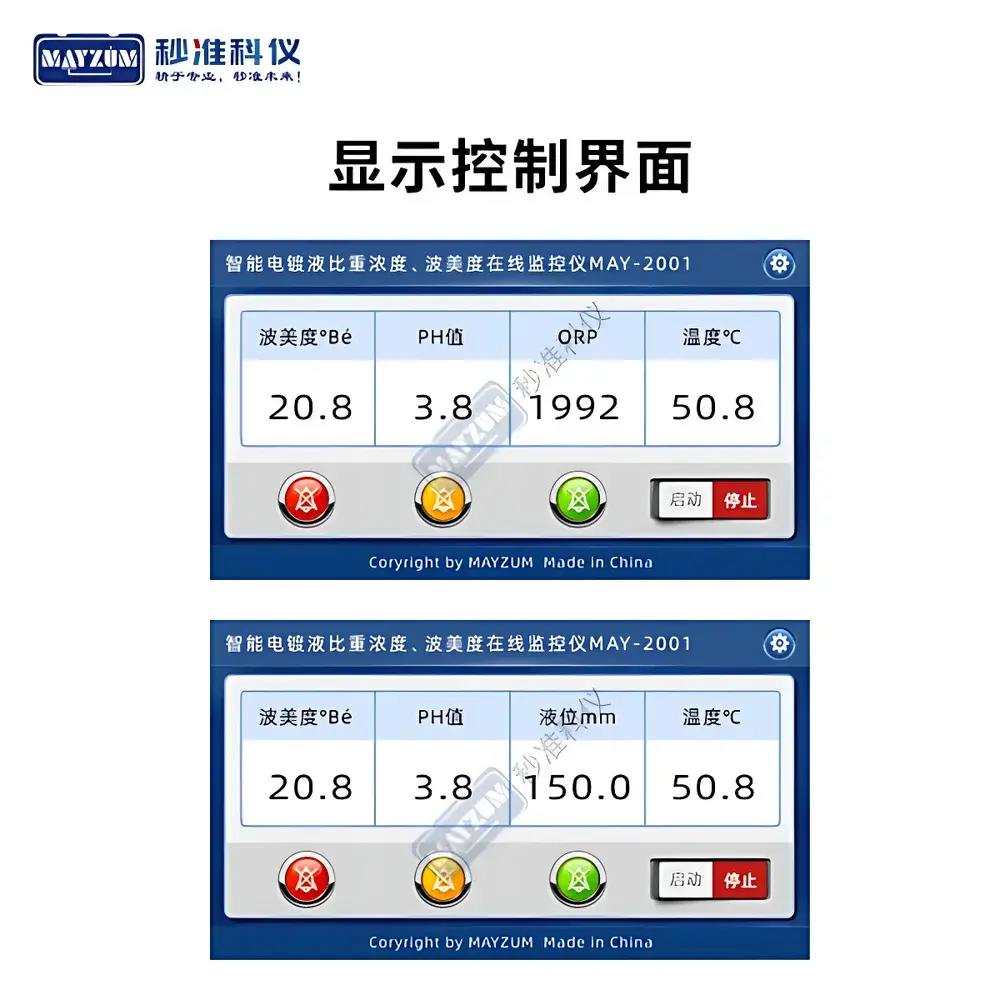
- Multi-parameter integration capability: Single probe interface supports concurrent acquisition of density, temperature, pH, ORP, and level—enabling unified process insight without redundant instrumentation.
- Robust signal architecture: Standard outputs include isolated 4–20 mA analog (HART-compatible), RS485/Modbus RTU, and dual-channel relay alarms (configurable high/low limits); optional intrinsically safe version (Ex ia IIB T6 Ga) available for Zone 1 hazardous areas.
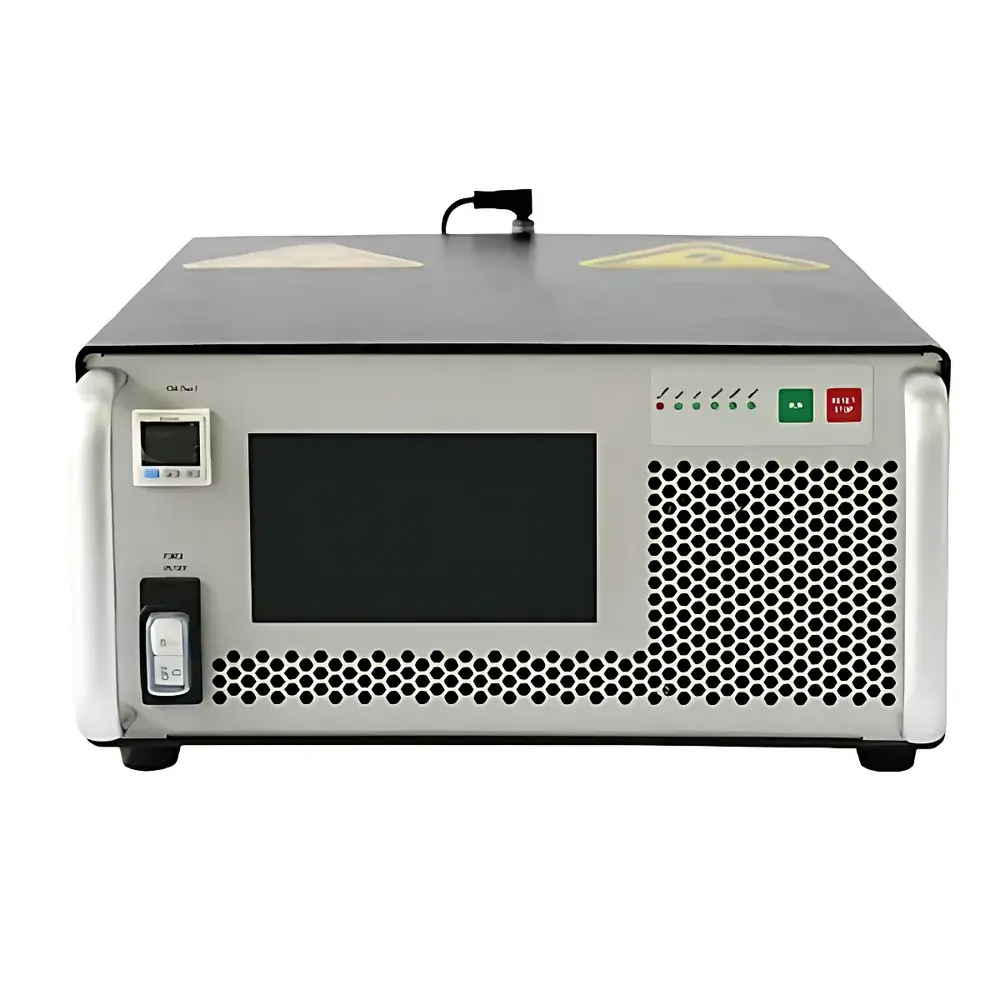
- Industrial HMI: 4.3-inch capacitive color touchscreen with intuitive icon-driven navigation, multilingual UI support (English, German, Spanish, Chinese), and user-defined alarm thresholds with visual/audio alert activation.
- Embedded data sovereignty: Local SQLite database stores up to 16 GB of timestamped records (density, temp, conc., alarms); 12-month retention policy with USB export to CSV/Excel and optional LTE/WiFi telemetry for remote SCADA or MES integration.
Sample Compatibility & Compliance
The MAY-2001HPO is validated for direct inline use in phosphating baths (e.g., Zn–Ni, Mn–phosphate, Fe–phosphate), chromate passivation solutions, alkaline degreasers, and acidic pickling media. Its PTFE construction complies with ASTM D471 (rubber property resistance to liquids) and ISO 15203 (corrosion resistance of polymeric materials in chemical environments). The instrument meets IP67 ingress protection per IEC 60529 and supports pressure ratings up to 20 MPa (2900 psi), suitable for pressurized recirculation loops. For regulated manufacturing environments, the system supports audit-ready data logging with time-stamped events, user access logs, and change history—aligning with FDA 21 CFR Part 11 electronic record requirements when deployed with optional secure authentication modules.
Software & Data Management
The onboard firmware implements deterministic real-time sampling at 1 Hz, with automatic outlier rejection and moving-average filtering to suppress transient noise from pump pulsation or agitation. Historical data is structured in relational tables indexed by UTC timestamp, measurement channel, and operator ID. The controller supports automated report generation: daily concentration trend summaries, deviation alerts vs. setpoint, and statistical process control (SPC) charts (X̄/R, Cpk). PC-based configuration software (Windows/Linux/macOS) enables firmware updates, custom scale definition (e.g., proprietary titration-to-concentration curves), and batch export of raw datasets. Optional cloud gateway modules provide MQTT/OPC UA connectivity for Industry 4.0 platforms such as Siemens MindSphere or Rockwell FactoryTalk.
Applications
- Real-time closed-loop control of phosphating bath replenishment via PLC-triggered dosing pumps based on density-derived % solids.
- Preventive maintenance scheduling: Correlation of gradual density drift with bath contamination (e.g., drag-in of rinse water, organic breakdown products).
- Quality assurance in automotive coil coating lines where phosphate coating weight must remain within ±0.1 g/m²—directly traceable to bath concentration stability.
- Compliance documentation for IATF 16949 Clause 8.5.1.2 (process validation) and ISO 9001:2015 Clause 8.5.1 (control of production).
- Integration into centralized plant monitoring systems for cross-line comparison of bath aging rates and chemical consumption efficiency.
FAQ
Does the MAY-2001HPO require periodic recalibration?
No. It ships with a factory-applied multi-point density calibration across its full range (0–2.2 g/cm³) and includes temperature-compensated reference data for 0–80 °C. Field verification is recommended annually using certified standard liquids (e.g., distilled water, glycerol/water mixtures), but adjustment is not necessary under normal operating conditions.
Can it measure non-aqueous or solvent-based baths?
The sensor is optimized for aqueous electrolyte systems. While it will report density for organic solvents (e.g., acetone, isopropanol), concentration conversion accuracy depends on user-provided density–composition reference tables; default phosphating algorithms do not apply.
What is the maximum allowable flow velocity past the probe?
For stable resonance detection, linear flow velocity should not exceed 3 m/s. In high-velocity pipelines, installation in a bypass loop with laminar flow conditioning is advised.
Is wireless data transmission supported out-of-the-box?
Wireless telemetry (LTE Cat-M1 or Wi-Fi 802.11n) is available as the MAY-LOT module—an optional add-on requiring separate configuration and antenna mounting.
How is temperature compensation implemented?
A co-located PT100 sensor measures bulk fluid temperature within ±0.1 °C. Compensation uses third-order polynomial coefficients derived from empirical calibration across 120+ reference points, stored in flash memory and applied in real time to raw frequency data before concentration calculation.