
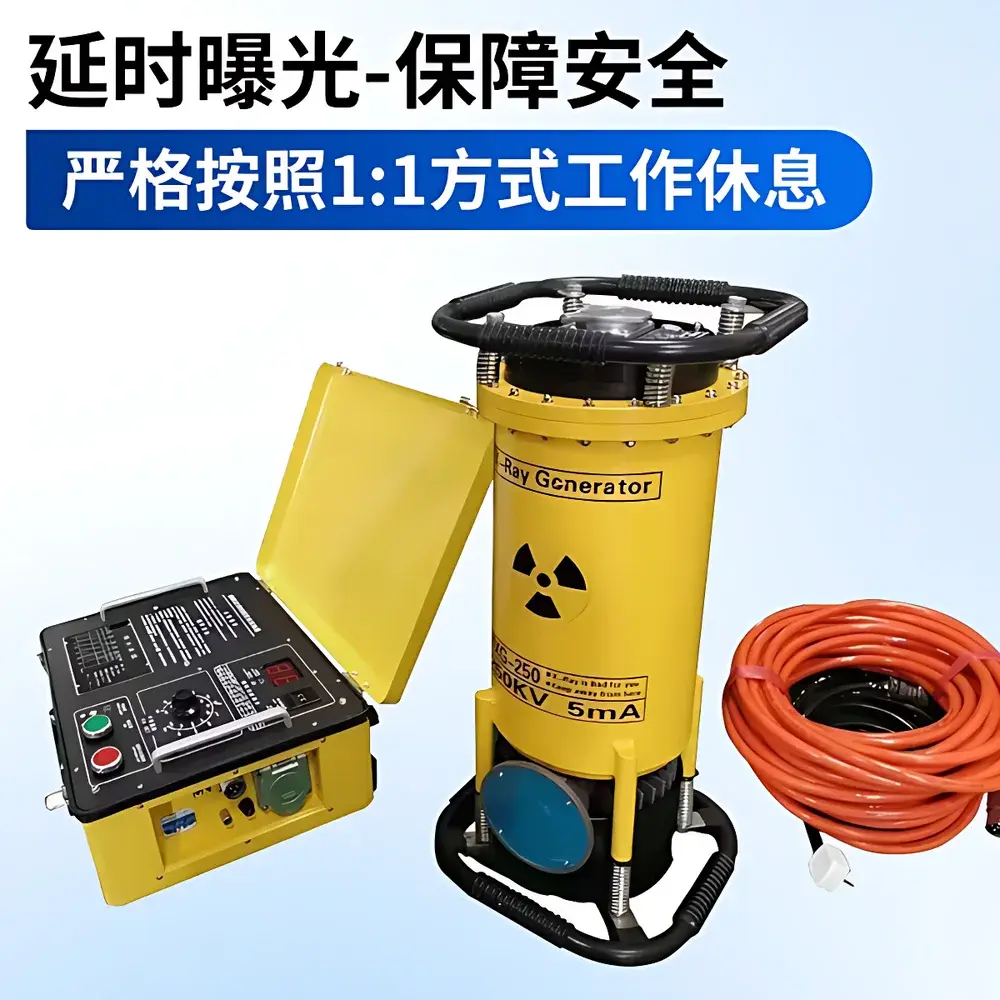
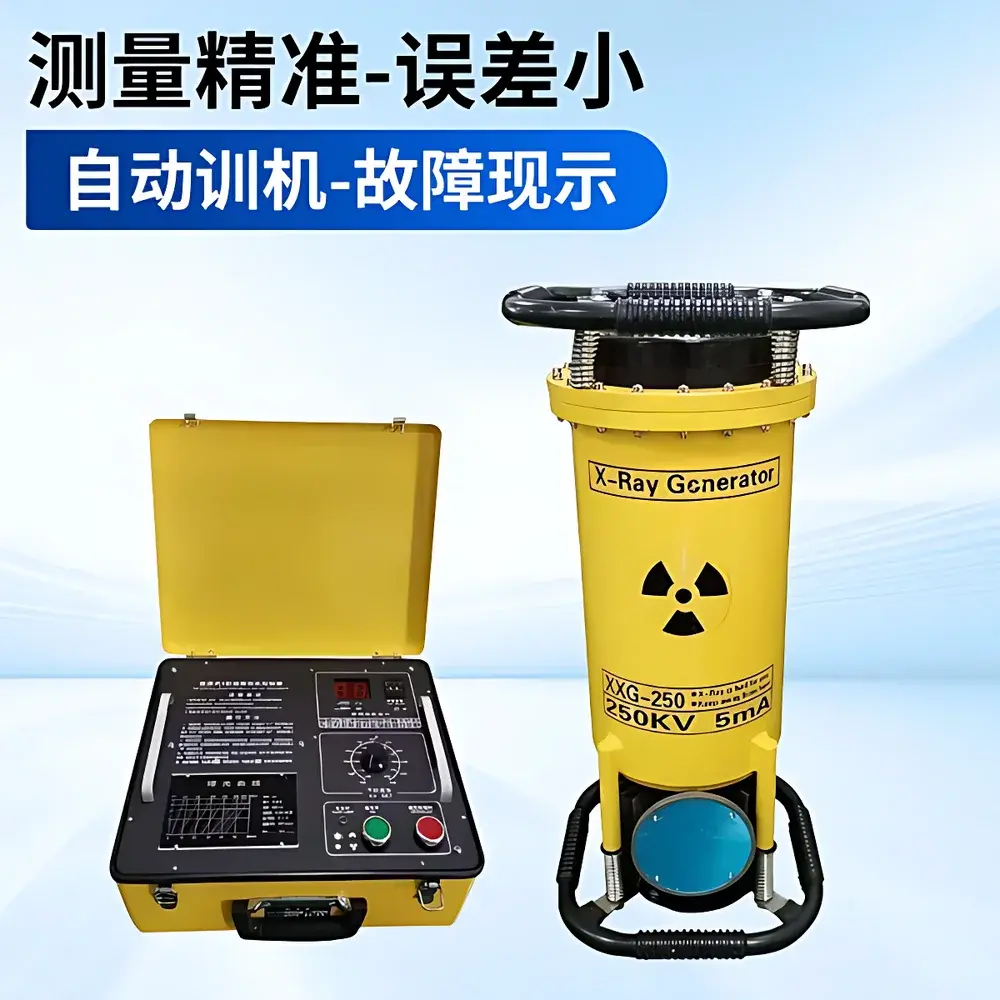
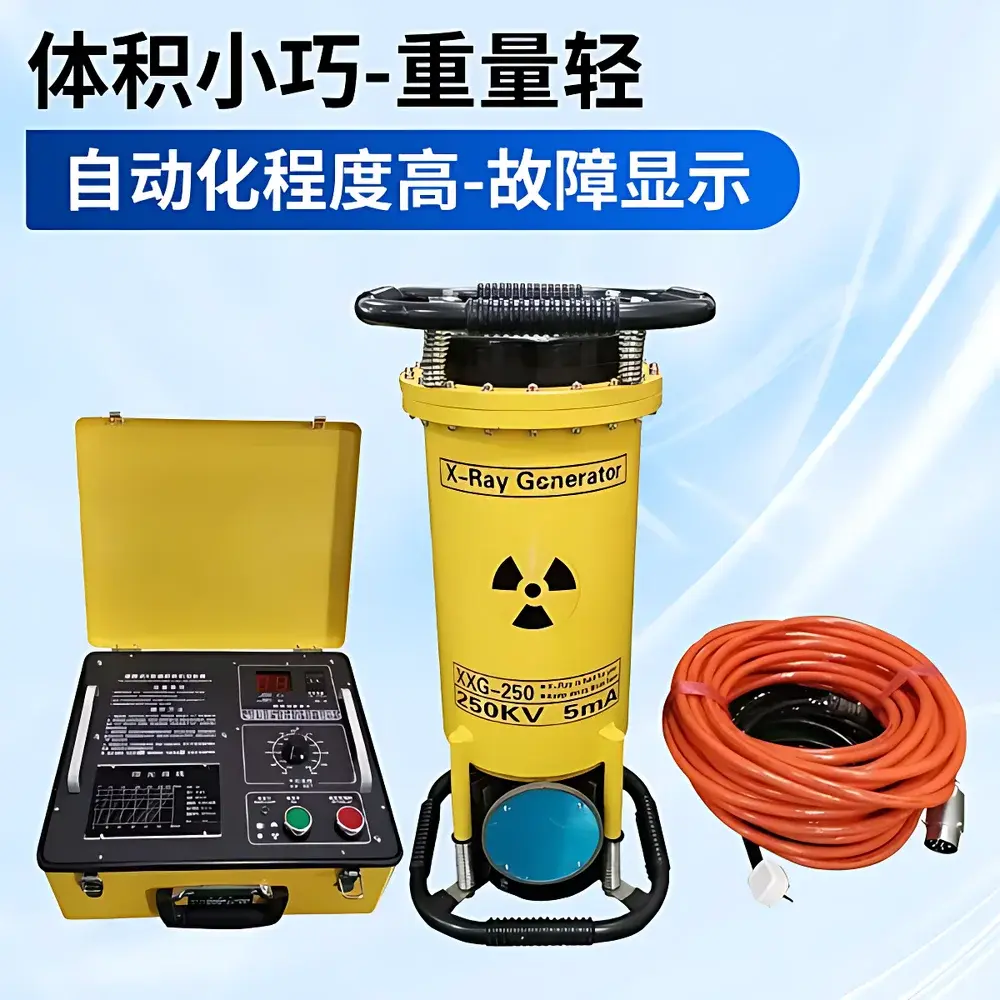
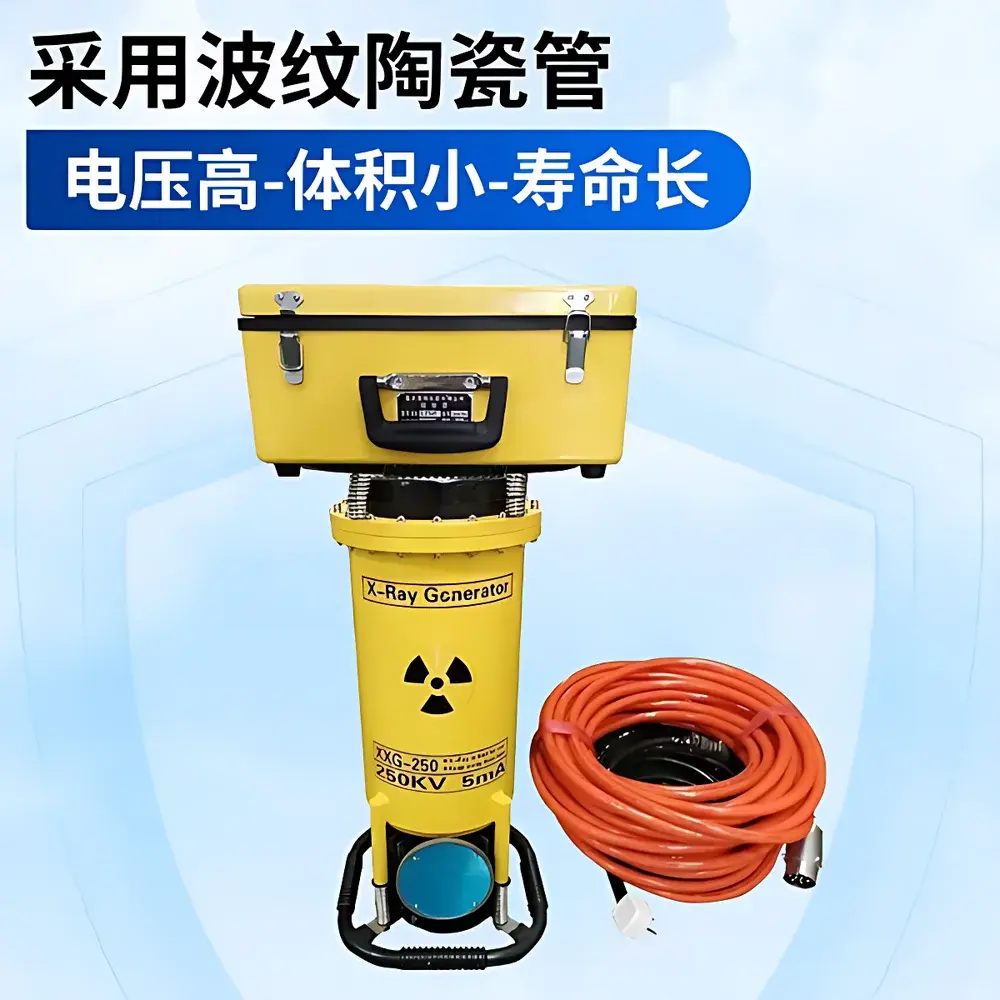
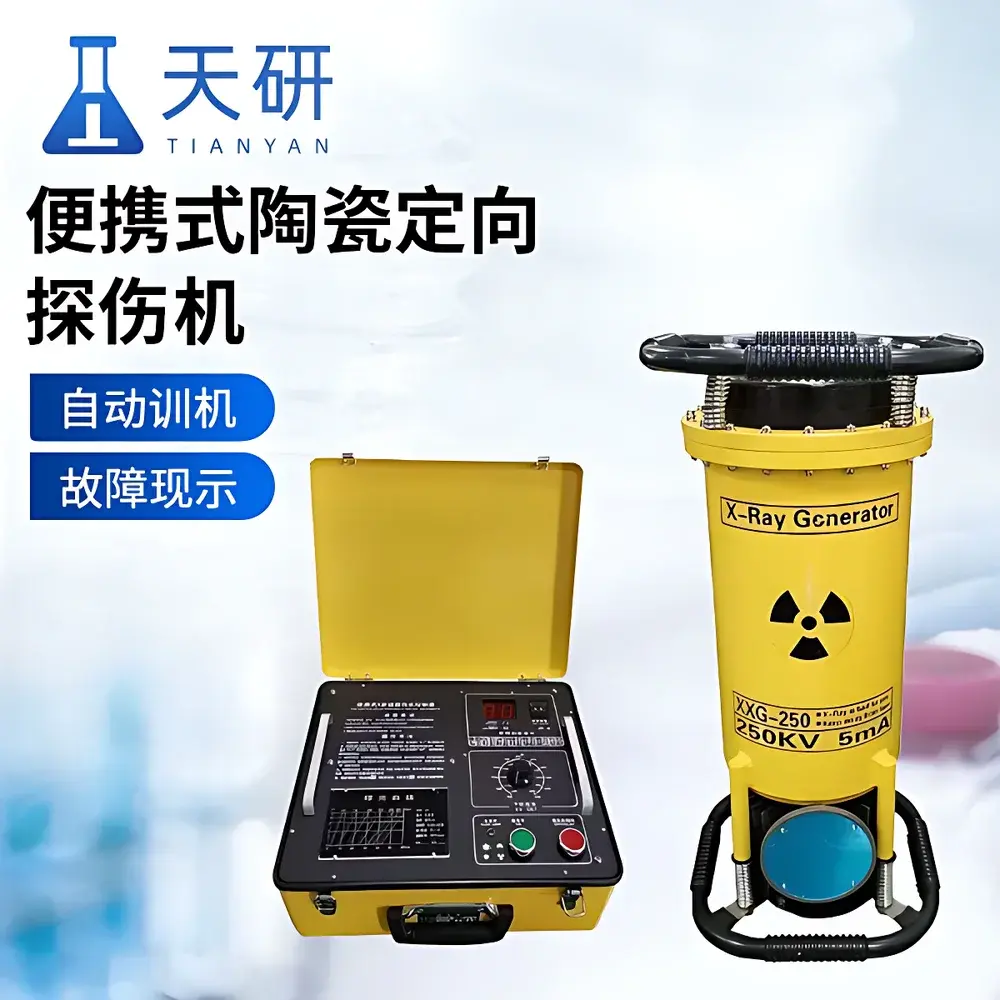
Portable Ceramic-Directed Magnetic Particle Inspection Unit Tianyan TY-XXG2505
| Brand | Tianyan (Shandong Tianyan) |
|---|---|
| Origin | Shandong, China |
| Manufacturer Type | Direct Manufacturer |
| Country of Origin | China |
| Model | TY-XXG2505 |
| Price | USD 2,950 (approx.) |
| Inspection Principle | Electromagnetic Yoke-Based Magnetic Particle Testing (MPI) with Directional Field Alignment for Ceramic Components |
| Power Supply | AC 220 V ±10%, 50 Hz |
| Yoke Lifting Force | ≥10 kg (per ASTM E1444/E709) |
| Effective Penetration Depth | Up to 39 mm in ceramic tubing (verified per ISO 9934-1:2016 Annex B guidelines for non-ferromagnetic substrates with surface-breaking discontinuities) |
Overview
The Tianyan TY-XXG2505 Portable Ceramic-Directed Magnetic Particle Inspection Unit is a purpose-engineered electromagnetic yoke system optimized for the detection of surface and near-surface discontinuities in non-porous, low-permeability ceramic components—particularly hollow structural ceramics such as alumina, silicon carbide, and zirconia tubes used in aerospace thermal protection systems, semiconductor processing fixtures, and high-temperature fluid handling. Unlike conventional MPI equipment designed for ferrous metals, this unit integrates a directional magnetic field configuration that compensates for the inherently low magnetic susceptibility of ceramics by maximizing flux concentration at critical geometries (e.g., tube inner/outer walls, weld interfaces, and machined grooves). The system operates on the principle of induced magnetization via alternating current (AC) yoke excitation, enabling real-time visualization of flaw indications using both visible and fluorescent magnetic particles under controlled ambient or darkroom conditions. Its lightweight, modular architecture supports field deployment in cleanrooms, production lines, and R&D laboratories where portability, repeatability, and compliance with international NDT standards are mandatory.
Key Features
- Directional yoke geometry with adjustable pole spacing (80–360 mm range) to accommodate curved ceramic tubing and irregular cross-sections while maintaining uniform field orientation perpendicular to expected flaw planes.
- Integrated AC-powered electromagnet with thermal overload protection and stable output regulation—ensuring consistent lifting force (>10 kg) across extended duty cycles per ASTM E1444 Section 6.2.3.
- Modular accessory interface supporting standardized consumables: 80 × 360 mm lead screens, IQI (Image Quality Indicators) sets compliant with ISO 19232-1, and dual-wavelength UV-A (365 nm) / white-light illumination modes for particle contrast optimization.
- Non-slip ergonomic handle with integrated on/off switch and LED status indicator; weight ≤7.2 kg for single-operator mobility without compromising mechanical rigidity.
- Compliance-ready design: All electrical components meet IEC 61000-6-3 EMC emission limits; housing rated IP54 for dust and splash resistance during shop-floor operation.
Sample Compatibility & Compliance
The TY-XXG2505 is validated for use on dense, sintered ceramic forms including but not limited to cylindrical insulators, vacuum feedthrough housings, and ceramic-to-metal brazed assemblies. It is explicitly intended for detecting linear surface cracks, grinding burns, and intergranular flaws detectable via magnetic particle accumulation at leakage fields. While ceramics themselves are non-magnetic, the method relies on the presence of embedded ferromagnetic inclusions (e.g., Fe₂O₃ residues from machining media), localized metallized coatings, or intentional magnetic tracer layers applied prior to inspection. The system conforms to ISO 9934-1:2016 (Magnetic particle testing — Part 1: General principles), ASTM E1444/E709 (Standard Practice for Magnetic Particle Testing), and supports documentation traceability required under AS9100D Clause 8.5.2 and ISO 17025:2017 for accredited NDT service providers.
Software & Data Management
As a hardware-centric portable MPI unit, the TY-XXG2505 does not incorporate embedded digital imaging or automated reporting software. However, it is fully compatible with third-party NDT documentation workflows: image capture from fluorescent indications can be performed using calibrated UV-compatible DSLR systems (e.g., Canon EOS R6 with 365 nm bandpass filter); density measurements are supported via traceable densitometers (e.g., X-Rite 310/320 series) meeting ISO 11699-1 Class B accuracy requirements. All inspection records—including yoke calibration logs, particle concentration verification (per ASTM E1316 Table 1), and IQI visibility reports—must be maintained manually or imported into enterprise QMS platforms (e.g., ETQ Reliance, MasterControl) supporting FDA 21 CFR Part 11 electronic signature and audit trail functionality.
Applications
- Quality assurance of ceramic heat exchanger tubes in nuclear instrumentation channels.
- In-process verification of plasma-sprayed ceramic coatings on turbine blades prior to HIP consolidation.
- Final acceptance testing of medical-grade ceramic dental abutments per ISO 13356 Annex C.
- Failure analysis of cracked ceramic substrates in power electronics modules following thermal cycling.
- Supplier qualification audits requiring documented MPI capability per AIAG CQI-11 Special Process: Heat Treating System Assessment.
FAQ
Can the TY-XXG2505 inspect fully non-magnetic monolithic ceramics (e.g., pure Al₂O₃)?
No—direct MPI requires either intrinsic ferromagnetic phase content or externally introduced magnetic tracers. For pure ceramics, alternative methods (e.g., dye penetrant testing per ISO 3452-1 or micro-CT) are recommended.
Is the unit certified for use in Class 100 cleanrooms?
Yes—the yoke head and handle are constructed from anodized aluminum and static-dissipative polymers; particulate shedding tests per ISO 14644-1 Class 5 protocols confirm suitability for controlled environments.
What is the recalibration interval for the lifting force verification?
Per ASTM E1444 Section 7.2.1, lifting force must be verified before each shift or after any impact event; annual third-party calibration is advised for ISO 17025 accreditation.
Are replacement coils available for field repair?
Yes—Tianyan supplies OEM-certified coil assemblies (P/N TY-COIL-2505) with full traceability to manufacturing lot and magnetic flux test reports.
Does the system support wet fluorescent particle suspension?
Yes—compatible with MIL-STD-1949A-compliant fluorescent carriers (e.g., Magnaflux Zyglo ZL-27C) when used with UV-A lighting and appropriate PPE (ANSI Z87.1 UV-filtering goggles).



