
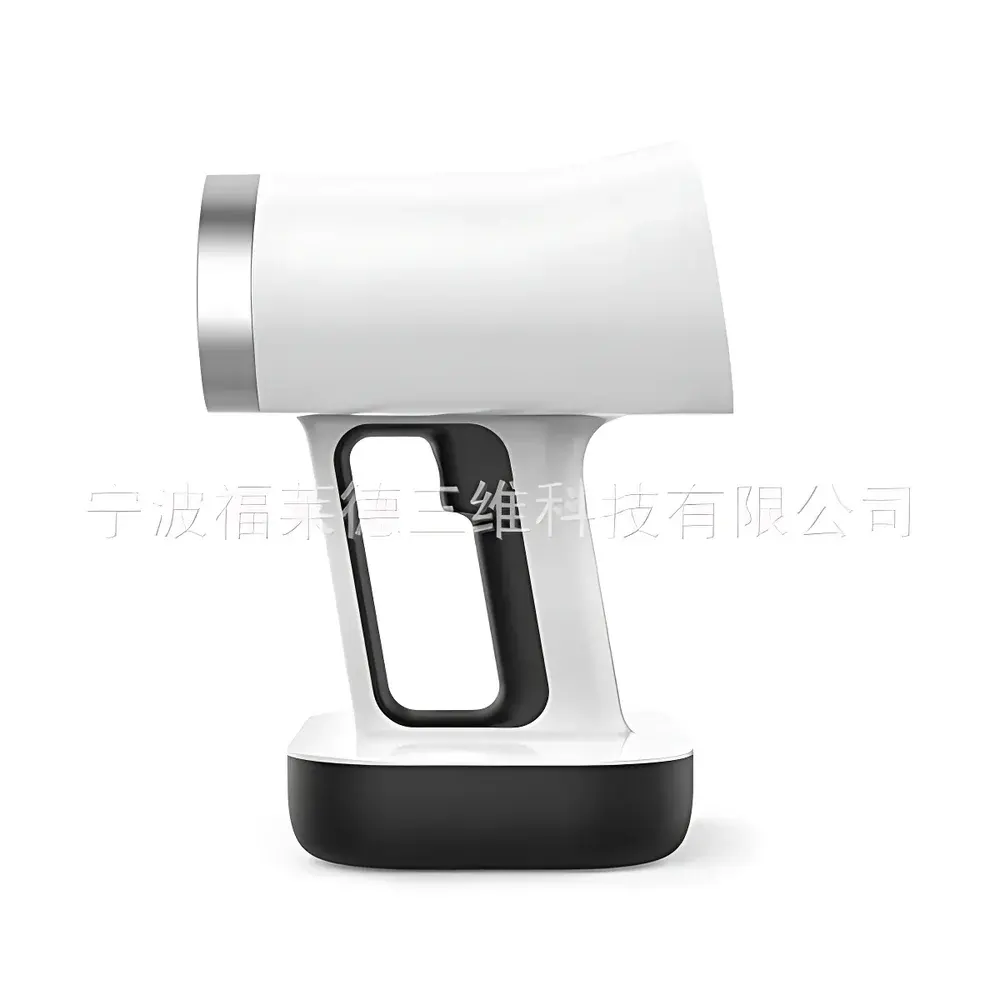
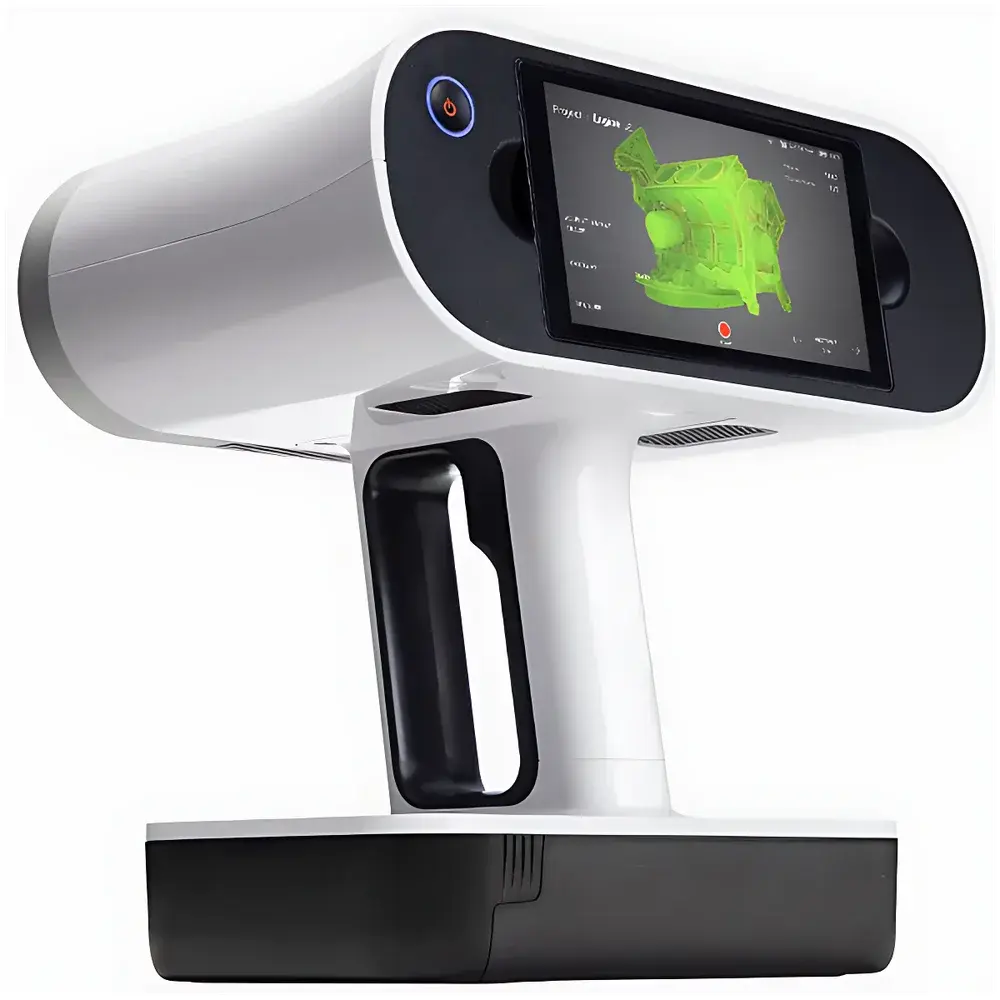
Artec Leo Handheld Color 3D Scanner
| Brand | Artec |
|---|---|
| Origin | Imported (Non-China) |
| Manufacturer Type | Authorized Distributor |
| Model | Leo |
| 3D Resolution | 0.25 mm |
| Point Accuracy | ≤0.1 mm |
| Accuracy Drift | ≤0.03% per 100 cm |
| Light Source | Dual-source — White-light LED Array (12 LEDs) + VCSEL for 3D Structured Light |
| Near-Range FOV | 246 × 153 mm |
| Far-Range FOV | 843 × 527 mm |
| Working Distance | 0.35–1.2 m |
| Texture Capture | Yes |
| Video Frame Rate | Up to 80 FPS |
| Data Acquisition Time | 0.0002 s per frame |
| Capture Speed | Up to 4,000,000 points/sec |
| Weight | 1.8 kg |
| Power Supply | Internal replaceable battery or external 12 V DC |
| Dimensions (H×D×W) | 227 × 163 × 228 mm |
| Connectivity | Wi-Fi 5 (802.11ac), Gigabit Ethernet, SD card slot |
| Onboard Processing | Yes (NVIDIA Jetson TX2 + custom FPGA co-processor) |
| Calibration | Self-calibrating |
Overview
The Artec Leo is a professional-grade, handheld color 3D scanner engineered for high-fidelity, real-time acquisition of complex surface geometry and photorealistic texture. Unlike traditional contact-based or tripod-mounted optical metrology systems, the Leo employs advanced dual-source structured light technology—combining white-light LED illumination with a high-stability VCSEL (Vertical-Cavity Surface-Emitting Laser) projector—to deliver robust, sub-millimeter geometric fidelity across variable working distances. Its onboard NVIDIA Jetson TX2 platform and custom FPGA acceleration enable full 3D reconstruction—including alignment, fusion, hole-filling, and texture mapping—directly on-device, eliminating dependency on external computing hardware. This architecture supports true walk-around scanning in dynamic environments, making it suitable for field applications in reverse engineering, quality inspection, cultural heritage digitization, and medical anthropology where portability, autonomy, and operational simplicity are critical.
Key Features
- Real-time on-device 3D reconstruction with live preview on integrated 5.5″ HD touchscreen—users observe mesh generation and texture application as scanning progresses.
- Dual illumination system: 12-LED white-light array for high-fidelity color capture and VCSEL-based structured light for precise depth triangulation under varying ambient lighting conditions.
- Self-calibrating optical path: automatic internal recalibration ensures long-term measurement stability without user intervention or external reference artifacts.
- Wireless workflow integration via Wi-Fi 5 (802.11ac) and Gigabit Ethernet—enables remote monitoring, firmware updates, and direct transfer of processed .obj/.stl/.aop files to networked storage or cloud platforms.
- Battery-operated design with hot-swappable lithium-ion modules—supports continuous operation up to 90 minutes per charge, extendable via external 12 V DC input for fixed-site deployment.
- No host PC dependency: all core processing—including multi-view registration, outlier rejection, and adaptive mesh simplification—is performed entirely onboard using deterministic algorithms compliant with ISO/IEC 17025 traceability principles.
Sample Compatibility & Compliance
The Artec Leo accommodates a broad spectrum of non-reflective, non-transparent, and moderately textured surfaces—including painted metal, composite materials, plaster, human skin, textiles, and aged organic substrates—without requiring spray-based matting agents. It complies with IEC 62471 (Photobiological Safety of Lamps), FCC Part 15 Class B, and CE marking requirements for electromagnetic compatibility (EMC) and low-voltage directives. While not certified for use in intrinsically safe (ATEX/IECEx) or sterile medical device manufacturing environments, its data output format and metadata structure support integration into GLP/GMP-aligned workflows when paired with validated Artec Studio 19+ software configured with audit-trail logging and electronic signature controls per FDA 21 CFR Part 11.
Software & Data Management
Artec Studio 19 serves as the primary post-processing environment, offering both guided Smart Mode (for rapid one-click optimization of raw scans) and manual expert mode (with granular control over alignment constraints, curvature-based filtering, and NURBS surface fitting). All projects retain embedded EXIF-like metadata—including timestamp, GPS coordinates (when enabled), sensor temperature, and illumination intensity logs—for traceable metrological documentation. Processed datasets export natively to industry-standard formats (.stl, .obj, .ply, .aop, .xyz) with optional GD&T annotation layers compatible with PolyWorks Inspector, Geomagic Control X, and Siemens NX. SD card storage supports FAT32/exFAT formatting for seamless offline archiving; encrypted file transfer protocols (SFTP, HTTPS) are available via optional enterprise license tiers.
Applications
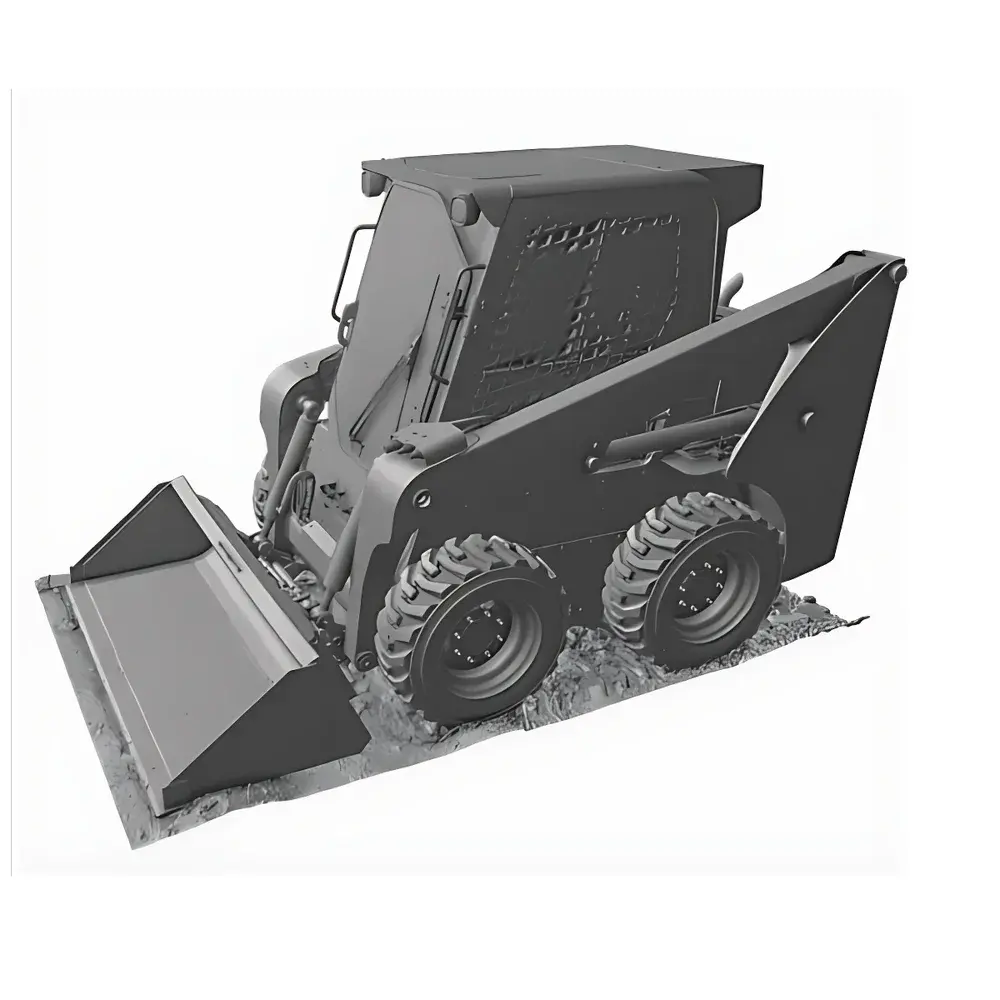
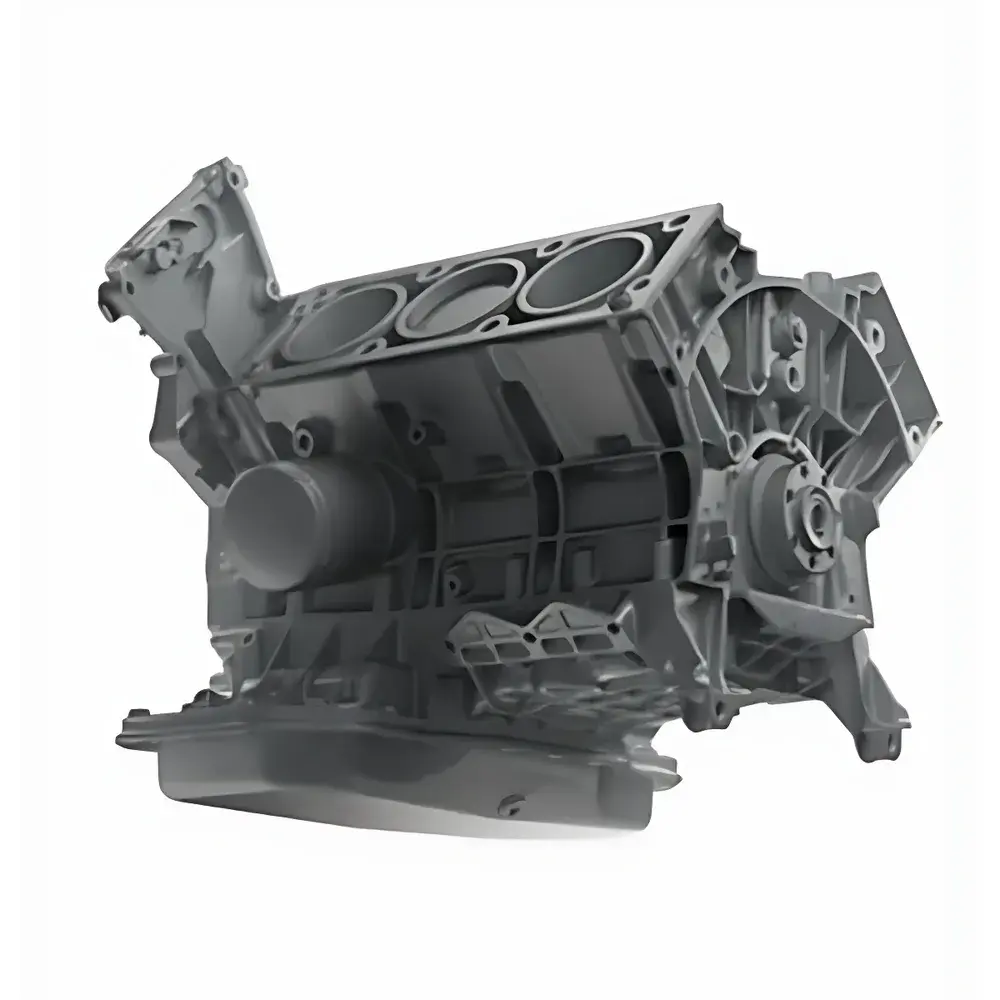
- Reverse engineering of legacy components lacking CAD documentation—particularly in aerospace MRO, automotive restoration, and industrial equipment refurbishment.
- In-field dimensional verification against nominal models using deviation heatmaps and cross-sectional analysis aligned to ASME Y14.5 standards.
- Forensic documentation of crime scenes and accident reconstructions where spatial context and surface detail preservation are legally admissible.
- Digital preservation of museum artifacts, archaeological finds, and historical monuments—supporting UNESCO-compliant archival workflows with georeferenced point cloud repositories.
- Anthropometric data collection for ergonomic product design, prosthetic customization, and clinical gait analysis protocols validated under ISO 20685.
FAQ
Does the Artec Leo require a connected computer to operate?
No. All scanning, alignment, fusion, and texturing operations occur onboard. A computer is only needed for advanced post-processing or large-scale batch operations in Artec Studio.
Can the Leo scan shiny or black surfaces without surface preparation?
It achieves reliable capture on moderately reflective or low-albedo surfaces, but highly specular metals or matte-black absorbers may require localized matte spray or polarization filters—consistent with ISO 10360-8 guidelines for optical coordinate measuring machines.
Is the scanner calibrated to national metrology standards?
While the Leo performs self-calibration using internal references, traceable calibration against NIST-traceable artifacts (e.g., ceramic sphere arrays) is recommended annually for ISO/IEC 17025-accredited laboratories.
What is the maximum effective scanning volume for a single session?
Under optimal conditions (stable lighting, moderate texture, 0.6–1.0 m working distance), users routinely reconstruct objects up to 2.5 m in longest dimension with RMS deviation ≤0.15 mm relative to ground-truth CMM measurements.
How is data security handled during wireless transmission?
Wi-Fi connections default to WPA2-Enterprise authentication; firmware updates and file transfers support TLS 1.2+ encryption and certificate pinning when deployed within corporate PKI infrastructures.





