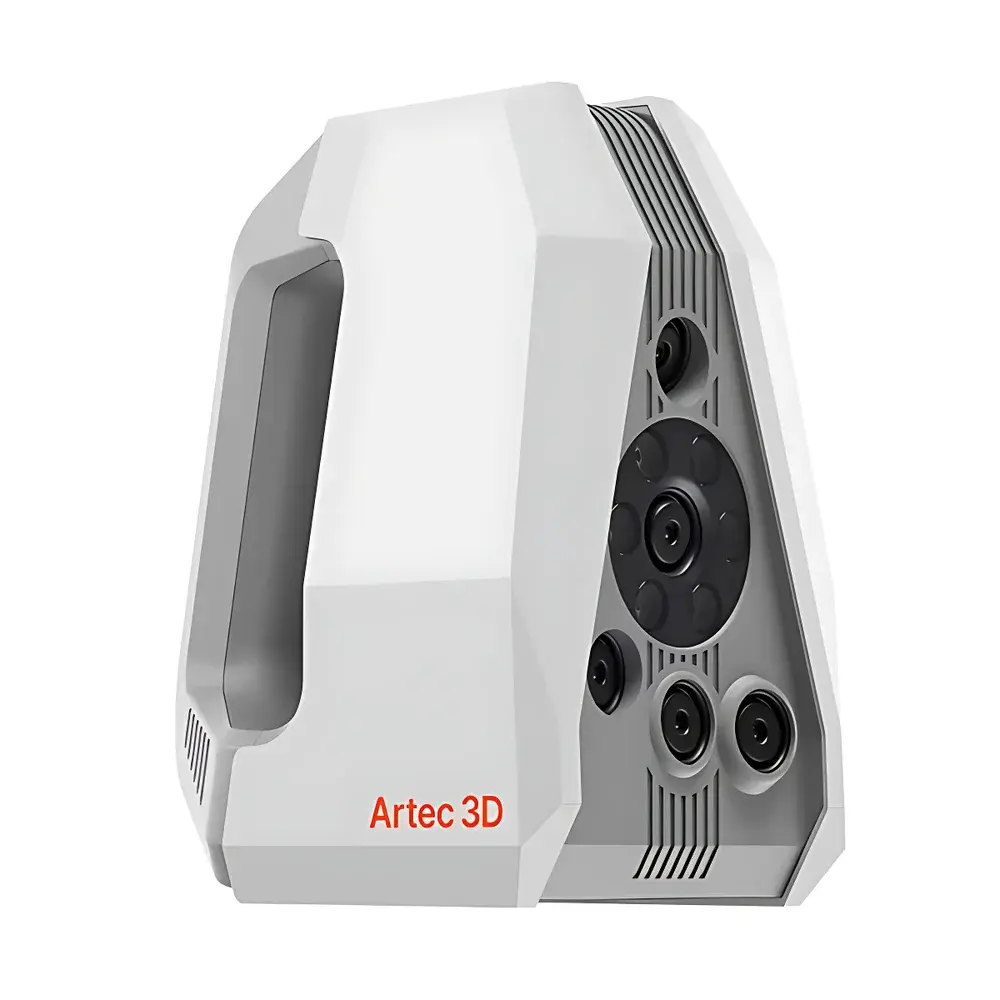
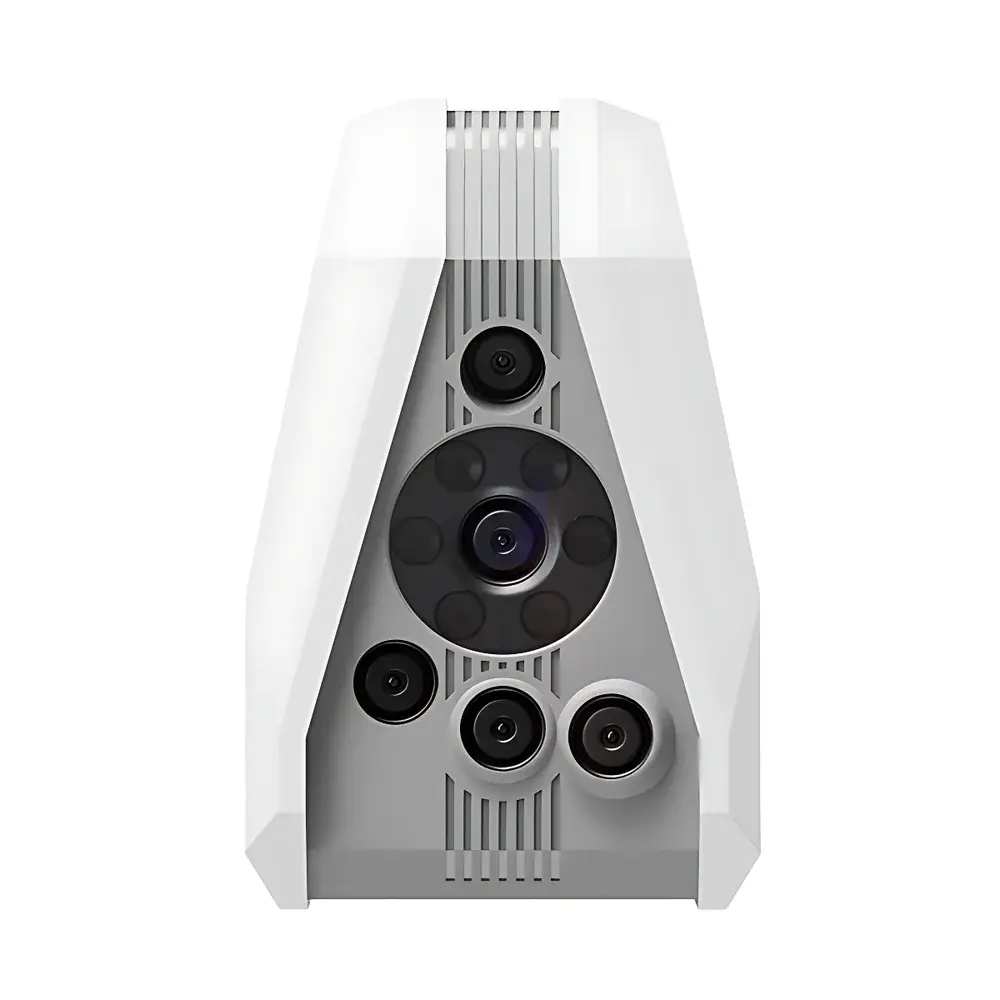
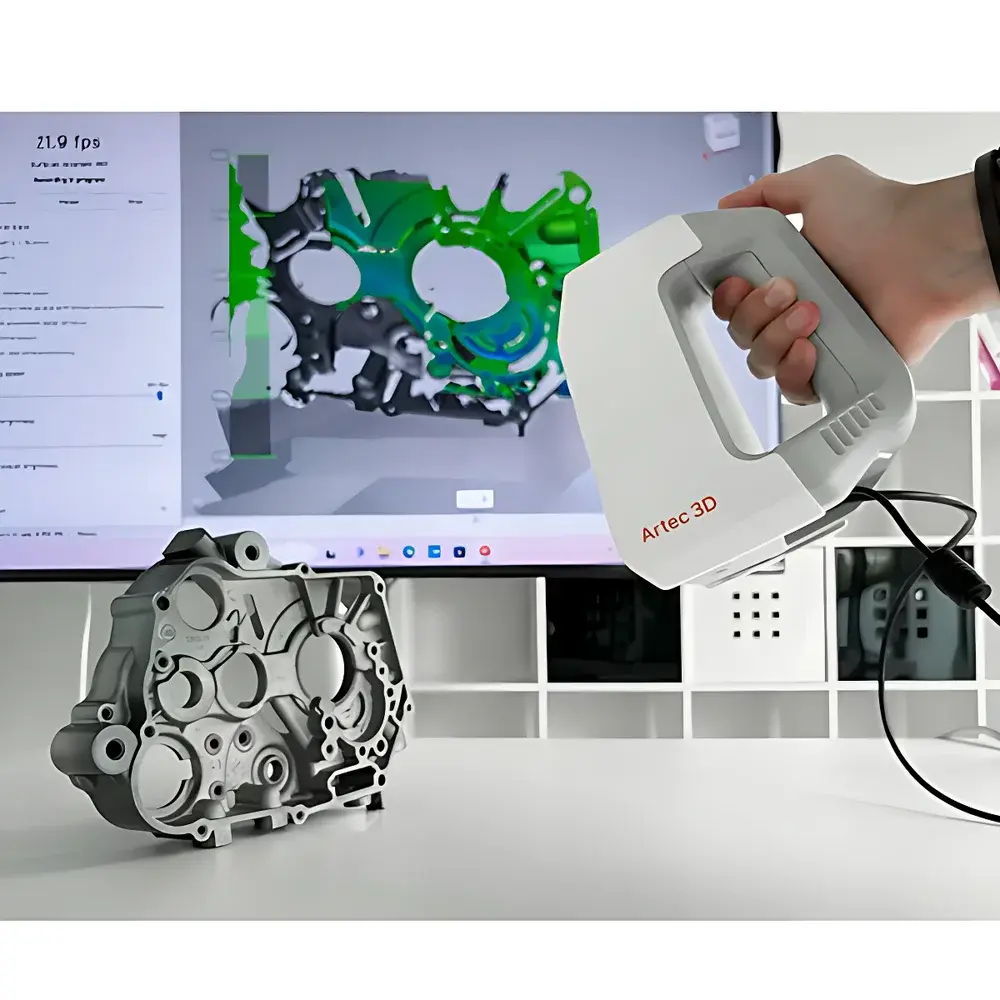
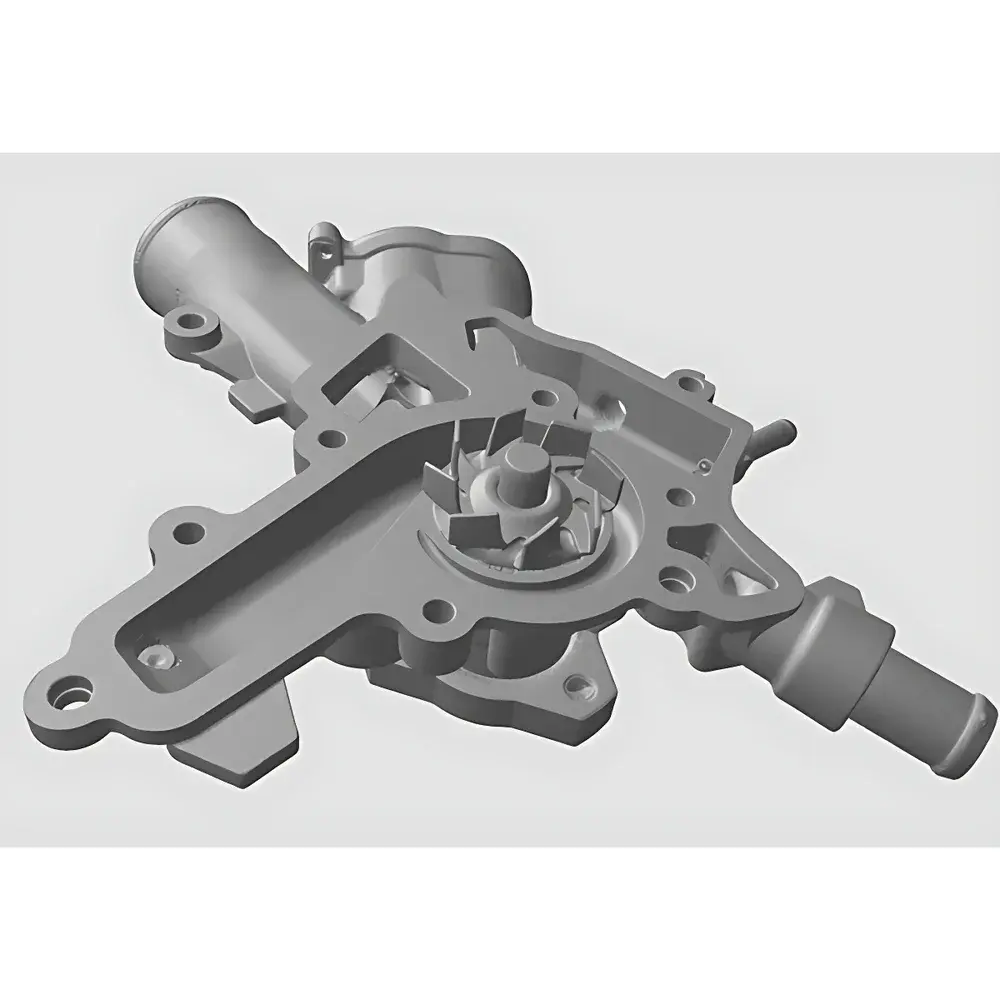
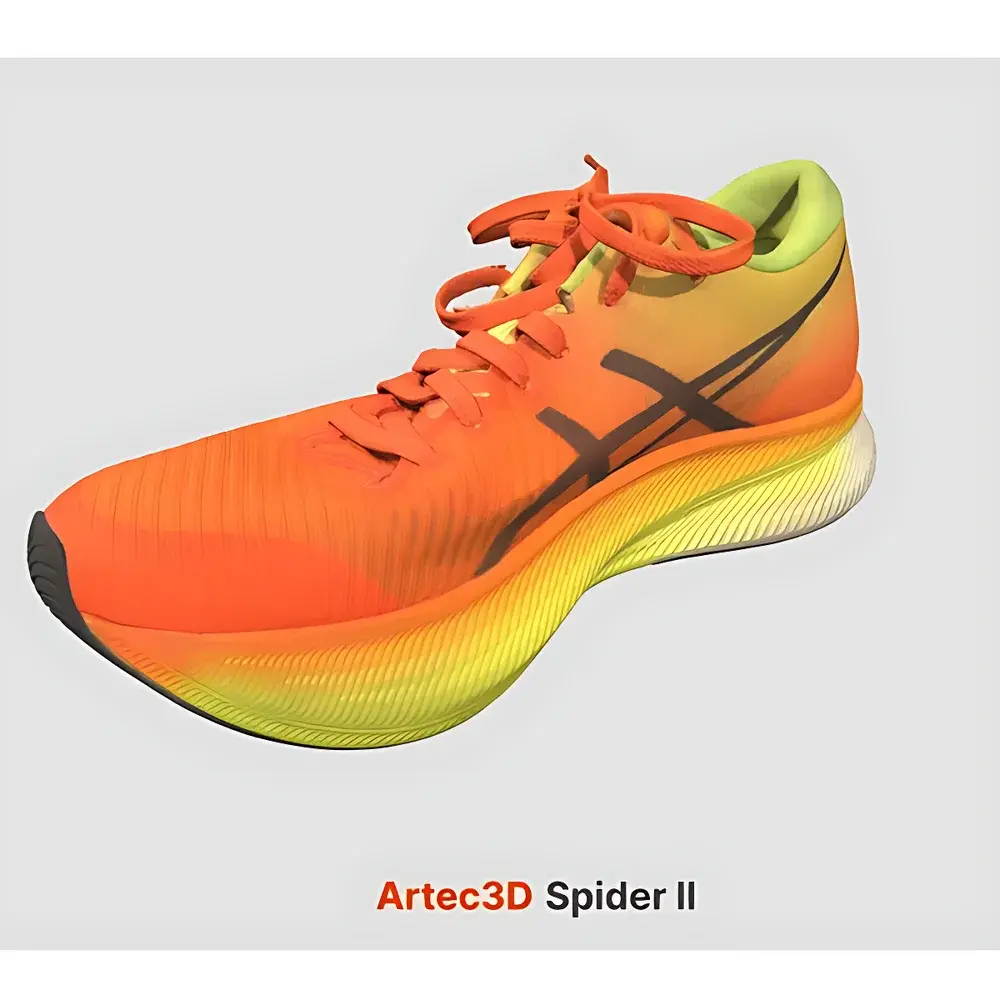
Artec Spider II Handheld High-Resolution 3D Scanner
| Brand | Artec |
|---|---|
| Origin | Imported (Non-China) |
| Manufacturer Type | Authorized Distributor |
| Instrument Category | Structured Light 3D Scanner |
| Model | Artec Spider II |
| Measurement Speed | 35 Mpts/sec |
| Accuracy | 0.05 mm |
| Resolution | 0.05 mm |
| Max Scan Volume | 1 m³ |
| Operating System | Windows 10/11 x64 |
| Weight | 0.95 kg |
| Interface | Thunderbolt 3 (backward compatible with Thunderbolt 4) |
| Texture Resolution | 5 MP |
| Color Depth | 24 bpp |
| Light Source | 450 nm Blue LED (structured light), 4000 K White LED (CRI > 95) |
| FOV (Near) | 128 × 104 mm |
| FOV (Far) | 171 × 152 mm |
| Real-time Reconstruction Rate | 30 fps |
| Tracking | Markerless Geometric + Textured Surface Tracking |
| Output Formats | OBJ, PLY, STL, WRL, AOP, ASC, PTX, E57, XYZRGB, STEP, IGES, X_T, CSV, DXF, XML |
Overview
The Artec Spider II is a professional-grade, handheld structured light 3D scanner engineered for metrology-grade digitization of small-to-medium complex parts with exceptional geometric fidelity and photorealistic texture capture. Utilizing dual-wavelength active illumination—blue LED structured light (450 nm) for high-contrast pattern projection and high-CRI white LED (4000 K, CRI > 95) for true-color surface rendering—the Spider II achieves sub-100 µm resolution and accuracy without requiring adhesive targets or spray-based surface preparation. Its real-time 30 fps volumetric reconstruction engine enables intuitive, markerless scanning workflows, where geometry and texture are simultaneously captured and fused in hardware-accelerated processing pipelines. Designed for compliance-critical environments including reverse engineering labs, quality assurance departments, and academic research facilities, the Spider II delivers traceable, repeatable, and auditable 3D data acquisition aligned with ISO/IEC 17025 principles for dimensional measurement uncertainty.
Key Features
- Sub-100 µm resolution and accuracy (0.05 mm at optimal working distance of 0.19–0.3 m), validated per ISO 10360-8 and VDI/VDE 2634 Part 2 protocols
- Markerless hybrid tracking: geometric surface topology + high-fidelity texture correlation ensures stable pose estimation on reflective, dark, or low-contrast surfaces
- Real-time 30 fps 3D reconstruction with on-device point cloud fusion—no post-processing latency during acquisition
- Thunderbolt 3 interface with deterministic low-latency data streaming; compatible with Thunderbolt 4 host systems for sustained 3.2 GB/s bandwidth
- Integrated dual-light system: 450 nm structured light for precision edge capture and 4000 K white LED (CRI > 95) for spectrally accurate color mapping
- Compact ergonomic form factor (187 × 156 × 118 mm, 0.95 kg) optimized for extended handheld operation and confined-space access
- Native support for NIST-traceable calibration artifacts and optional certified reference standards for periodic verification
Sample Compatibility & Compliance
The Spider II excels at capturing intricate geometries—including sharp edges, thin walls, threaded features, engraved markings, and organic freeform surfaces—without surface treatment. It reliably digitizes materials ranging from matte plastics and machined metals to anodized aluminum and painted composites. While highly effective on non-specular surfaces, glossy or transparent objects may require optional anti-glare spray (ISO 10360-compliant) for optimal performance. The device complies with CE, FCC, and RoHS directives. Data integrity workflows align with GLP/GMP documentation requirements: all scan sessions generate immutable metadata logs (timestamp, operator ID, calibration status, environmental conditions), supporting FDA 21 CFR Part 11 audit trails when integrated with Artec Studio’s secure user management and electronic signature modules.
Software & Data Management
Artec Studio 19+ provides full pipeline control—from live scanning and auto-alignment to noise filtering, mesh simplification, and GD&T-enabled deviation analysis. The software supports automated batch processing via Python API and integrates natively with major CAD platforms (Siemens NX, SolidWorks, Autodesk Fusion 360) through STEP, IGES, and X_T export. All output formats—including E57 (ASTM E57.04 standard for 3D imaging data exchange), PTX, and XYZRGB—are fully interoperable with metrology software such as PolyWorks, GOM Inspect, and Metrolog X4. Project archives retain full provenance: raw sensor frames, calibration matrices, and reconstruction parameters—enabling reproducible reprocessing under updated algorithms or revised QA criteria.
Applications
- Reverse engineering of legacy components lacking CAD documentation—especially turbine blades, dental prostheses, and heritage artifacts
- First-article inspection and FAI reporting per AS9102 or PPAP requirements, with deviation heatmaps referenced to nominal CAD models
- Tooling validation for injection molds, die-cast dies, and composite layup masters
- Digital archiving in museums and conservation labs, preserving fine surface detail and pigment authenticity
- R&D prototyping feedback loops, where rapid iteration between physical prototype and digital twin accelerates design validation cycles
- Educational use in mechanical engineering and industrial design curricula, supporting hands-on metrology training with real-world uncertainty analysis
FAQ
Does the Spider II require target markers or surface spraying for reliable scanning?
No. It uses markerless geometric-texture hybrid tracking, eliminating the need for adhesive targets or matting sprays in most applications. Spray may be recommended only for highly reflective or transparent surfaces per ISO 10360-8 guidance.
What is the calibrated working volume and how is it defined?
The certified measurement volume is 1,800 cm³, achieved at optimal working distance (0.19–0.3 m). Maximum scan range extends to 1 m, but accuracy degrades beyond 0.3 m per the specified 0.05 mm + 0.3 mm/m volumetric error model.
Is the device validated for ISO/IEC 17025-compliant calibration laboratories?
Yes. Artec provides optional NIST-traceable calibration reports and supports integration with laboratory information management systems (LIMS) for full traceability of measurement uncertainty budgets.
Can scan data be exported directly into GD&T inspection software?
Yes. Native E57, ASCII PTX, and XYZRGB exports preserve full coordinate and color fidelity. Deviation analysis outputs are compatible with PolyWorks Inspector, GOM Inspect, and Metrolog X4 for ASME Y14.5-compliant reporting.
What are the minimum and recommended hardware specifications for real-time processing?
Minimum: Intel Core i9-12900K, NVIDIA RTX 4060, 32 GB RAM. Recommended: Intel Core i9-14900K, NVIDIA RTX 4070 or higher, 64 GB RAM, Thunderbolt 4 host controller with dedicated PCIe lane allocation.