Cubic Nitrogen Oxides (NOx) Sensor Chip
| Brand | Cubic |
|---|---|
| Origin | Hubei, China |
| Manufacturing Type | OEM Sensor Component |
| Product Type | NOx Sensing Chip (HTCC-Based Electrochemical Platform) |
| Model | NOx Sensor Chip |
| Operating Principle | Potentiometric/Electrochemical Current Measurement |
| Measurement Range | 0–3076 ppm NOx |
| Operating Temperature | −40 °C to 1000 °C (exhaust-side) |
| Ambient Temperature Rating | −40 °C to 105 °C |
| Supply Voltage | 12 V / 24 V DC |
| CAN Interface | ISO 11898-2 compliant, 250 kbps baud rate |
| CAN Message Interval | 50 ms |
| Heater Power Consumption | Low-power integrated HTCC heater |
| Structural Design | Compact, high-vibration-resistant dual protective cap |
| Lifetime | Extended operational lifespan under cyclic thermal stress |
| Compliance | Designed for alignment with Euro VI, China VI, and EPA Tier 4 emission regulation monitoring requirements |
Overview
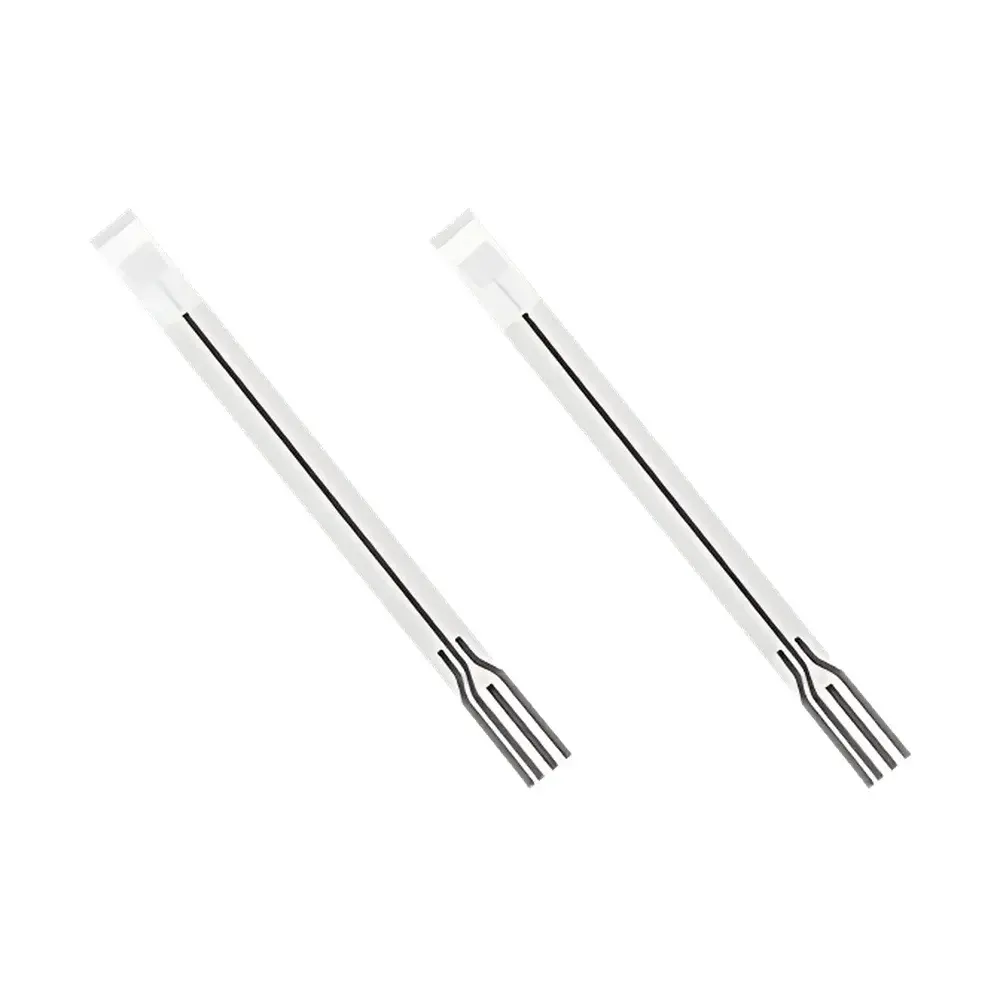
The Cubic NOx Sensor Chip is a high-reliability, high-temperature electrochemical sensing element engineered for real-time nitrogen oxides (NO and NO₂) detection in diesel exhaust streams. Built on a multilayer high-temperature co-fired ceramic (HTCC) substrate, the chip integrates a precision micro-heater and dual-electrode electrochemical cell architecture. Its operating principle relies on potentiometric and limiting-current electrochemical transduction: NOx species undergo catalytic decomposition and ion migration across a stabilized zirconia (YSZ) electrolyte, generating a current proportional to gas concentration. This enables linear, repeatable quantification across the full 0–3076 ppm dynamic range—critical for closed-loop selective catalytic reduction (SCR) control and regulatory compliance reporting in heavy-duty vehicles.
Key Features
- HTCC-based robust architecture: Multilayer ceramic construction ensures mechanical integrity and thermal shock resistance up to 1000 °C exhaust gas exposure.
- Low-power integrated heater: Optimized heater design reduces thermal inertia and power draw while enabling rapid cold-start response (< 20 s to operational temperature).
- Dual protective cap assembly: Mechanically decoupled outer and inner shielding tubes absorb vibration energy and resist physical impact, meeting SAE J2340 vibration endurance specifications.
- Enhanced poisoning resistance: Electrode formulation and diffusion barrier layers mitigate deactivation from sulfur compounds, phosphorus, and oil-derived ash—extending functional life beyond 200,000 km in field deployment.
- Thermal decoupling capability: Stable output across wide exhaust temperature gradients (150–750 °C), reducing dependence on upstream thermal management systems.
- Compact footprint: Chip-level form factor (≤12 mm × 12 mm active area) enables integration into space-constrained sensor housings without compromising signal fidelity.
Sample Compatibility & Compliance
This sensor chip is designed exclusively for integration into OEM-grade NOx sensors used in diesel-powered commercial vehicles—including Class 6–8 trucks, buses, and off-highway equipment. It interfaces directly with standard automotive-grade sensor control units (SCUs) via ISO 11898-2 CAN physical layer. The chip’s performance envelope satisfies key requirements of Euro VI, China VI, and U.S. EPA Tier 4 Final emission standards. While the chip itself is not a standalone certified device, its metrological behavior supports full-system validation per ISO 22735 (heavy-duty exhaust gas analyzers) and contributes to GLP-aligned calibration traceability when deployed in certified test benches.
Software & Data Management
The chip outputs calibrated NOx concentration values over CAN at fixed 50 ms intervals, compatible with standard OBD-II and J1939 diagnostic protocols. When embedded in a full sensor module, it supports diagnostic trouble code (DTC) generation per SAE J1939-71 (e.g., P2200, P2201) and provides heater status, sensor temperature, and raw current diagnostics. Firmware updates to associated SCUs may include adaptive compensation algorithms for aging drift and cross-sensitivity correction (e.g., against CO and H₂O interference). Full audit trails—including calibration timestamps, fault logs, and parameter versioning—are maintained in accordance with ISO/IEC 17025 and FDA 21 CFR Part 11 principles where deployed in certified emissions testing laboratories.
Applications
- Real-time NOx feedback control in SCR dosing systems
- On-board diagnostics (OBD) and continuous monitoring for regulatory reporting (PEMS)
- Engine development and durability testing on transient dynamometer cycles (e.g., WHSC, WHTC)
- Aftertreatment system validation under variable load, speed, and ambient conditions
- Integration into portable emissions measurement systems (PEMS) for roadside or in-use compliance verification
- Research-grade studies on catalyst aging, urea decomposition efficiency, and NO₂/NO ratio dynamics
FAQ
Is this chip suitable for gasoline engine applications?
No. The Cubic NOx Sensor Chip is specifically optimized for high-temperature, high-particulate diesel exhaust environments and lacks the low-concentration sensitivity required for stoichiometric gasoline exhaust monitoring.
Does the chip require external calibration gas during field operation?
No. It operates as a self-calibrating element within a closed-loop sensor module; periodic zero/span verification using certified gases is recommended only during maintenance or certification testing.
Can the chip be reflow soldered onto PCBs?
No. HTCC substrates are not compatible with standard reflow profiles. Mounting requires mechanical clamping or high-temperature epoxy bonding per manufacturer’s assembly guidelines.
What is the typical shelf life before integration?
When stored sealed in dry nitrogen at room temperature, the chip retains specification compliance for up to 24 months from date of manufacture.
Is the CAN interface electrically isolated?
Isolation is implemented at the sensor module level—not the chip itself. System designers must incorporate galvanic isolation (e.g., ISO 11898-5 compliant transceivers) in the host electronics.