Magtech MT-NMR-Series Benchtop Nuclear Magnetic Resonance Teaching Instrument
| Brand | Magtech |
|---|---|
| Origin | Beijing, China |
| Manufacturer Type | Direct Manufacturer |
| Country of Origin | China |
| Model | MT-NMR-Series |
| Pricing | Available Upon Request |
Overview
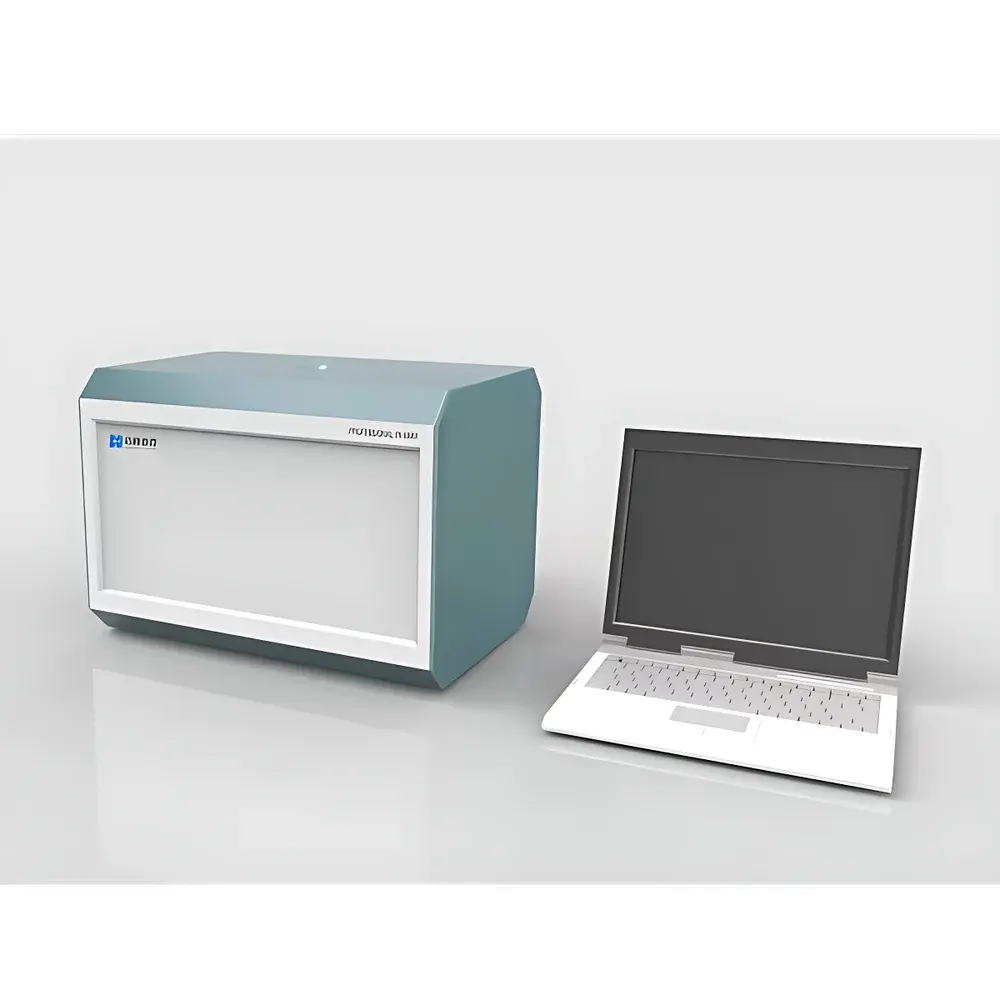
The Magtech MT-NMR-Series Benchtop Nuclear Magnetic Resonance Teaching Instrument is a compact, low-field NMR system engineered specifically for undergraduate and graduate-level physics, engineering, and biomedical education. Operating at a fixed Larmor frequency (typically 10–60 MHz, depending on permanent magnet configuration), it utilizes pulsed Fourier-transform NMR principles to demonstrate core concepts including spin dynamics, resonance absorption, T₁ and T₂ relaxation, free induction decay (FID), and basic pulse sequence execution (e.g., spin-echo, inversion-recovery). Unlike high-field superconducting spectrometers, this instrument employs a stable, maintenance-free permanent magnet and integrated RF transceiver electronics—enabling hands-on experimentation without cryogens, high-power infrastructure, or dedicated shielding rooms. It serves as a pedagogical bridge between theoretical quantum mechanics and real-world magnetic resonance signal acquisition, supporting curriculum-aligned lab modules in modern physics, electromagnetic theory, signal processing, and medical imaging fundamentals.
Key Features
- Compact benchtop design with integrated magnet, probe, RF electronics, and control interface—requires only standard 110–240 V AC power and ambient laboratory conditions.
- Adjustable static magnetic field strength (user-selectable via calibrated shimming) enabling direct correlation between field homogeneity and spectral resolution.
- Dedicated educational software suite with real-time oscilloscope-style FID visualization, FFT spectrum display, and interactive parameter tuning (pulse width, delay, number of scans, receiver gain).
- Modular sample holder accommodating standard 5 mm OD NMR tubes (glass or plastic), with optional inserts for solid/semi-solid samples (e.g., polymers, gels, tissue phantoms).
- Open architecture supporting custom pulse sequence scripting (via Python API) for advanced student projects and faculty-led research extensions.
- Comprehensive teaching documentation: lab manuals, instructor guides, simulation-based pre-lab exercises, and assessment rubrics aligned with ABET and IUPAP learning outcomes.
Sample Compatibility & Compliance
The MT-NMR-Series accommodates liquid, gel, and low-mobility solid-state samples—including water-based phantoms, polymer solutions, vegetable oils, and doped agarose gels—enabling comparative studies of relaxation behavior across material classes. All hardware and firmware comply with IEC 61000-6-3 (EMC emission limits) and IEC 61000-6-2 (immunity requirements) for educational environments. The system meets ISO/IEC 17025 general requirements for competence of testing and calibration laboratories when used within validated educational protocols. While not intended for clinical diagnostics, its pulse sequence fidelity and signal reproducibility support GLP-aligned validation workflows for teaching quality assurance principles in biomedical instrumentation labs.
Software & Data Management
The Magtech NMR LabSuite software provides a role-based interface: “Student Mode” restricts access to core acquisition parameters to prevent misconfiguration, while “Instructor Mode” unlocks advanced controls including phase cycling, gradient calibration, and raw data export (ASCII, CSV, and vendor-neutral .npy formats). All acquisitions include embedded metadata (timestamp, operator ID, pulse sequence name, hardware settings), satisfying audit-trail requirements for academic integrity and accreditation reviews. Data files are timestamped and digitally signed to ensure provenance; optional integration with institutional LMS platforms (e.g., Canvas, Moodle) enables automated submission and grading. Software updates follow a documented release cycle compliant with IEEE Std 1220 for systems engineering processes.
Applications
- Teaching fundamental NMR phenomena: Larmor precession, resonance condition, RF excitation, and vector model interpretation.
- Quantitative relaxation studies: measuring T₁ via inversion-recovery and T₂ via Carr–Purcell–Meiboom–Gill (CPMG) sequences.
- Signal processing labs: digital filtering, zero-filling, apodization, phase correction, and peak integration using real experimental data.
- Interdisciplinary projects: correlating NMR relaxation times with viscosity, molecular weight, or crosslink density in polymer chemistry labs.
- Medical physics training: simulating MRI contrast mechanisms using paramagnetic doping, modeling k-space traversal, and exploring slice selection gradients.
- Electronics coursework: characterizing RF coil Q-factor, impedance matching, and transient response of analog front-end circuits.
FAQ
Is the MT-NMR-Series suitable for quantitative chemical analysis?
No—it is optimized for pedagogical demonstration and physical parameter measurement (relaxation times, resonance frequency shifts), not high-resolution chemical shift discrimination or multi-nucleus spectroscopy.
Can students perform experiments independently after minimal training?
Yes—the system includes guided workflow prompts, context-sensitive help, and error-recovery routines; most students achieve autonomous operation within two supervised lab sessions.
Does the instrument require radiofrequency shielding or special facility modifications?
No—its low-field design and built-in RF containment meet FCC Part 15 Class B limits; installation requires only a stable benchtop and standard electrical outlet.
What safety certifications does the unit hold?
It carries CE marking per Directive 2014/30/EU (EMC) and 2014/35/EU (LVD), plus RoHS 2011/65/EU compliance for restricted substances.
Is source code for the acquisition software available for academic modification?
Yes—upon institutional license agreement, Magtech provides documented C++ SDK and Python bindings for curriculum customization and research extension.