
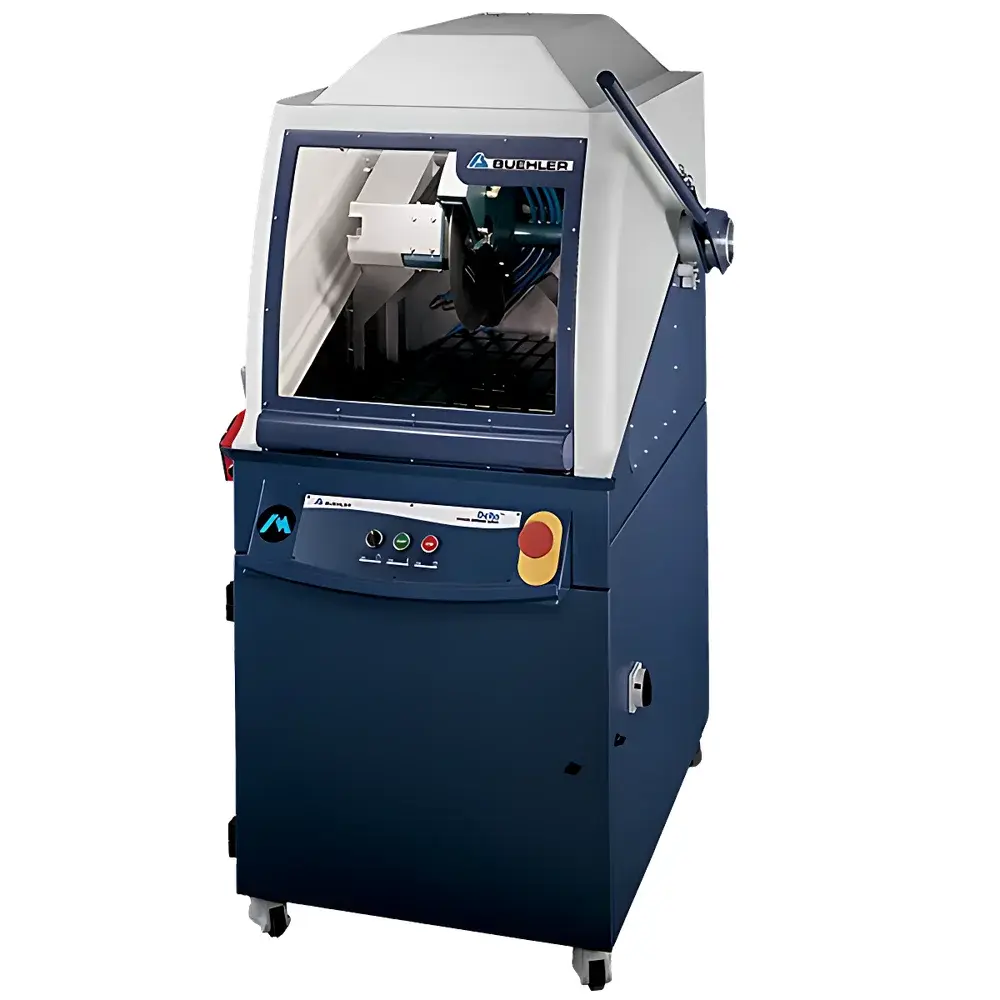
Delta™ Manual Action Cutter by BUEHLER
| Brand | BUEHLER |
|---|---|
| Origin | USA |
| Model | Delta™ Manual Action Cutter |
| Motor Power | 10 HP (7.5 kW) |
| Cutting Wheel Diameter | 14" (355 mm) |
| Max Cutting Capacity | 5" (127 mm) |
| Handle Travel | 42" (106 cm) |
| Certification | CE |
| Construction | Stainless Steel Base, Fiberglass Enclosure |
| Cooling | Recirculating Coolant System |
| Safety | Interlocked Guard with Motor-Activated Lock, Overcurrent Protection |
| Lighting | Fluorescent Task Light |
Overview
The Delta™ Manual Action Cutter by BUEHLER is a floor-standing, manually operated precision cutting system engineered for high-reproducibility metallographic sample preparation. Designed around the principles of controlled abrasive sectioning under consistent force and thermal management, it employs a direct-drive, high-torque induction motor to deliver stable rotational speed and minimal speed drop under load—critical for maintaining cut integrity across heterogeneous or hardened materials. Unlike automated or semi-automated systems, the Delta’s manual feed mechanism provides full operator control over feed rate and downforce, enabling adaptive cutting strategies for brittle ceramics, multi-layer composites, or heat-sensitive alloys where programmable dwell or variable-speed profiles may introduce artifacts. Its robust mechanical architecture—including a vibration-damped stainless steel base and rigid cast-iron column—ensures dimensional stability during prolonged operation, minimizing runout and improving edge squareness in final sections.
Key Features
- 10 HP (7.5 kW) heavy-duty motor delivering sustained torque at rated speed (3,450 rpm nominal), optimized for continuous-duty cutting of ferrous and non-ferrous alloys, carbides, and sintered materials
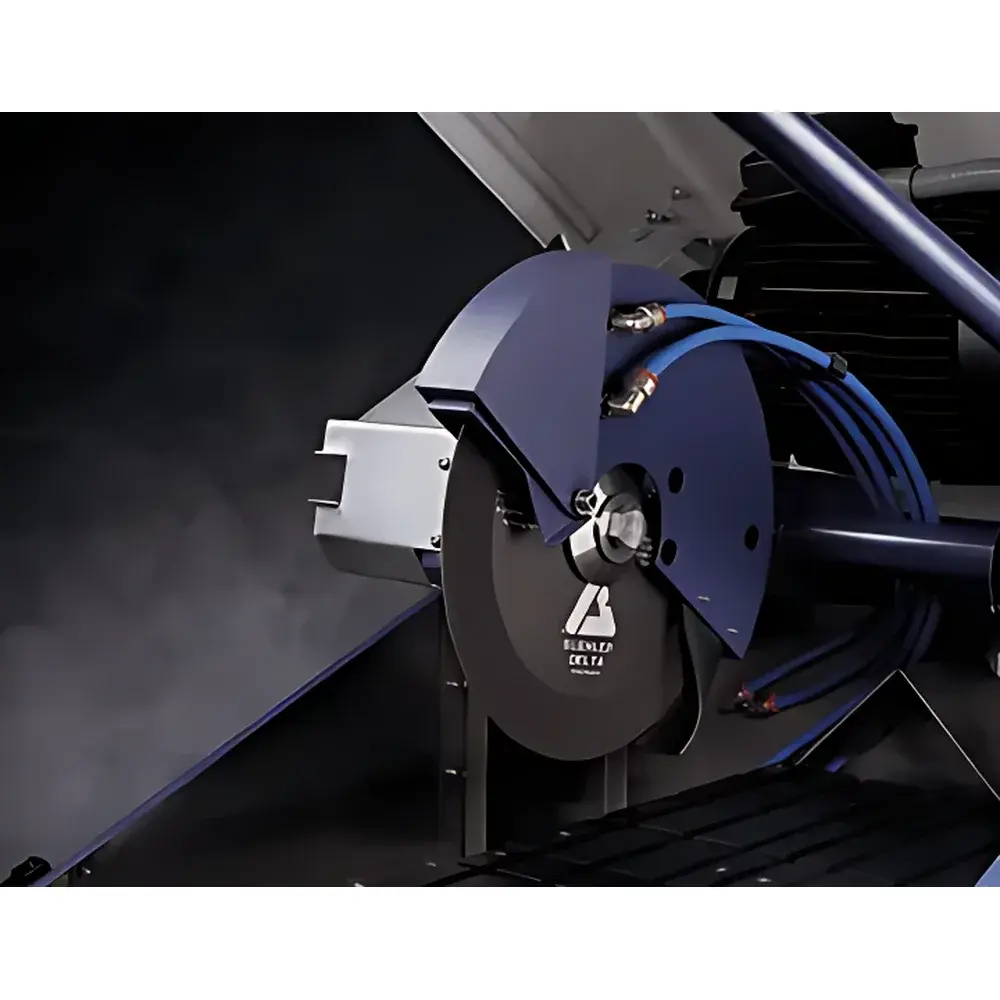
- 355 mm (14″) reinforced abrasive wheel compatible with standard resin-bonded silicon carbide or diamond-impregnated wheels; arbor design conforms to ANSI B74.10 and EN 13236 standards
- Full 106 cm (42″) vertical travel range of the articulated cutting arm, permitting unobstructed access to large or irregularly shaped specimens up to 127 mm (5″) in height
- Integrated recirculating coolant system with adjustable flow rate (0–8 L/min), temperature-stabilized reservoir, and splash-resistant nozzle positioning to suppress localized heating and minimize thermal distortion or phase transformation in sensitive microstructures
- CE-certified safety architecture: interlocked fiberglass enclosure with electromagnetic latch that physically prevents motor start-up unless fully closed; redundant thermal overload protection and magnetic circuit breaker compliant with IEC 60947-2
- Task-optimized fluorescent lighting embedded within the enclosure roof, providing uniform 500–600 lux illumination across the cutting zone without UV emission or shadow interference
Sample Compatibility & Compliance
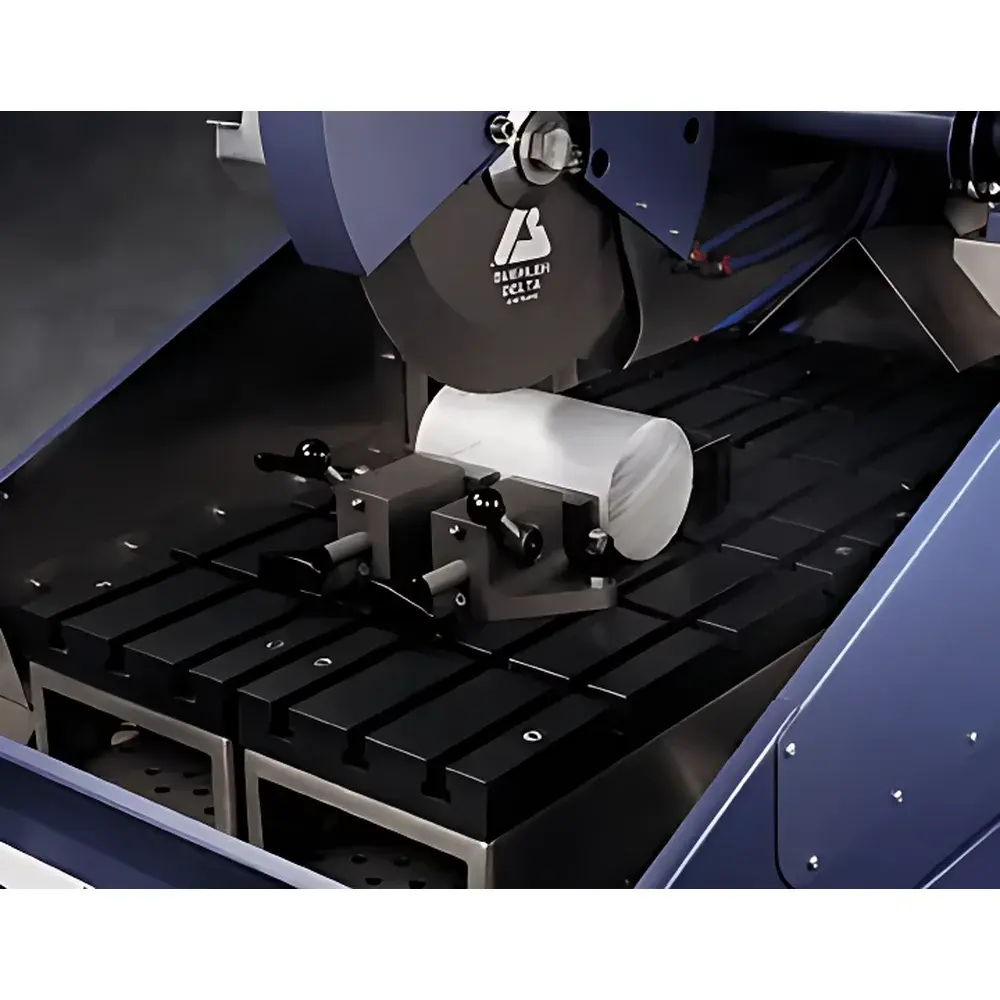
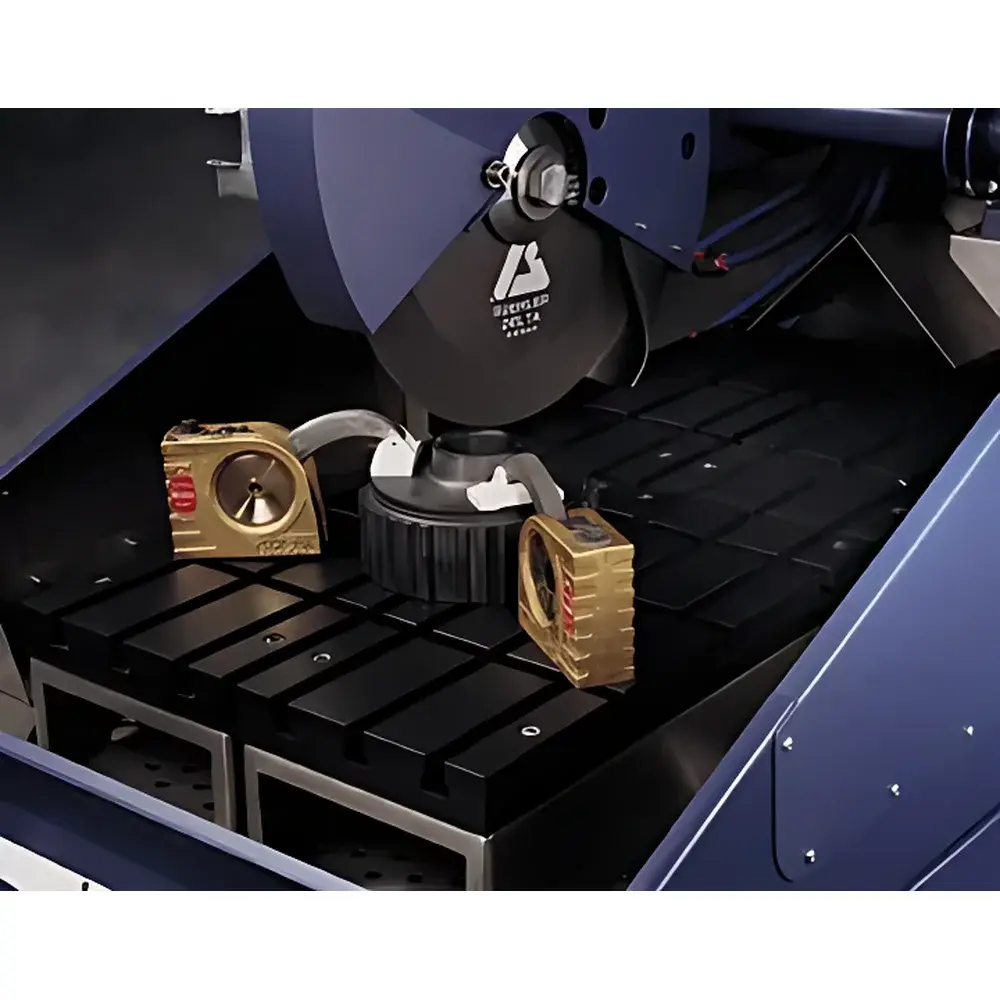
The Delta™ accommodates a broad spectrum of specimen geometries—from cylindrical rods and rectangular billets to irregular castings and additively manufactured parts—without requiring custom fixturing for routine cuts. It supports standard ASTM E3, ISO 14487, and EN 10360-2 specimen dimensioning protocols for metallographic analysis. The coolant system is compatible with water-soluble, oil-based, and synthetic coolants meeting OEM specifications for corrosion inhibition and bacterial resistance (e.g., ISO 6743-12 Class C). All electrical components comply with UL 61010-1 and IEC 61000-6-2/6-4 for laboratory EMC and safety. The unit is designed for GLP-aligned environments: documentation packages include factory calibration records, CE Declaration of Conformity, and traceable material certifications for structural components.
Software & Data Management
As a manually operated system, the Delta™ does not incorporate embedded firmware or digital control interfaces. However, its mechanical repeatability and standardized operating procedures support integration into validated laboratory workflows governed by FDA 21 CFR Part 11 and ISO/IEC 17025 requirements. Operators document cutting parameters—including wheel type, coolant composition, feed duration, and visual inspection outcomes—in paper-based or LIMS-linked logbooks. BUEHLER provides SOP templates aligned with ASTM E3-22 and ISO 14487 Annex A for audit-ready recordkeeping, including fields for operator ID, date/time stamp, specimen ID, and post-cut evaluation criteria (e.g., kerf width, edge chipping index, subsurface deformation depth).
Applications
- Routine sectioning of cast iron, tool steels, aluminum die-castings, and titanium alloys prior to mounting and polishing
- Preparation of cross-sections from welded joints, brazed assemblies, and clad materials for interface characterization
- Controlled decapsulation of electronic packages and PCB substrates for failure analysis
- Sectioning of geological core samples and ceramic matrix composites where thermal shock resistance is critical
- High-volume production lab environments requiring >200 cuts/day with minimal maintenance downtime
FAQ
What types of abrasive wheels are recommended for the Delta™ cutter?
BUEHLER recommends resin-bonded silicon carbide wheels (e.g., BUEHLER MetaCut® 1000 series) for general ferrous metals and diamond-impregnated wheels (e.g., BUEHLER DiaMet® 2000) for cemented carbides, ceramics, and graphite. Wheel selection must comply with maximum RPM rating and ANSI B74.10 dimensional tolerances.
Is the coolant system compatible with biocidal additives?
Yes—the polyethylene reservoir and PVC fluid paths are chemically resistant to common bacteriostatic agents used in synthetic coolants per ISO 6743-12 Class C specifications.
Can the Delta™ be integrated into a laboratory quality management system?
While it lacks digital connectivity, its mechanical consistency, CE certification, and documented SOPs enable full traceability and compliance with ISO/IEC 17025 clause 6.4.1 (equipment verification) and FDA 21 CFR Part 11 (if paired with electronic logbook solutions).
What maintenance intervals are specified for the motor and coolant pump?
Motor bearings require relubrication every 5,000 operating hours; the centrifugal coolant pump impeller and seals should be inspected annually or after 1,000 operating hours—whichever occurs first—per BUEHLER Maintenance Bulletin MB-Delta-2023.



