
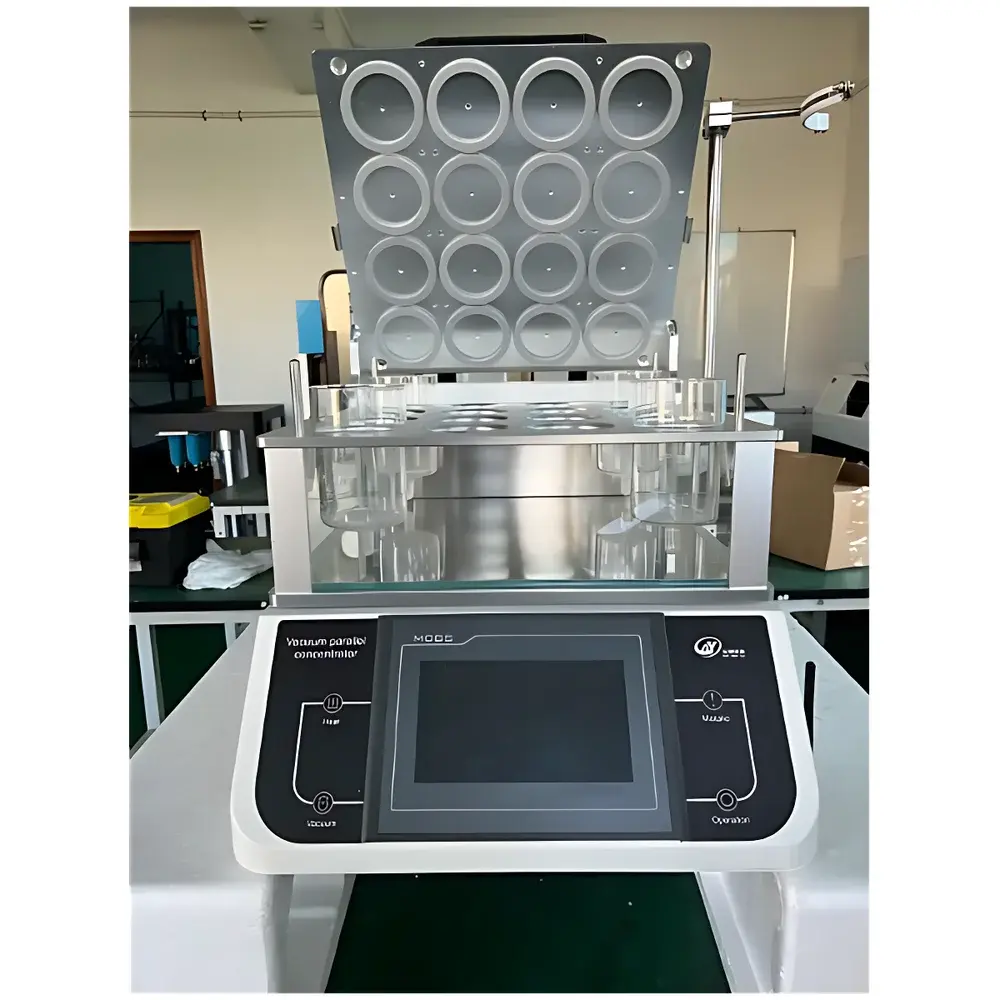
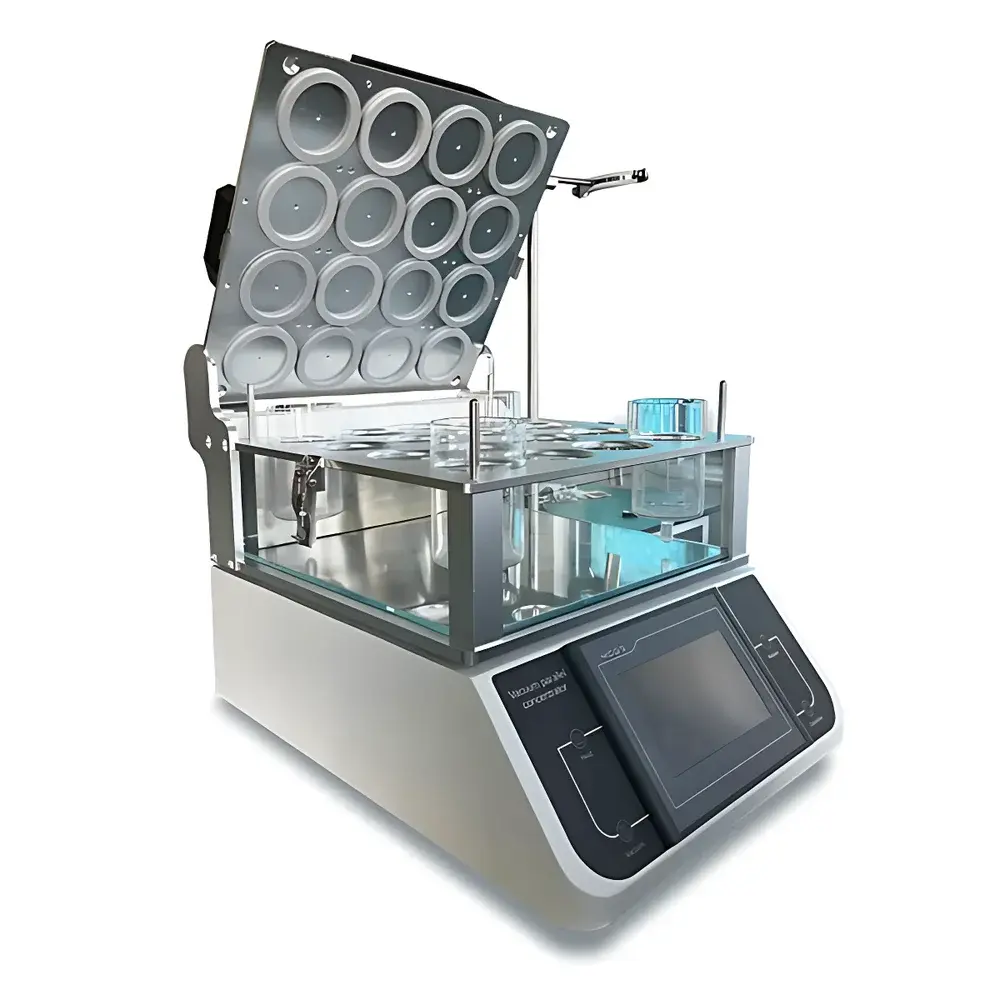
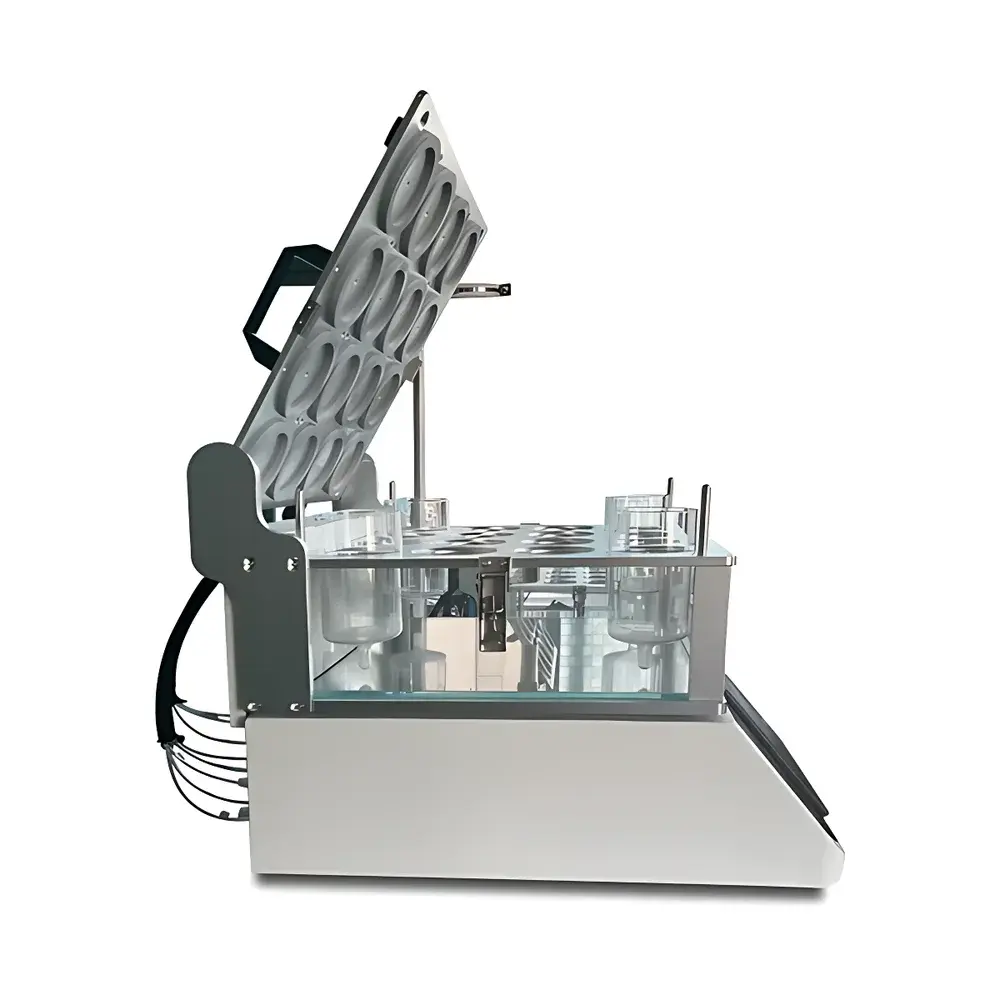
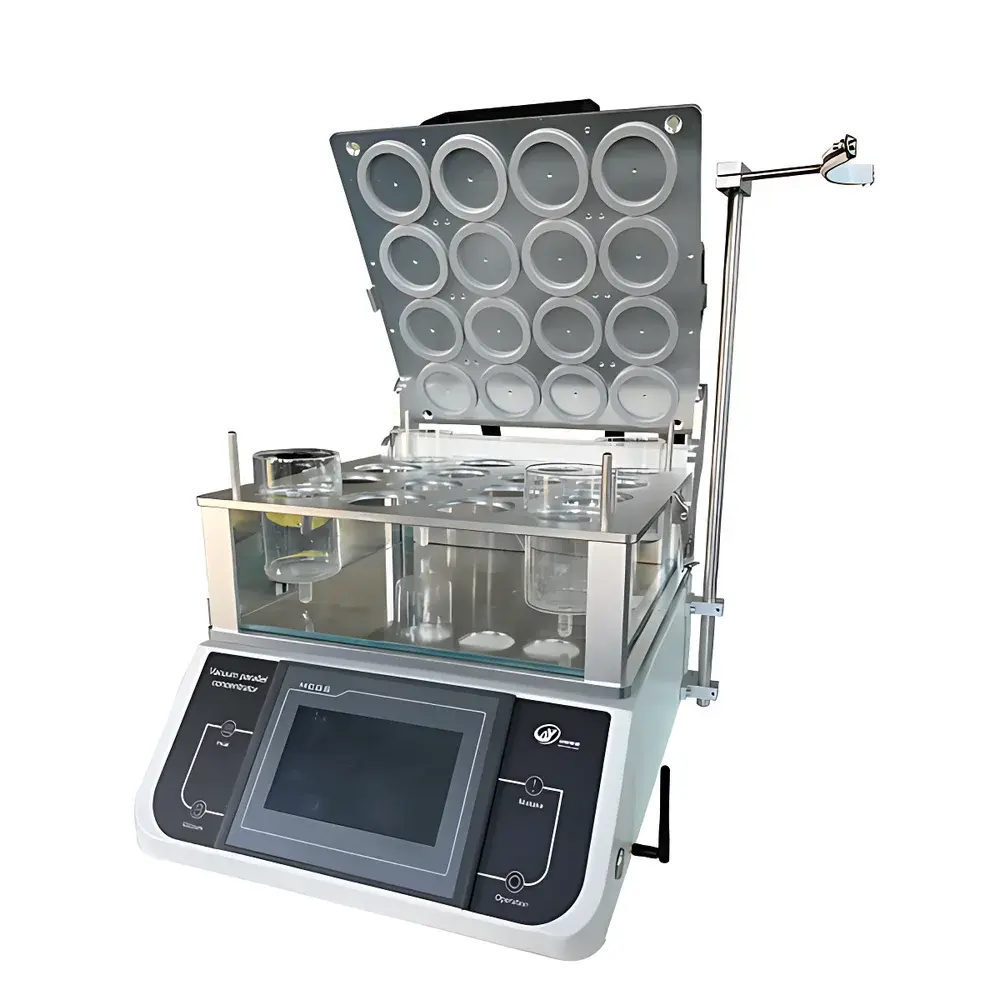
Anyanyiqi CHNS-16K Automatic Vacuum Parallel Concentrator
| Brand | Anyanyiqi |
|---|---|
| Origin | Zhejiang, China |
| Model | CHNS-16K |
| Instrument Type | Vacuum Parallel Concentrator |
| Temperature Range | Ambient to 100 °C |
| Temperature Control Accuracy | ±1 °C |
| Sample Capacity per Vial | 150 mL or 200 mL |
| Throughput | 1–16 samples simultaneously |
| Timer Range | 0–999 min |
| Heating Method | Water Bath |
Overview
The Anyanyiqi CHNS-16K Automatic Vacuum Parallel Concentrator is an engineered solution for high-throughput solvent removal and sample volume reduction in analytical laboratories. It operates on the principle of simultaneous vacuum-assisted evaporation under controlled thermal conditions—leveraging reduced ambient pressure to lower the boiling point of solvents while applying uniform water-bath heating across all sample positions. This enables rapid, reproducible concentration or complete drying of multiple samples without thermal degradation, particularly advantageous for heat-sensitive analytes in food safety, environmental monitoring, pharmaceutical QC, agrochemical residue analysis, and traditional Chinese medicine (TCM) research. Unlike nitrogen blow-down systems, the CHNS-16K minimizes inert gas consumption and eliminates risk of sample splashing or oxidation by maintaining sealed, individual vapor pathways for each vial.
Key Features
- Independent vacuum-sealed channels per sample position—preventing cross-contamination, backflow, and bumping during volatile solvent evaporation.
- Dual-stage condensation system with integrated water-cooled condenser towers and recirculating chiller compatibility, achieving >95% solvent recovery efficiency for common organic solvents (e.g., acetonitrile, methanol, ethyl acetate, hexane).
- Precise water-bath heating architecture ensures thermal homogeneity across all 16 positions; temperature deviation remains within ±0.8 °C at setpoint (validated per ISO/IEC 17025 calibration protocols).
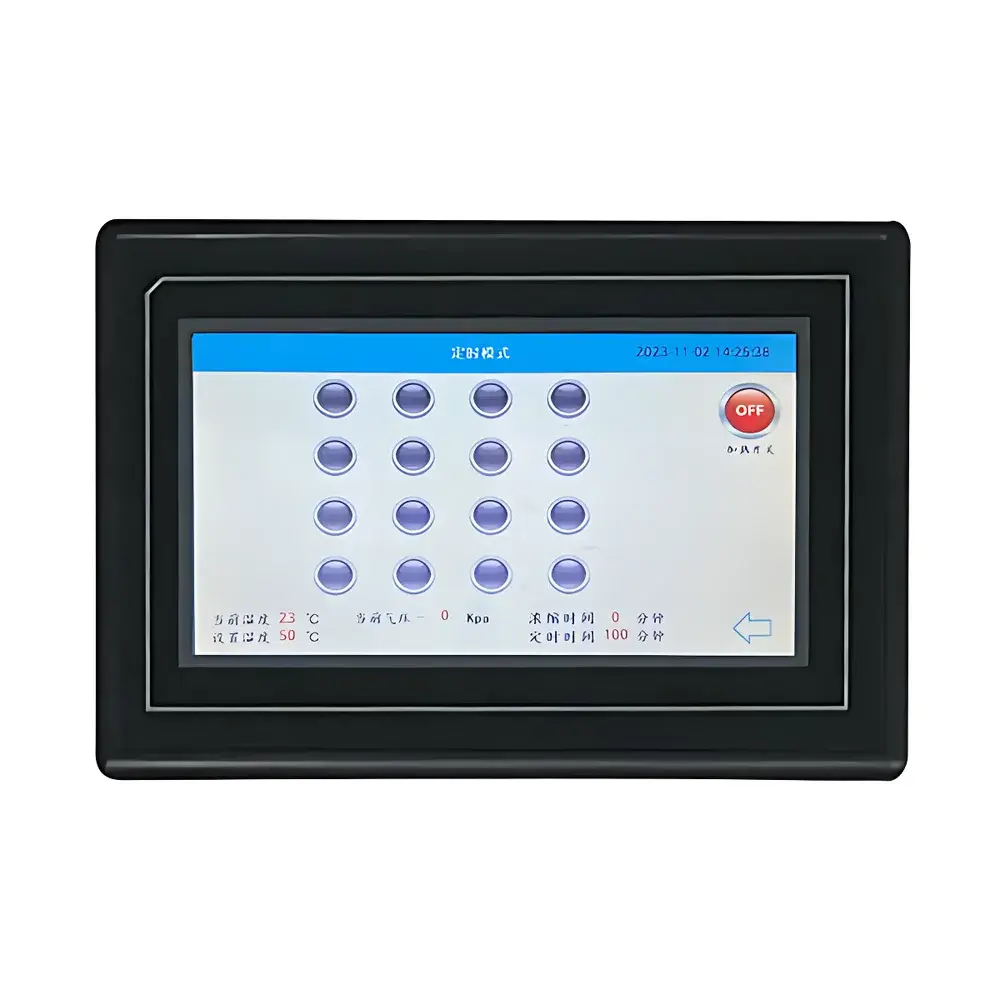
- 7-inch capacitive touchscreen interface with intuitive workflow navigation, programmable multi-step methods (vacuum ramping, temperature profiling, timed hold), and real-time status monitoring.
- Modular sample holder design supports interchangeable racks for 150 mL or 200 mL round-bottom or flat-bottom vials—no tools required for reconfiguration.
- All wetted gas-path components—including vacuum lines, sealing gaskets, and condenser internals—are constructed from PTFE, borosilicate glass, and FDA-compliant silicone elastomers to eliminate leachable contaminants.
- Built-in vacuum pump interface and optional external vacuum controller support compliance with ASTM D3279 and USP <467> residual solvent testing requirements.
Sample Compatibility & Compliance
The CHNS-16K accommodates a broad range of sample matrices including aqueous extracts, lipid-rich plant homogenates, pesticide-spiked water, mycotoxin standards in grain digests, and biofluid supernatants. Its sealed parallel architecture meets GLP documentation requirements for traceability: each run logs timestamp, vacuum pressure (mbar), bath temperature (°C), elapsed time, and user ID when integrated with LIMS-compatible data export (CSV/Excel). The system conforms to IEC 61010-1 safety standards for laboratory equipment and supports audit-ready operation under FDA 21 CFR Part 11 when paired with validated electronic signature software.
Software & Data Management
The embedded firmware enables method storage for up to 99 user-defined protocols, each supporting sequential vacuum application, gradient heating profiles, and endpoint detection via timer-based termination. Raw operational logs are exportable via USB port in timestamped .csv format. Optional PC-based software (sold separately) provides remote monitoring, trend analysis of evaporation kinetics, and automated report generation aligned with ISO/IEC 17025 clause 7.7 record-keeping obligations. All data fields comply with ALCOA+ principles (Attributable, Legible, Contemporaneous, Original, Accurate, Complete, Consistent, Enduring, Available).
Applications
- Pre-concentration of environmental water samples prior to GC-MS analysis of PAHs and PCBs (EPA Method 8270D).
- Routine cleanup of QuEChERS extracts from fruits and vegetables before LC-MS/MS multiresidue screening.
- Final solvent removal in reference standard preparation for certified reference material (CRM) production.
- High-volume sample turnaround in contract testing labs performing heavy metal speciation (e.g., As, Hg, Se species) following EPA Method 1632.
- Stabilization of thermolabile phytochemicals (e.g., flavonoids, terpenoids) during herbal extract processing under oxygen-free vacuum conditions.
FAQ
What vacuum level is recommended for optimal solvent removal without foaming?
For most polar solvents (e.g., methanol, acetonitrile), a chamber pressure of 50–150 mbar is typical; non-polar solvents (e.g., hexane, toluene) perform best at 200–300 mbar. The instrument supports manual or auto-ramped vacuum control.
Can the CHNS-16K be integrated into an automated sample preparation line?
Yes—via dry-contact relay outputs and RS-232/USB TTL serial interface, it synchronizes with robotic liquid handlers and SPE workstations using Modbus RTU or custom ASCII command sets.
Is validation documentation available for IQ/OQ/PQ protocols?
Factory-issued IQ/OQ templates compliant with ASTM E2500 and EU Annex 15 are provided; PQ execution requires lab-specific performance qualification against defined acceptance criteria (e.g., %RSD of final volume across 16 vials ≤3%).
What maintenance intervals are recommended for long-term reliability?
Condenser cleaning every 200 hours of operation; vacuum pump oil change every 500 hours; annual calibration verification of temperature sensor and pressure transducer using NIST-traceable references.
Does the system support solvent recycling for sustainability initiatives?
When used with a closed-loop chiller and dual condenser configuration, recovered solvents can be collected in designated traps for distillation reuse—reducing hazardous waste generation by up to 70% compared to single-pass nitrogen evaporation.



