
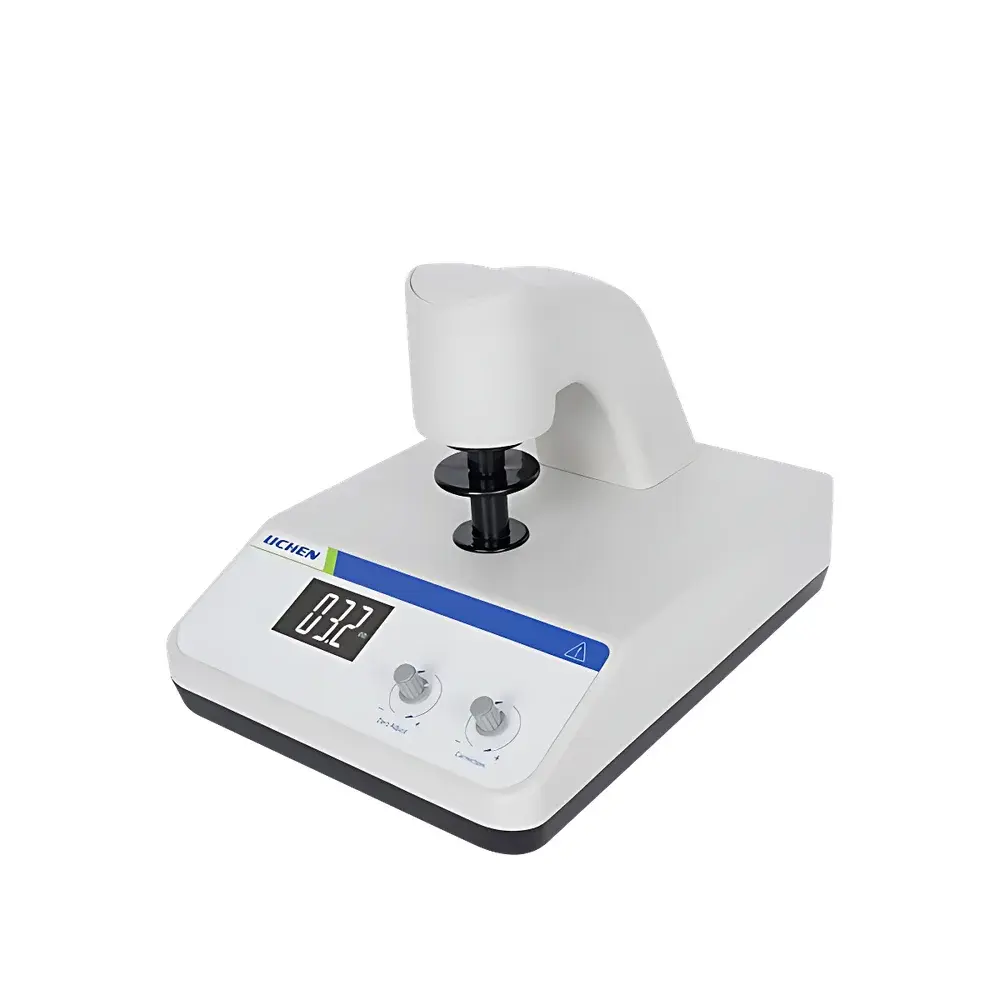
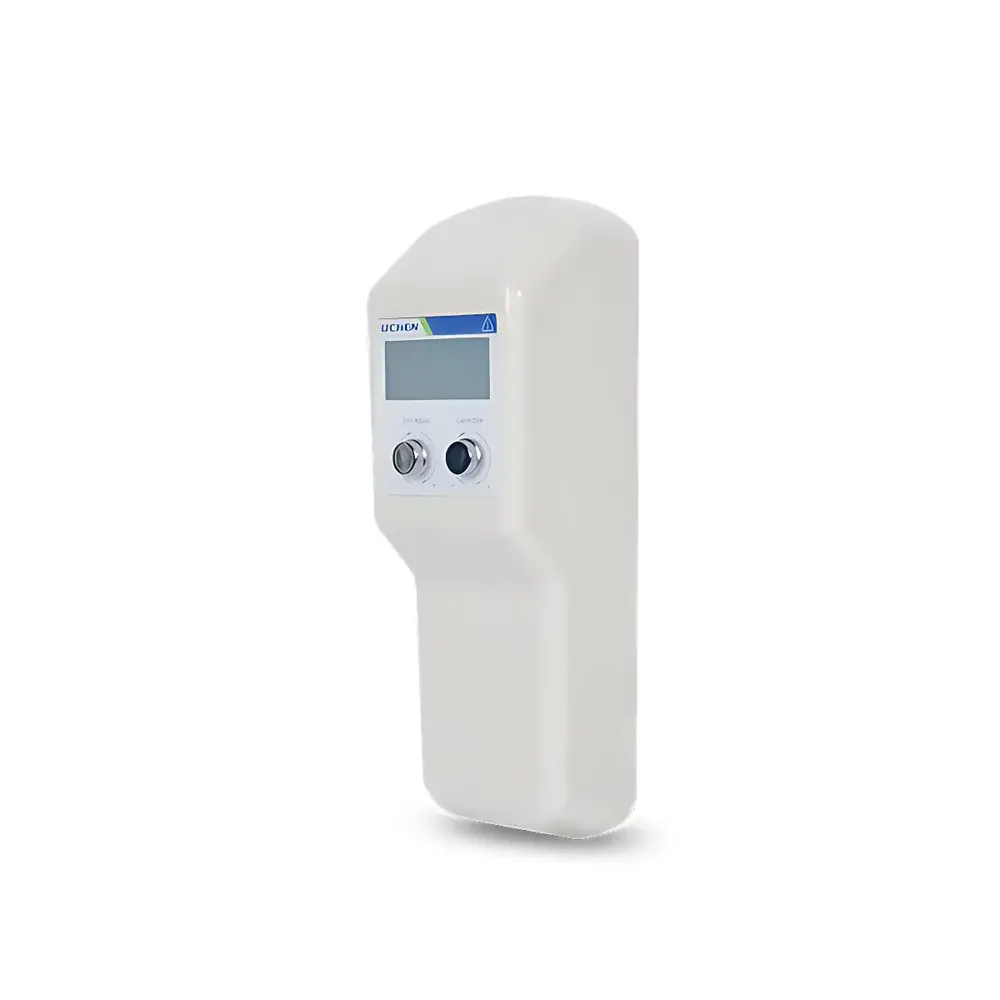
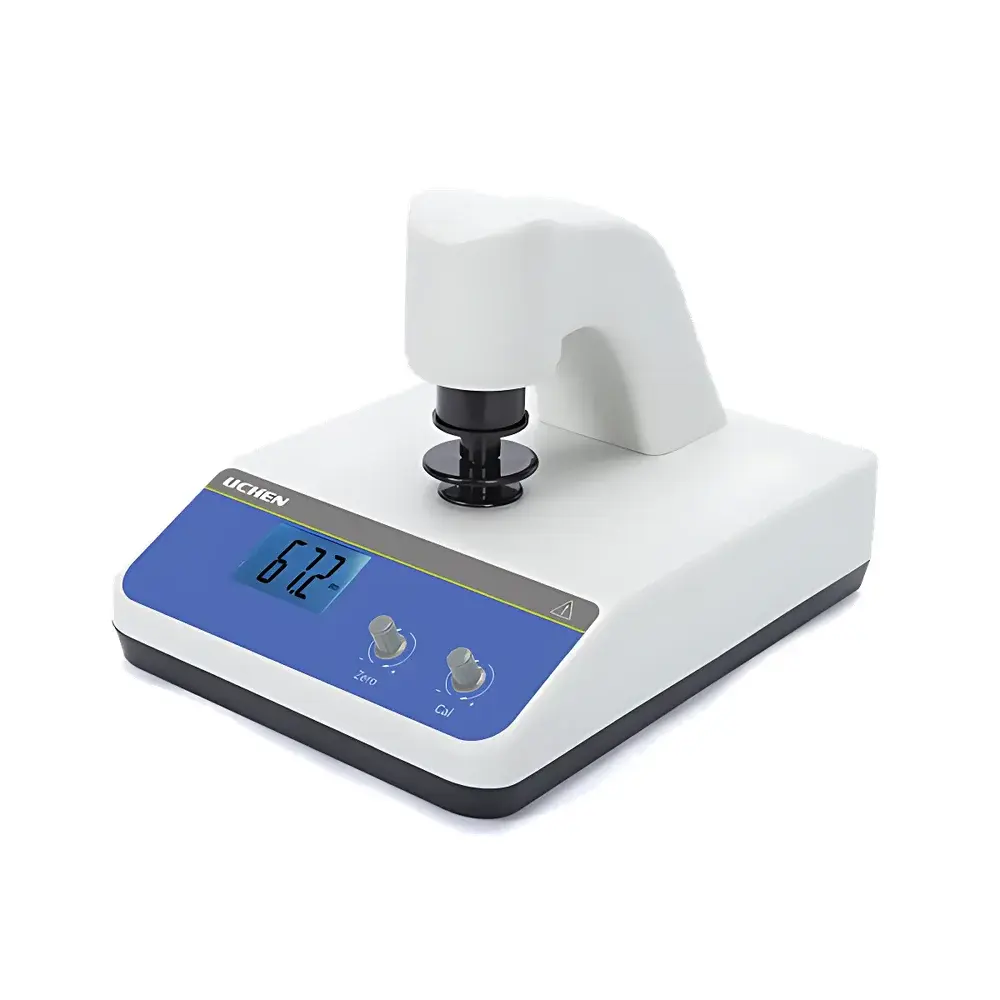
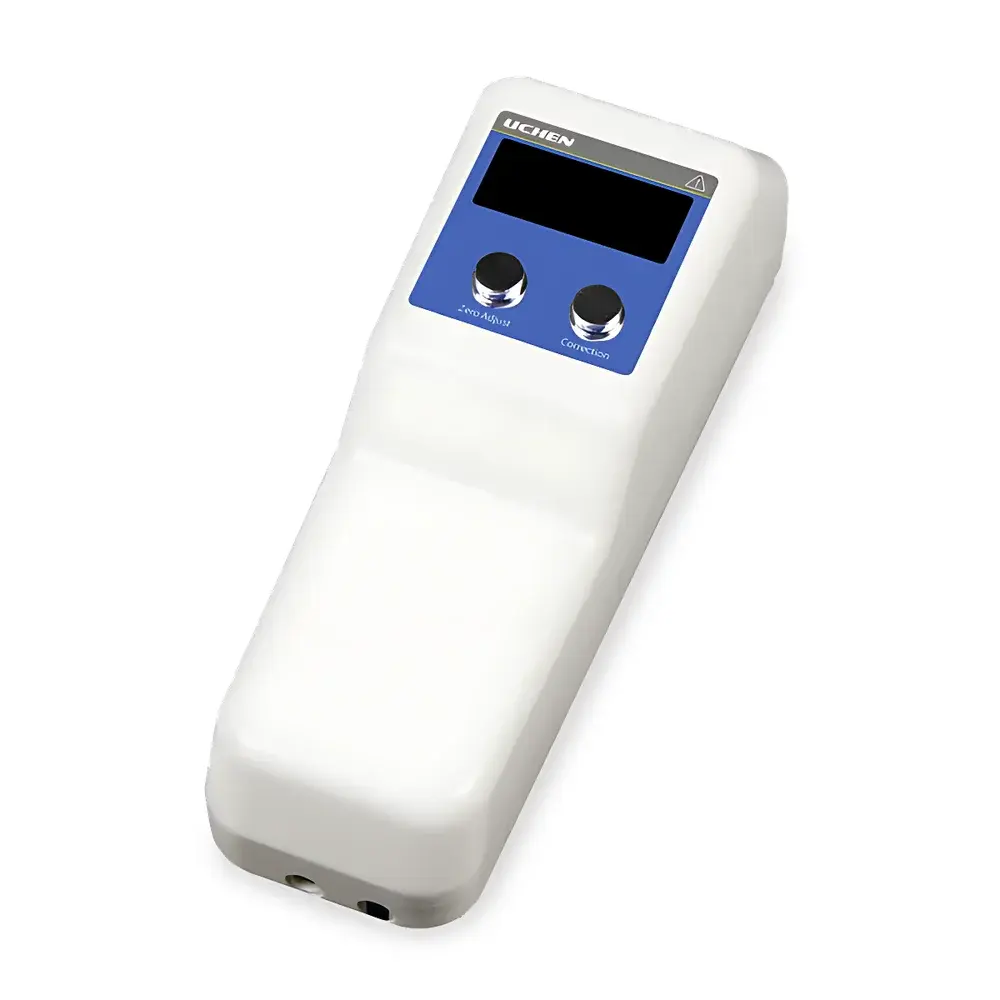
LICHEN WSB Series Digital Whiteness Meter
| Brand | LICHEN |
|---|---|
| Origin | Shanghai, China |
| Manufacturer Type | Direct Manufacturer |
| Region of Origin | Domestic (China) |
| Model | WSB Series |
| Price Range | USD 170 – 475 |
| Power Supply | WSB-1: 5×AA alkaline batteries (DC 1.5 V) or AC 220 V / 50 Hz |
| WSB-2 | AC 220 V / 50 Hz |
| Display | LCD |
| Whiteness Formula | Blue Light Whiteness WB = R₄₅₇ |
| Measurement Range | 0–199 |
| Aperture Diameter | WSB-1: Φ15 mm |
| WSB-2 | Φ30 mm |
| Zero Drift | ≤0.2 / 10 min |
| Indication Drift | ≤0.3 / 3 min |
| Repeatability Error | WSB-1: ≤0.2 |
| WSB-2 | ≤0.3 |
| Net Weight | WSB-1: 0.4 kg |
| WSB-2 | 2.1 kg |
| Dimensions | WSB-1: 70 × 220 × 75 mm |
| WSB-2 | 260 × 330 × 250 mm |
| Calibration Standard | Certified National White Reference Tile |
| Preheat Time | 30 seconds |
| Compliance | GB/T 2913, GB/T 5950, GB/T 8940.1, GB/T 12097, GB/T 13025.2 |
Overview
The LICHEN WSB Series Digital Whiteness Meter is a precision optical instrument engineered for quantitative assessment of whiteness in white and near-white materials—particularly paper, textiles, plastics, ceramics, pigments, and powdered chemicals. It operates on the principle of blue light reflectance photometry, measuring the diffuse reflectance of incident light at a wavelength centered at 457 nm (±5 nm), which corresponds to the peak sensitivity of the human eye’s photopic response under daylight conditions. This spectral alignment ensures that the reported whiteness value (WB = R457) correlates strongly with visual perception, satisfying metrological requirements for consistency across sensory and instrumental evaluation. The instrument employs a stable, narrow-band LED source, high-linearity silicon photodiode detection, and low-drift analog-to-digital signal processing architecture to deliver traceable, repeatable results aligned with national standard methodologies.
Key Features
- Optimized optical path design with calibrated 457 nm LED excitation and cosine-corrected detector geometry for compliance with CIE and ISO-defined measurement geometry (0°/d).
- Low-power LCD display with auto-backlight control and intuitive menu navigation—enabling extended field use without degradation in readability.
- Integrated temperature-compensated analog front-end and precision 16-bit A/D conversion ensure minimal thermal drift and long-term baseline stability.
- Factory-calibrated using NIM-traceable national white reference tiles (certified reflectance ≥98.5% at 457 nm), enabling direct transfer of calibration integrity to end-user operation.
- Rapid system stabilization: functional measurement capability achieved within 30 seconds of power-on—no warm-up delay required for routine QC checks.
- Dual configuration options: WSB-1 offers handheld portability (0.4 kg) with battery or AC operation; WSB-2 provides benchtop-grade stability (2.1 kg) with larger aperture (Φ30 mm) for heterogeneous or granular samples.
- Intelligent power management including low-battery warning, auto-shutdown after 5 minutes of inactivity, and overvoltage protection on AC input.
Sample Compatibility & Compliance
The WSB Series supports solid, sheet, and powdered specimens with flat, uniform surfaces. Its fixed-aperture design (Φ15 mm for WSB-1; Φ30 mm for WSB-2) minimizes edge effects and ensures representative sampling per ASTM E313 and ISO 2470-1 protocols. The instrument conforms to multiple Chinese national standards governing whiteness measurement—including GB/T 2913 (for rigid plastics), GB/T 5950 (for paper and board), GB/T 8940.1 (for pulp), GB/T 12097 (for starch), and GB/T 13025.2 (for industrial salt). While not certified to ISO/IEC 17025 as a standalone testing laboratory, its design enables integration into GLP-compliant quality systems when operated with documented calibration records, environmental controls (23 ±2 °C, RH 50 ±5%), and periodic verification against secondary standards.
Software & Data Management
The WSB Series operates as a stand-alone meter with no embedded firmware-based data logging or PC connectivity. All measurements are displayed in real time and retained only on-screen until overwritten. For regulated environments requiring audit trails (e.g., pharmaceutical excipient QC per USP <905> or food-grade additive release), users must implement external documentation procedures—such as manual entry into validated electronic lab notebooks (ELN) or integration via optional RS-232 interface modules (sold separately). Calibration history, operator ID, ambient condition logs, and sample identification should be maintained per FDA 21 CFR Part 11 principles where applicable. Firmware updates are not supported; metrological integrity is preserved through physical recalibration using certified reference tiles at intervals defined by internal SOPs (typically every 6–12 months or after impact exposure).
Applications
- Quality control of paper brightness and optical brightener efficacy in pulp & paper mills.
- In-process verification of titanium dioxide dispersion homogeneity in paint and coating formulations.
- Batch release testing of pharmaceutical excipients (e.g., microcrystalline cellulose, lactose) per pharmacopoeial visual equivalence criteria.
- Raw material acceptance for textile bleaching agents and synthetic detergents.
- Research-grade comparative analysis of aging-induced yellowing in polymer films and packaging substrates.
- Regulatory submission support for cosmetic pigment whiteness claims under GB/T 27578–2011.
FAQ
What does the whiteness value WB = R457 represent?
It denotes the percentage reflectance of a specimen measured at 457 nm, normalized against a perfect diffuser (e.g., barium sulfate or certified white tile), as defined in GB/T 2913 and ISO 2470-1.
Can the WSB Series measure yellowness or tint?
No—this instrument is dedicated to blue-light whiteness only. Yellowness index (YI) or CIE whiteness (WI) calculations require multi-wavelength spectral data not provided by this single-channel photometer.
Is the instrument suitable for curved or textured surfaces?
Only flat, matte, and optically homogeneous surfaces yield valid results. Specular components must be excluded; therefore, glossy or embossed samples require prior flattening or alternative instrumentation (e.g., integrating sphere spectrophotometers).
How often should the reference white tile be replaced?
NIM-certified tiles should be inspected quarterly for scratches, contamination, or discoloration. Replacement is recommended every 24 months or immediately following any visible degradation, per GB/T 9721 guidance.
Does the WSB-1 support AC power operation?
Yes—the WSB-1 accepts both 5×AA alkaline batteries (DC 7.5 V) and an optional AC adapter (input: AC 220 V / 50 Hz; output: DC 7.5 V / 500 mA), enabling continuous benchtop use without battery dependency.





