
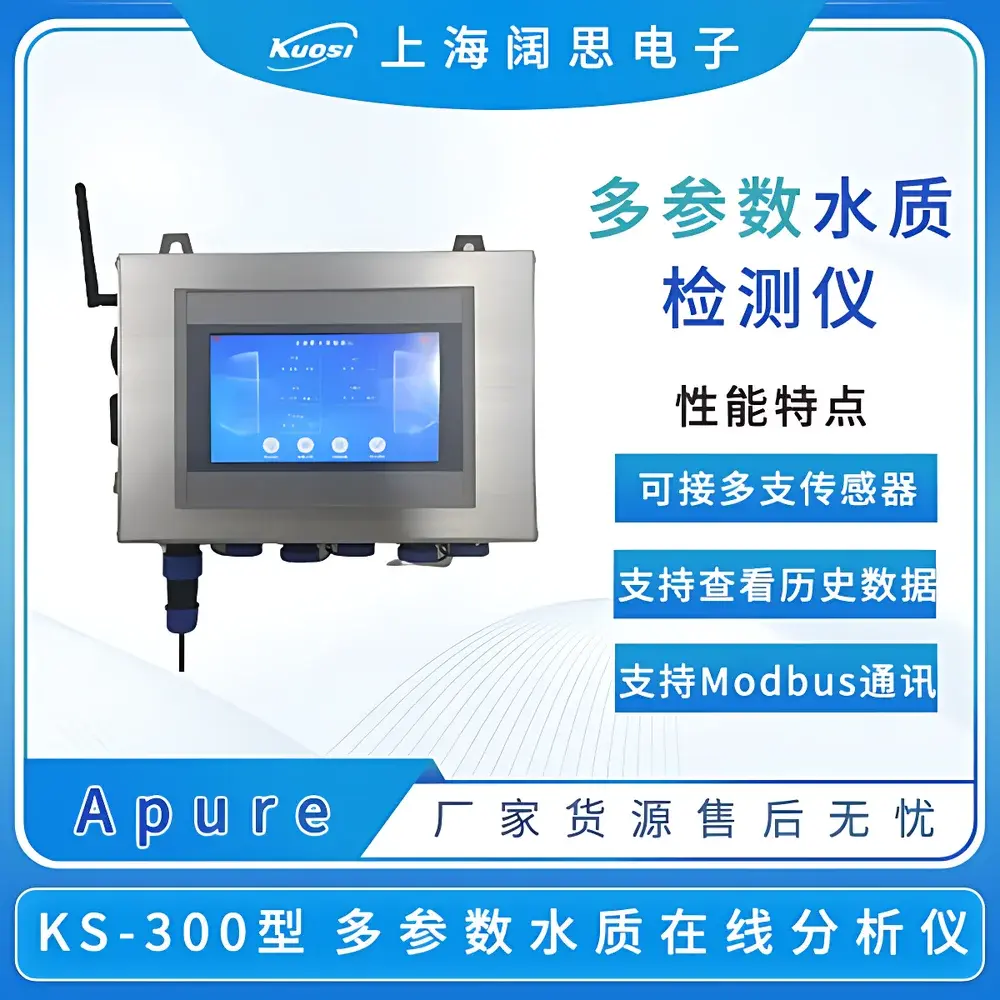
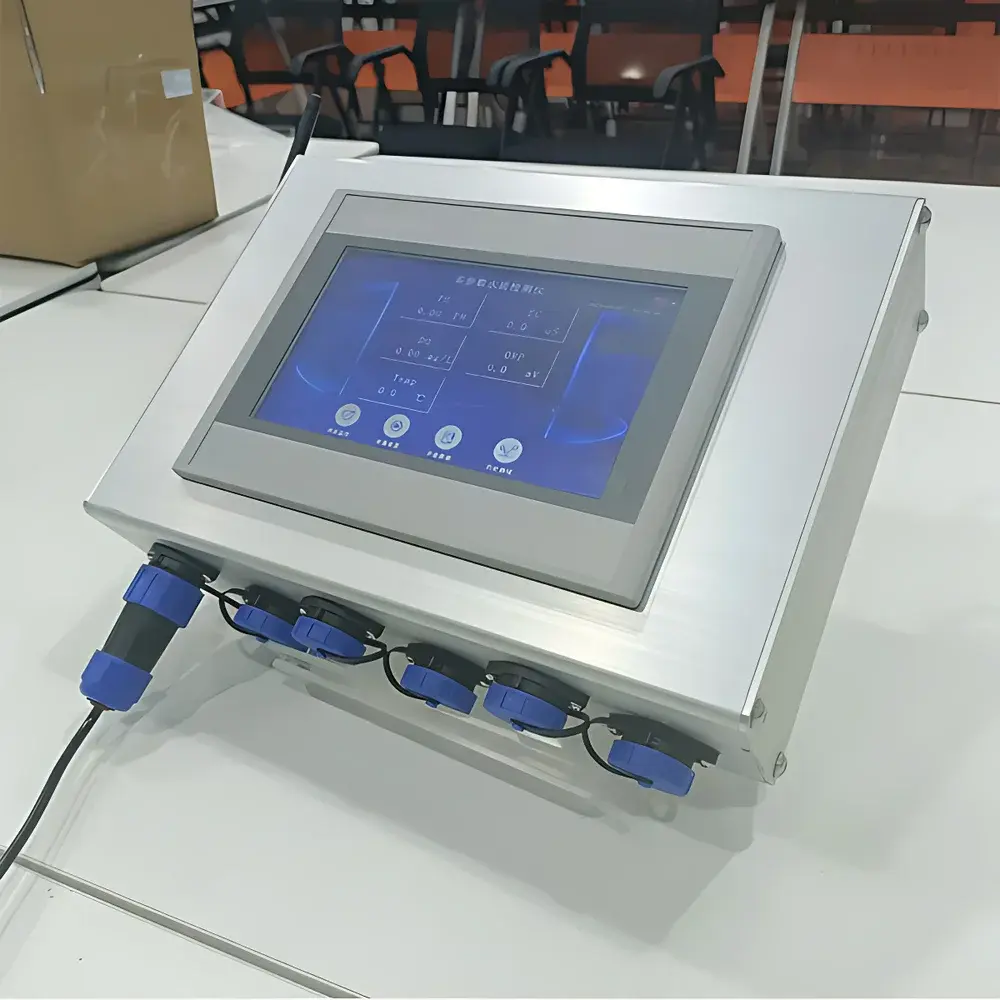
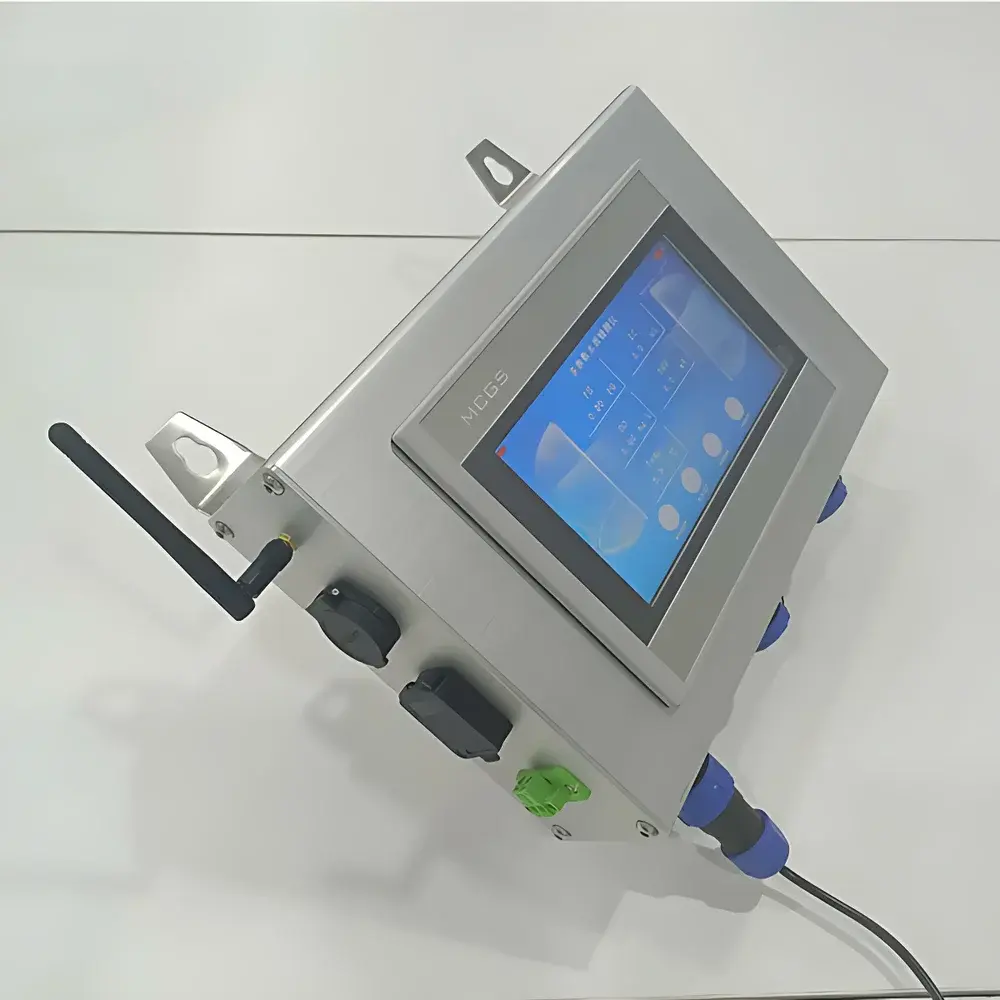
Apure KS-300 Multi-Parameter Online Water Quality Analyzer
| Brand | Apure |
|---|---|
| Origin | Shanghai, China |
| Manufacturer Type | Direct Manufacturer |
| Product Category | Domestic |
| Model | KS-300 |
| Instrument Type | Online Water Quality Analyzer |
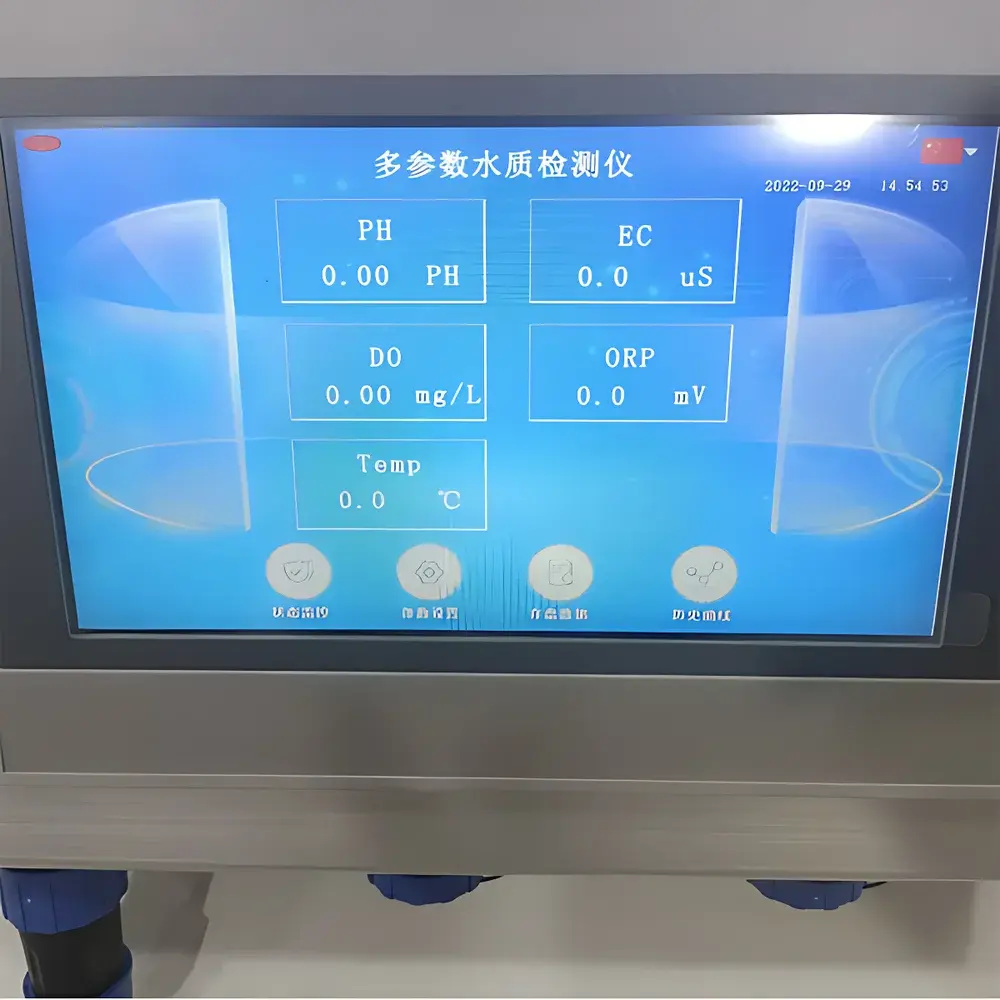
| Measured Parameters | pH, Dissolved Oxygen (DO), Conductivity, Temperature (derived from sensor fusion architecture) |
| Output Interface | 4–20 mA analog output, RS-485 Modbus RTU protocol |
| Power Supply | 12–24 VDC |
| IP Rating | IP67 enclosure |
| Operating Temperature Range | 0–50 °C |
| Sensor Mounting | Submersible or flow-through cell compatible |
Overview
The Apure KS-300 Multi-Parameter Online Water Quality Analyzer is an industrial-grade, fixed-installation monitoring system engineered for continuous, real-time assessment of critical water quality parameters in municipal, industrial, and environmental applications. Utilizing electrochemical sensing principles—potentiometric measurement for pH, Clark-type polarographic or optical luminescence-based detection for dissolved oxygen, and inductive or electrode-based conductivity measurement—the KS-300 delivers stable, field-calibratable performance under variable hydraulic and thermal conditions. Its modular transducer architecture supports both submersible deployment in open channels or reservoirs and inline installation via standardized flow cells (e.g., 1/2″ NPT or DN20 flange interface), enabling integration into SCADA networks, PLC-controlled treatment processes, or autonomous telemetry systems. Designed to operate unattended for extended periods, the analyzer incorporates temperature compensation algorithms compliant with ISO 7888 (conductivity), ISO 5814 (DO), and ASTM D1293 (pH), ensuring metrological traceability across operational ranges.
Key Features
- Simultaneous real-time measurement of pH, dissolved oxygen (DO), electrical conductivity (EC), and temperature—each parameter processed via dedicated signal conditioning circuits to minimize cross-sensitivity.
- IP67-rated ruggedized housing with UV-stabilized polycarbonate and stainless-steel wetted parts (316L SS sensor bodies), suitable for outdoor exposure and humid environments.
- Dual-output communication interface: isolated 4–20 mA analog outputs (per parameter, configurable scaling) and RS-485 serial port supporting Modbus RTU protocol for direct integration with programmable logic controllers (PLCs) or distributed control systems (DCS).
- Embedded self-diagnostics including sensor integrity checks, cable resistance monitoring, and calibration status logging—flagging drift or fouling events prior to data deviation thresholds.
- Low-power design optimized for solar-battery hybrid deployments; typical consumption <1.2 W at 24 VDC, supporting operation in off-grid monitoring stations.
- Factory-default calibration certificates traceable to NIM (National Institute of Metrology, China) standards, with optional on-site verification kits for field recalibration per ISO/IEC 17025 requirements.
Sample Compatibility & Compliance
The KS-300 is validated for use in freshwater, wastewater effluent, surface water, and recirculating aquaculture systems. It meets mechanical and electrical safety requirements per GB/T 4208 (equivalent to IEC 60529 for IP67), electromagnetic compatibility per GB/T 17626 series (IEC 61000-4-x), and environmental operating limits aligned with IEC 60721-3-3 Class 3K5. While not certified for drinking water compliance under NSF/ANSI 61 or EPA Method 150.1, its measurement methodology adheres to foundational principles referenced in ISO 5667-22 (water quality sampling) and ISO 10523 (pH determination). Calibration protocols support GLP-aligned documentation, including timestamped calibration logs, operator ID entry, and certificate export via USB or Modbus register dump.
Software & Data Management
The KS-300 operates autonomously without proprietary host software; configuration and diagnostics are performed via ASCII command set over RS-485 or using Apure’s free PC-based Terminal Utility (Windows/macOS/Linux compatible). All configuration parameters—including measurement range, averaging time (1–120 s), alarm thresholds, and unit selection—are stored in non-volatile memory with write-protection. Data logging is externalized: the device streams live values as Modbus registers (e.g., 40001 = pH, 40002 = DO mg/L, 40003 = EC µS/cm), enabling ingestion into third-party SCADA platforms (Ignition, Siemens Desigo, Wonderware), cloud gateways (AWS IoT Core, Azure IoT Hub), or local historian databases (InfluxDB, PostgreSQL + TimescaleDB). Audit trails—including calibration events, firmware updates, and configuration changes—are retained for ≥30 days in internal flash memory and accessible via Modbus function code 0x03.
Applications
- Municipal wastewater treatment plants: continuous monitoring of aeration basin DO, influent/effluent pH, and secondary clarifier conductivity for process optimization and regulatory reporting.
- Industrial cooling tower management: early detection of corrosion risk via pH and conductivity trends, integrated with biocide dosing control loops.
- River and lake monitoring networks: long-term deployment in buoy-mounted or bank-installed housings for eutrophication studies and seasonal DO saturation analysis.
- Food & beverage production: inline verification of rinse water quality pre-CIP cycles, supporting HACCP prerequisite programs.
- Educational and research laboratories: cost-effective platform for teaching water chemistry fundamentals, sensor physics, and industrial communications protocols (Modbus RTU).
FAQ
Does the KS-300 support automatic temperature compensation for all measured parameters?
Yes—integrated Pt1000 RTD provides simultaneous temperature measurement; all primary sensors apply NIST-traceable polynomial compensation algorithms per ISO 7888 (conductivity), ISO 5814 (DO), and DIN 19265 (pH).
Can the device be calibrated in the field without a laptop?
Yes—manual calibration is supported via front-panel push-button sequence for zero/span adjustment on pH and DO channels; conductivity calibration requires a known KCl standard but no external software.
Is the KS-300 compatible with Modbus TCP/IP networks?
No—it implements Modbus RTU over RS-485 only; integration with Ethernet-based systems requires an RS-485-to-TCP gateway (e.g., Moxa EDS-205A or equivalent).
What is the recommended maintenance interval for sensor cleaning and replacement?
For moderate-fouling environments (e.g., treated wastewater), quarterly visual inspection and gentle cleaning with 0.1 M HCl are advised; pH and DO sensors typically require replacement every 12–18 months depending on exposure history and calibration stability.
Does the analyzer meet FDA 21 CFR Part 11 requirements for electronic records?
No—it lacks user authentication, electronic signatures, and audit trail encryption required by Part 11; however, raw Modbus data can be ingested into validated LIMS or MES systems that provide such controls.







