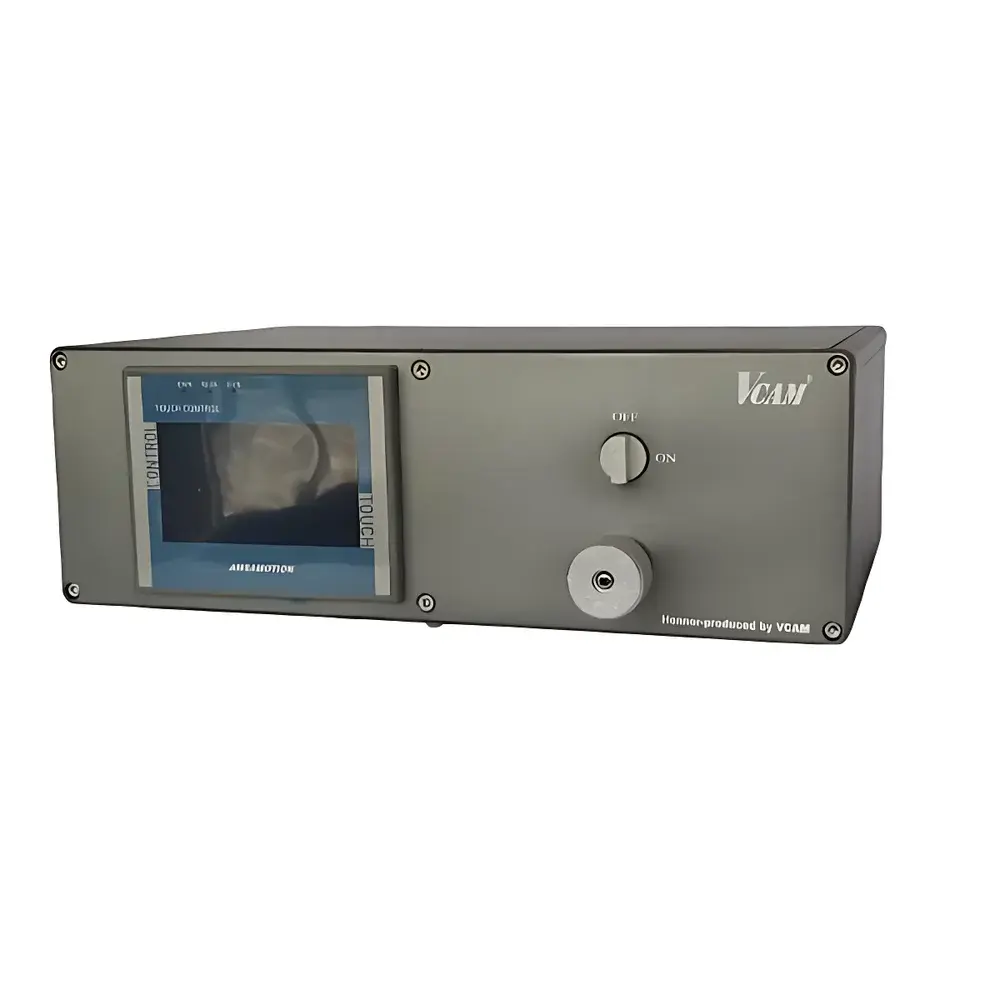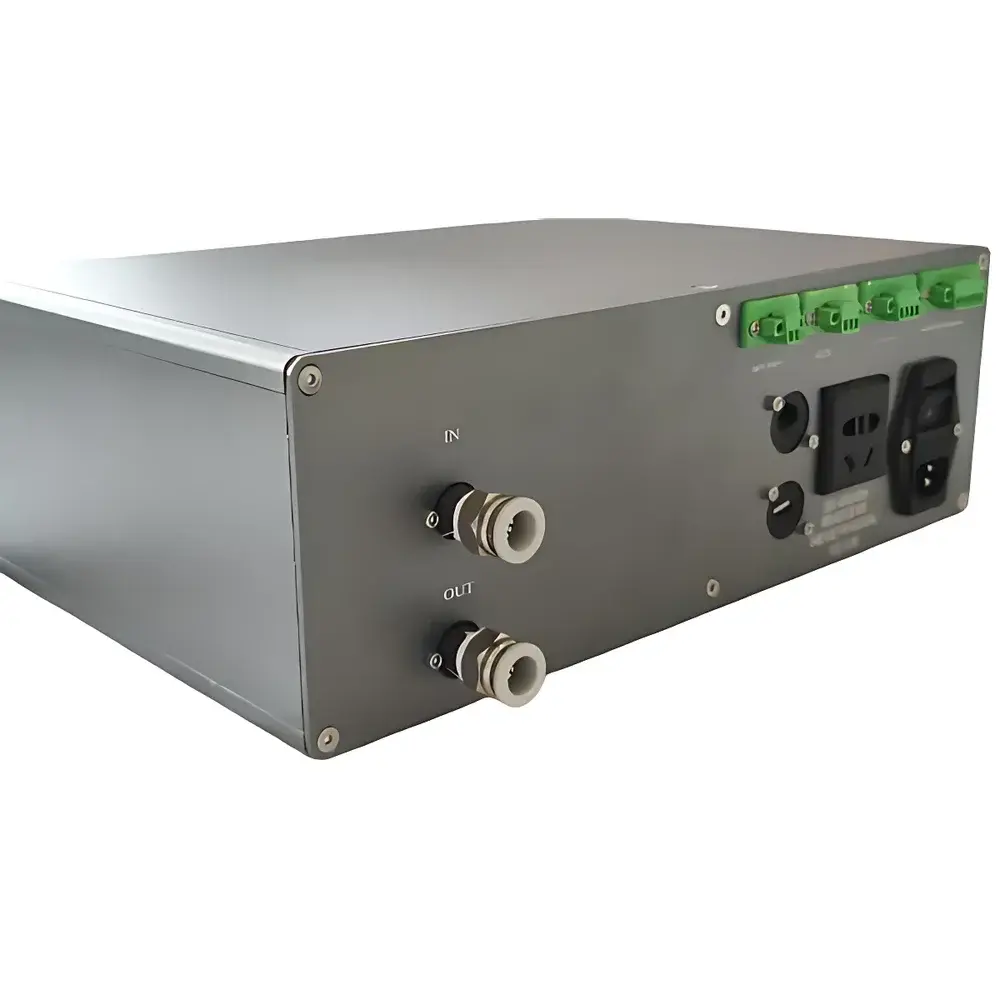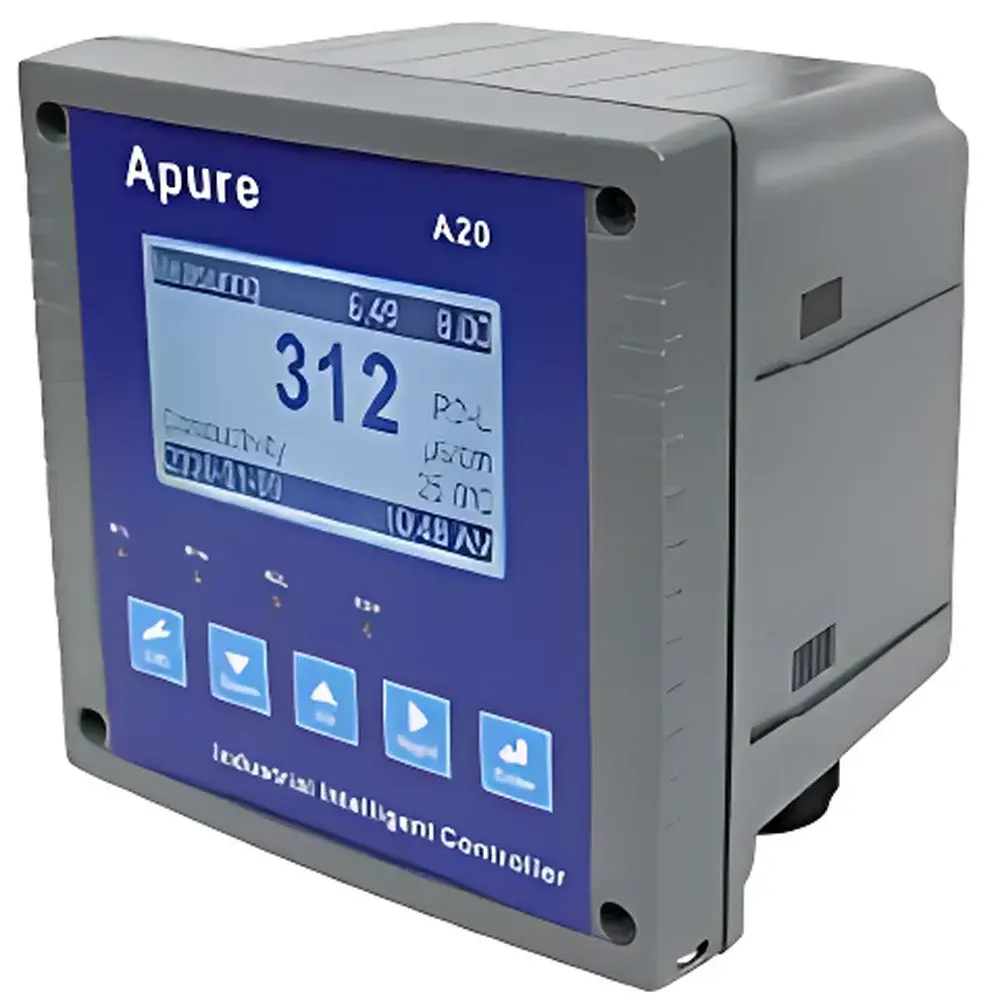
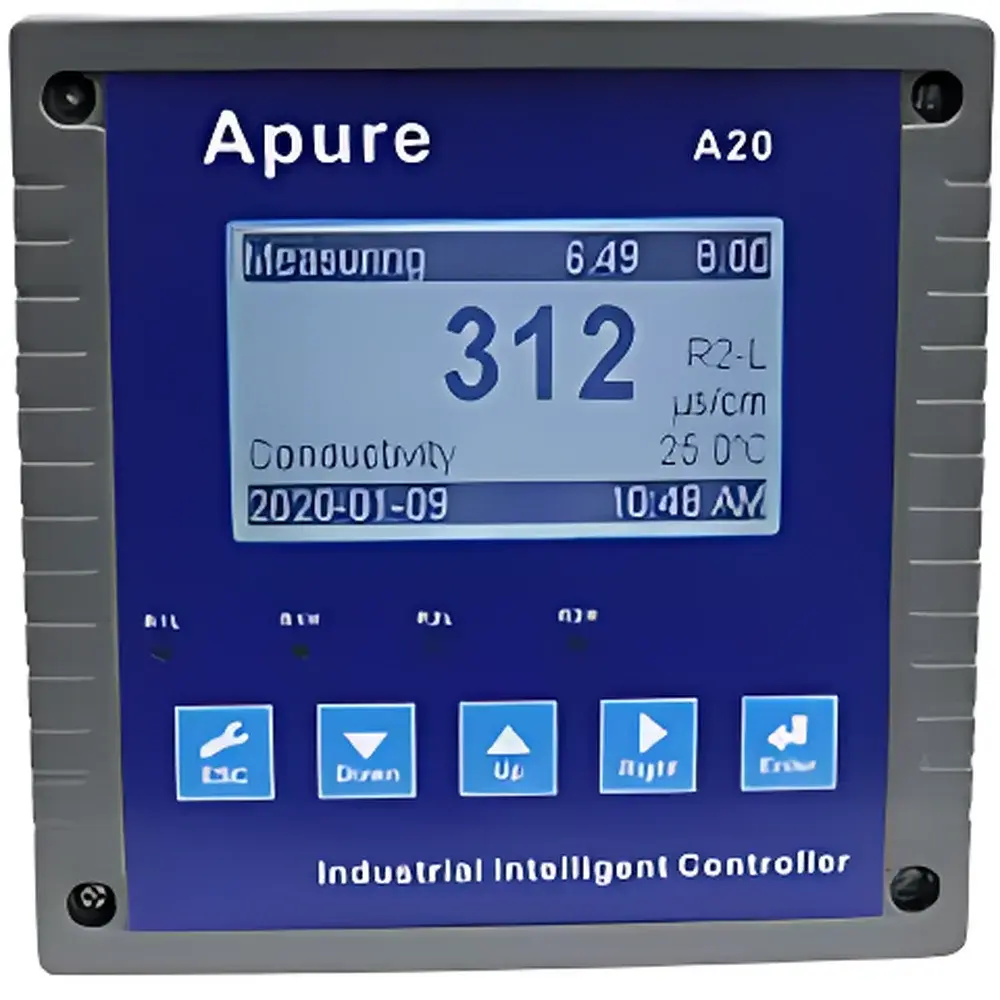
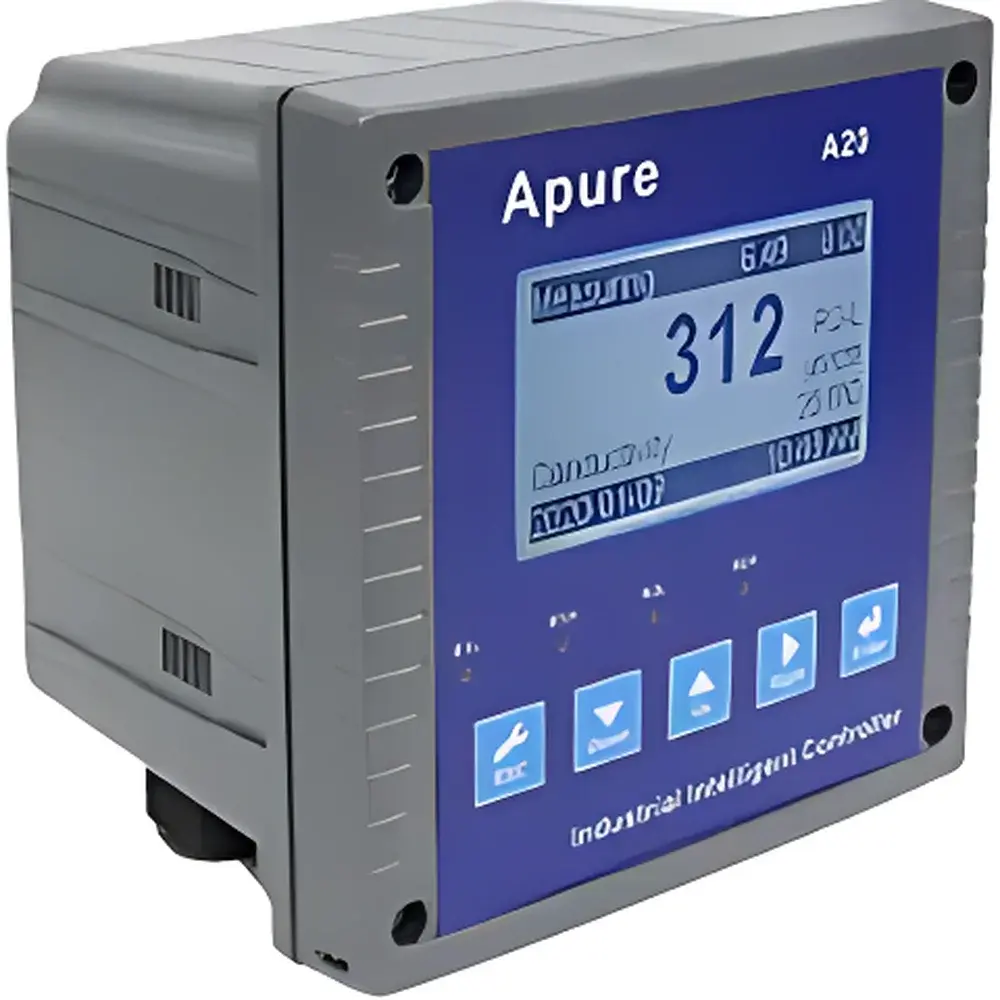
Apure A20CD-AA1 Online Conductivity and Resistivity Controller
| Brand | Apure |
|---|---|
| Origin | Shanghai, China |
| Manufacturer Type | OEM Manufacturer |
| Model | A20CD-AA1 |
| Conductivity Range | 0.05 µS/cm – 200 mS/cm |
| Resistivity Range | 0.00 – 20.00 MΩ·cm |
| Temperature Range | −30 °C to +150 °C (manual or automatic with PT1000/NTC10K sensor) |
| Basic Accuracy | ±0.01 µS/cm |
| Resolution | 0.01 µS/cm |
| Dimensions | 144 mm (H) × 144 mm (W) × 115 mm (D) |
| Power Supply | AC 220 V or DC 24 V |
| Power Consumption | ≤5 W |
| Environmental Operating Conditions | 0–60 °C, ≤85% RH (non-condensing) |
| Mounting Cutout | 138 mm × 138 mm |
| Analog Outputs | Two isolated 4–20 mA outputs (conductivity/resistivity and temperature, max. load 500 Ω) |
| Relay Outputs | Two SPDT relays (3 A / 250 V AC, NO contact), configurable for high/low alarm with adjustable hysteresis |
| Display Language | Switchable between Chinese and English |
| Password Protection | User-accessible configuration lock |
| Menu Navigation | Context-sensitive on-screen prompts |
Overview
The Apure A20CD-AA1 Online Conductivity and Resistivity Controller is a microprocessor-based industrial analyzer engineered for continuous, real-time monitoring of aqueous solution conductivity and resistivity in demanding process environments. It operates on the principle of two-electrode or four-electrode conductometric measurement—where an alternating current excitation signal is applied across a conductivity cell, and the resulting voltage drop is converted into a precise conductance value, corrected for cell constant and temperature. The instrument simultaneously acquires temperature data via integrated support for PT1000 platinum resistance thermometers or NTC10K thermistors—or allows manual temperature entry—enabling automatic temperature compensation per ASTM D1125 and ISO 7888 standards. Designed for wall- or panel-mount deployment in fixed-location applications, the A20CD-AA1 delivers stable, low-drift performance across a wide dynamic range—from ultrapure water (≥18.2 MΩ·cm) to aggressive industrial brines—making it suitable for critical quality control loops where compliance with USP , EP 2.2.38, or pharmacopeial water specifications is required.
Key Features
- Switchable bilingual interface (English/Chinese) with intuitive, context-aware menu navigation—reducing operator training time and minimizing misconfiguration risk.
- Flexible temperature compensation architecture supporting automatic PT1000, NTC10K, or user-defined manual input—ensuring accuracy across diverse thermal profiles and sensor legacy infrastructures.
- Dual isolated 4–20 mA analog outputs: one dedicated to conductivity/resistivity (user-selectable units), the other to temperature—each galvanically isolated to suppress ground-loop interference and meet IEC 61000-4-5 surge immunity requirements.
- Two programmable SPDT relay outputs with fully adjustable setpoints and hysteresis—enabling fail-safe control of dosing pumps, valve actuators, or shutdown interlocks without oscillatory cycling.
- Multi-level password protection (operator and engineer tiers) restricting access to calibration constants, output scaling, and relay logic—supporting audit-ready operation under GLP and GMP frameworks.
- Robust industrial enclosure (IP65 front rating) with compact 144 mm × 144 mm DIN form factor—designed for seamless integration into existing control panels without spatial compromise.
Sample Compatibility & Compliance
The A20CD-AA1 is optimized for aqueous solutions across municipal, industrial, and regulated manufacturing settings—including potable water distribution networks, wastewater treatment bioreactors, boiler feedwater systems, chemical synthesis reactors, and pharmaceutical purified water (PW) and water-for-injection (WFI) loops. Its measurement algorithm conforms to the linearized temperature compensation model defined in ISO 7888:2019 and supports NaCl-based reference curves per ASTM D1125. While not certified to IEC 61508 or SIL-2 out-of-the-box, its relay logic and analog output stability align with functional safety prerequisites for Category B equipment per EN 62061. The device meets CE marking requirements (EMC Directive 2014/30/EU and LVD Directive 2014/35/EU) and complies with RoHS 2011/65/EU material restrictions.
Software & Data Management
The A20CD-AA1 operates as a standalone field instrument with no embedded firmware update capability via USB or Ethernet; however, all configuration parameters—including calibration coefficients, relay thresholds, hysteresis values, and unit preferences—are retained in non-volatile memory during power loss. Configuration is performed locally via the built-in membrane keypad and LCD display. For integration into higher-level SCADA or DCS architectures, the dual 4–20 mA outputs provide direct analog interfacing without protocol translation. Though the controller does not support Modbus RTU or HART natively, third-party analog-to-digital gateways may be deployed to enable historical trend logging, remote diagnostics, and Part 11-compliant electronic records when paired with validated data acquisition software meeting FDA 21 CFR Part 11 requirements.
Applications
- Real-time monitoring of conductivity in reverse osmosis (RO) permeate and deionized (DI) water loops to verify ion removal efficiency.
- Resistivity surveillance in semiconductor ultrapure water (UPW) distribution systems to detect trace ionic contamination events.
- Process endpoint detection in acid/base neutralization tanks used in electroplating and metal finishing lines.
- Continuous verification of cleaning-in-place (CIP) rinse water quality in food & beverage and biopharmaceutical facilities.
- Feedwater conductivity control in high-pressure steam generation systems to prevent boiler tube scaling and corrosion.
- Effluent discharge compliance monitoring at municipal wastewater treatment plants per local environmental regulatory limits.
FAQ
What temperature sensors are supported?
The A20CD-AA1 accepts PT1000 (IEC 60751 Class B) and NTC10K (β = 3950 K) sensors, or permits manual temperature entry for applications where external sensing is impractical.
Can the 4–20 mA outputs be scaled independently?
Yes—each output channel supports full-range linear scaling (e.g., 0–200 mS/cm on Output 1 and −20–120 °C on Output 2), configurable via the local menu.
Is calibration traceable to national standards?
Field calibration uses standard KCl reference solutions (e.g., 0.01 mol/kg, 0.1 mol/kg); users are responsible for maintaining traceability to NIST or equivalent metrological institutes through documented procedures.
Does the device support automatic cell constant recognition?
No—the cell constant must be entered manually during setup; the controller does not interface with smart electrodes or digital probe identification protocols.
What is the maximum cable length for the 4–20 mA outputs?
When loaded at ≤500 Ω, the outputs maintain specification over shielded twisted-pair runs up to 300 meters in electrically noisy environments, provided proper grounding and separation from power cables are observed.