
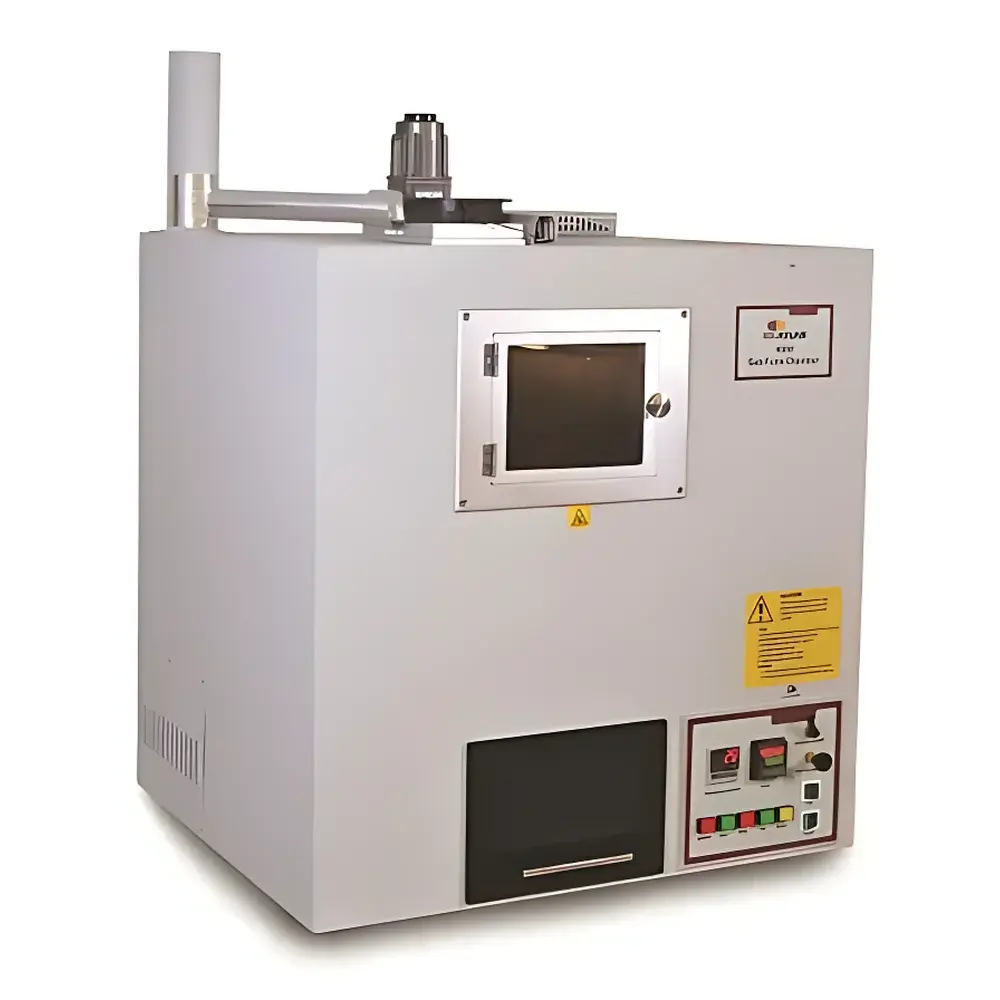
SDL Atlas M291 Nitrogen Oxides (NOₓ) Fading Tester
| Brand | SDL Atlas |
|---|---|
| Origin | Guangdong, China |
| Manufacturer Type | OEM Manufacturer |
| Country of Origin | China |
| Model | M291 |
| Price Range | USD 14,000 – 70,000 |
Overview
The SDL Atlas M291 Nitrogen Oxides (NOₓ) Fading Tester is a purpose-built instrumental system designed to evaluate the color fastness of textile materials when exposed to nitrogen oxide gases generated by controlled combustion—primarily simulating atmospheric NOₓ exposure in urban or industrial environments. It operates on the principle of accelerated aging under defined gaseous pollutant conditions, where NOₓ species (NO, NO₂) are thermally generated via calibrated Bunsen burner combustion of natural gas or propane, and introduced into a sealed, temperature-regulated test chamber. The instrument conforms to internationally recognized textile testing standards including ISO 105-G03, AATCC Test Method 172, and GB/T 8427–2019 (modified for NOₓ exposure), enabling reproducible assessment of fading, yellowing, or chromatic shift in dyed and printed fabrics, yarns, and nonwovens.
Key Features
- Integrated Bunsen burner assembly with precision gas flow control and flame stabilization circuitry for consistent NOₓ generation
- Motor-driven rotating specimen rack accommodating up to 20 standard 100 × 40 mm textile specimens per cycle, ensuring uniform exposure across all samples
- Microprocessor-based temperature controller maintaining chamber setpoint within ±1.5 °C across operational range (ambient +5 °C to 60 °C)
- Dual-safety interlock system: flame ignition sequence is gated by real-time gas pressure verification and pre-ignition purge timing; automatic shutdown triggered upon flame extinction or unburnt gas detection
- Front-mounted observation window with heat-resistant borosilicate glass and integrated LED illumination for real-time visual monitoring without chamber opening
- Internal chamber lighting and ergonomic viewing port facilitate sample loading, positioning, and post-test evaluation under standardized D65 illumination conditions
Sample Compatibility & Compliance
The M291 accommodates flat fabric swatches, knitted and woven textiles, garment panels (cut to specification), and yarn skeins mounted on frames. Specimen holders are compatible with ISO 105-A02 multi-fiber adjacent fabric strips and AATCC 10-step grayscale references. All mechanical and thermal components meet IEC 61000-6-2 (immunity) and IEC 61000-6-4 (emissions) requirements. Safety architecture complies with EN 61010-1:2019 for laboratory electrical equipment, incorporating redundant gas shutoff valves, pressure relief vents, and Class II insulation throughout high-voltage ignition circuits. Documentation supports GLP-compliant validation protocols—including IQ/OQ/PQ—and traceable calibration against NIST-traceable thermocouples and certified gas analyzers.
Software & Data Management
While the M291 operates via embedded firmware with tactile membrane keypad interface, optional USB data logging enables time-stamped recording of chamber temperature, burner runtime, gas pressure, and safety event flags (e.g., flame loss, overtemperature). Exported CSV files integrate with LIMS platforms and statistical process control (SPC) software for trend analysis across batches. Audit trail functionality meets FDA 21 CFR Part 11 requirements when paired with validated third-party data acquisition modules. All firmware updates are delivered via encrypted USB key with version-controlled release notes and change logs.
Applications
- Evaluation of NOₓ-induced fading resistance in automotive interior textiles (seats, headliners, door panels)
- Quality assurance for outdoor apparel and technical fabrics exposed to high-traffic urban air
- R&D screening of novel reactive dyes, pigment dispersions, and UV-absorbing finishing agents
- Regulatory conformance testing for EU EcoLabel, OEKO-TEX Standard 100 Class II/III, and ZDHC MRSL v3.1 Annex 4 (gas-phase pollutants)
- Comparative benchmarking of color retention between conventional and bio-based fibers (e.g., Tencel™, recycled PET) under oxidative gaseous stress
FAQ
What gases does the M291 generate during testing?
The instrument produces nitrogen oxides (predominantly NO and NO₂) via controlled combustion of natural gas or propane in air—no external gas cylinders required.
Is operator intervention needed during a 72-hour test cycle?
No. Once initiated, the system runs autonomously with continuous flame monitoring, thermal regulation, and fail-safe gas cutoff—designed for unattended operation.
Can the M291 be used for ozone or sulfur dioxide testing?
No. It is specifically engineered for NOₓ simulation. Separate instruments compliant with ISO 105-G04 (ozone) or ISO 105-G05 (SO₂) are required for those assessments.
Does the M291 include calibration certificates?
Yes—factory calibration includes temperature sensor verification (±0.5 °C at 40 °C), gas flow meter certification, and safety relay response timing validation, documented per ISO/IEC 17025 guidelines.
What maintenance intervals are recommended?
Burner nozzle inspection every 50 test cycles; thermocouple recalibration annually; full safety system functional check prior to each qualification run or quarterly—whichever occurs first.



